Artwork
En train de ...confectionner quelques
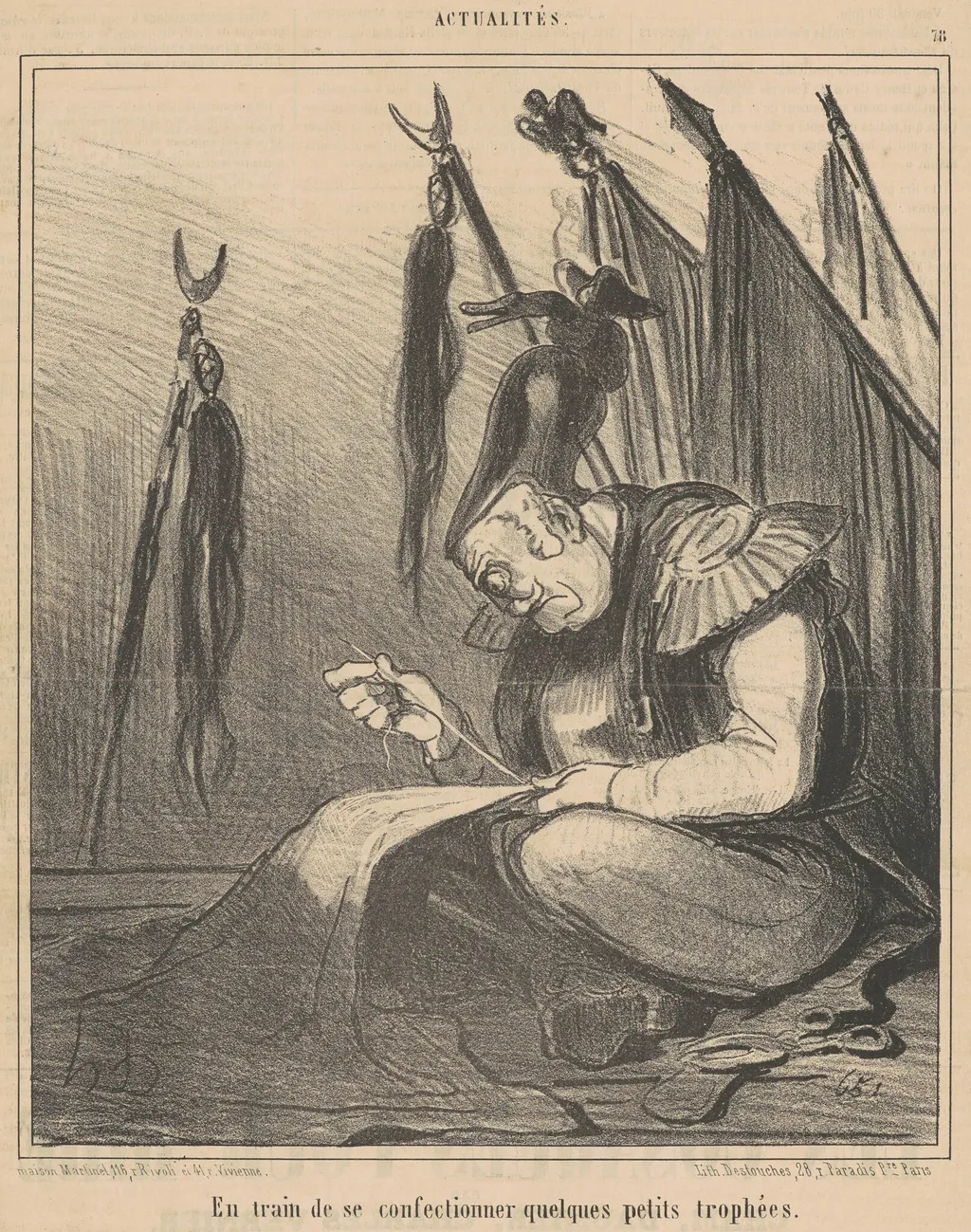
En train de ...confectionner quelques is an ink print by the Impressionist artist Honoré Daumier. It dates from 1854 and is held in the collection of the National Gallery of Art.
About this work
Overview
This lithograph by Honoré Daumier portrays a solitary figure seated in quiet labor, threading a needle amid a cluttered environment of suspended items.
This lithograph by Honoré Daumier portrays a solitary figure seated in quiet labor, threading a needle amid a cluttered environment of suspended items. Executed in the lithographic medium, the work belongs to a series documenting ordinary domestic routines. Daumier’s focus on unremarkable moments elevates the mundane into a subject worthy of artistic attention, reflecting his interest in the rhythms of working-class life.
Subject & Meaning
The figure, likely a woman, is absorbed in the repetitive task of sewing — a common domestic duty in the 19th century. The hanging objects around her, perhaps garments or linens, suggest a workspace shaped by necessity rather than comfort. The scene conveys stillness and endurance, not drama; the absence of narrative tension underscores the quiet dignity of unseen labor, rendered without sentimentality.
Technique & Style
Daumier employed lithography to achieve subtle tonal gradations and loose, expressive lines. The background is rendered with smudged, atmospheric marks, while the figure is defined with sharper contours, creating a sense of depth and focus. His use of ink and stone allowed for rapid reproduction, aligning with his broader practice of documenting social life through accessible printed imagery rather than oil paintings.
History & Provenance
Created during the mid-19th century, this print likely originated as part of a series published in periodicals or albums, common outlets for Daumier’s work. It was not commissioned as fine art but circulated among middle-class audiences interested in social observation. Its survival in institutional collections reflects later recognition of its documentary value, though it was originally intended for ephemeral consumption.
Context
Daumier worked amid rapid urbanization and industrial change in France, where domestic labor remained largely manual and gendered. His prints often depicted servants, laborers, and homemakers — figures overlooked in academic art. This lithograph fits within a broader visual critique of social hierarchy, using understated realism to highlight the invisible work sustaining daily life.
Legacy
Though not widely exhibited in his lifetime as a standalone work, this lithograph contributes to Daumier’s reputation as a keen observer of ordinary existence. Later artists and historians have cited his prints as precursors to modern realism and social documentary photography. The work endures not for its novelty, but for its unembellished witness to the quiet routines of 19th-century domesticity.
Artist & collection
Artist
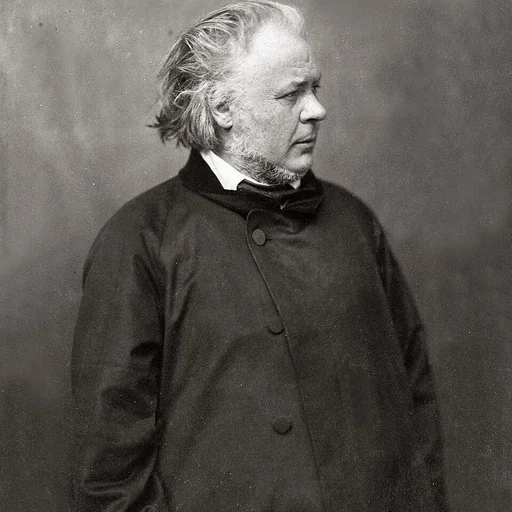
Honoré-Victorin Daumier was a French painter, sculptor, and printmaker, whose many works offer commentary on the social and political life in France, from the Revolution of 1830 to the fall of the Second French Empire in 1870.

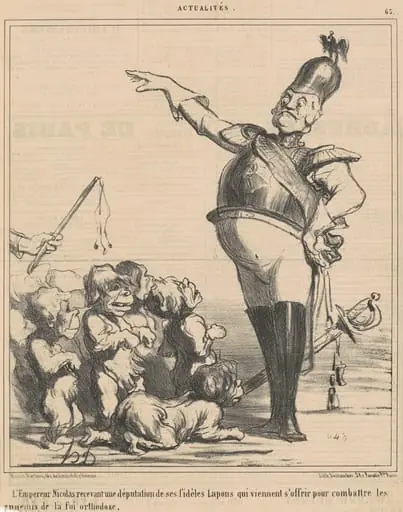 L'empereur Nicolas recevant une députation ...
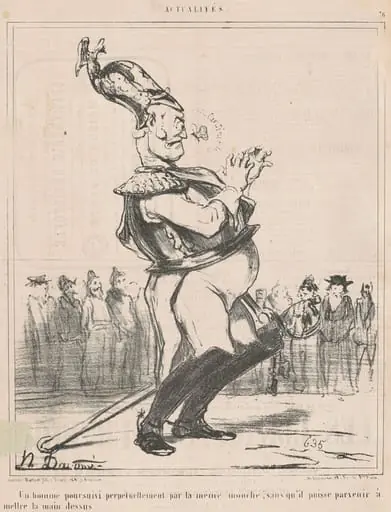 Un homme poursuivi ...
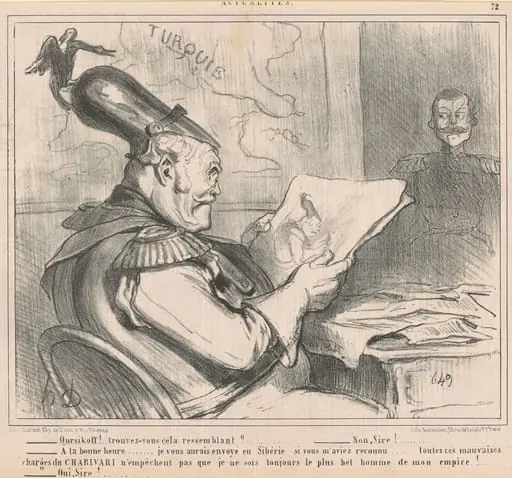 "-Ouriskoff!..trouvez-vous cela ressemblant?" from Actualities
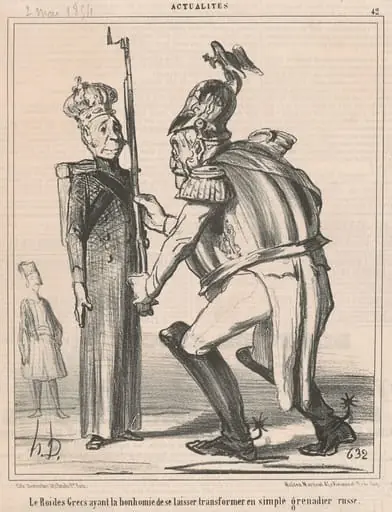 Le roi des grecs ...
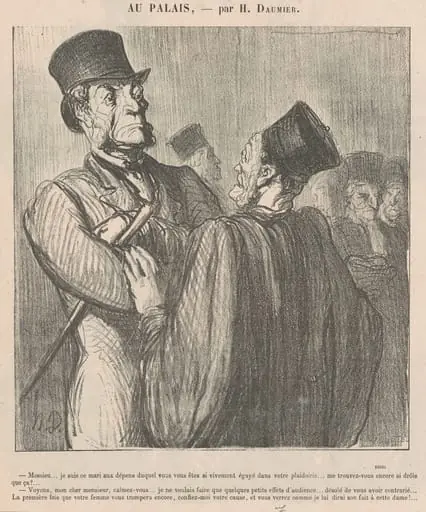 Mossieu ... je suis ce mari aux dépens duquel
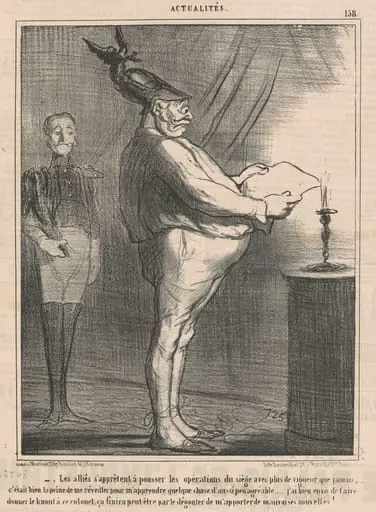 Les alliés s'appretent a pousser les opérations ...
 Décidément on ne peut pas...
 Usant jusqu'a son dernier homme ...