Artwork
L'Ami de collège
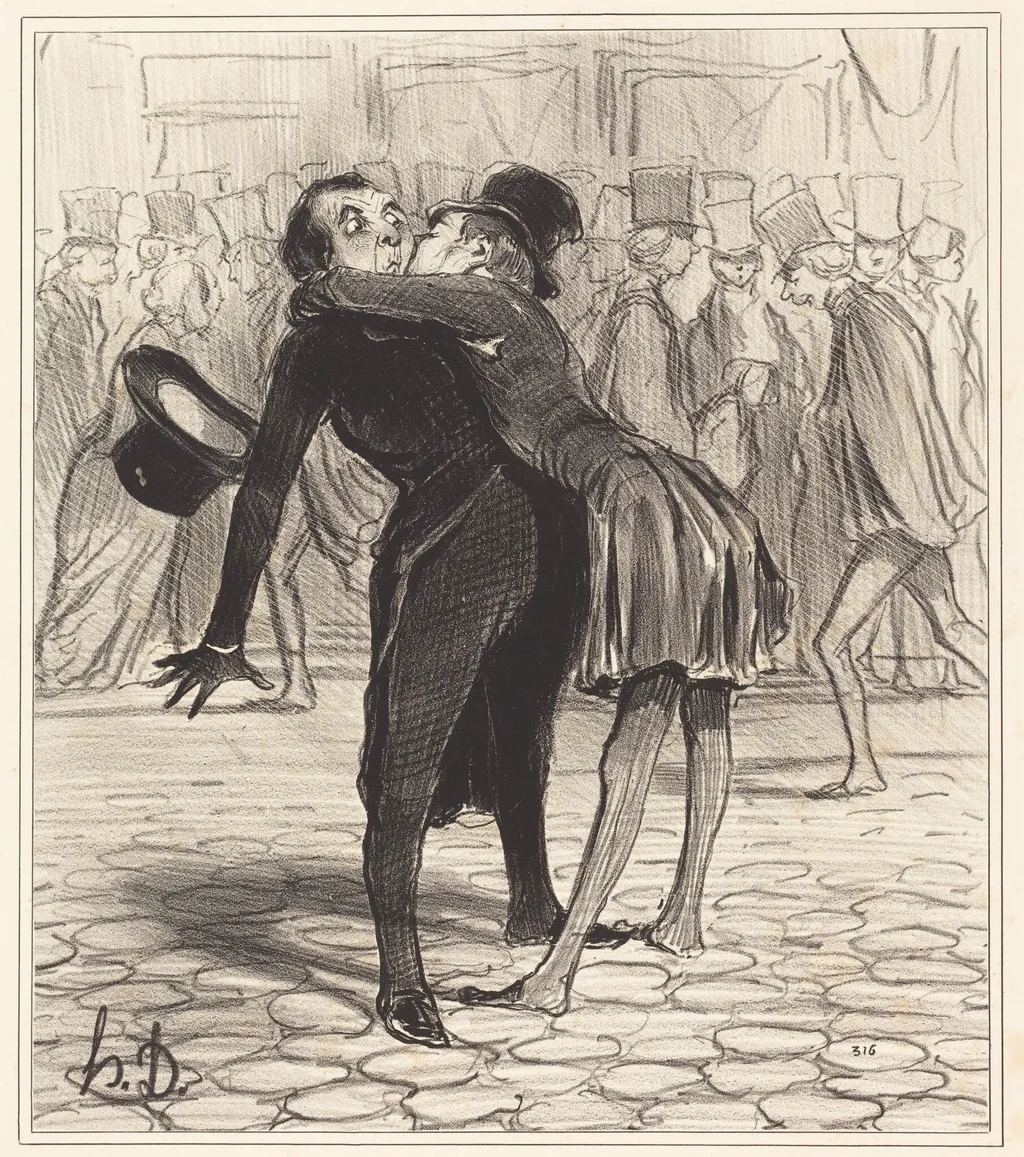
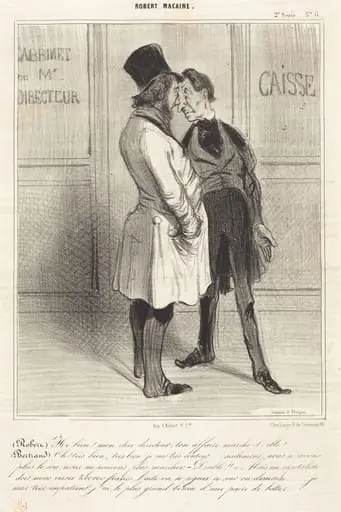
L'Ami de collège is an ink print by the Romanticist artist Honoré Daumier. It dates from 1841 and is held in the collection of the National Gallery of Art.
About this work
Overview
Executed in ink on stone, the print exemplifies his mastery of lithography as a medium for rapid, expressive commentary on everyday life and class dynamics.
Created in 1841, *L'Ami de collège* is a lithograph by Honoré Daumier that captures a fleeting moment of human connection amid urban Paris. As part of a broader series of social satires, the work reflects Daumier’s engagement with the political climate of the July Monarchy. Executed in ink on stone, the print exemplifies his mastery of lithography as a medium for rapid, expressive commentary on everyday life and class dynamics.
Subject & Meaning
The image depicts two men embracing on a street, their gestures suggesting a reunion between former schoolmates. One is dressed in formal attire, the other in a more modest overcoat, hinting at divergent social paths. The intimacy of the moment contrasts with the anonymous crowd behind them, subtly questioning the authenticity of social bonds under a regime that prized appearance over substance. Daumier frames camaraderie as both genuine and fragile within a stratified society.
Technique & Style
Daumier employed loose, energetic linework to convey motion and emotional immediacy rather than polished detail. The rough, almost spontaneous strokes suggest a sketch caught in real time, enhancing the sense of spontaneity. Background figures are rendered as indistinct smudges, directing focus to the central embrace. This expressive approach, typical of his lithographic work, prioritizes psychological truth over formal accuracy, making the scene feel alive and unposed.
History & Provenance
The print was produced during Daumier’s most prolific period of political satire, published in the liberal journal *Le Charivari*. It emerged amid government crackdowns on press freedom, following his earlier imprisonment for caricaturing King Louis-Philippe. Though not overtly political, *L'Ami de collège* aligns with his broader critique of social pretense. Its survival reflects its circulation among middle-class readers who valued his unflinching social observations.
Context
In 1840s France, the July Monarchy fostered a culture of superficial civility and rising bourgeois influence. Daumier’s prints responded to this by exposing the gap between public decorum and private reality. Lithography allowed him to produce images quickly and cheaply, making them accessible to a broad audience. His work stood in contrast to academic art, offering instead a raw, democratic vision of urban life shaped by observation, not idealization.
Legacy
Daumier’s use of lithography to capture fleeting human moments influenced later generations of illustrators and realist artists. His ability to convey complex social dynamics with minimal detail set a precedent for modern graphic storytelling. Though little celebrated in his lifetime beyond journalistic circles, his prints are now recognized for their psychological depth and their role in redefining printmaking as a vehicle for social critique.
Artist & collection

Artist
Honoré-Victorin Daumier was a French painter, sculptor, and printmaker, whose many works offer commentary on the social and political life in France, from the Revolution of 1830 to the fall of the Second French Empire in 1870.









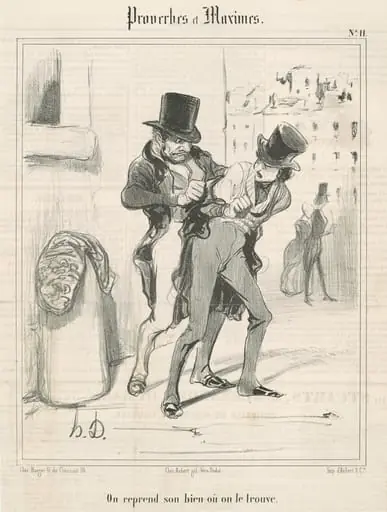 On reprend son bien ou on le trouve
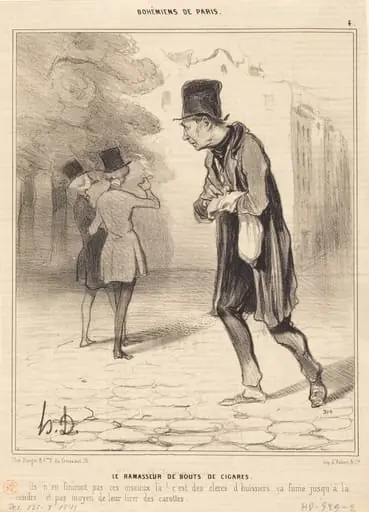 Le Ramasseur de bouts de cigares
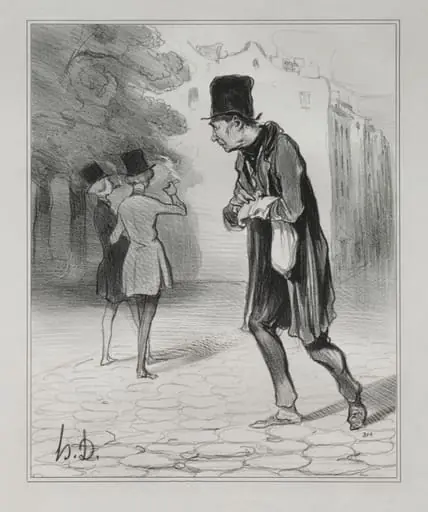 The Collector of Cigar Stubs
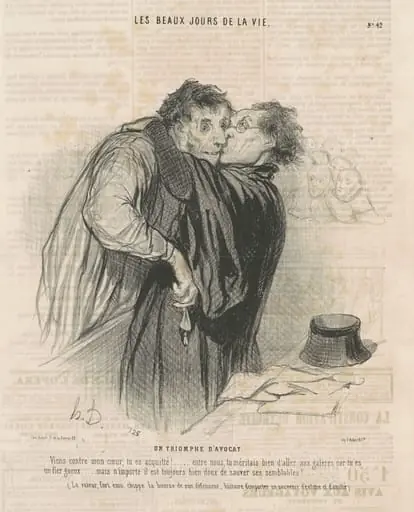 Un triomphe d'avocat
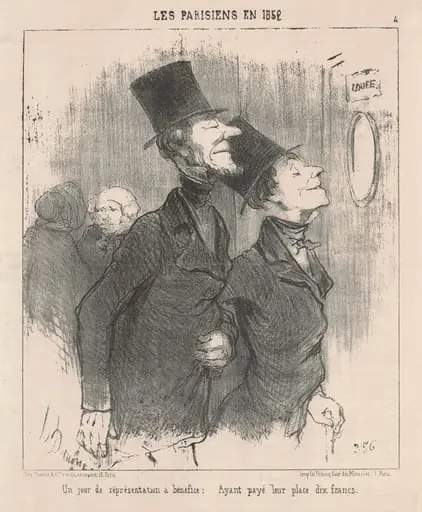 Un jour de représentation a benéfice
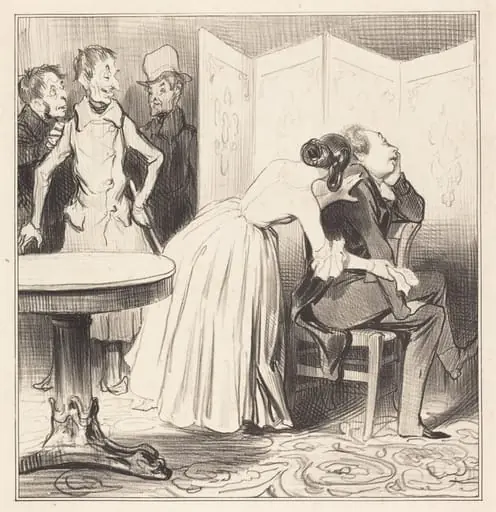 Le Chevalier des Adrets est l'amant...
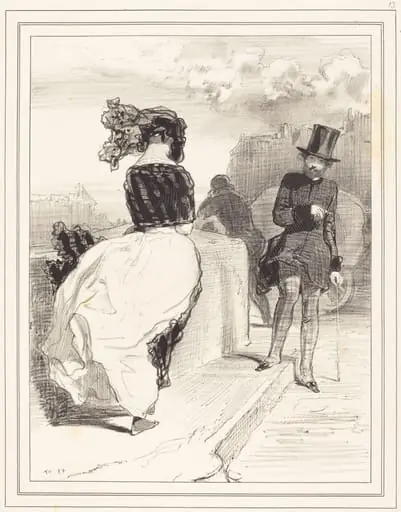 "Une de ces mines pudibones"
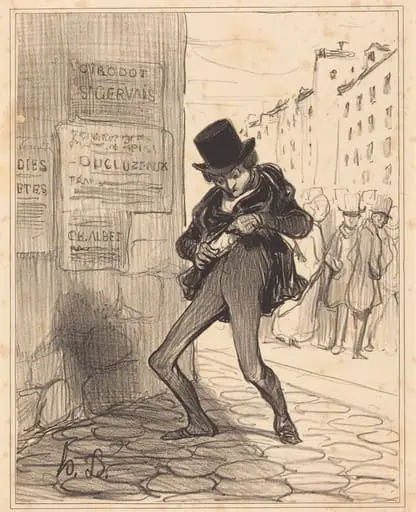 Volé!... Rue vide-gousset...
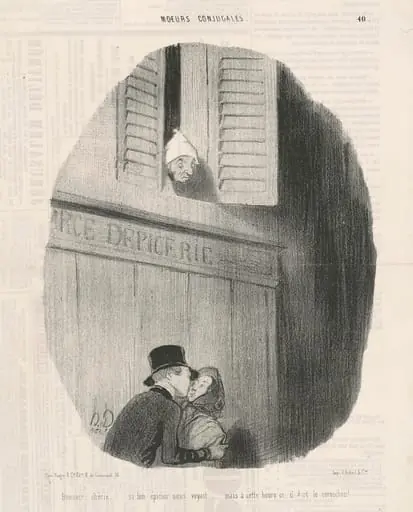 Bonsoir chérie...si ton épicier nous voyait...
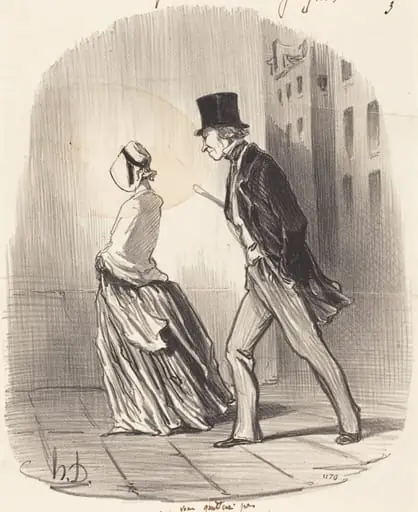 Non, madame, je ne vous quitterai pas...
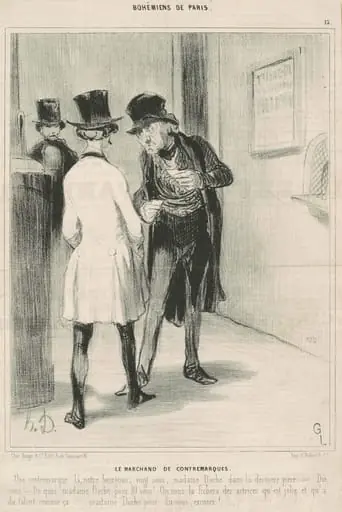 Le marchand de contremarques
 (Robert) Hé bien! mon cher directeur...