Artwork
La première lecon ... ; Un monsieur ... ; Collé sous bande; Deux amateurs de la banlieue
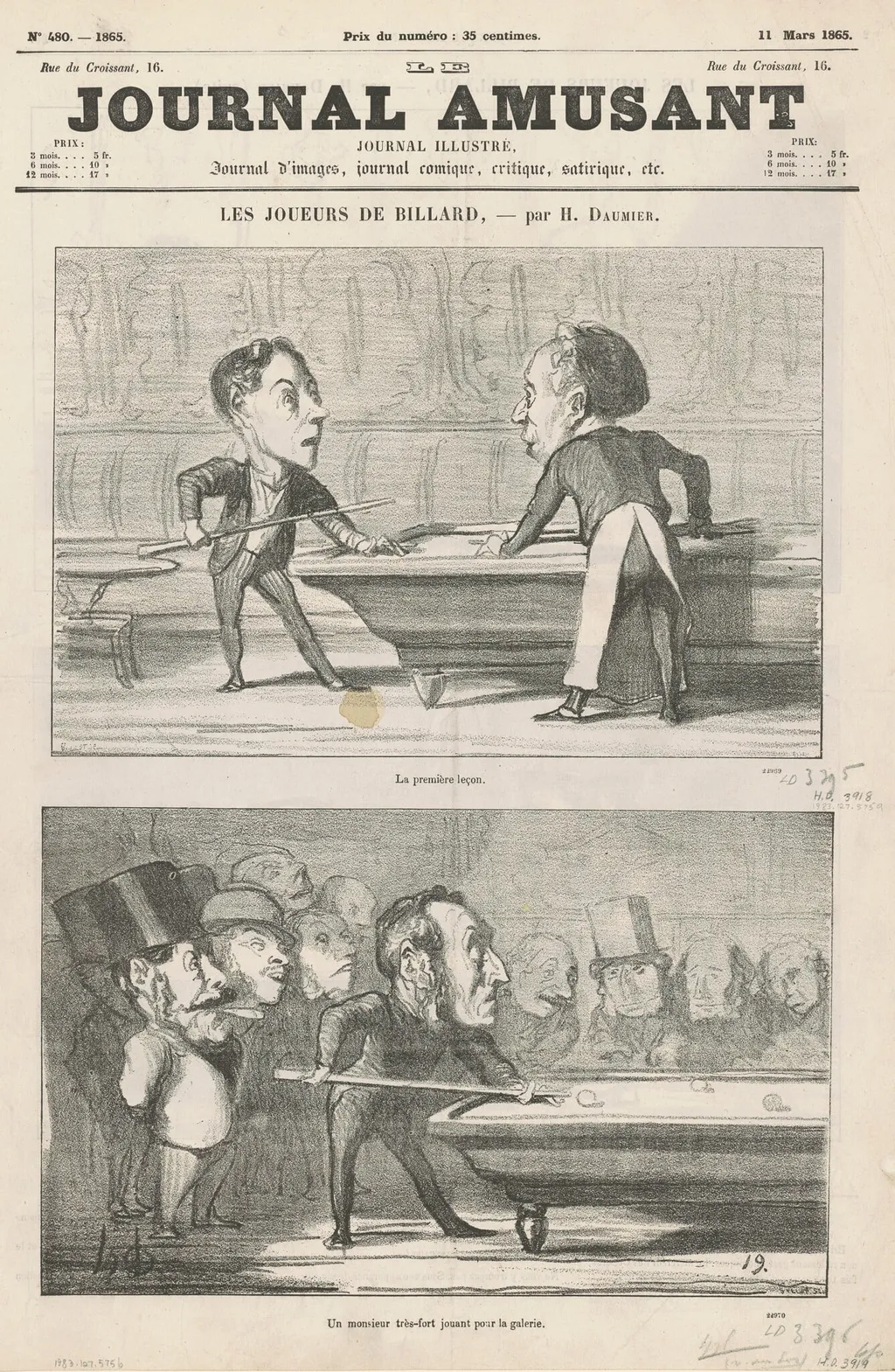
La première lecon ... ; Un monsieur ... ; Collé sous bande; Deux amateurs de la banlieue is an ink print by the Impressionist artist Honoré Daumier. It dates from 1865 and is held in the collection of the National Gallery of Art.
About this work
Daumier used lithography to capture everyday life with quick, bold lines.
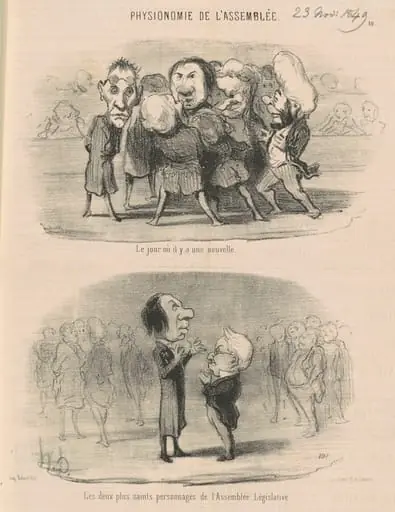
Daumier’s lithograph shows two panels of men playing billiards in 1865. In the top, one man leans in to give advice. Below, another player aims his cue, while a small crowd watches.
Daumier used lithography to capture everyday life with quick, bold lines. His humor comes from exaggerated poses and tight spaces. The scene feels alive, like a snapshot of a bar’s corner game.
It looks like a time capsule of 19th-century Paris. Want more like this? Try lithographs by Daumier, Honoré.
Overview
Created in 1865, this lithograph by Honoré Daumier presents a two-panel scene of billiards players in a Parisian café. The work captures a quiet, everyday moment with sharp observational wit, using the medium’s capacity for rapid, expressive line work to convey motion and social nuance. Though often grouped under titles like 'Les Joueurs de Billard,' the piece was originally published as part of a series of vignettes documenting urban leisure.
Subject & Meaning
The upper panel shows a spectator offering unsolicited advice to a player, while the lower panel depicts another man focused on his shot, surrounded by a small, attentive crowd. Daumier highlights the performative nature of casual play—how social roles emerge even in informal settings. The exaggerated postures and cramped composition underscore the tension between earnestness and absurdity in bourgeois pastimes.
Technique & Style
Daumier employed lithography to achieve fluid, energetic lines that suggest movement without detail. His use of bold contrasts and compressed space creates a sense of immediacy, as if the viewer has stepped into the room. The lack of shading and reliance on contour emphasize gesture over realism, aligning with his broader approach to social commentary through caricature.
History & Provenance
The print was produced during Daumier’s prolific period for periodicals like Le Charivari, where his satirical images reached a wide public. Originally published as a single sheet with multiple scenes, it was later collected in albums and preserved in institutional holdings. Its survival reflects its status as a representative example of 19th-century French graphic satire.
Context
In mid-19th century Paris, billiards halls were popular gathering spots for the middle class, blending recreation with social performance. Daumier’s work responds to this cultural shift, documenting how leisure activities became stages for identity and status. His focus on ordinary men, not elites, aligns with his broader interest in the rhythms of urban life under the July Monarchy and Second Empire.
Legacy
This lithograph exemplifies Daumier’s influence on modern visual storytelling, bridging journalism and art. His ability to distill social observation into concise, expressive images prefigured later developments in cartooning and photojournalism. While not widely exhibited as a standalone work, it remains a touchstone in studies of print culture and everyday life in 19th-century France.
Artist & collection

Artist
Honoré-Victorin Daumier was a French painter, sculptor, and printmaker, whose many works offer commentary on the social and political life in France, from the Revolution of 1830 to the fall of the Second French Empire in 1870.









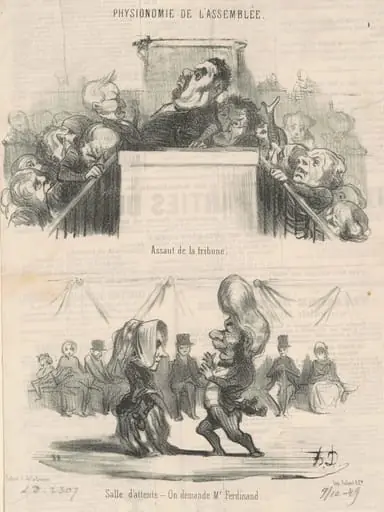 Assaut de la tribune
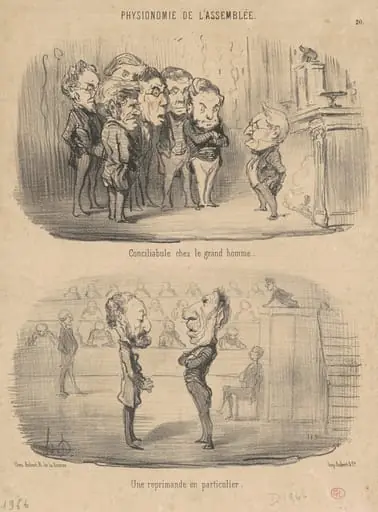 Conciliabule chez le grand homme
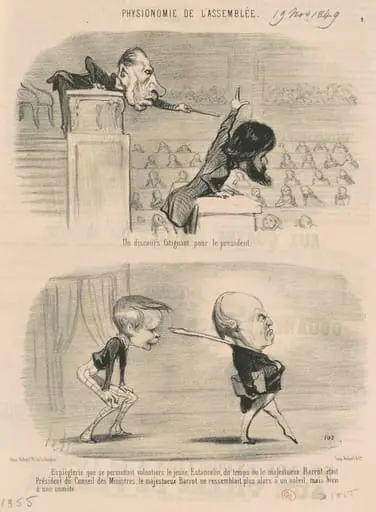 Un discours fatiguant pour le président
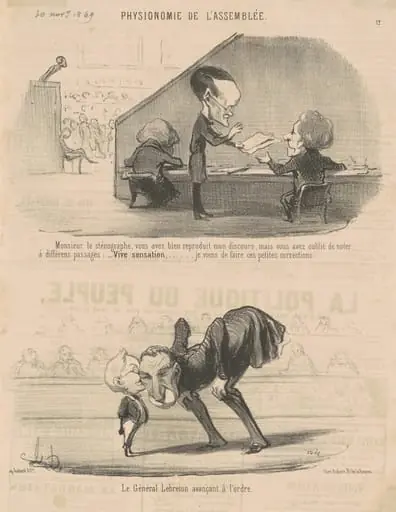 Monsieur le sténographe ...
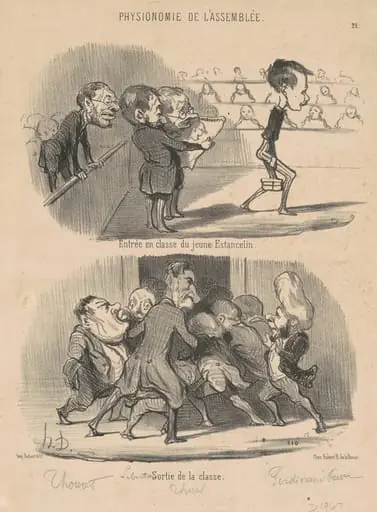 Entrée en classe du jeune Estancelin
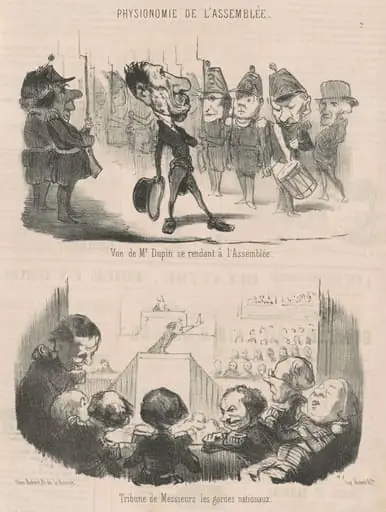 Vue de M. Dupin se rendant a l'assemblée
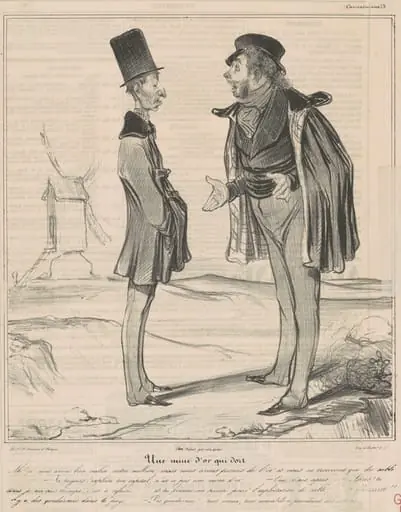 Une mine d'or qui dort
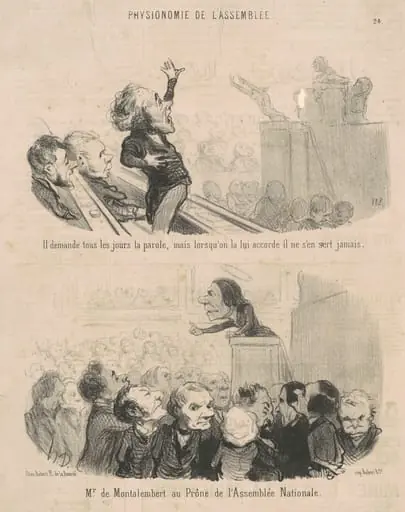 Il demande tous les jours la parole ...
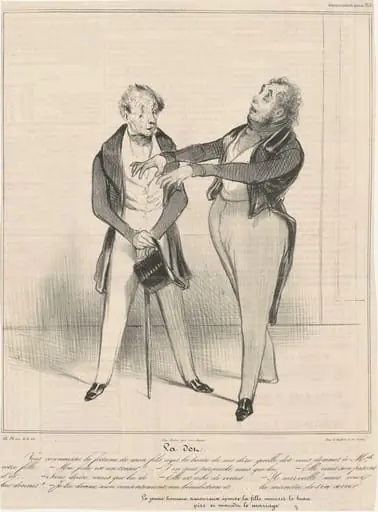 La Dot...vous connaissez la fortune...
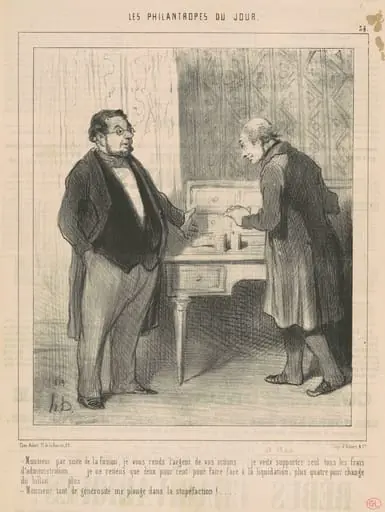 Monsieur par suite de la fusion
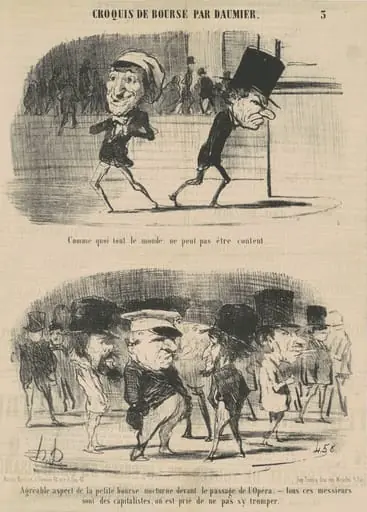 Comme quoi tout le monde de peut ...
 Le jour ou il y a une nouvelle