Artwork
Le Coup de canon du Palais-Royal
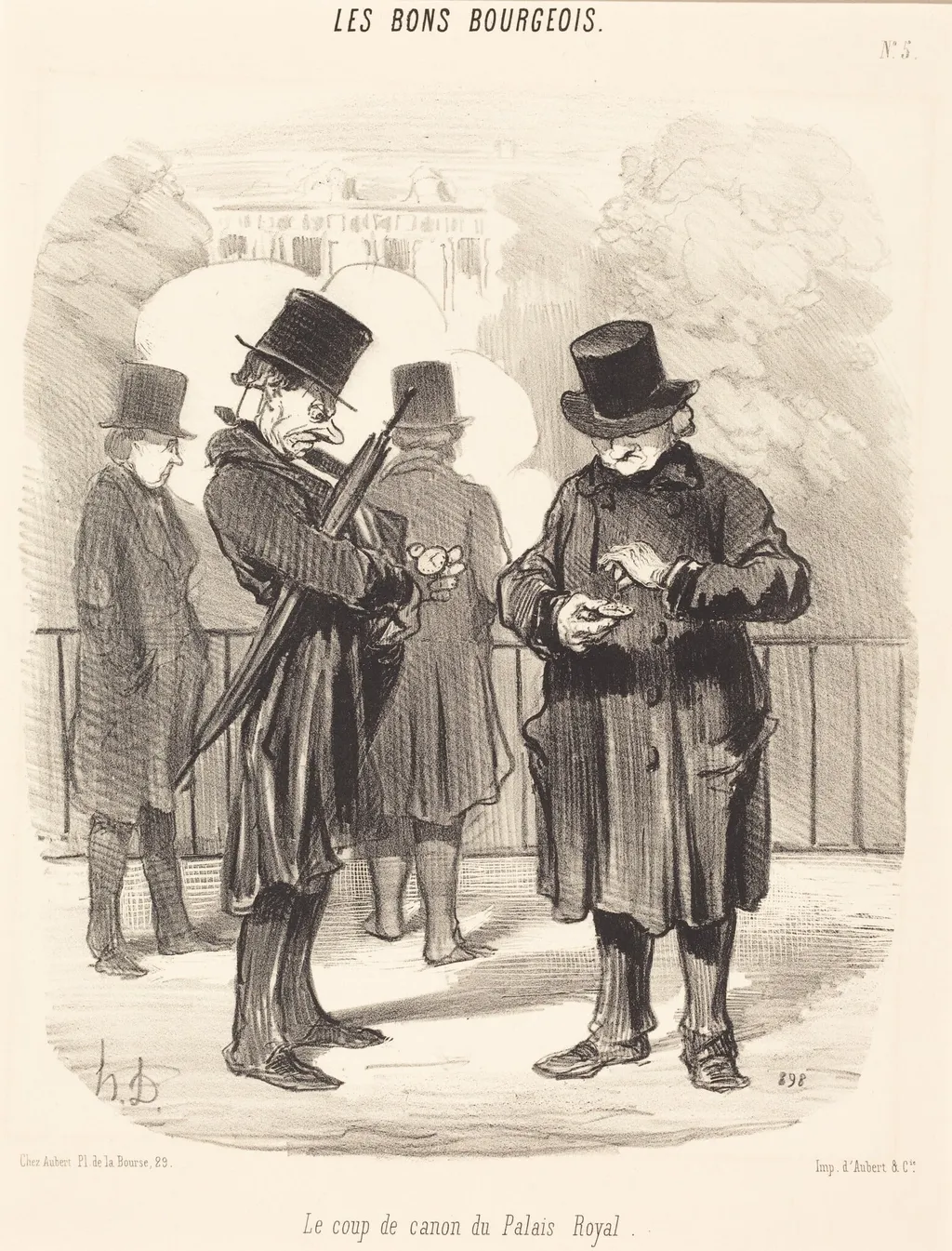
Le Coup de canon du Palais-Royal is an ink print by the Romanticist artist Honoré Daumier. It dates from 1846 and is held in the collection of the National Gallery of Art.
About this work
Overview
Honoré Daumier’s 1846 lithograph *Le Coup de canon du Palais‑Royal* captures a bustling urban tableau on a bridge near the Palais‑Royal. A group of men in dark coats gathers around a central figure who clutches a large object, while a columned building and a prominent tree loom in the background, suggesting depth and a public setting.
Subject & Meaning
The composition portrays a moment of upheaval, likely referencing a cannon discharge that historically signaled protest or state force at the Palais‑Royal, a known locus of political demonstration in mid‑19th‑century France. By foregrounding the crowd’s reaction, Daumier underscores the tension between authority and popular unrest.
Technique & Style
Executed in lithography, the print exploits the medium’s capacity for fine line work and tonal variation, rendering textures on clothing, stone, and foliage. Daumier’s characteristic satirical edge emerges through exaggerated postures and the stark contrast between the central figure and surrounding figures.
History & Provenance
Created during Daumier’s prolific period contributing to oppositional journals such as *La Caricature* and *Le Charivari*, the work reflects his engagement with political satire under the July Monarchy. The print was circulated among the period’s reformist readership, reinforcing Daumier’s reputation as a visual commentator on contemporary events.
Artist & collection
Artist
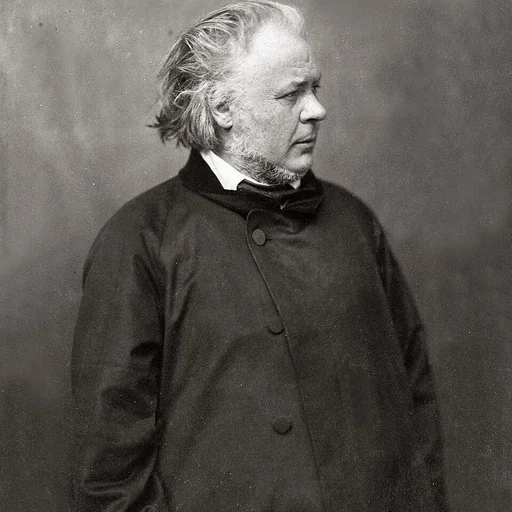
Honoré-Victorin Daumier was a French painter, sculptor, and printmaker, whose many works offer commentary on the social and political life in France, from the Revolution of 1830 to the fall of the Second French Empire in 1870.

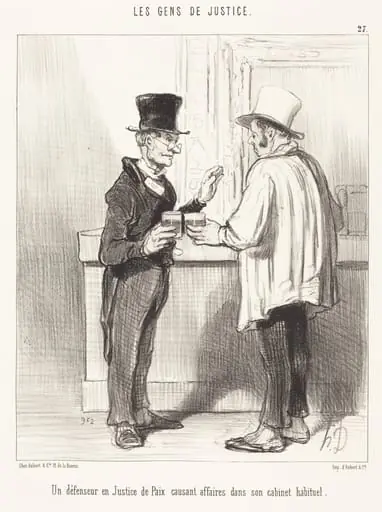 Un Défenseur... causant... dans son cabinet habituel
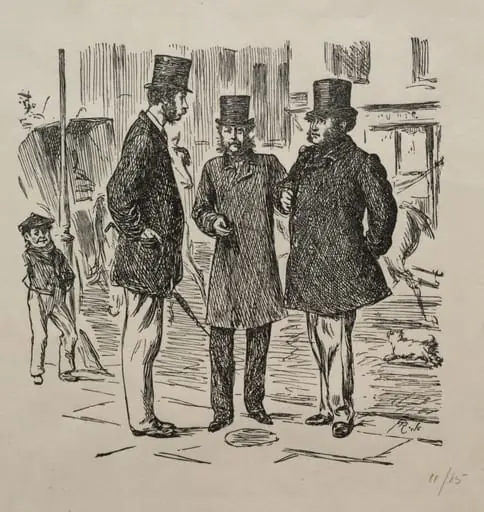 The Little Moment before the Introduction
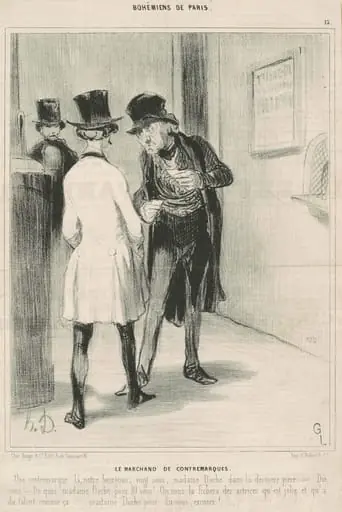 Le marchand de contremarques
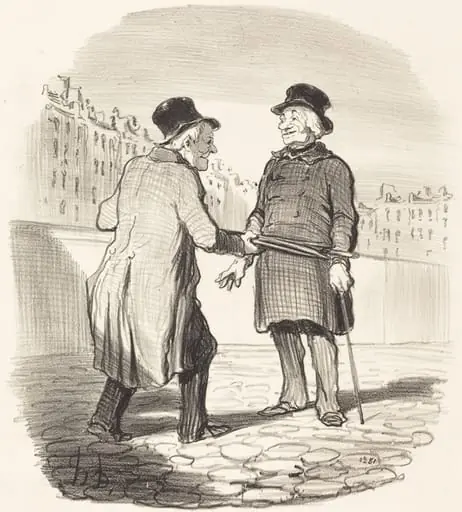 Je vous arrête, mauvais sujet...
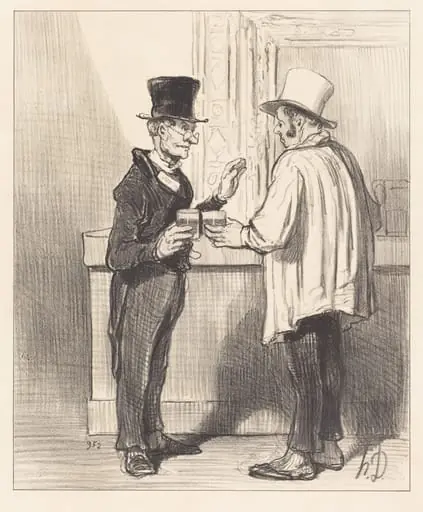 Un Défenseur... causant... dans son cabinet habituel
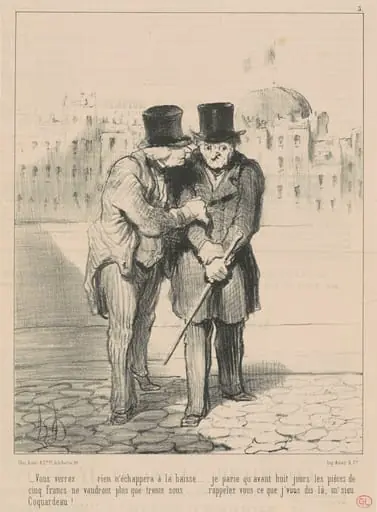 Vous verrez ... rien n'échappera a la baisse ...
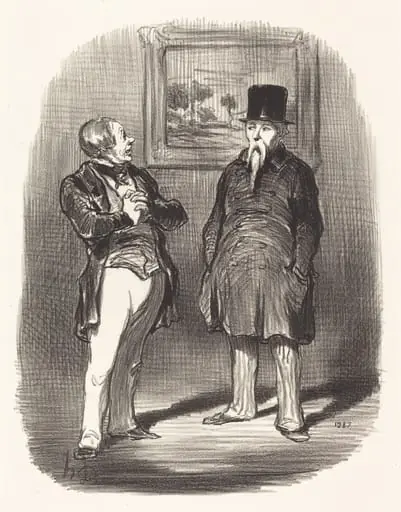 Tiens... je ne te reconnaissais pas...
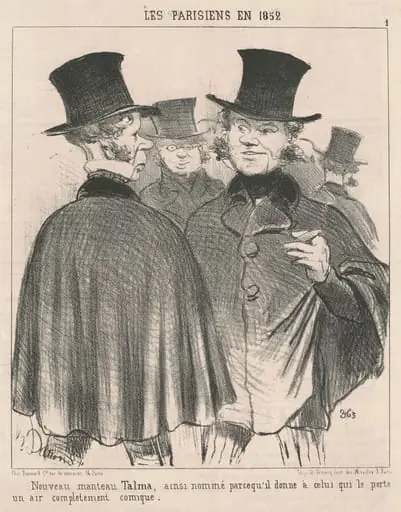 Nouveau manteau talma
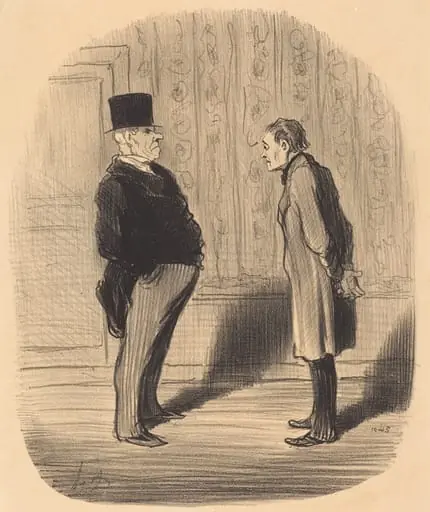 Eh! bien monsieur et mes trois termes...
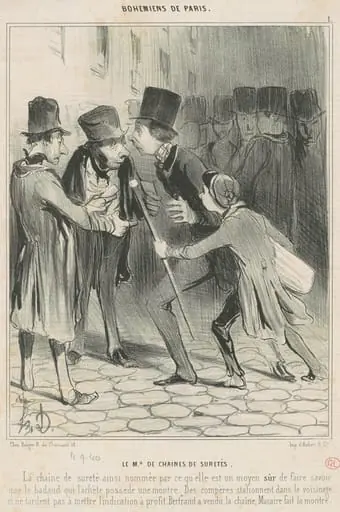 Le Md de Chaines de suretés
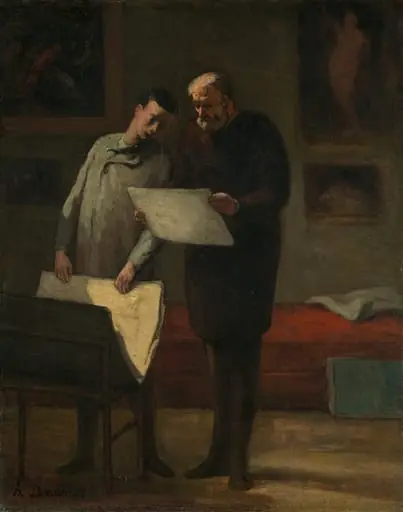
 Se posant en connaisseurs
 Un Voyage d'agrément a Paris