Artwork
Le Ventre Législatif (The Legislative Belly)
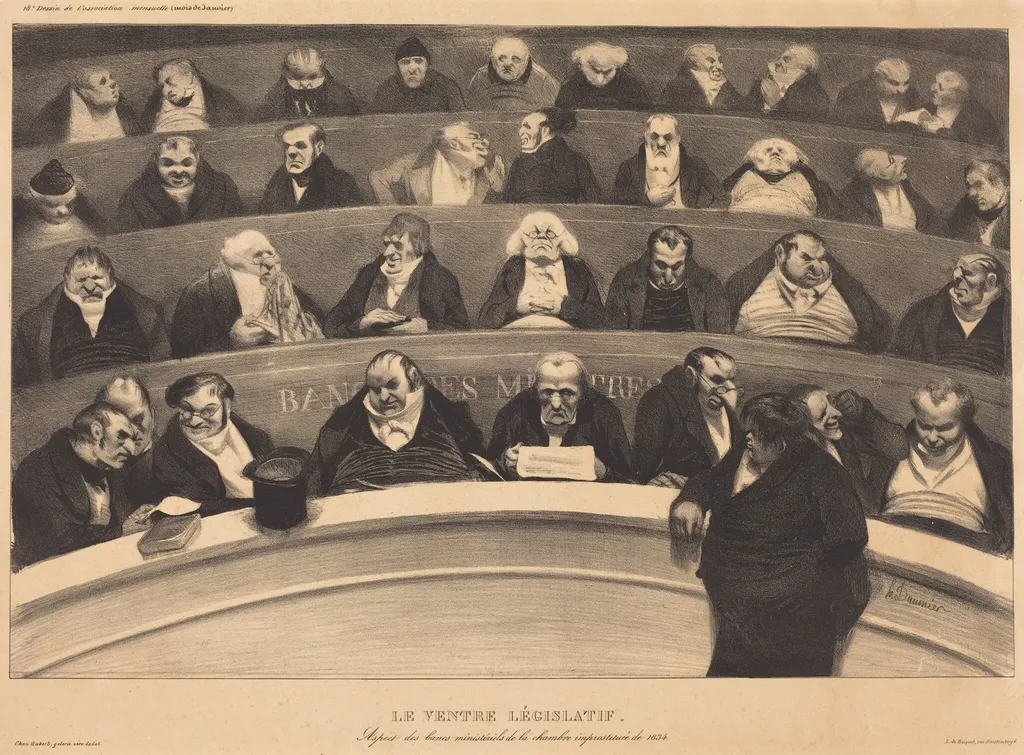
Le Ventre Législatif (The Legislative Belly) is an ink print by the Romanticist artist Honoré Daumier. It dates from 1834 and is held in the collection of the National Gallery of Art.
About this work
Overview
Created in 1834, *Le Ventre Législatif* is a lithograph by Honoré Daumier that critiques the French legislative body during the July Monarchy.
Created in 1834, *Le Ventre Législatif* is a lithograph by Honoré Daumier that critiques the French legislative body during the July Monarchy. As part of his broader series for satirical journals like *La Caricature*, Daumier used the medium of lithography to distribute sharp political commentary widely. The print captures the assembly in a dense, claustrophobic composition, transforming lawmakers into exaggerated, almost monstrous forms to underscore public disillusionment with governance.
Subject & Meaning
The scene portrays deputies seated in a semicircle, their bloated physiques and distorted features symbolizing moral and intellectual decay. The banner at the front, reading 'BANQUES MINISTÉRIELLES,' directly links the legislature to financial elites, suggesting collusion between government and banking interests. Daumier’s depiction avoids individual portraits, instead presenting the body as a single, grotesque organism—implying systemic corruption rather than isolated misconduct.
Technique & Style
Daumier employed lithography’s capacity for rapid, expressive line work to achieve a dense, ink-heavy aesthetic. Bold contours and deep shadows model the figures’ swollen forms, while minimal detail in clothing contrasts with the exaggerated facial features—prominent noses, jowls, and wild hair. The composition’s tight clustering and uneven spacing heighten the sense of disorder, reinforcing the satire through visual overload rather than narrative detail.
History & Provenance
The print was published in *La Caricature*, a journal known for its fierce opposition to King Louis-Philippe’s regime. Daumier’s caricatures frequently drew government ire; this work contributed to his 1832 imprisonment for sedition. Though *Le Ventre Législatif* was not confiscated, its circulation helped cement his reputation as a fearless chronicler of political hypocrisy. Original impressions survive in major European collections, primarily from private and institutional archives of 19th-century political satire.
Context
During the July Monarchy, press censorship was strict, but lithographic satire exploited loopholes by using allegory and caricature. Daumier’s work emerged amid rising public discontent over electoral fraud, economic inequality, and the monarchy’s alignment with bourgeois interests. His prints reached a broad audience, functioning as visual pamphlets that bypassed formal political discourse and spoke directly to urban readers weary of elite self-interest.
Legacy
Daumier’s approach influenced later generations of political illustrators and cartoonists, establishing a visual language for institutional critique. His use of distortion to reveal moral failure became a standard in satirical art. Though his contemporaries often dismissed him as a mere caricaturist, later scholars recognized his work as a profound commentary on power, bureaucracy, and the fragility of democratic representation in the face of entrenched privilege.
Artist & collection

Artist
Honoré-Victorin Daumier was a French painter, sculptor, and printmaker, whose many works offer commentary on the social and political life in France, from the Revolution of 1830 to the fall of the Second French Empire in 1870.









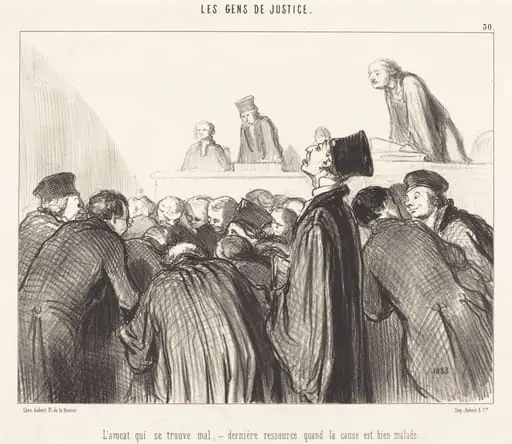 L'Avocat que se trouve mal
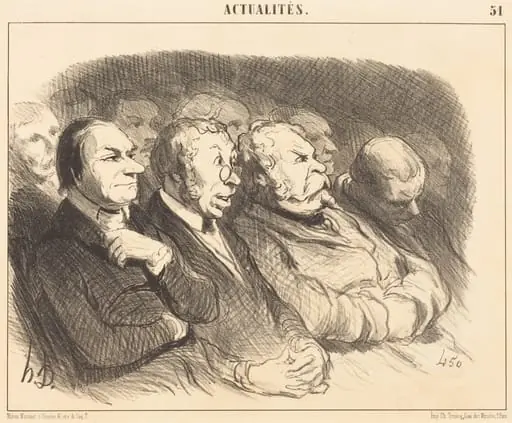 Physionomies de spectateurs de la Porte St.-Martin...
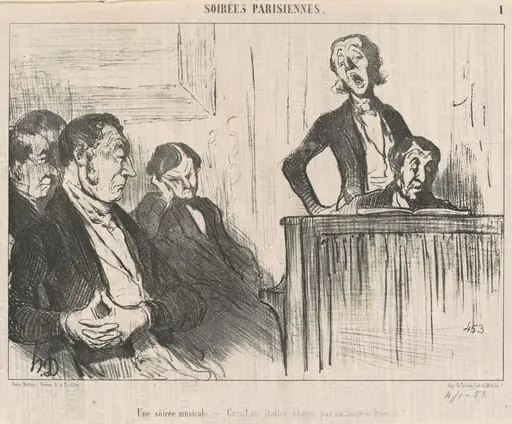 Une soirées musicale
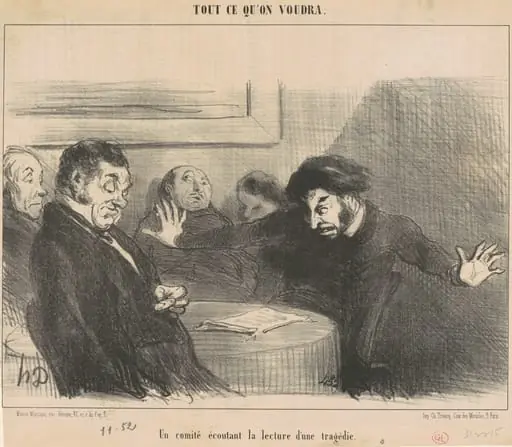 Un comité écoutant la lecture d'une tragédie
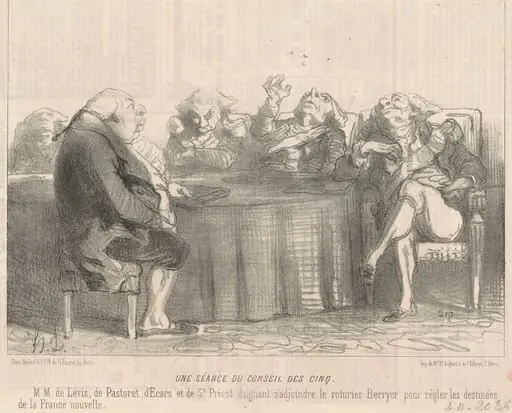 Une séance du conseil des cinq
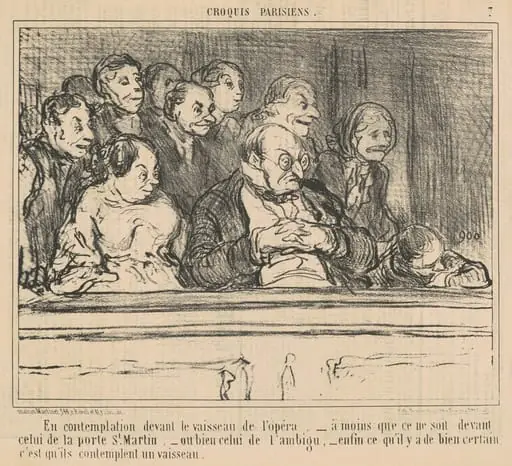 En contemplation devant le vaisseau de l'opera
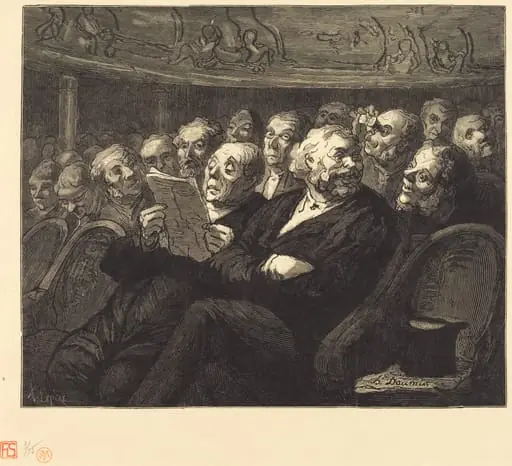 Les Fauteuils d'orchestre
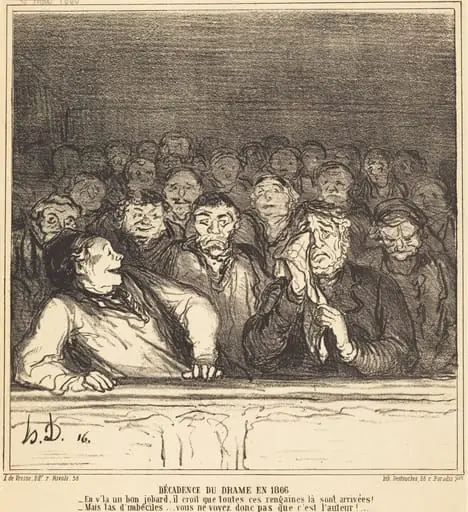 Décadence du drame en 1866
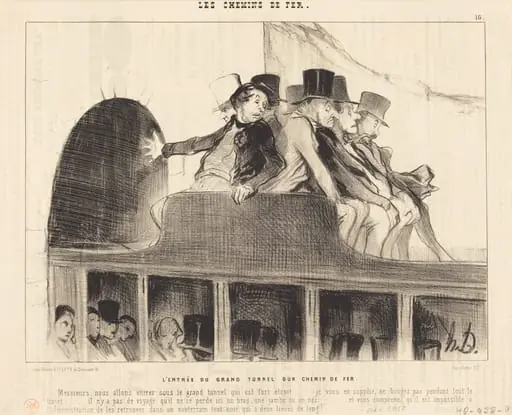 L'Entrée du Grand tunnel d'un chemin de fer