Artwork
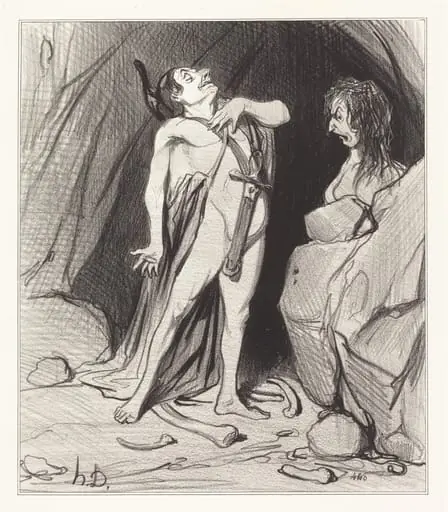
Oedipe
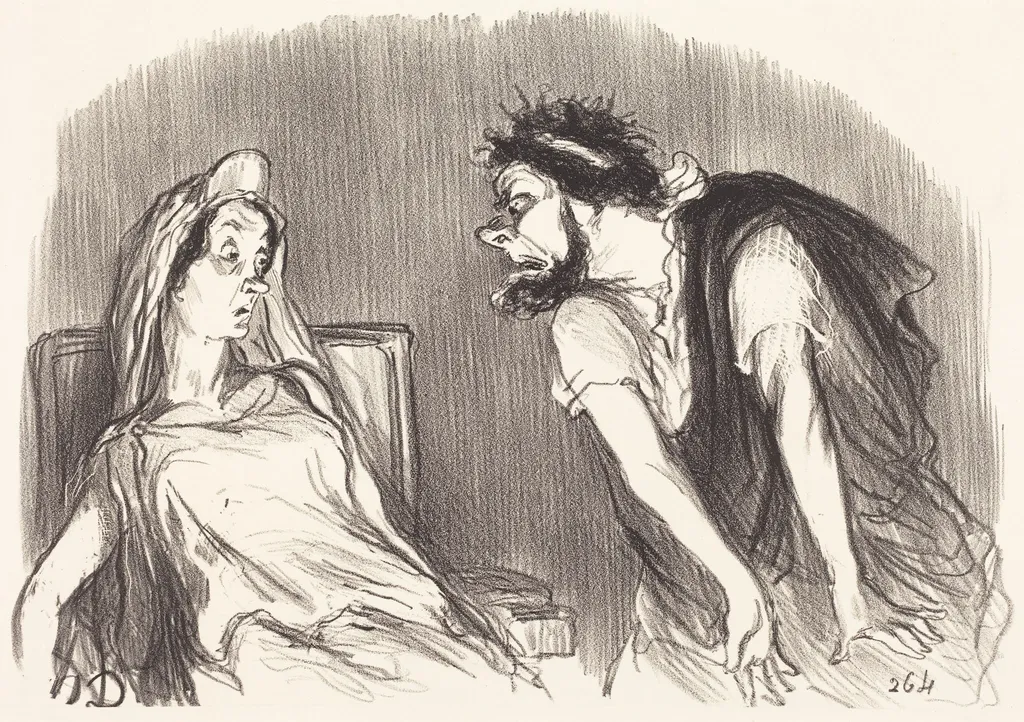
Oedipe is an ink print by the Impressionist artist Honoré Daumier. It dates from 1851 and is held in the collection of the National Gallery of Art.
About this work
Overview
Oedipe is a lithograph created by Honoré Daumier in 1851. It is a work by a prominent French artist known for satirical commentary on 19th-century French society.
Subject & Meaning
The print depicts a scene referencing the mythological figure Oedipus, a subject Daumier used to convey social commentary. Two hunched figures are shown in a dimly lit room, one slumped and covered, the other leaning over, gripping their shoulder.
Technique & Style
Daumier employed rough, sketchy lines and dark shading to convey emotion and create a sense of urgency. The use of quick, expressive strokes over precise detail was a notable aspect of his style, contributing to a raw, unpolished feel.
Context
As a caricaturist for publications like La Caricature and Le Charivari, Daumier critiqued the monarchy, aristocracy, and clergy from the July Revolution through the Second French Empire, often blending classical themes with contemporary commentary.
Own this work as a print
Artist & collection
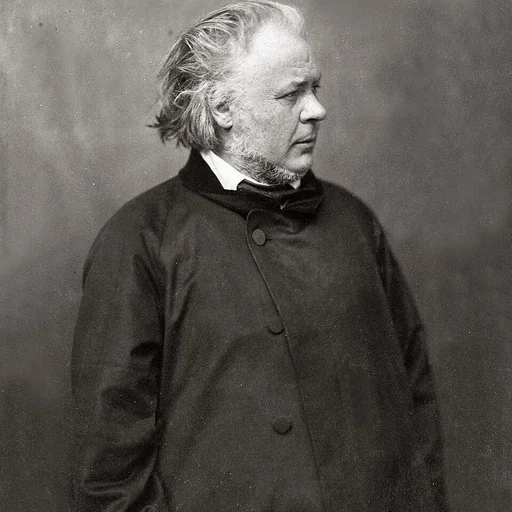
Artist
Honoré-Victorin Daumier was a French painter, sculptor, and printmaker, whose many works offer commentary on the social and political life in France, from the Revolution of 1830 to the fall of the Second French Empire in 1870.









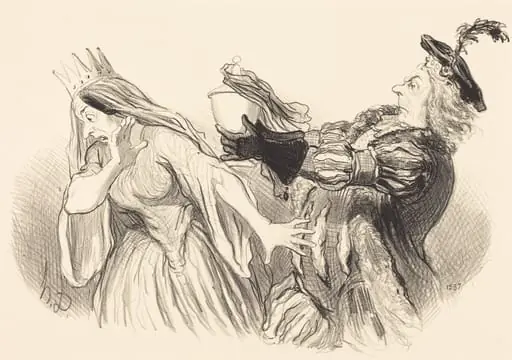 Hamlet
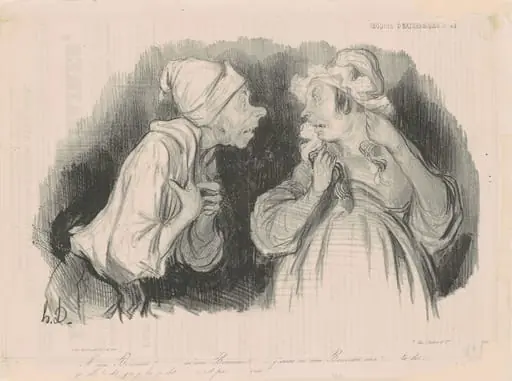 M'ame Bonneau... J'aime m'ame Bonneau moi!...
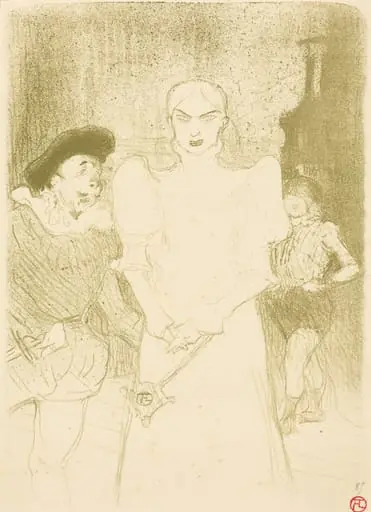 At the Opera: Mme. Caron in "Faust" (A l'opéra: Mme. Caron dans "Faust")
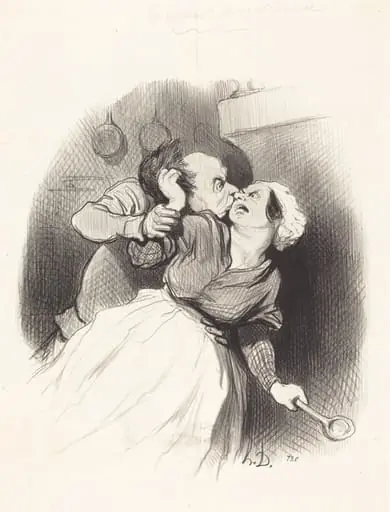 Un Retour de jeunesse
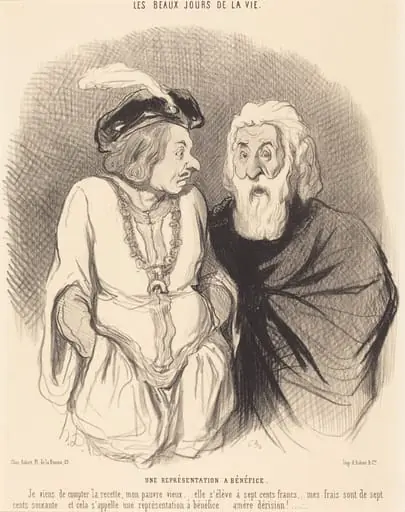 Une Représentation a bénéfice
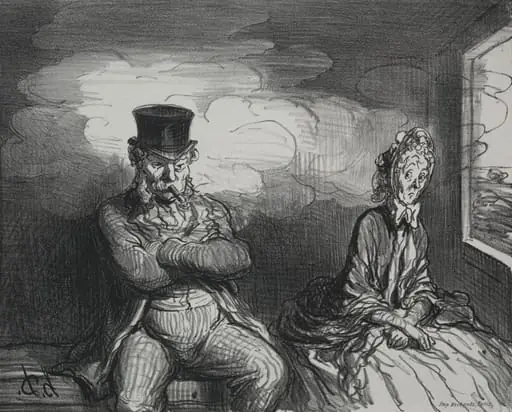 On the Train: A Pleasant Companion
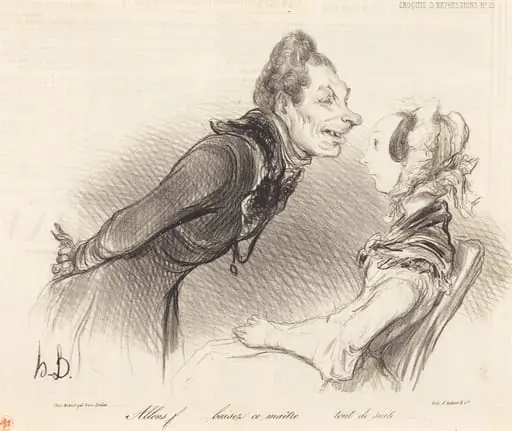 Allons... baisez ce maitre... tout de suite...
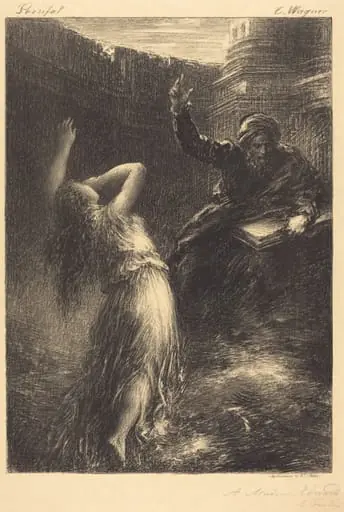 Evocation of Kundry (2nd plate)
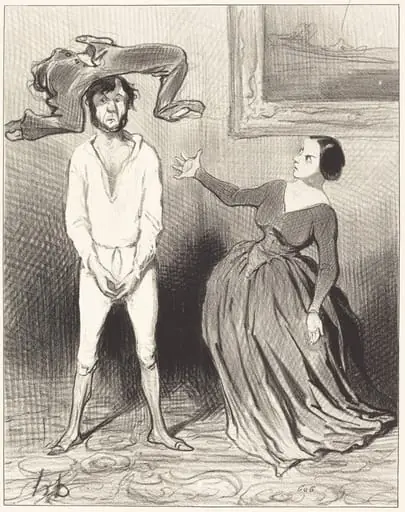 Une Femme comme moi... remettre un bouton?...
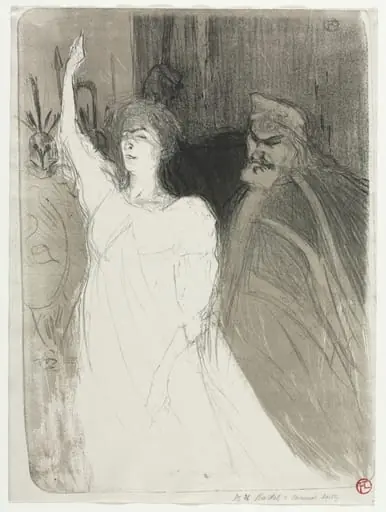 A Princely Idyl, Clara Ward
 Pour qui sont ces Serpents...
 Oedipe chez le Sphinx