Artwork
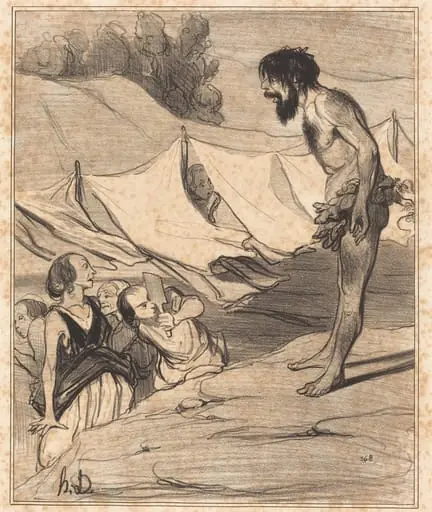
Présentation d'Ulysse a Nausica
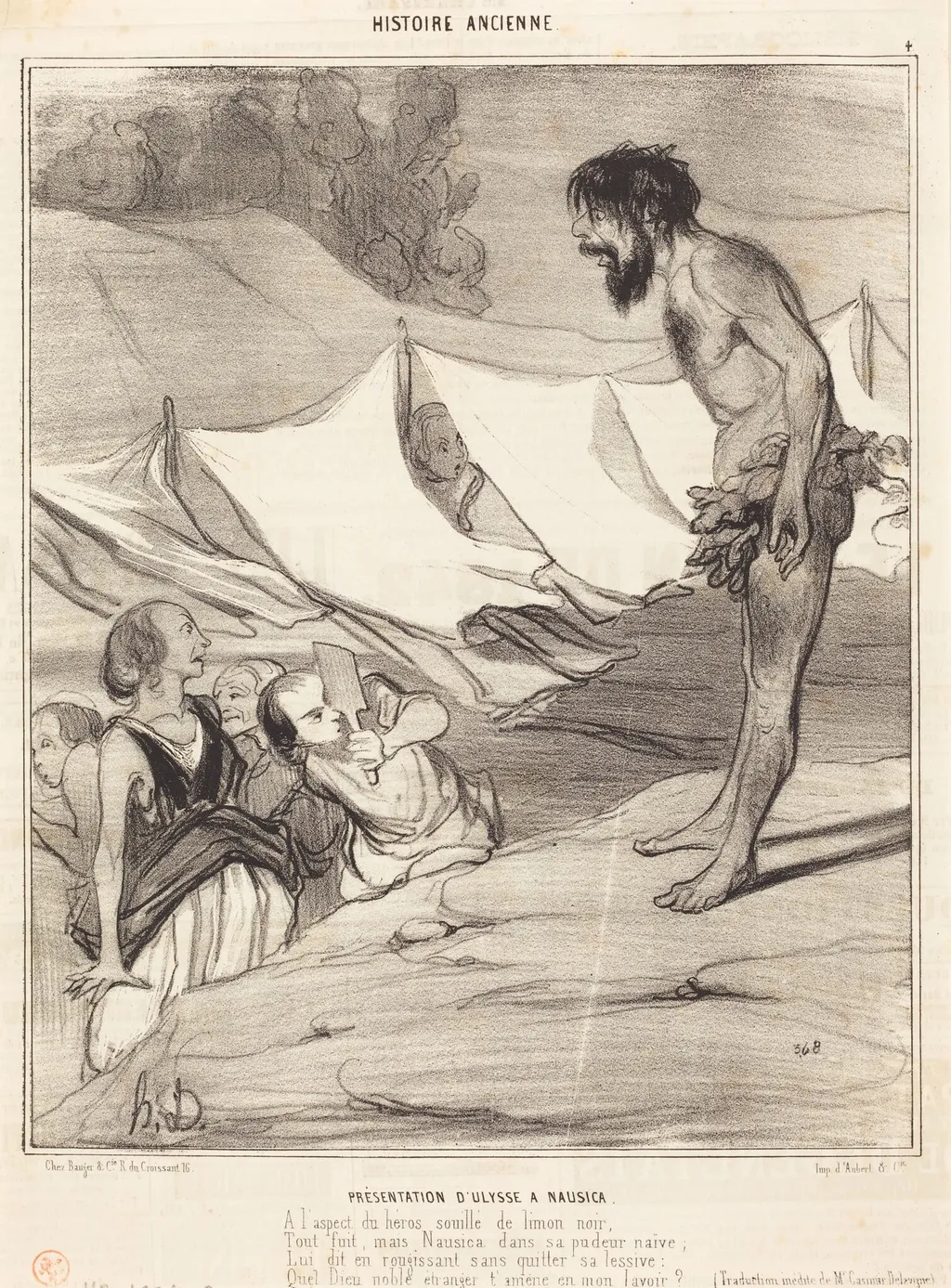
Présentation d'Ulysse a Nausica is an ink print by the Romanticist artist Honoré Daumier. It dates from 1842 and is held in the collection of the National Gallery of Art.
About this work
Overview
Created in 1842, this lithograph on newsprint by Honoré Daumier depicts a moment from Homer’s Odyssey, rendered in the spare, immediate style characteristic of his journalistic prints. Produced during a period of intense political satire in Paris, the work bridges classical narrative with the raw aesthetic of mass-produced imagery, reflecting Daumier’s dual role as artist and social commentator.
Subject & Meaning
The figure of Ulysses, bare-chested and cloaked in a loincloth, holds a bundle of leaves as he stands before a group of onlookers.
The figure of Ulysses, bare-chested and cloaked in a loincloth, holds a bundle of leaves as he stands before a group of onlookers. Their expressions suggest wary fascination, as if witnessing a stranger’s arrival after hardship. The scene evokes vulnerability and displacement, not heroism, aligning Ulysses with the marginalized rather than the exalted — a quiet subversion of mythic grandeur through everyday human tension.
Technique & Style
Daumier employed lithography on newsprint to achieve rapid, expressive results. The image relies on tonal gradations of gray, with deep shadows defining the figure’s form and a washed-out background suggesting distance. Loose, gestural lines convey texture and movement without detail, emphasizing emotional resonance over precision. The medium’s affordability and immediacy suited his intent: art as public discourse.
History & Provenance
Made during Daumier’s most active years contributing to satirical journals like *Le Charivari*, this print emerged from a climate of censorship and political unrest. Though less overtly political than his cartoons, it reflects his broader practice of using classical references to veil contemporary critique. Its survival on fragile newsprint underscores its original function as ephemeral commentary rather than fine art.
Context
In the 1840s, French artists increasingly turned to antiquity to explore themes of exile, identity, and authority under Louis-Philippe’s regime. Daumier’s reinterpretation of Ulysses diverges from academic idealism, instead portraying the hero as a weary outsider — a figure whose dignity lies in endurance, not glory. This aligns with Romanticism’s interest in inner life, but grounds it in the realism of social observation.
Legacy
Though rarely exhibited as a standalone work, this print exemplifies Daumier’s unique ability to fuse literary tradition with the visual language of the press. His use of classical myth to frame human vulnerability influenced later realist and modernist artists who sought to elevate ordinary experience. The work remains a quiet testament to the power of understated narrative in print.
Artist & collection
Artist
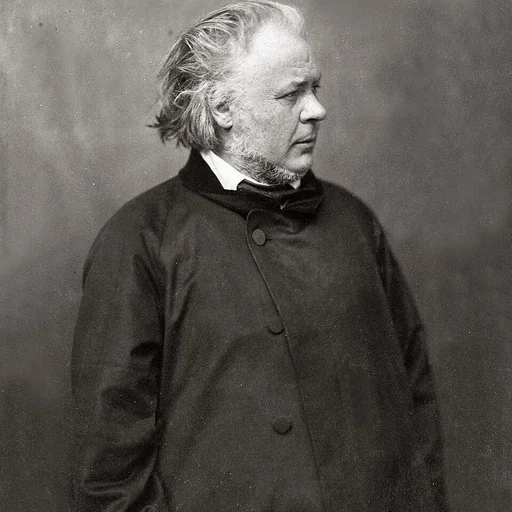
Honoré-Victorin Daumier was a French painter, sculptor, and printmaker, whose many works offer commentary on the social and political life in France, from the Revolution of 1830 to the fall of the Second French Empire in 1870.









 Introduction of Ulysses to Nausica
 Télémaque et Mentor
 Untitled
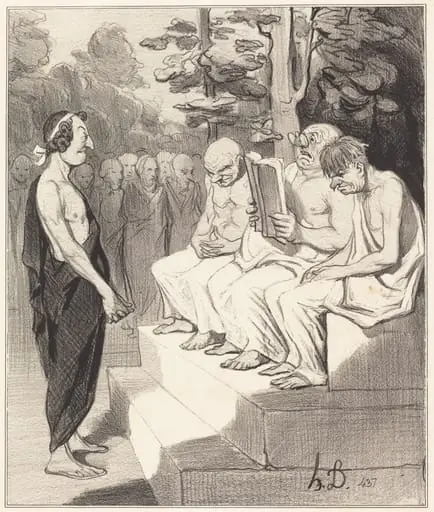 Télémaque interrogé par les sages
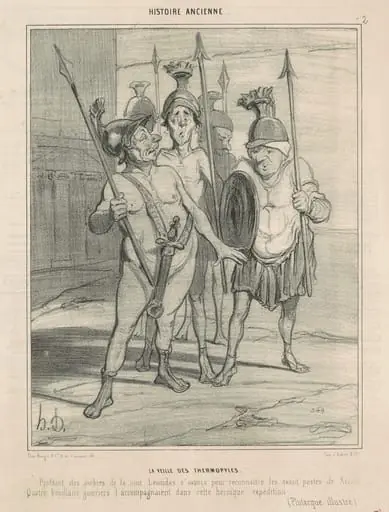 La veille des Thermopyles
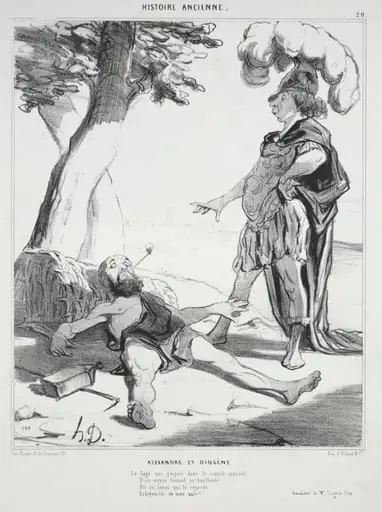 Alexander and Diogenes
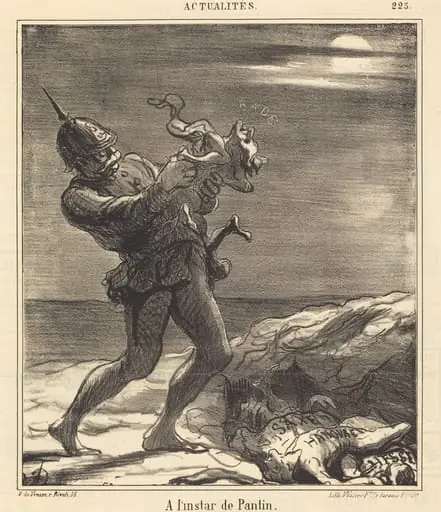 A l'instar de Pantin
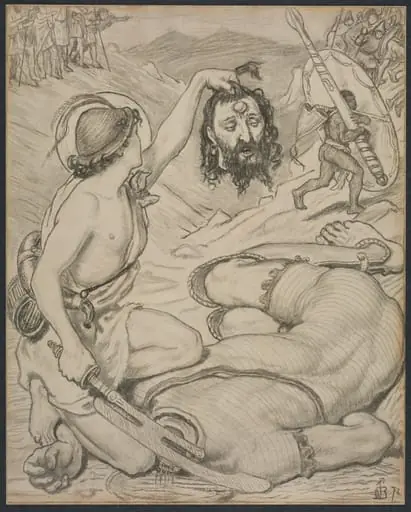 David and Goliath, Cartoon for Stained Glass Window at Jesus College, Cambridge
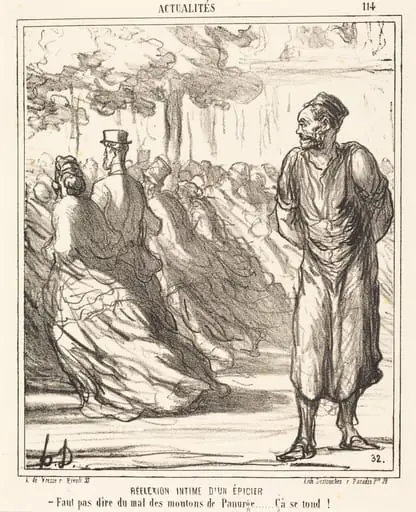 Réflection intime d'un épicier
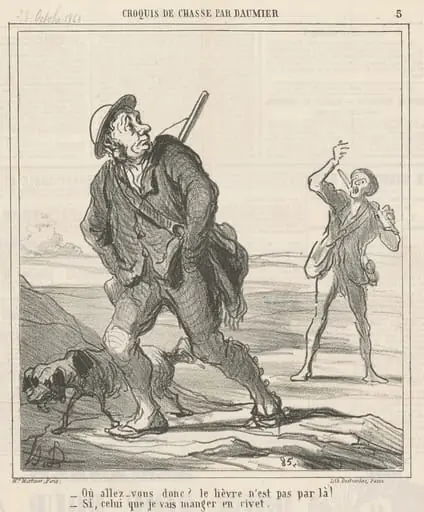 Ou allez-vous donc?
 The Finding of Moses
 Présentation d'Ulysse a Nausica