Artwork
Battlefield
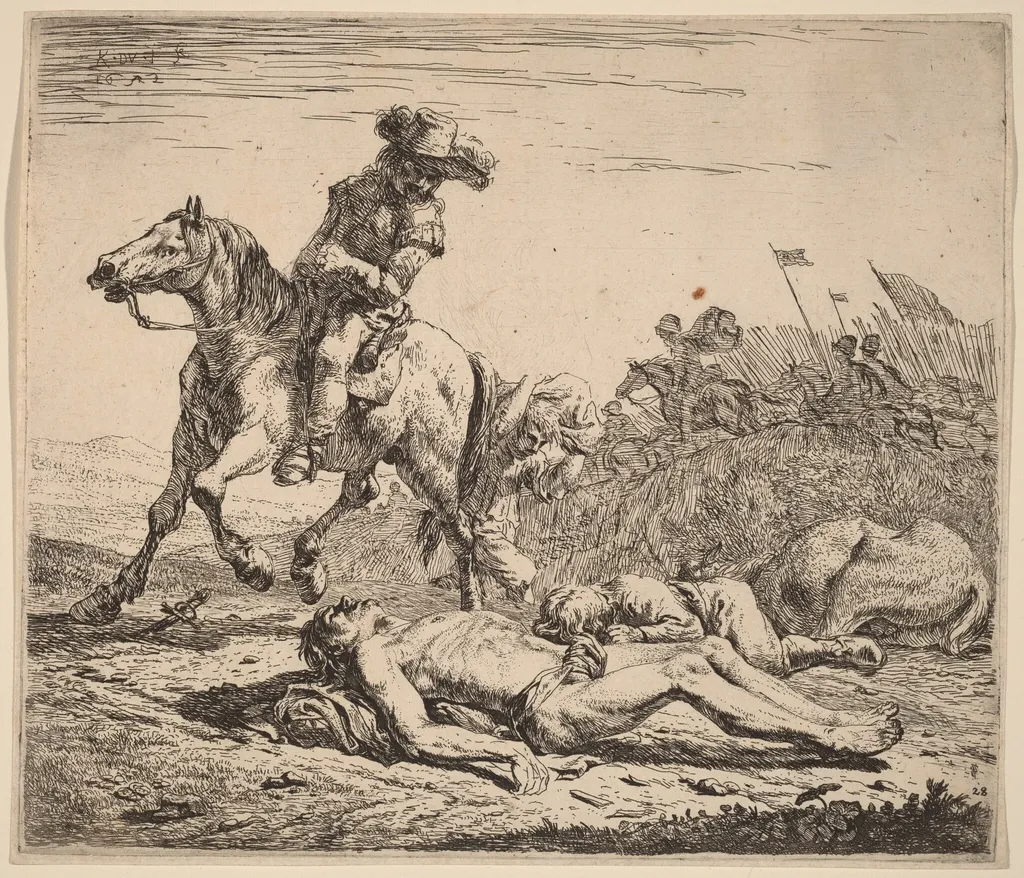
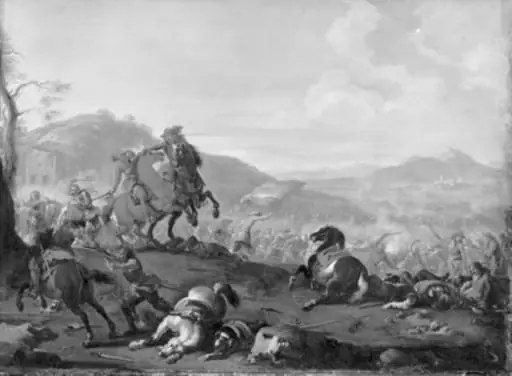
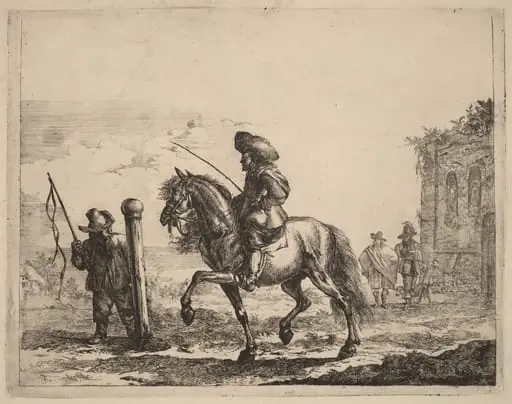
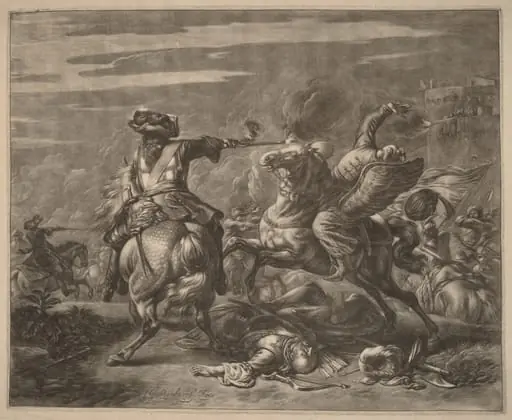
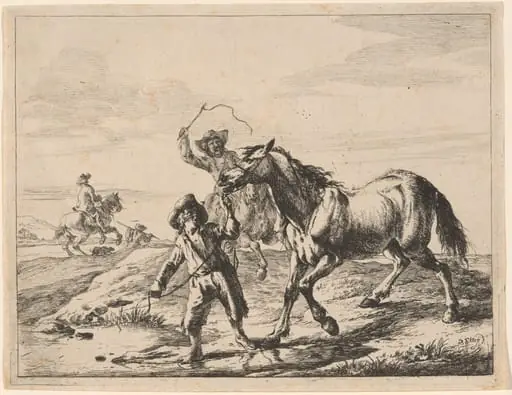
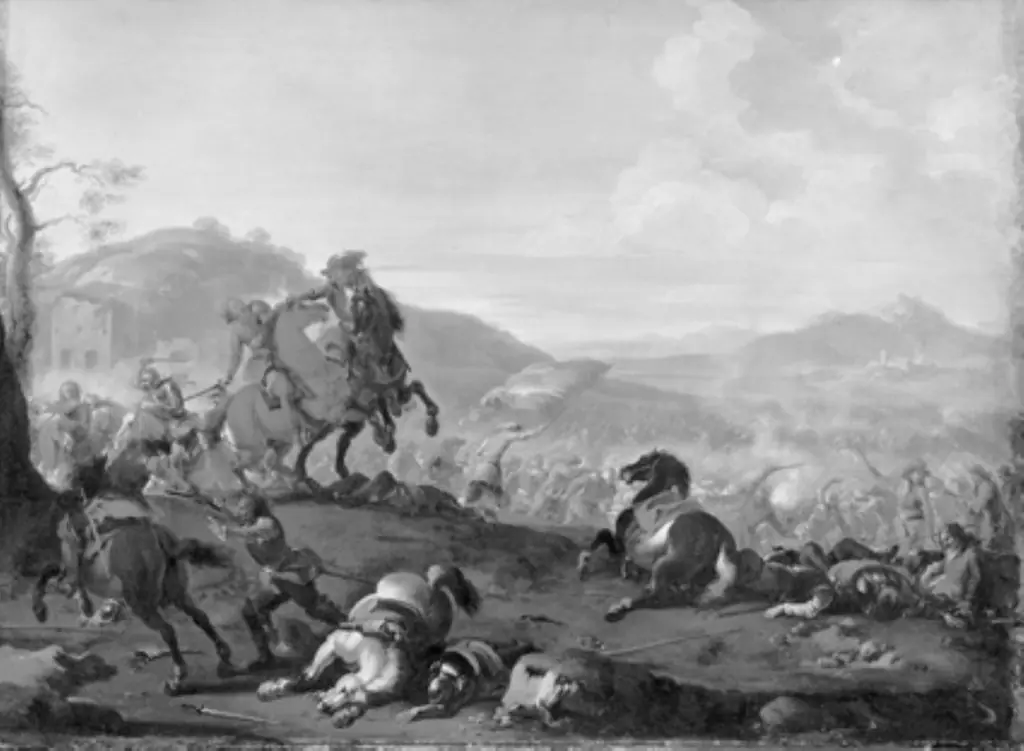
Battlefield is an ink print by the Baroque artist Karel Dujardin. It dates from 1652 and is held in the collection of the National Gallery of Art.
About this work
Overview
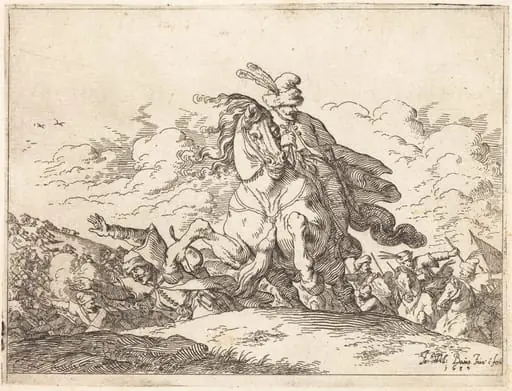
Battlefield is a 1652 print by Karel Dujardin, executed in etching and drypoint on laid paper. It captures a moment of violent disorder amid war, rendered with fine, incised lines that emphasize texture and movement. The composition is tightly packed, with figures layered in recession to suggest spatial depth without perspective clarity, reinforcing the disarray of combat.
Subject & Meaning
The scene centers on a fallen soldier in the foreground, contrasted with a rearing horse and rider surging toward the viewer.
The scene centers on a fallen soldier in the foreground, contrasted with a rearing horse and rider surging toward the viewer. Other figures, both mounted and on foot, are caught in motion—some armed, others collapsed. No clear side or cause is identified; the focus is on the physical chaos and human vulnerability, reflecting a broader 17th-century interest in the raw reality of war rather than its heroism.
Technique & Style
Dujardin employed etching for broad tonal areas and drypoint for dense, scratchy textures, particularly in the horse’s mane, armor, and shadowed ground. The muted palette of ink enhances the somber mood, while varying line weight and cross-hatching model form and depth. The absence of bright highlights or clean outlines intensifies the sense of confusion and atmospheric gloom.
History & Provenance
Created in the Netherlands during the later stages of the Eighty Years’ War, the print likely circulated among collectors interested in military subjects. Dujardin, known for Italianate landscapes and animal studies, produced few battle scenes; this work stands as an uncommon departure, possibly influenced by contemporary prints of war by artists like Rembrandt or Wouvermans.
Context
In mid-17th-century Europe, war imagery often served political or commemorative ends, but Dujardin’s approach is observational rather than propagandistic. His focus on fragmented action and individual suffering aligns with a growing artistic trend toward naturalism, away from idealized depictions of conflict. The print reflects a period when artists increasingly documented the human cost of prolonged warfare.
Legacy
Battlefield remains a rare example of Dujardin’s engagement with violent subject matter. While not widely reproduced or studied, it contributes to understanding how Dutch printmakers approached war not as spectacle but as chaotic, intimate experience. Its technical precision and emotional restraint influenced later generations of etchers seeking authenticity over dramatization.
Artist & collection