Artwork
Un Vainqueur de Steeple-chase
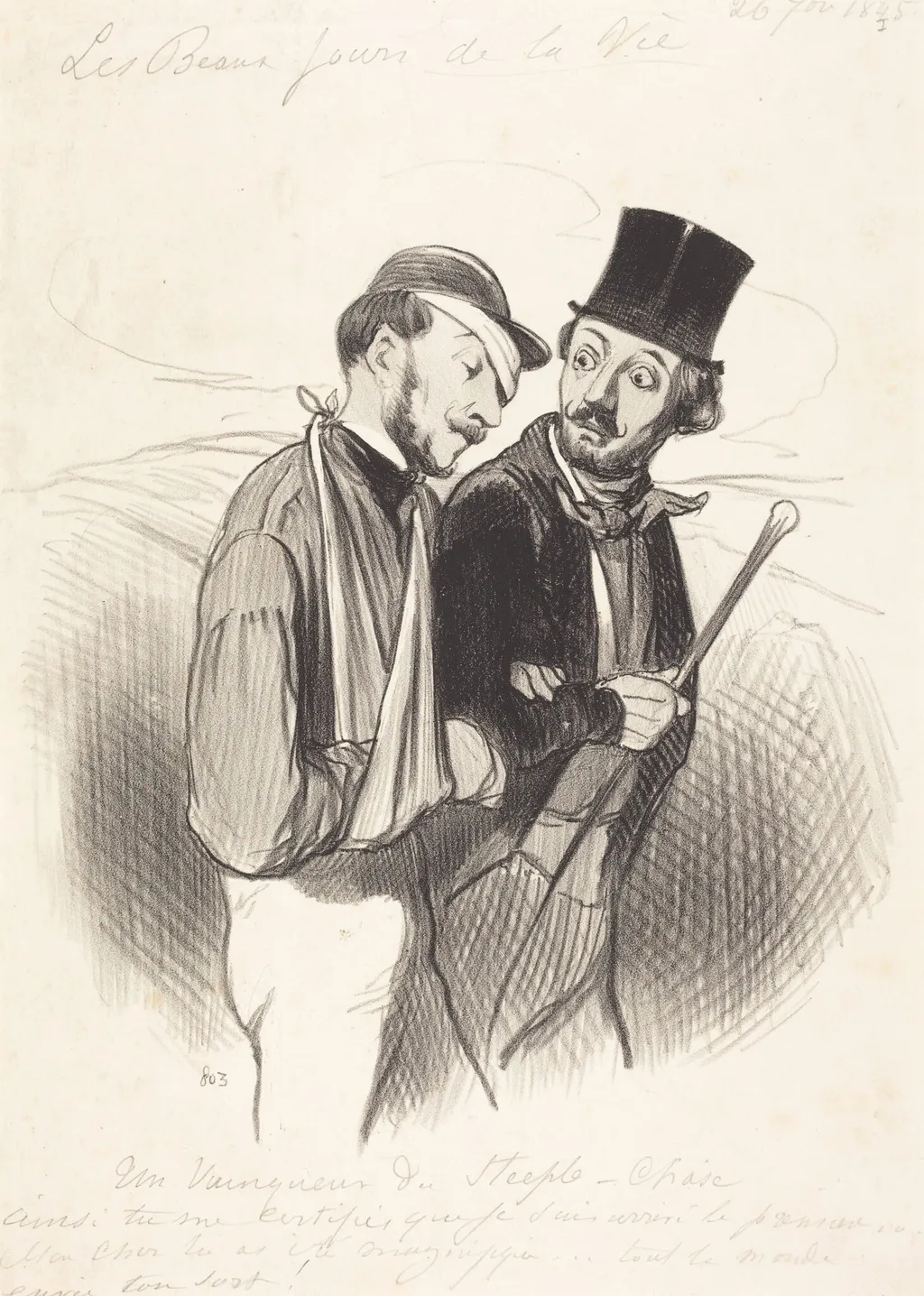
Un Vainqueur de Steeple-chase is an ink print by the Romanticist artist Honoré Daumier. It dates from 1845 and is held in the collection of the National Gallery of Art.
About this work
Overview
This 1845 lithograph by Honoré Daumier captures a moment of social tension between two men, rendered in the medium of print for mass circulation.
This 1845 lithograph by Honoré Daumier captures a moment of social tension between two men, rendered in the medium of print for mass circulation. Created during a period of political upheaval in France, the work emerged from Daumier’s involvement with satirical journals that challenged authority through visual wit. Though titled *Un Vainqueur de Steeple-chase*, the image does not depict a race but instead focuses on a quiet, charged encounter between two figures, subverting expectations to critique class and spectacle.
Subject & Meaning
The image portrays a man with a bandaged head, likely injured, conversing with a well-dressed gentleman in a top hat and cane. The contrast in their attire and demeanor suggests a commentary on social hierarchy and the cost of public spectacle. The bandaged figure may symbolize the exploited or injured commoner, while the polished man represents the detached elite. Daumier uses this quiet exchange to imply broader societal imbalances masked by the glamour of events like steeplechase racing.
Technique & Style
Daumier employed lithography to achieve expressive, fluid lines with stark tonal contrasts. The plain background isolates the figures, heightening psychological tension. His brushwork is economical yet precise, emphasizing texture in fabric and the rawness of the injured man’s bandage. The absence of detail in the setting directs focus to gesture and expression, characteristic of his approach to social observation—prioritizing human interaction over environmental context.
History & Provenance
Produced during Daumier’s tenure with the satirical press, this print likely appeared in *Le Charivari*, a journal known for its sharp political cartoons. Though the title references a sporting event, the image diverges from literal representation, reflecting Daumier’s tendency to use allegory. Its survival in institutional collections underscores its role as a document of 19th-century French visual culture, preserved for its critical insight rather than aesthetic novelty.
Context
In the 1840s, France’s July Monarchy and the lead-up to the 1848 Revolution saw rising tensions between the bourgeoisie and working class. Public spectacles like steeplechase racing became symbols of elite leisure, often funded by the labor of others. Daumier’s work responded to this disparity, using irony to expose the human cost behind fashionable pastimes. His prints circulated widely, making social critique accessible beyond elite art circles.
Legacy
Daumier’s lithographs, including this one, helped redefine printmaking as a vehicle for social commentary. His influence extended to later generations of realist and modernist artists who valued narrative clarity and moral observation over idealization. Though not widely celebrated in his lifetime, his work gained recognition in the 20th century as foundational to the tradition of political art in the modern era.
Artist & collection

Artist
Honoré-Victorin Daumier was a French painter, sculptor, and printmaker, whose many works offer commentary on the social and political life in France, from the Revolution of 1830 to the fall of the Second French Empire in 1870.









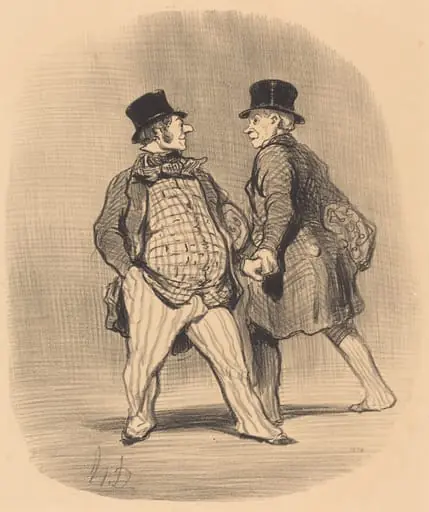 Confrère, méfiez-vous du petit baron...
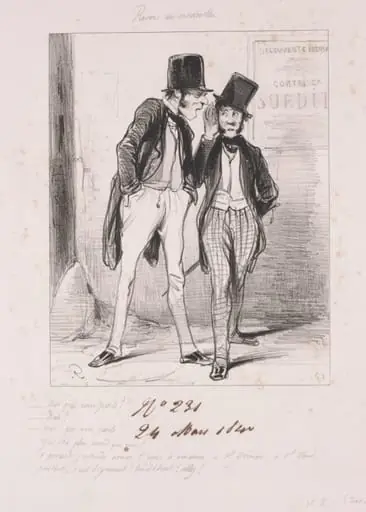 Revers des médailles: Moi qui vous parle
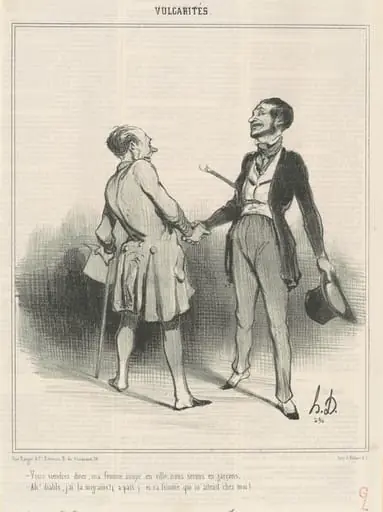 Vous viendrez diner, ma femme soupe en ville ...
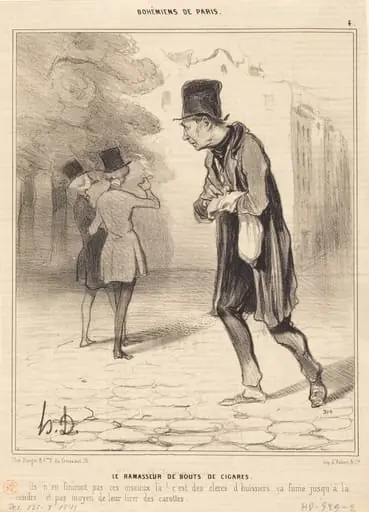 Le Ramasseur de bouts de cigares
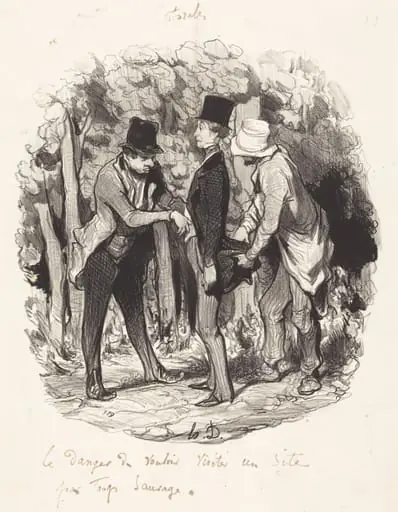 Le Danger de... visiter un site par trop sauvage
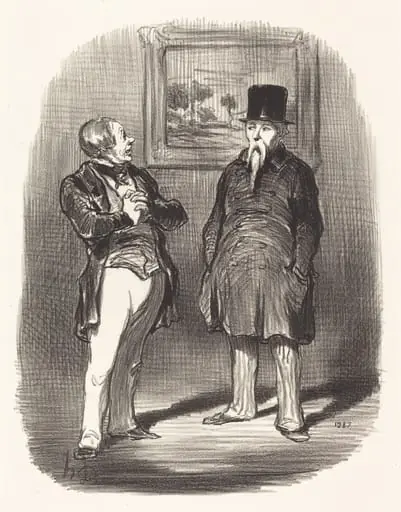 Tiens... je ne te reconnaissais pas...
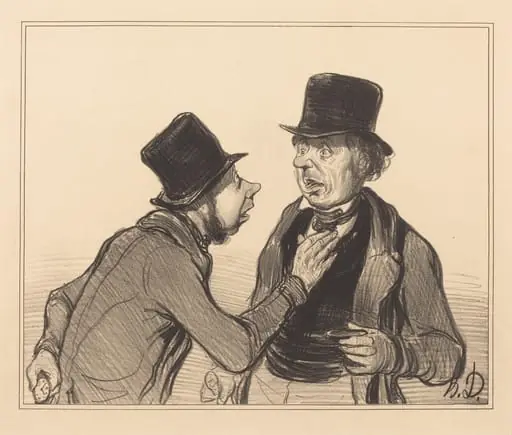 Oui Monsieur vous n'êtes pas de Paris...
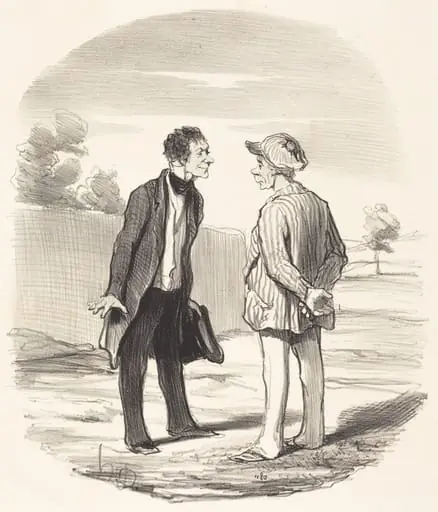 Oui, monsieur Gimblet, l'ordre ne sera... rétabli...
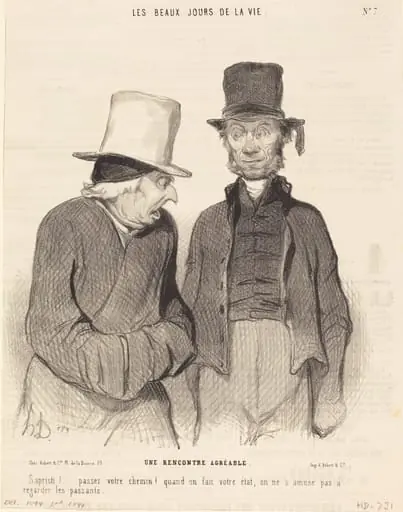 Une Rencontre agréable
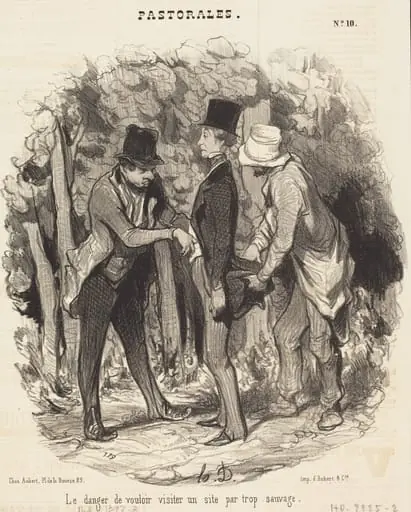 Le Danger de... visiter un site par trop sauvage
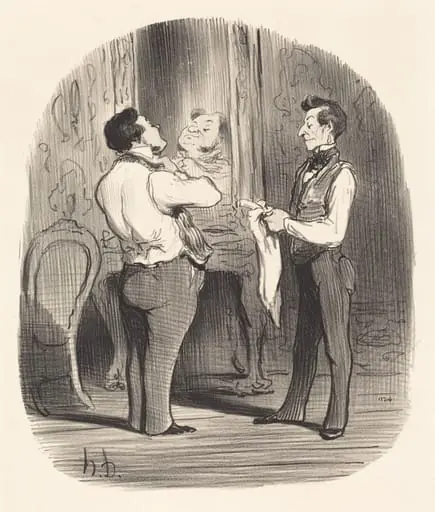 Le Jour ou il s'agit de faire une conquête
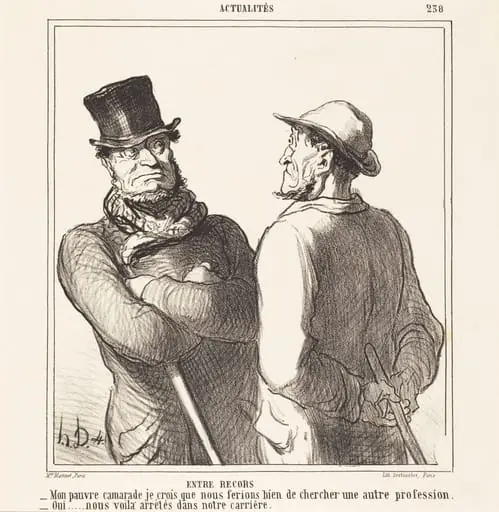 Entre recors