Artwork
Ruins of the Eastern Portico of the Temple of Baalbec
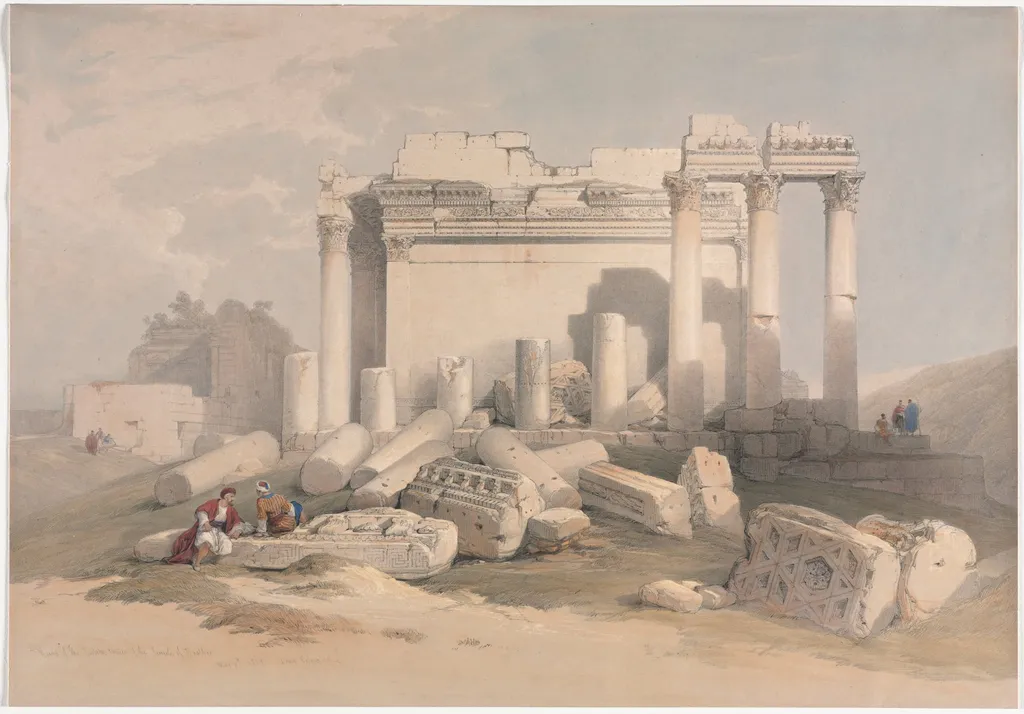
Ruins of the Eastern Portico of the Temple of Baalbec is a print by the Romanticist artist David Roberts. It dates from 1839 and is held in the collection of the Cleveland Museum of Art.
About this work
This 1839 painting shows ancient stone columns standing crooked in a bright desert. Dust hangs in the air. Light hits the ruins. Shadows pool between the blocks.
Roberts traveled to Lebanon to sketch these ruins. He painted what he saw, not what people expected. The cracks in the stone tell a story of time.
Look next at David Roberts (Scottish, 1796–1864).
Overview
Unlike many contemporaries who idealized ancient sites, Roberts prioritized observational accuracy, documenting decay and weathering with unembellished detail.
David Roberts, a Scottish artist known for his precise renderings of architectural ruins, produced this lithograph in 1839 following his journey through the Levant. The work captures the Eastern Portico of the Temple of Baalbec in modern-day Lebanon, rendered from on-site sketches made during his travels. Unlike many contemporaries who idealized ancient sites, Roberts prioritized observational accuracy, documenting decay and weathering with unembellished detail.
Subject & Meaning
The image presents the temple’s remaining columns—tilted, fractured, and weathered—rising from a sun-baked desert floor. There is no human presence, no restoration, only the quiet persistence of stone against time. The scene conveys neither grandeur nor myth, but the tangible passage of centuries: erosion, collapse, and silence. The ruins stand as witnesses, not symbols, reflecting Roberts’s interest in archaeology over romanticism.
Technique & Style
Roberts employed lithography to translate his field sketches into a reproducible format, preserving the tonal subtleties of light and shadow observed on site. The composition emphasizes verticality and spatial depth, with dust-laden air and sharp contrasts between sunlit stone and deep recesses. His line work is restrained, avoiding theatricality; texture emerges through careful hatching, mirroring the grain of aged limestone and the irregularity of collapsed masonry.
History & Provenance
Created after Roberts’s 1838–39 expedition through Egypt, Sinai, and the Levant, the print was part of a series published in 1842–49. These lithographs were among the first detailed visual records of Baalbec’s ruins for European audiences. The original sketches, now held in Scottish collections, were made under challenging conditions, often in remote locations with limited supplies, underscoring the work’s documentary rigor.
Context
In the early 19th century, European interest in the ancient Near East surged alongside colonial exploration and archaeological curiosity. Roberts’s work emerged amid a wave of Orientalist imagery, yet distinguished itself by rejecting fantasy. His depictions aligned with emerging scholarly efforts to record heritage sites before further degradation, contributing to early archaeological documentation rather than exoticized spectacle.
Legacy
Roberts’s prints became reference points for later scholars and travelers, influencing how ancient sites were visually understood in the West. His commitment to fidelity over embellishment set a precedent for topographical accuracy in art. Though associated with Orientalism, his approach to ruins—honest, unadorned, and attentive to decay—resonates with modern conservation ethics and the value of recording impermanence.
Artist & collection
Artist
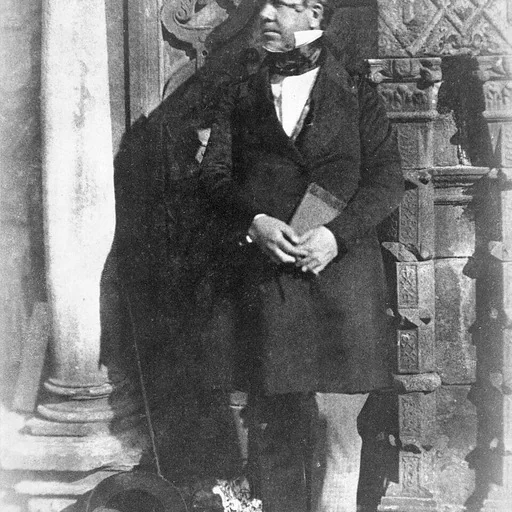
David Roberts (24 October 1796 – 25 November 1864) was a Scottish painter. He is especially known for The Holy Land, Syria, Idumea, Arabia, Egypt, and Nubia, a prolific series of detailed lithograph prints of Egypt and…

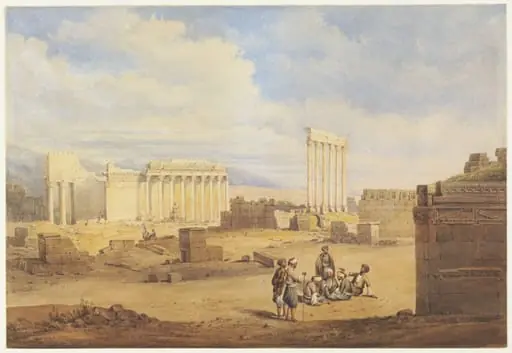 Baalbek
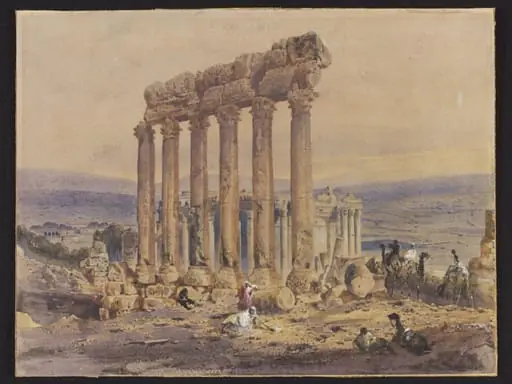 The Temple of Jupiter, Baalbek
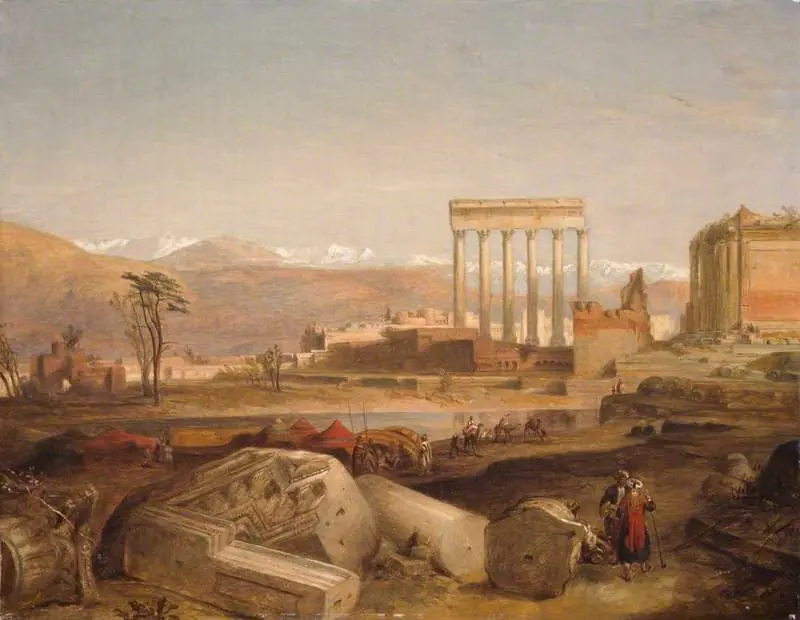 Baalbec
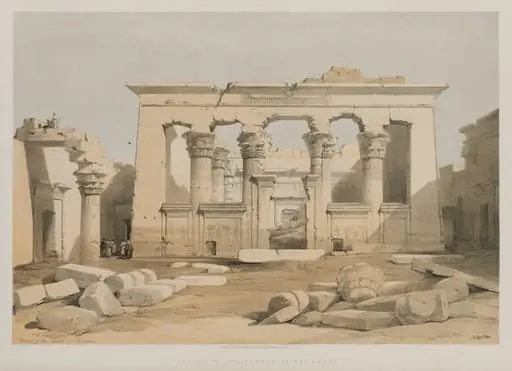 Egypt and Nubia, Volume I: Portico of the Temple of Kalabshe
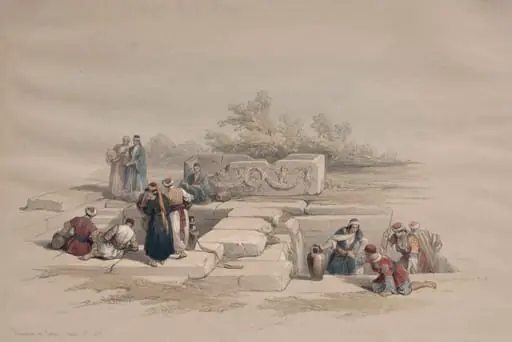 Fountain at Cana
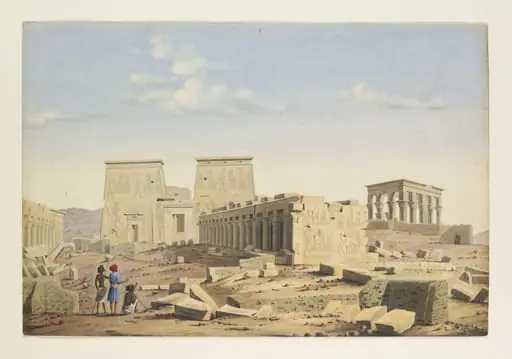 Ile de Philoé
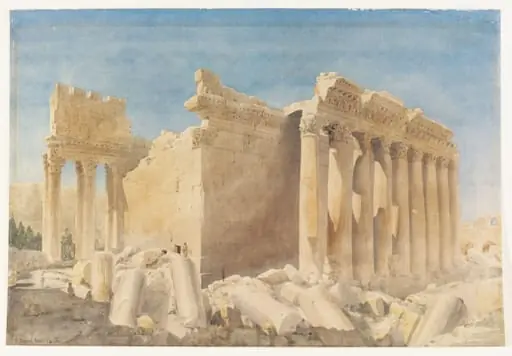 Temple of Bacchus, Baalbek
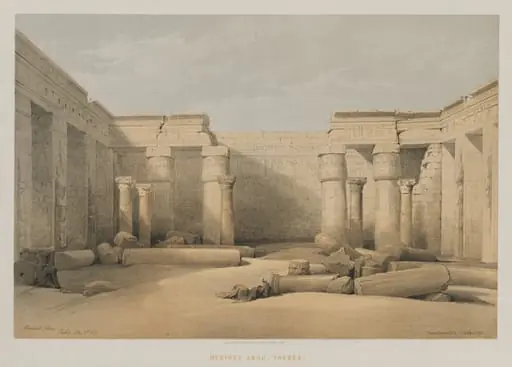 Egypt and Nubia, Volume II: Medinet Abou, Thebes
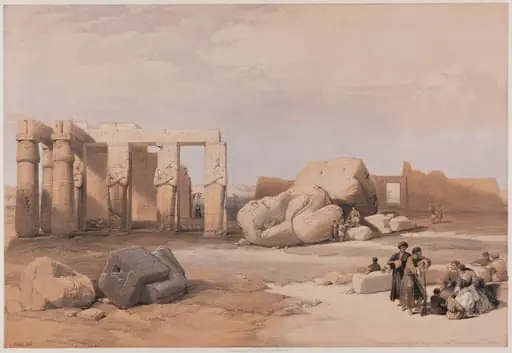 Egypt and Nubia, Volume II: Fragments of the Great Colossi at the Memnonium, Thebes
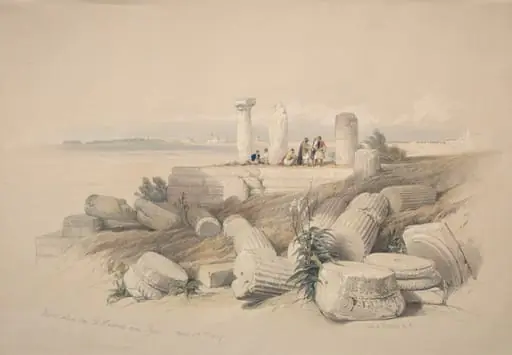 Ruins Called Om El Hamed near Tyre