Artwork
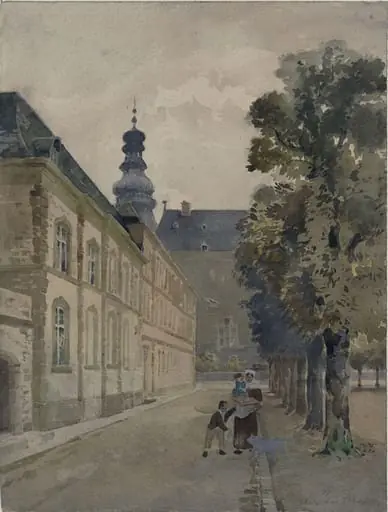
Barracks at St. Servan
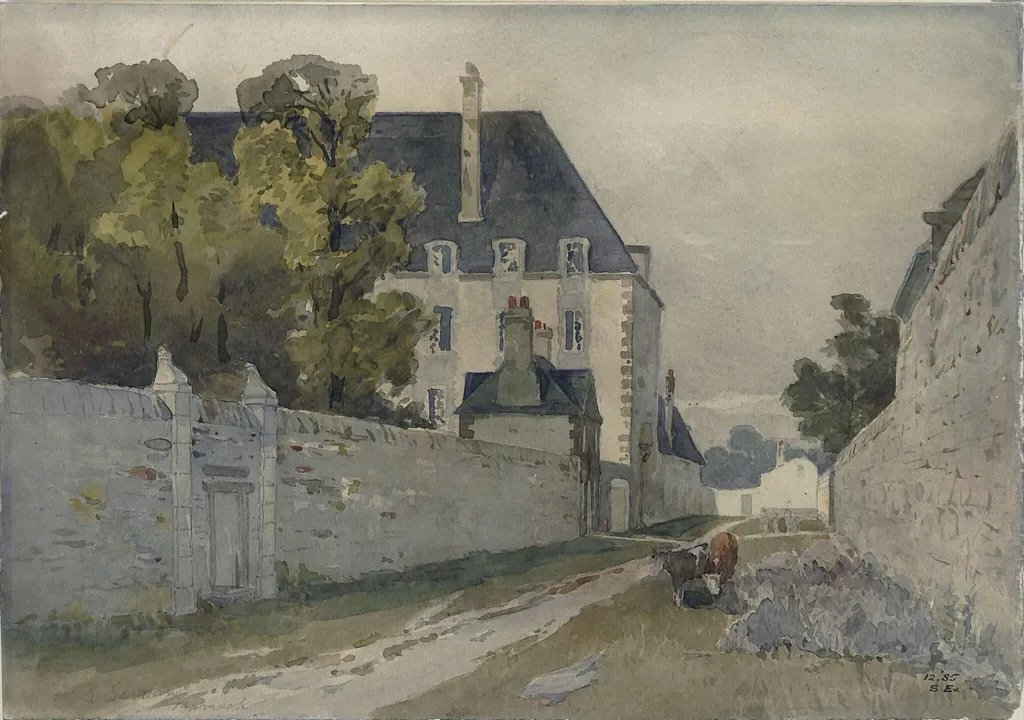
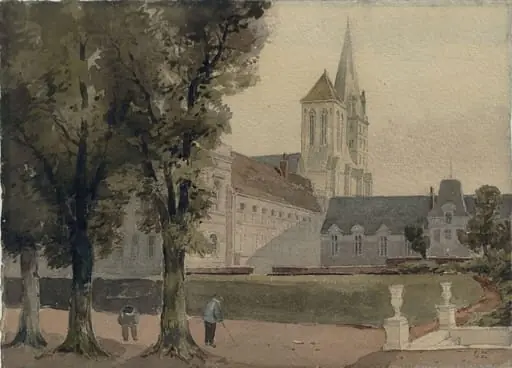
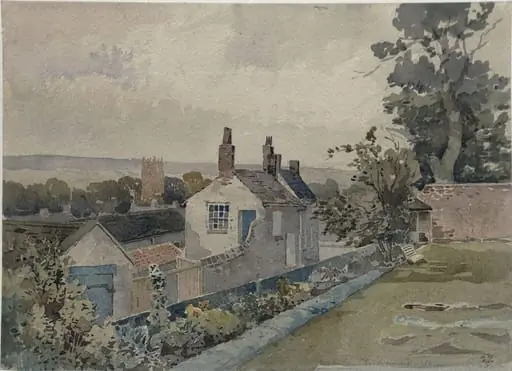
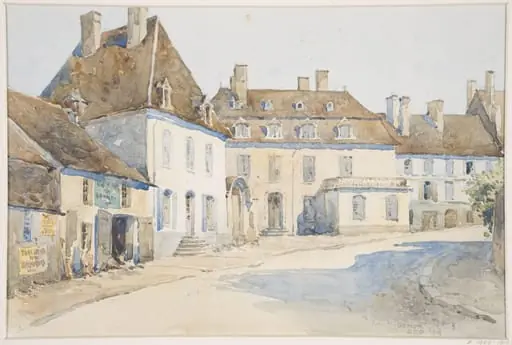
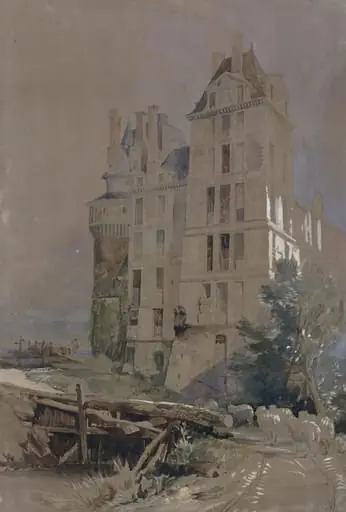
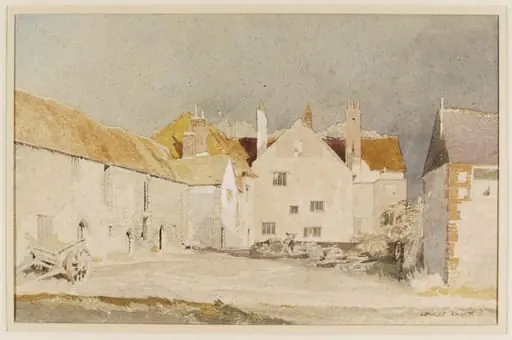
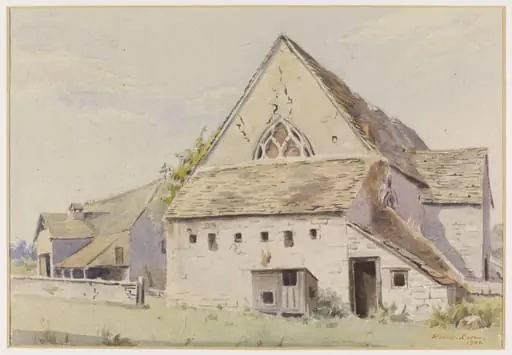
Barracks at St. Servan is a watercolor work on paper by the British Romanticist artist Edward Robinson. It dates from 1840 and is held in the collection of the Victoria and Albert Museum.
About this work
Overview
Edward Robinson’s 1840 watercolour titled *Barracks at St. Servan* depicts a modestly scaled architectural scene. A white, two‑storey structure with a dark tiled roof and prominent chimneys dominates the composition, set against a backdrop of trees and a low stone wall. A solitary figure stands near the wall, lending a human reference point to the otherwise quiet built environment.
Subject & Meaning
The work records a military barracks situated in the coastal town of Saint‑Servan, illustrating the everyday presence of armed forces within a tranquil landscape. By placing a lone individual in the foreground, Robinson hints at the routine life of soldiers or civilians, while the surrounding foliage softens the institutional character of the building.
Technique & Style
Executed in transparent watercolour, the painting relies on muted tones and delicate washes that convey atmospheric light. Soft brushwork defines the building’s mass and the surrounding trees, while fine linear strokes outline the stone wall and the figure. The overall effect is one of calm observation, aligning with the gentle realism typical of early‑mid‑19th‑century British watercolourists.
History & Provenance
Created in 1840, the piece entered the collection of the Victoria and Albert Museum, where it remains on display. The museum acquired the work as part of its broader effort to document British architectural and landscape painting of the period, though specific acquisition details are not publicly recorded.
Context
Robinson worked during a period when watercolour was gaining status as a respectable medium for topographical and genre subjects. The depiction of a functional military building reflects contemporary interest in documenting civic infrastructure, while the serene treatment aligns with the Romantic sensibility that valued the harmonious coexistence of human structures and nature.
Artist & collection
Artist
This artist left dozens of watercolours captured on trips around Britain and France in the 19th century.