Artwork
The Gendarmerie at Bourges
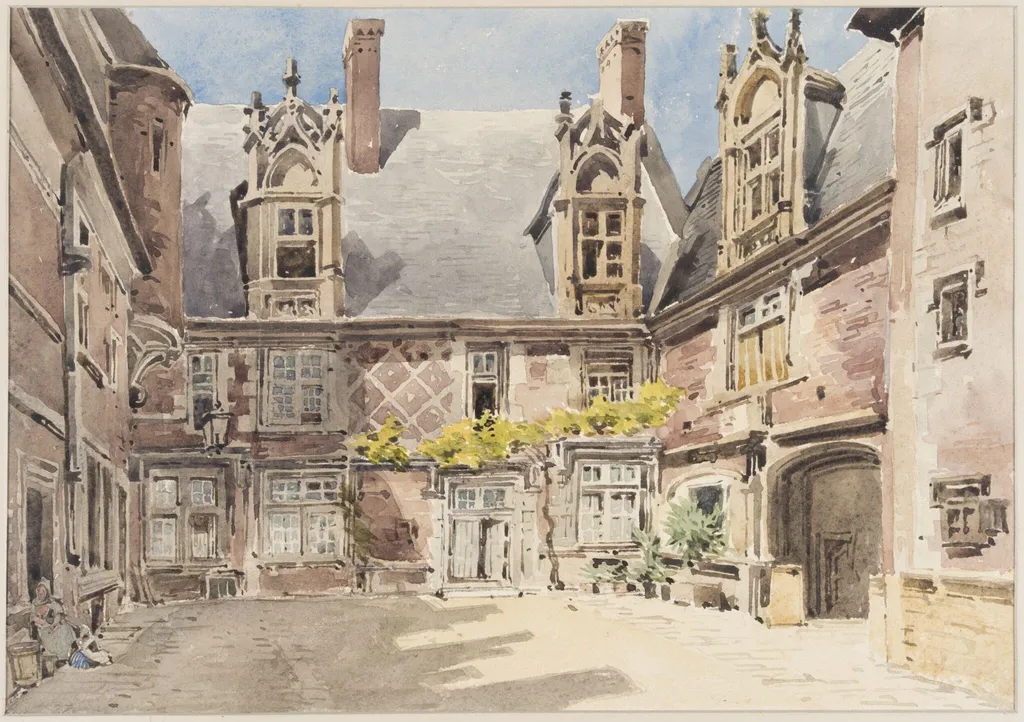
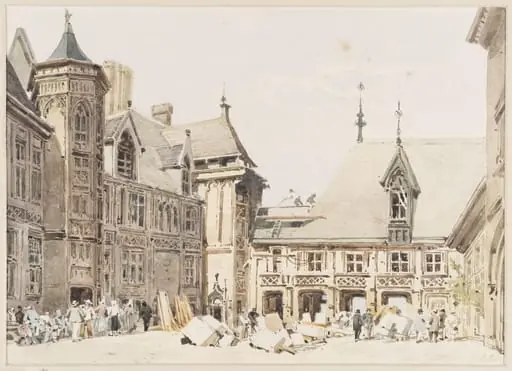
The Gendarmerie at Bourges is a watercolor work on paper by the Romanticist artist Charles Claude Pyne. It dates from 1822 and is held in the collection of the Victoria and Albert Museum.
About this work
Overview
Charles Claude Pyne’s watercolor portrays a modest courtyard in Bourges, framed by stone and brick structures. The composition centers on a quiet, paved space where a woman sits near an entrance, while surrounding buildings display a mixture of plain and ornamented façades with white‑framed windows.
Subject & Meaning
The scene captures an everyday moment of municipal life, emphasizing the tranquil atmosphere of a provincial gendarmerie setting. The seated figure, placed within the courtyard, suggests a pause in routine duties, inviting contemplation of the ordinary rhythms of 19th‑century French civic spaces.
Technique & Style
Pyne employs delicate watercolor washes to render light and shadow, creating a soft, atmospheric effect. The artist balances flat colour areas with subtle tonal gradations, highlighting the textured brickwork, cobblestone ground, and the steep‑roofed silhouettes that jut outward, characteristic of a Romantic interest in modest, lyrical subjects.
History & Provenance
The work, executed in the mid‑1800s, remains attributed to Pyne, a French watercolorist known for topographical studies. Its provenance traces through private collections before entering a regional museum’s holdings, where it serves as a visual record of Bourges’ urban architecture of the period.
Context
During the Romantic era, artists often turned to quotidian scenes, infusing them with a gentle, nostalgic tone. Pyne’s depiction aligns with this trend, documenting a civic interior while employing a dream‑like softness that contrasts with the more dramatic landscapes typical of the movement.
Own this work as a print
Artist & collection

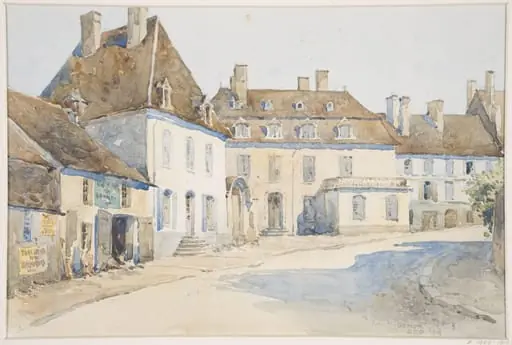 Semur, France
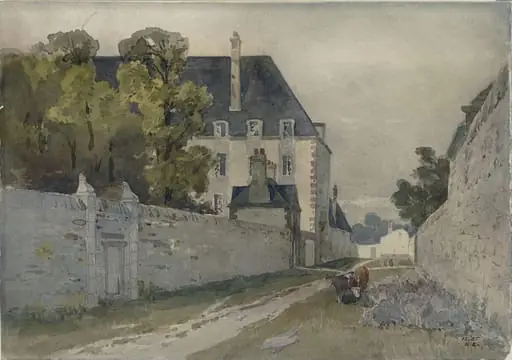 Barracks at St. Servan
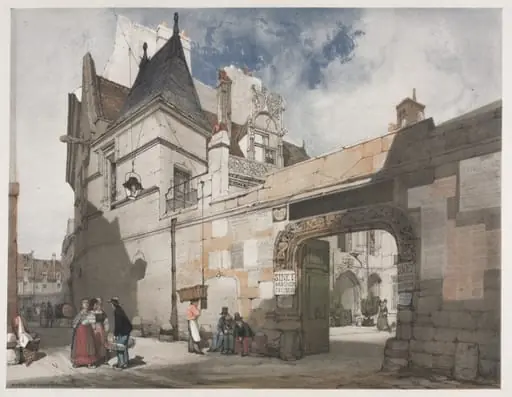 Picturesque Architecture in Paris, Ghent, Antwerp, Rouen: Hôtel de Cluny, Paris
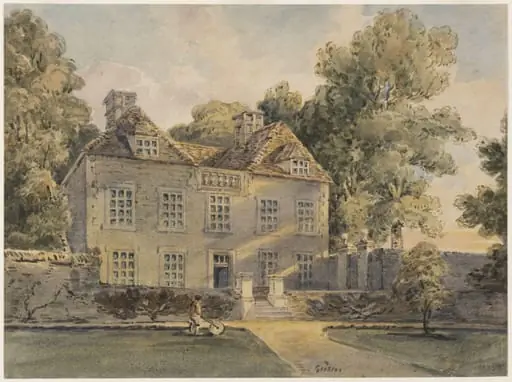 Dr. Monro's house, Winster
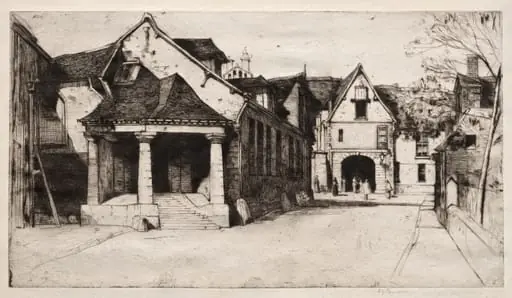 Old Museum, Beauvais
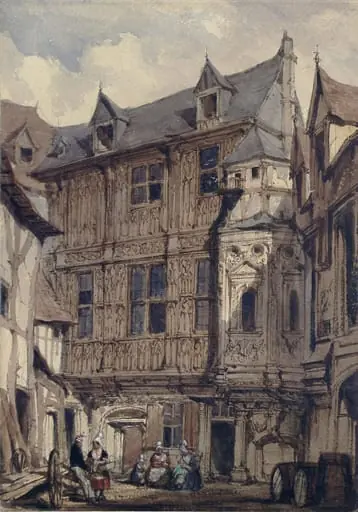 Rouen, St. Etienne
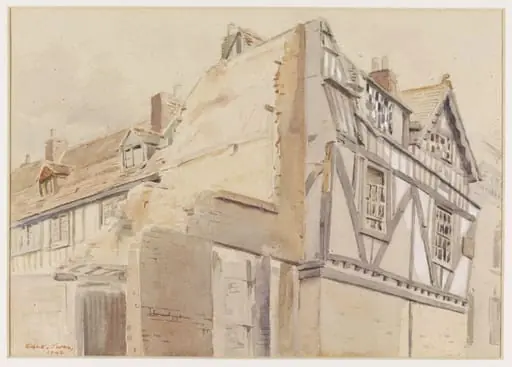 Raven Inn, Gloucester
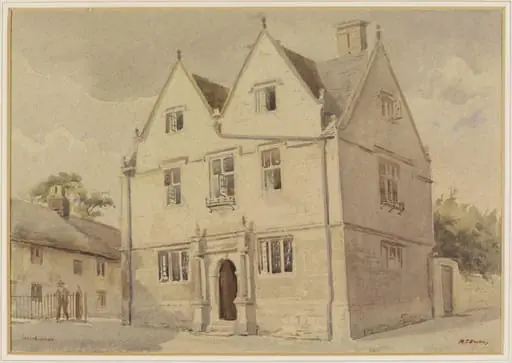 Jacobean House, Winchcombe
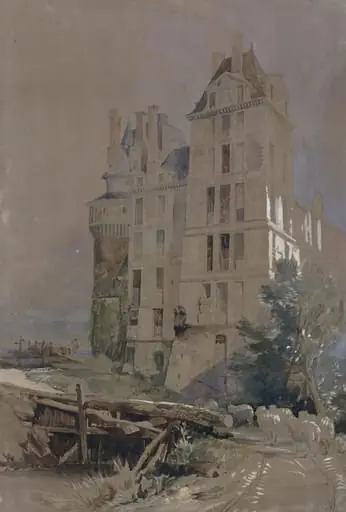 Chateau Brissac, Maine-et-Loire
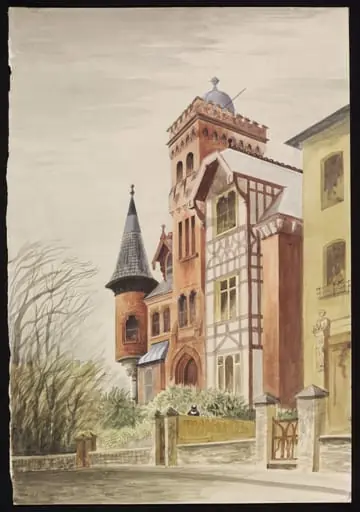 House in Amberley Grove, Sydenham, built by an Astronomer c.1867
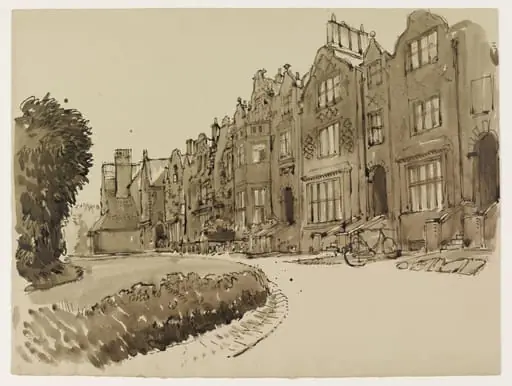 Queens' Terrace, Windsor
 Bourges: House of Jacques Coeur