Artwork
The Last Underground Prison: He Fell Dead into His Brother's Arms
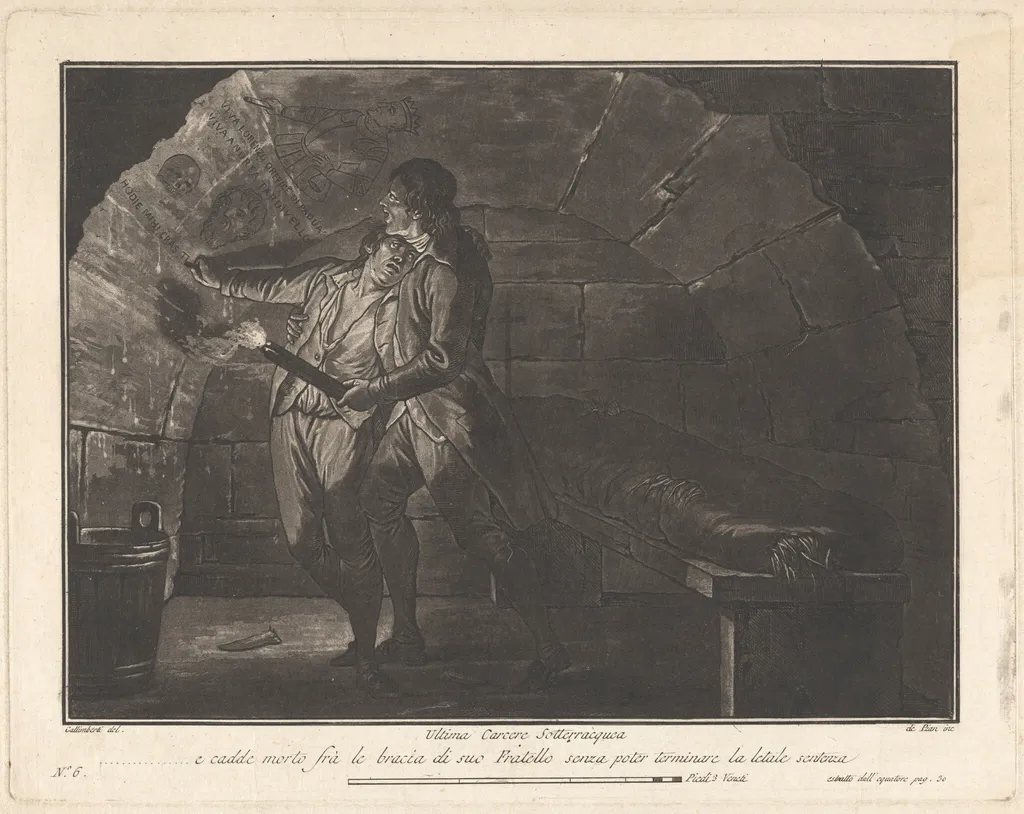
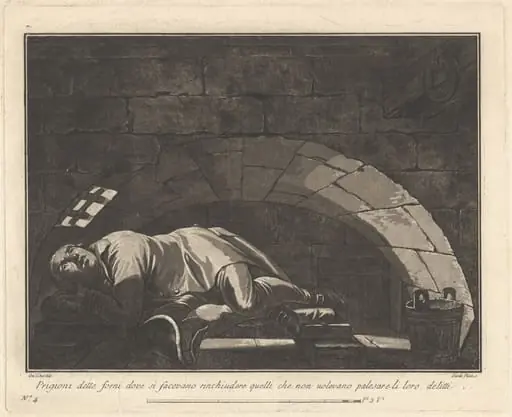
The Last Underground Prison: He Fell Dead into His Brother's Arms is an ink print by the Romanticist artist Giovanni De Pian. It dates from 1797 and is held in the collection of the National Gallery of Art.
About this work
Overview
The Last Underground Prison: He Fell Dead into His Brother's Arms is an etching and aquatint print created by Giovanni De Pian in 1797. The work is part of the collection at the National Gallery of Art in Washington.
Subject & Meaning
The print depicts a poignant, dramatic scene within a dark, stone-walled enclosure. Two men, dressed in 18th-century attire, are shown in a heartfelt embrace. One figure clutches a written document, while the other appears injured or dying, resting his head on the first man's shoulder, conveying a moment of intense emotional tension.
Technique & Style
Executed in etching and aquatint on laid paper, the piece utilizes contrasting textures and tonal depths to evoke a somber atmosphere. The dramatic lighting and expressive figures align with the emotional intensity characteristic of late 18th-century artistic trends.
History & Provenance
Created in 1797 by Giovanni De Pian, the print is now housed at the National Gallery of Art in Washington, D.C., as part of its permanent collection.
Context
While the specific narrative context of the scene is not detailed, the work's emphasis on emotional drama and its visual execution place it within the broader artistic currents of the late 18th century, sharing thematic resonances with the emerging Romantic movement.
Artist & collection


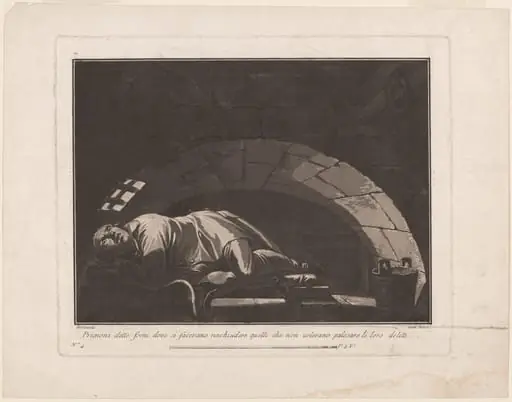 The "Ovens," for Those Who Wouldn't Admit Their Crimes
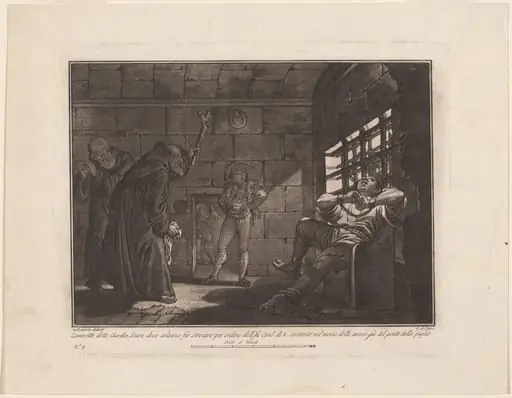 The "Giardin Scuro," for Executions by Strangling
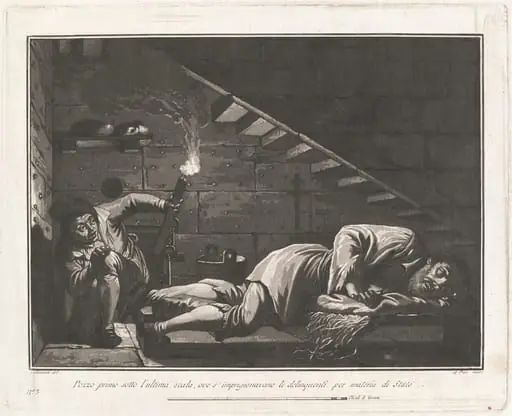 The "Well," for Violators of State Law
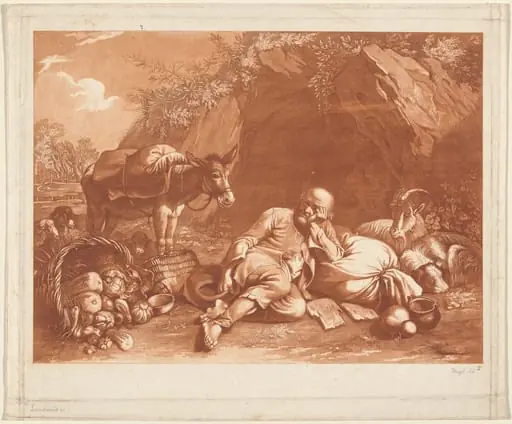 An Old Man Leaning on a Sack
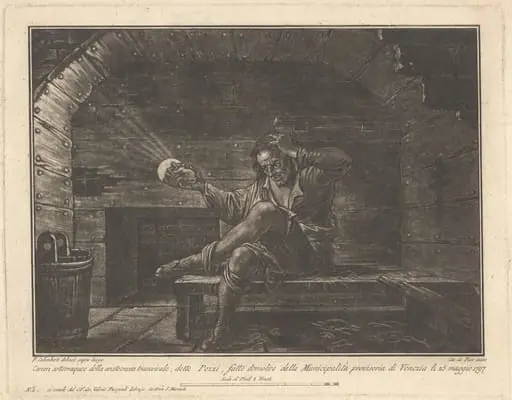 Underground Prisons, Known as "the Wells"
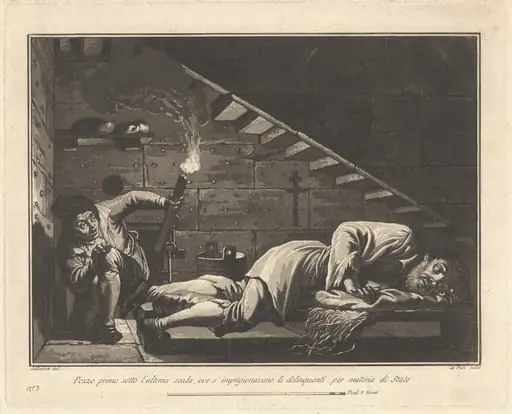 The "Well," for Violators of State Law
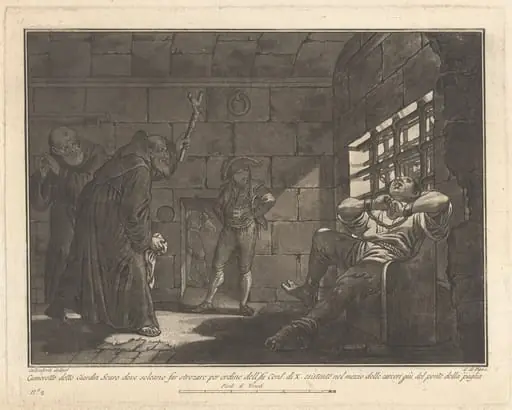 The "Giardin Scuro," for Executions by Strangling
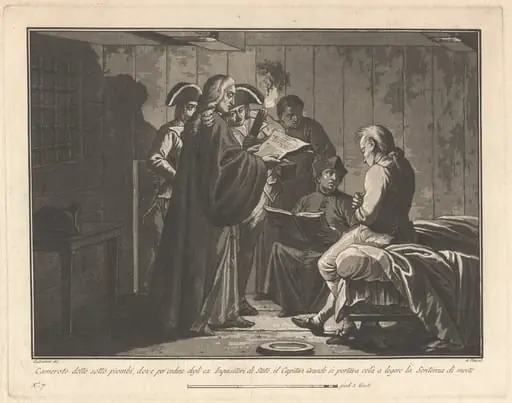 The "Sotto Piombi," Where Death Sentences Were Read