Artwork
The "Ovens," for Those Who Wouldn't Admit Their Crimes
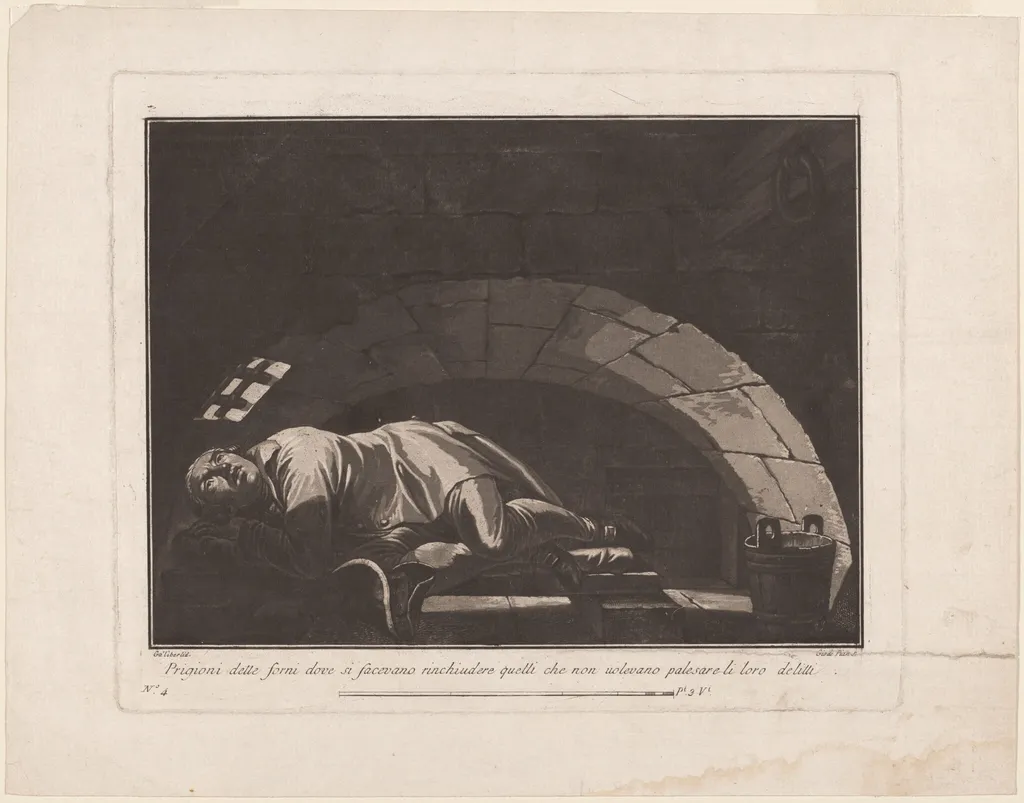
The "Ovens," for Those Who Wouldn't Admit Their Crimes is an ink print by the Romanticist artist Giovanni De Pian. It dates from 1797 and is held in the collection of the National Gallery of Art.
About this work
Overview
Giovanni De Pian’s 1797 print, titled “The ‘Ovens,’ for Those Who Wouldn’t Admit Their Crimes,” combines etching with aquatint on laid paper. The composition centers on a solitary figure lying supine before a stone arch, his head turned left and eyes closed, conveying a palpable sense of despondency.
Subject & Meaning
The reclining man, dressed in a simple shirt and trousers, rests his right hand on his abdomen while a bucket lies nearby. The stark pose and closed eyes suggest resignation or guilt, reinforcing the work’s title that hints at concealed wrongdoing and the psychological weight of unconfessed crimes.
Technique & Style
De Pian employs the fine lines of etching alongside the tonal washes of aquatint, creating a nuanced play of light and shadow. The laid paper surface enhances the texture, while the contrast between deep blacks and muted grays accentuates the figure’s isolation within the architectural setting.
Context
Produced at the height of the Romantic era, the print reflects the movement’s fascination with emotion, individual suffering, and the sublime. Its somber mood and focus on inner turmoil align with contemporary artistic concerns about the human psyche and moral ambiguity.
Legacy
First issued in 1797, the work remains a representative example of late‑18th‑century printmaking in Italy. Though not widely reproduced, it continues to be cited in studies of Romantic graphic art for its expressive use of chiaroscuro and its thematic exploration of concealed guilt.
Artist & collection


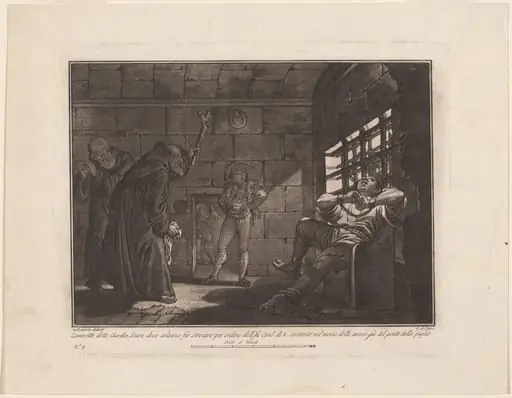 The "Giardin Scuro," for Executions by Strangling
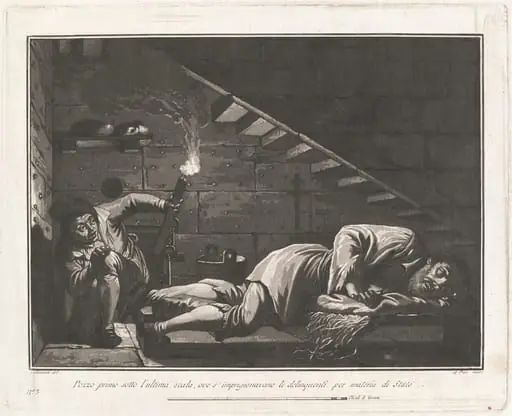 The "Well," for Violators of State Law
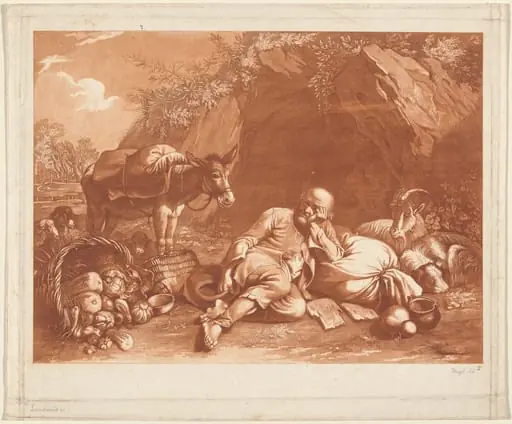 An Old Man Leaning on a Sack
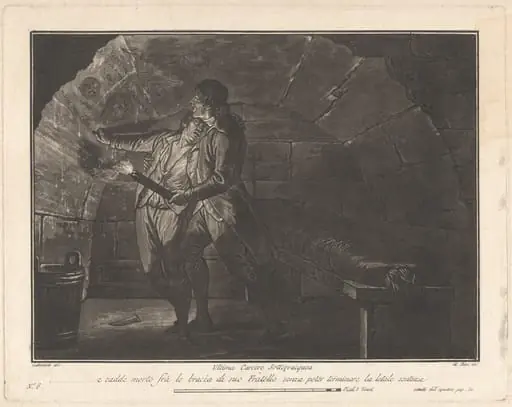 The Last Underground Prison: He Fell Dead into His Brother's Arms
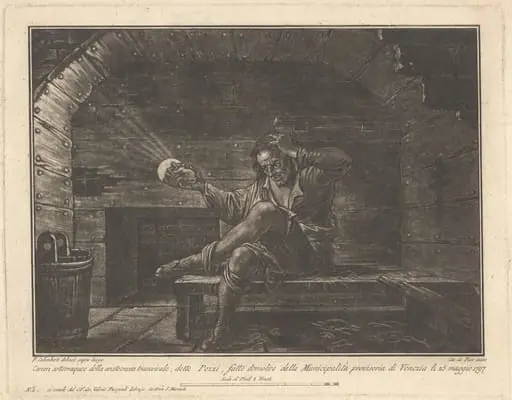 Underground Prisons, Known as "the Wells"
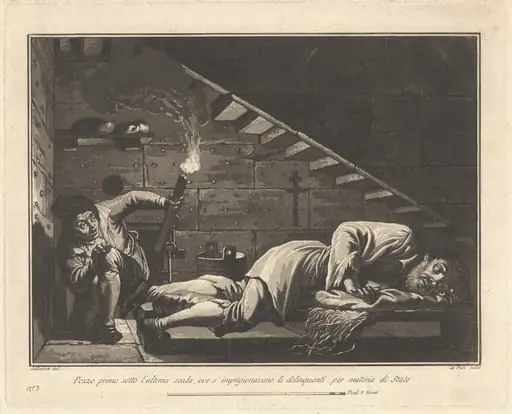 The "Well," for Violators of State Law
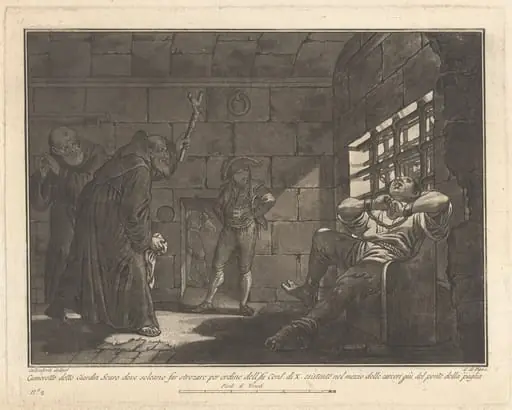 The "Giardin Scuro," for Executions by Strangling
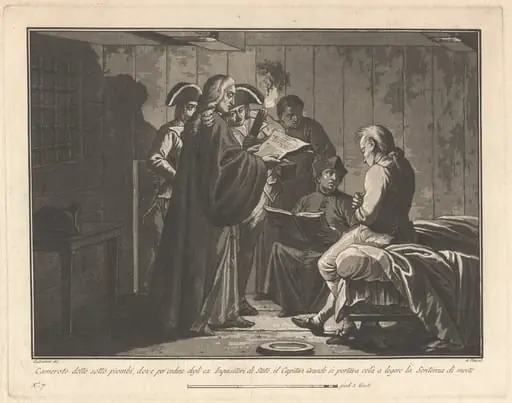 The "Sotto Piombi," Where Death Sentences Were Read