Artwork
The "Well," for Violators of State Law
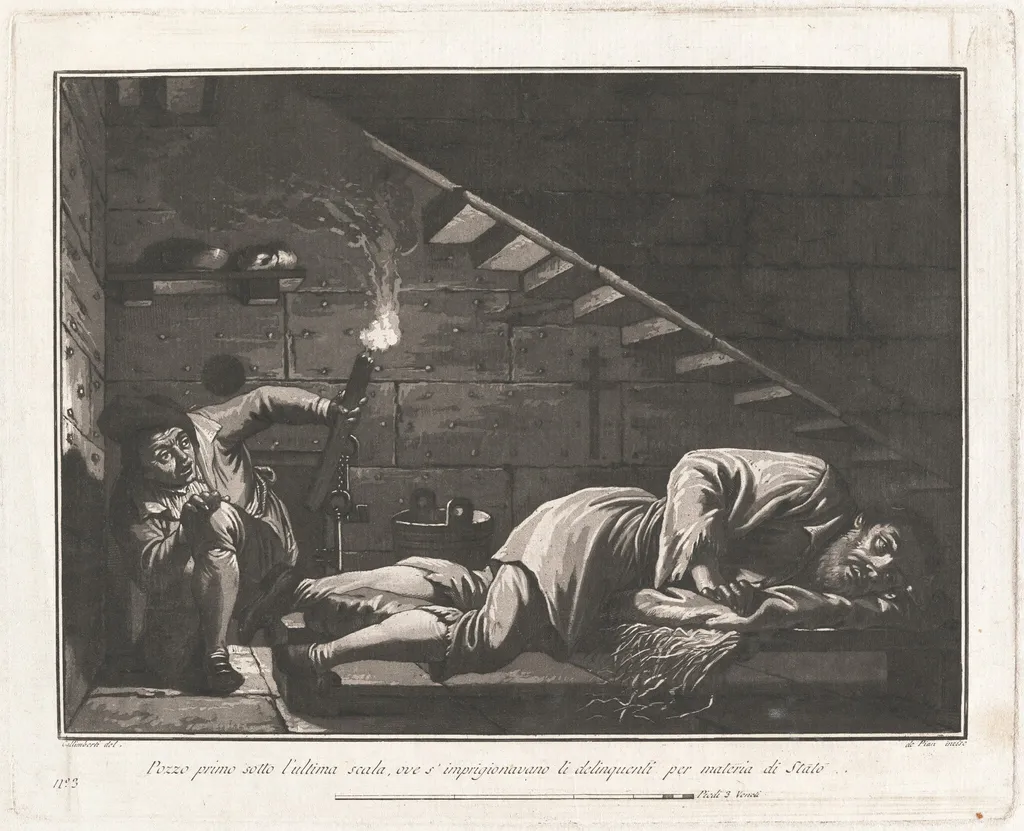
The "Well," for Violators of State Law is an ink print by the Romanticist artist Giovanni De Pian. It dates from 1797 and is held in the collection of the National Gallery of Art.
About this work
Overview
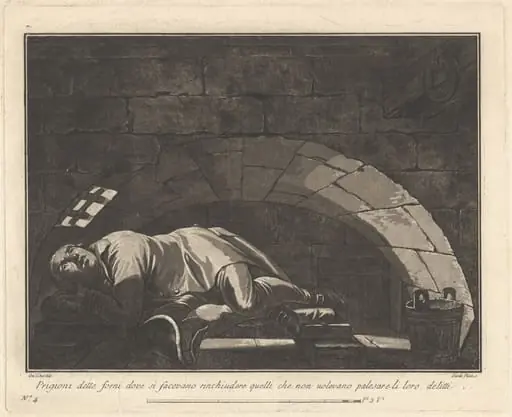
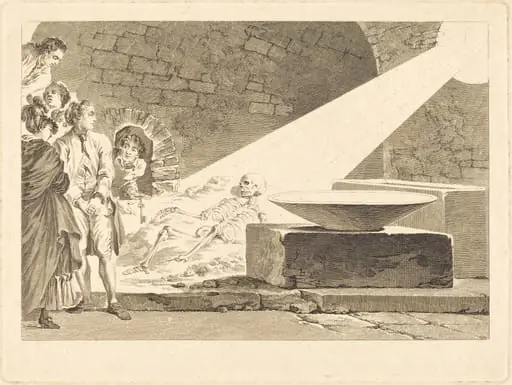
Created in 1797 by Giovanni De Pian, this print combines etching and aquatint on laid paper to depict a somber prison scene. The work is part of a series addressing legal punishment, rendered with stark tonal contrasts that emphasize confinement and human suffering. Its composition avoids ornamentation, focusing instead on the physical and emotional weight of incarceration.
Subject & Meaning
The scene portrays two imprisoned men in a dim cell: one lies motionless beneath a frayed blanket, the other stands with a torch, casting harsh light across the space. A child crouches nearby, clutching a bundle, suggesting familial consequence. The image conveys the isolation and brutality of state-imposed punishment, with the torch symbolizing both illumination and interrogation, not rescue.
Technique & Style
De Pian employed etching for fine lines and aquatint for broad, atmospheric tones to achieve deep shadows and uneven textures. The rough stone walls and heavy door are rendered with coarse, irregular marks, enhancing the sense of decay and entrapment. The torch’s glow is achieved through controlled ink density, creating dramatic contrasts that draw the eye to the figures’ vulnerability.
History & Provenance
The print was produced in 1797 during a period of legal reform in parts of Europe, when public opinion increasingly scrutinized punitive practices. Though De Pian’s broader oeuvre is poorly documented, this work survives in a limited number of impressions, likely circulated among reform-minded audiences. Its survival suggests it was valued for its social commentary rather than aesthetic novelty.
Context
Unlike idealized historical scenes, it presents an unvarnished view of incarceration, resonating with contemporary debates on justice and human dignity.
In late 18th-century Europe, prisons were often overcrowded and unsanitary, with punishment focused on deterrence rather than rehabilitation. This print reflects growing awareness of these conditions, aligning with Enlightenment critiques of state power. Unlike idealized historical scenes, it presents an unvarnished view of incarceration, resonating with contemporary debates on justice and human dignity.
Legacy
Though not widely reproduced in its time, the print remains a rare visual record of pre-modern penal conditions. It contributes to a small but significant body of work by artists who used printmaking to expose institutional cruelty. Its influence is indirect, informing later social realist traditions that prioritized witness over spectacle in depicting marginalized lives.
Artist & collection


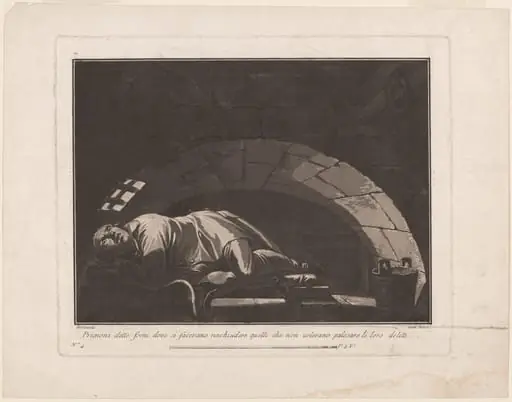 The "Ovens," for Those Who Wouldn't Admit Their Crimes
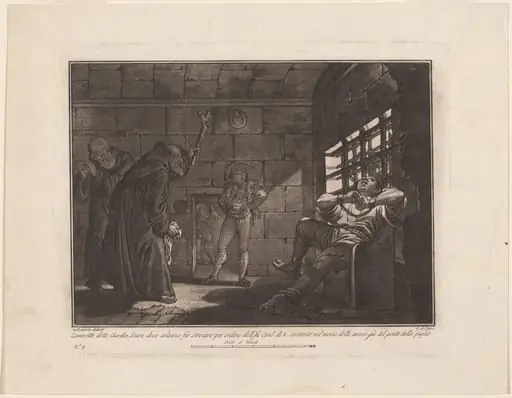 The "Giardin Scuro," for Executions by Strangling
 An Old Man Leaning on a Sack
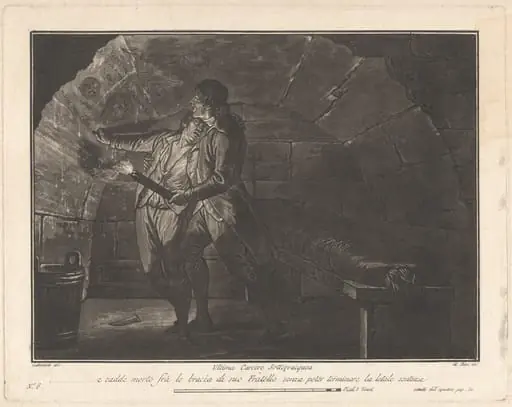 The Last Underground Prison: He Fell Dead into His Brother's Arms
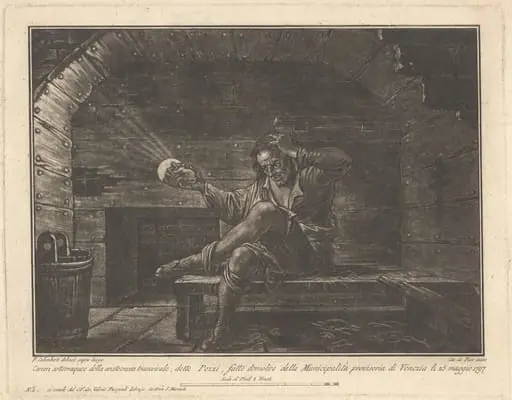 Underground Prisons, Known as "the Wells"
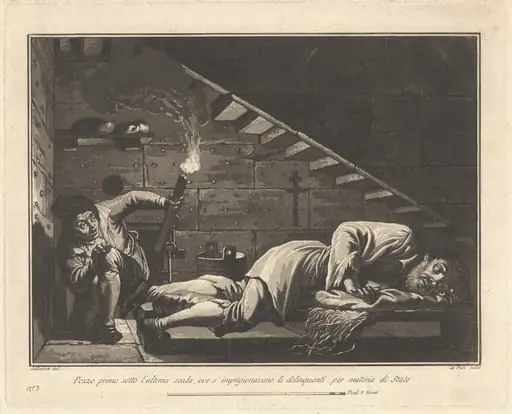 The "Well," for Violators of State Law
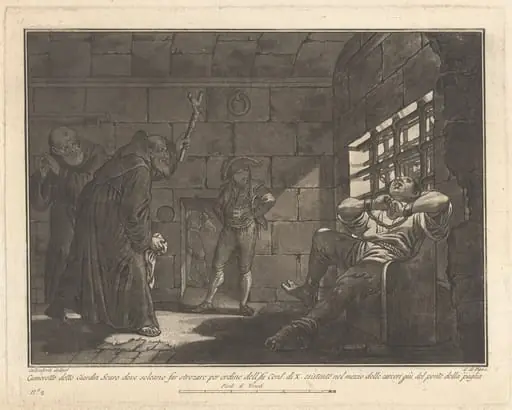 The "Giardin Scuro," for Executions by Strangling
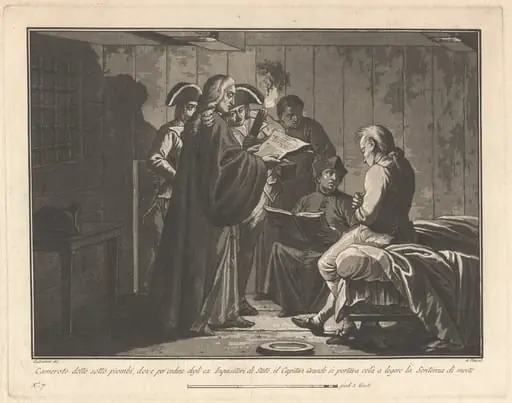 The "Sotto Piombi," Where Death Sentences Were Read