Artwork
Underground Prisons, Known as "the Wells"
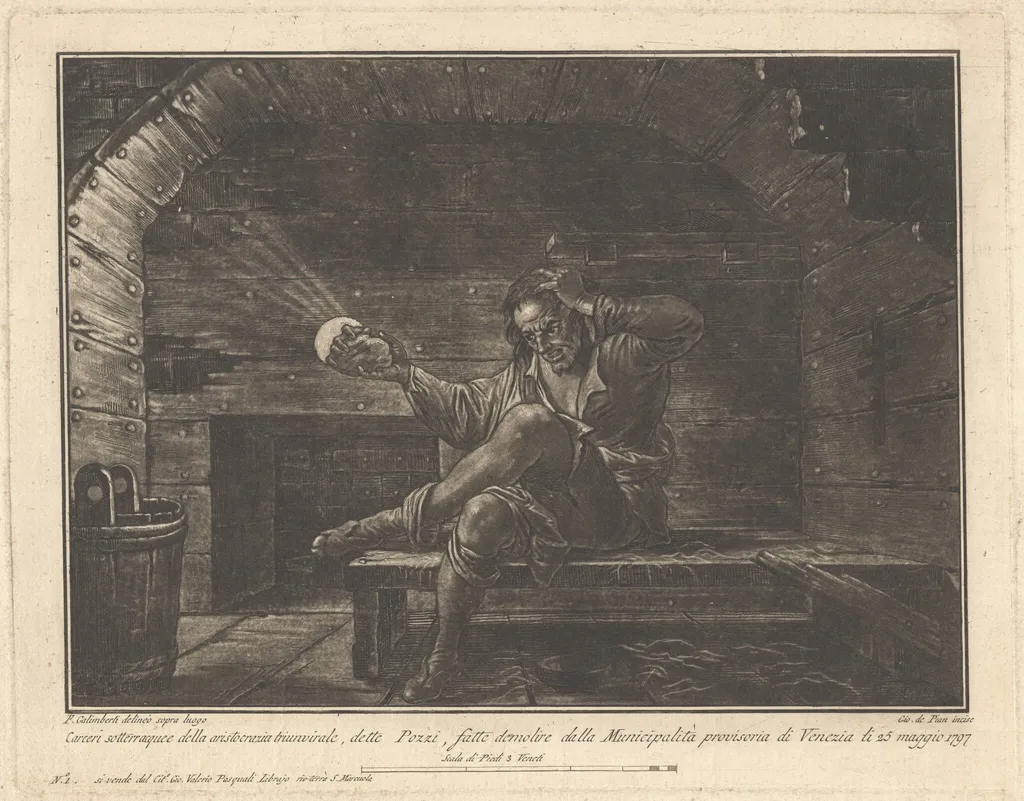
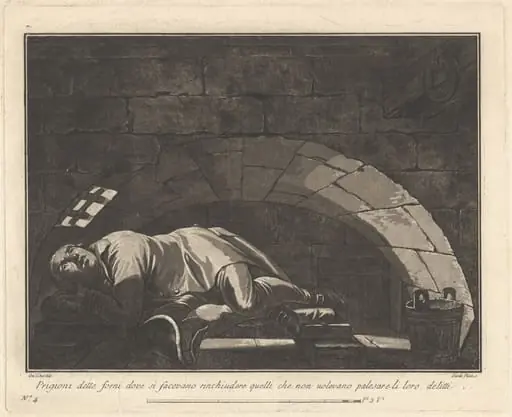
Underground Prisons, Known as "the Wells" is an ink print by the Romanticist artist Giovanni De Pian. It dates from 1797 and is held in the collection of the National Gallery of Art.
About this work
Overview
Giovanni De Pian’s 1797 print, titled *Underground Prisons, Known as “the Wells,”* is an etching combined with aquatint on laid paper. The work is part of the National Gallery of Art’s collection in Washington, D.C., and exemplifies the artist’s interest in stark interior scenes.
Subject & Meaning
The sparse setting—a bucket in one corner and a simple bench or pallet—conveys a sense of confinement and isolation.
The image depicts a solitary figure seated in a cramped, wood‑panelled chamber with a low ceiling. Dressed in late‑eighteenth‑century clothing, the man clutches a lantern that throws a narrow beam upward, while his left hand rests on his head, suggesting anxiety or physical discomfort. The sparse setting—a bucket in one corner and a simple bench or pallet—conveys a sense of confinement and isolation.
Technique & Style
De Pian employs a combination of etching lines and aquatint washes to render deep shadows and luminous highlights, creating a pronounced chiaroscuro effect. The contrast between the dark interior and the lantern’s glow intensifies the emotional tension, aligning the work with the Romantic emphasis on feeling and individual experience.
Context
Produced at the close of the eighteenth century, the print reflects contemporary fascination with subterranean prisons, known locally as “the Wells,” which were notorious for their harsh conditions. By focusing on a single inmate’s distress, De Pian engages with broader Enlightenment concerns about human rights and the penal system.
Legacy
While not as widely reproduced as other Romantic prints, *Underground Prisons* remains a valuable illustration of the period’s graphic techniques and social commentary. Its presence in a major national collection underscores its relevance to studies of early modern incarceration and the visual language of Romanticism.
Artist & collection


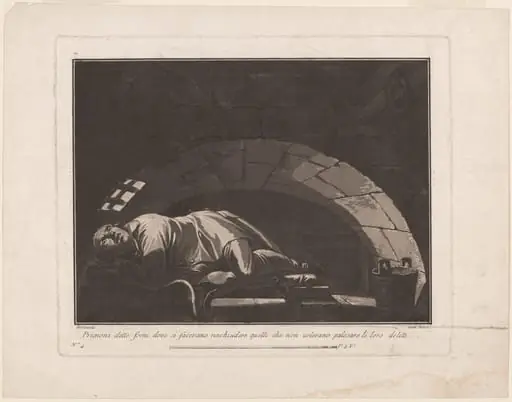 The "Ovens," for Those Who Wouldn't Admit Their Crimes
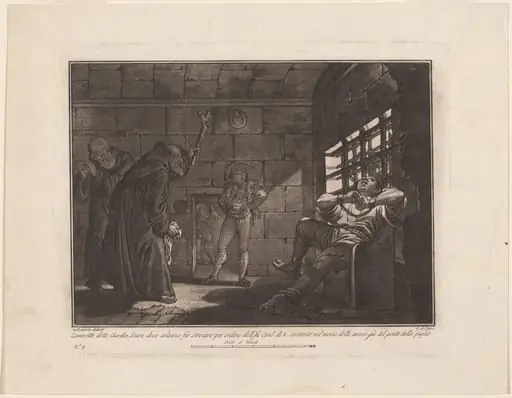 The "Giardin Scuro," for Executions by Strangling
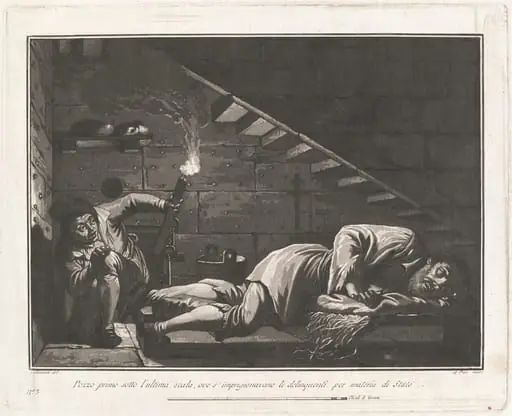 The "Well," for Violators of State Law
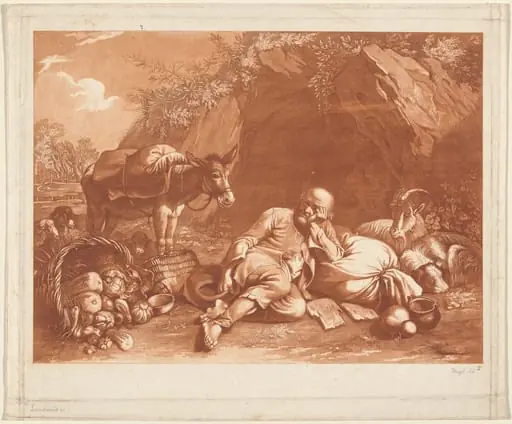 An Old Man Leaning on a Sack
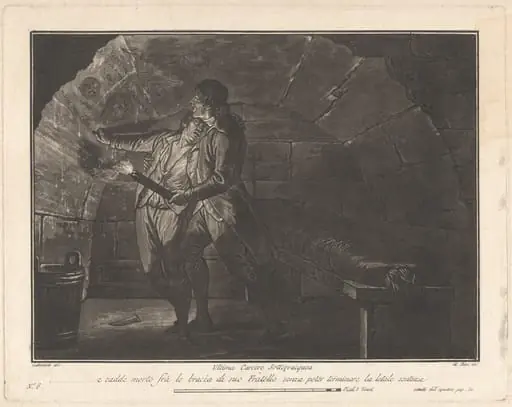 The Last Underground Prison: He Fell Dead into His Brother's Arms
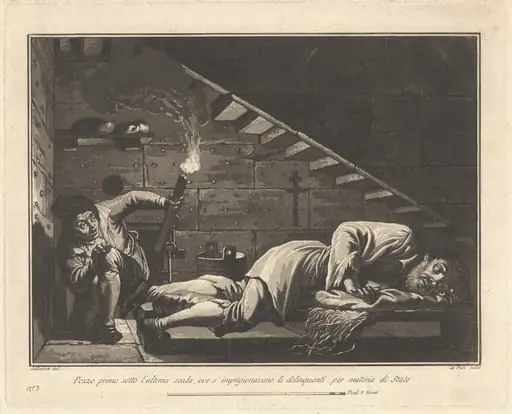 The "Well," for Violators of State Law
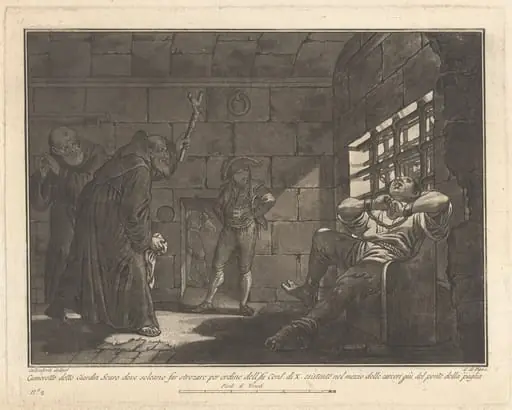 The "Giardin Scuro," for Executions by Strangling
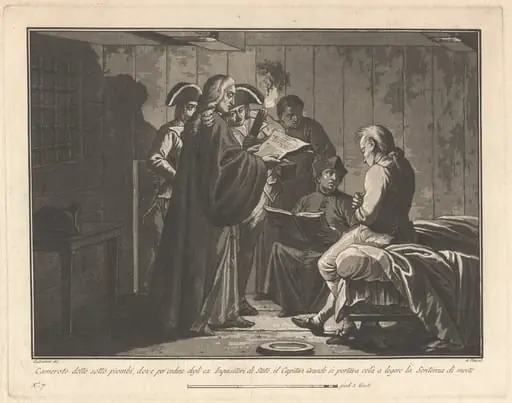 The "Sotto Piombi," Where Death Sentences Were Read