Artwork
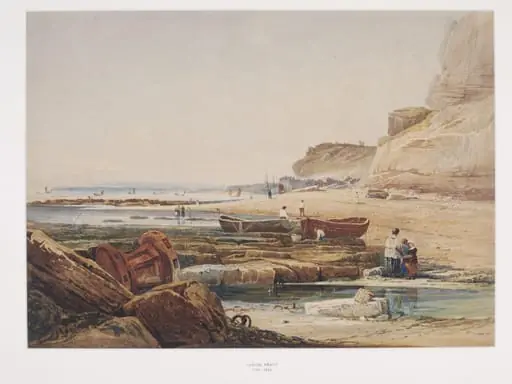
The sands of Cullercoats in Northumberland
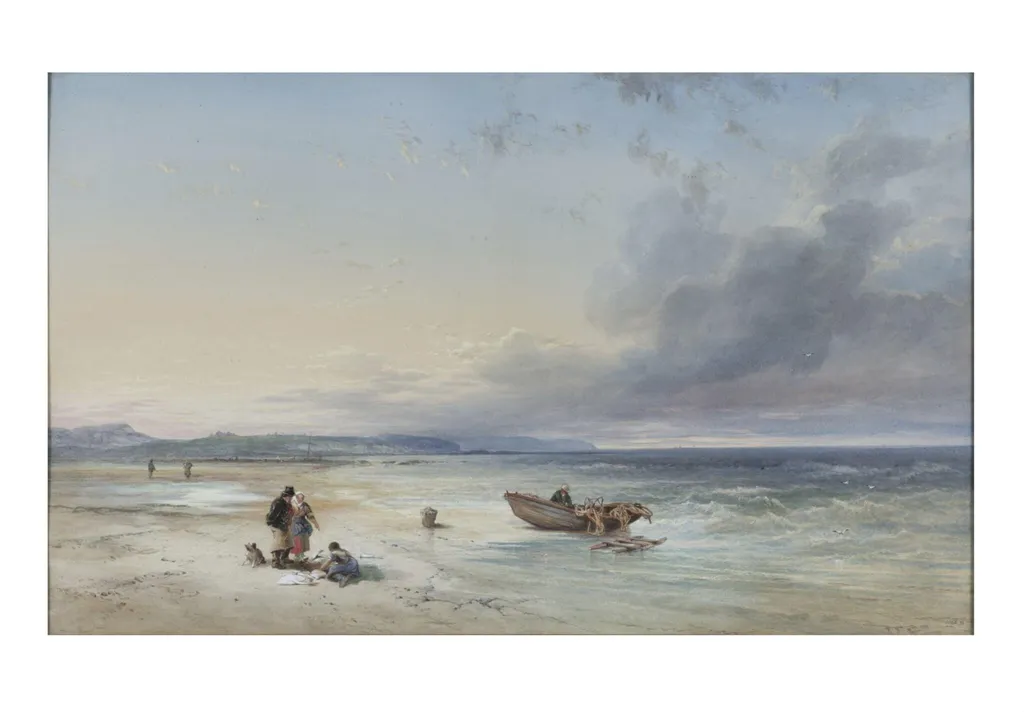
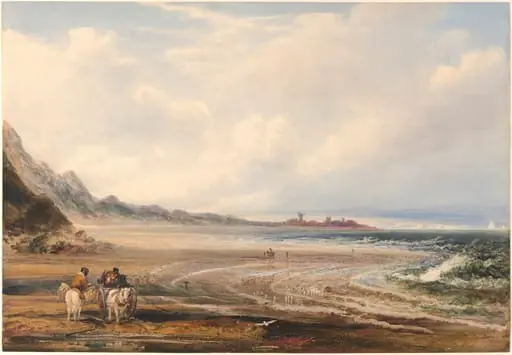
The sands of Cullercoats in Northumberland is a watercolor work on paper by the British Romanticist artist Thomas Richardson. It dates from 1844 and is held in the collection of the Victoria and Albert Museum.
About this work
Overview
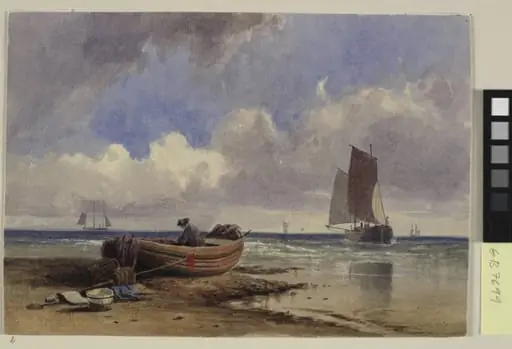
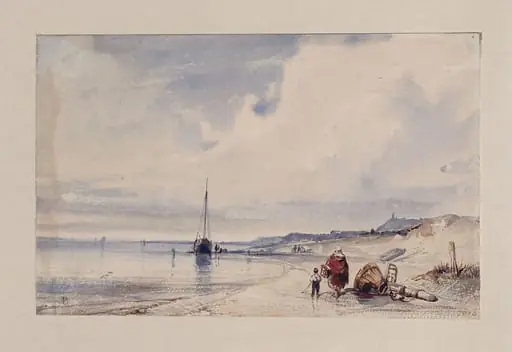
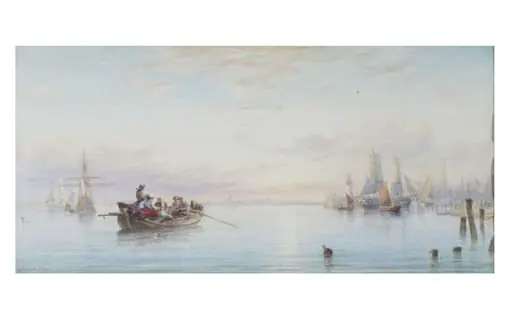
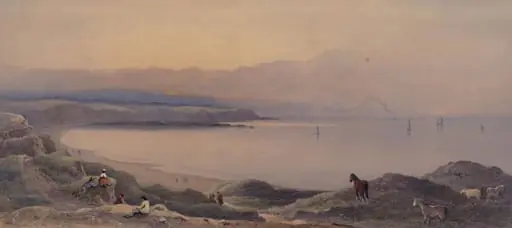
Thomas Richardson created this watercolour in 1844, capturing a quiet moment on the Northumberland coast at Cullercoats. Signed and dated by the artist, the work is a modest yet deliberate study of coastal life. Rendered in delicate washes, it avoids dramatic spectacle in favor of subdued observation, reflecting the quiet rhythm of seaside existence during the mid-nineteenth century.
Subject & Meaning
The scene depicts ordinary figures engaged in daily activities: a group converses near a dog on the shore, while others move along the beach in the distance. A small boat rests at the water’s edge, neither fully ashore nor at sea. These unremarkable moments—no fishing, no storm, no grand gesture—elevate the mundane into a contemplative record of coastal routine, emphasizing stillness over action.
Technique & Style
Richardson employed loose, fluid brushwork to suggest movement in the sky and water without defining detail.
Richardson employed loose, fluid brushwork to suggest movement in the sky and water without defining detail. Pale, layered washes create a hazy atmosphere, with soft transitions between cloud, sea, and land. The absence of sharp outlines and the muted palette reinforce a sense of calm, while the watercolour’s transparency allows the paper’s texture to subtly contribute to the scene’s quiet luminosity.
History & Provenance
The painting has been held in the collection of the Victoria and Albert Museum since its acquisition, though its earlier ownership remains undocumented. Its survival in good condition suggests it was carefully preserved, likely by a private collector before entering institutional care. No exhibition history or critical reception from the artist’s lifetime is recorded, indicating it was not widely known during Richardson’s era.
Context
In the 1840s, British artists increasingly turned to coastal and rural scenes as industrialization reshaped society. Richardson’s work aligns with this trend, focusing on unidealized, everyday life rather than romanticized landscapes. Cullercoats, then a modest fishing village, offered a quiet alternative to more celebrated seaside resorts, making this painting a quiet testament to regional authenticity.
Legacy
Though Richardson was not a major figure in Victorian art, this watercolour endures as a quiet example of regional observation. It contributes to a broader understanding of how lesser-known artists documented ordinary coastal life with sensitivity and restraint. Its presence in a national collection ensures its continued accessibility as a record of 19th-century British visual culture.
Own this work as a print
Artist & collection
Artist
Thomas Richardson painted landscapes you’d swear you’ve hiked into—craggy peaks, quiet shores, every fold of rock and wave caught in watercolour.