Artwork
Head of the Fallen Jockey (study for "Scene from the Steeplechase: The Fallen Jockey")
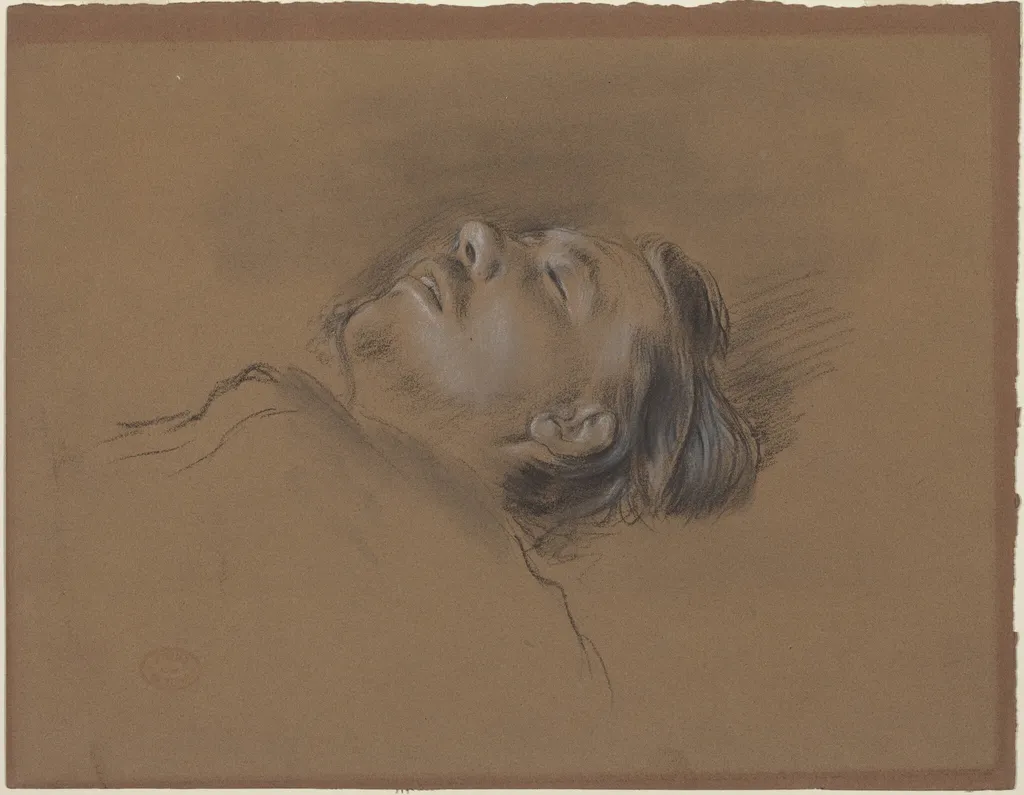
Head of the Fallen Jockey (study for "Scene from the Steeplechase: The Fallen Jockey") is a chalk drawing by the Impressionist artist Edgar Degas. It dates from 1866 and is held in the collection of the National Gallery of Art.
About this work
Overview
This 1866 drawing by Edgar Degas, executed in black chalk heightened with white on brown paper, serves as a study for his larger work, *Scene from the Steeplechase: The Fallen Jockey*. It showcases the artist's technical prowess and thematic interests.
Subject & Meaning
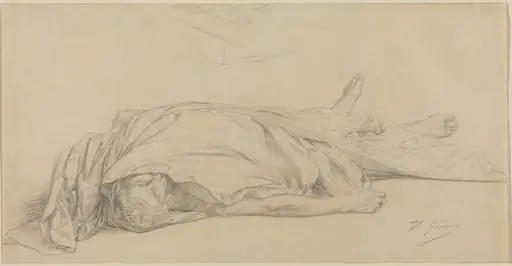
Depicting a jockey in a twisted, fallen pose, the drawing captures a dynamic moment of contemporary equestrian activity. The subject's riding attire and hat provide contextual detail, while the focus on pose and expression conveys the artist's emphasis on capturing the human figure in a state of turmoil.
Technique & Style
Degas utilized contrasting black chalk and white highlights on brown paper, employing principles akin to chiaroscuro to achieve depth and emphasize the jockey's awkward position. This technical approach underscores Degas's realist inclinations, despite his association with Impressionism.
History & Provenance
Created circa 1866 as a preparatory study for *Scene from the Steeplechase: The Fallen Jockey*, the drawing's provenance details are not specified here, highlighting only its creation context within Degas's equestrian-themed explorations.
Context
While Degas is often linked to Impressionism, his preference for the term 'realist' is reflected in this work's detailed figure rendering. The subject matter diverges from his more common depictions of dancers, instead showcasing his interest in modern, active scenes.
Legacy
This study demonstrates Degas's mastery of drawing and his ability to convey dynamic movement, contributing to his reputation as a versatile and skilled artist across various themes, including less frequently highlighted equestrian subjects.
Artist & collection
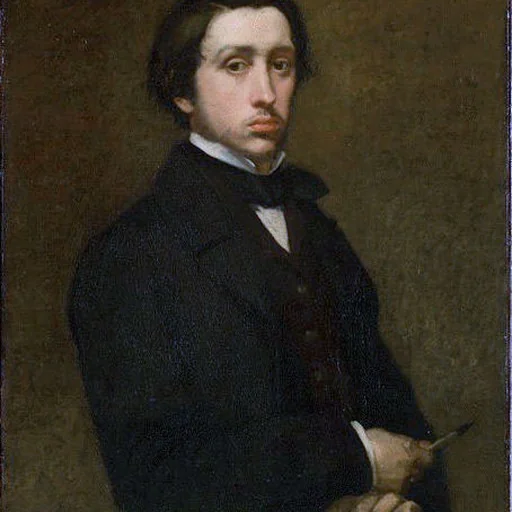
Artist
Born Hilaire-Germain-Edgar De Gas on 19 July 1834 in Paris, Edgar Degas came from an affluent banking family with aristocratic roots and spent his childhood among the cultivated circles of the French capital.