Artwork
Henricus Percye (Henry Percy, Ninth Earl of Northumberland)
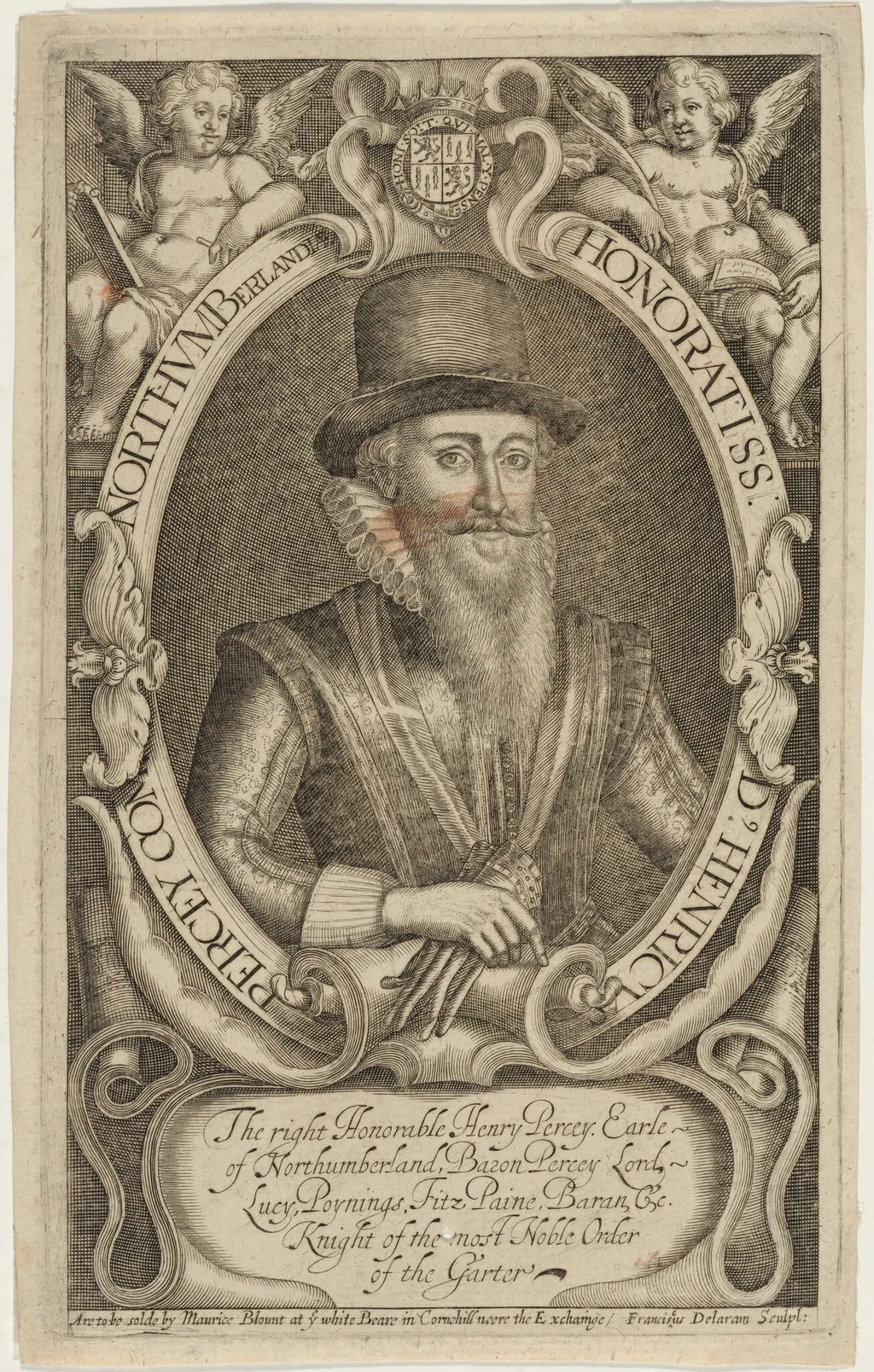
Henricus Percye (Henry Percy, Ninth Earl of Northumberland) is an ink print by the Renaissance artist Francis Delaram. It dates from 1608 and is held in the collection of the National Gallery of Art.
About this work
Overview
Delaram, active during a period of transition in print culture, used engraving to convey status and lineage through precise inkwork and symbolic decoration.
This 1608 engraving by Francis Delaram depicts Henry Percy, the Ninth Earl of Northumberland, as a dignified nobleman. Rendered in fine linear detail, the portrait combines formal portraiture with allegorical elements typical of early 17th-century English printmaking. Delaram, active during a period of transition in print culture, used engraving to convey status and lineage through precise inkwork and symbolic decoration.
Subject & Meaning
The portrait presents Henry Percy not merely as a nobleman but as an embodiment of aristocratic virtue. His direct gaze and formal attire suggest authority, while the banner held by cherubs—bearing 'NORTHUMBERLAND' and 'HONOR & DUTY'—frames him with moral ideals. The inclusion of his full titles and the Garter insignia reinforces his institutional standing, aligning his personal identity with the values of the English peerage.
Technique & Style
Delaram employed fine-line engraving to achieve texture and depth, particularly in the earl’s beard, hat, and clothing. The background lacks the same precision, suggesting a focus on the figure rather than environment. Decorative cherubs and heraldic elements reflect Flemish influences, common in prints of the era. The composition balances realism with symbolic ornamentation, characteristic of elite portraiture in Jacobean England.
History & Provenance
Created in 1608, the engraving emerged during a time when printed portraits served as tools of political and familial legacy. Delaram, possibly of Flemish origin, worked in England between the late 1610s and mid-1620s, contributing to publications like Camden’s Historie. This print likely circulated among the gentry, reinforcing the Percy family’s prominence. Its survival indicates continued interest in noble imagery beyond the original commission.
Context
In early 17th-century England, engraved portraits were used to project status in the absence of widespread painting access. The Percy family, historically powerful in the North, sought to maintain their prestige through visual representation. Delaram’s integration of heraldry and allegorical figures aligns with broader European trends, where printmakers merged portraiture with classical and moral symbolism to elevate their subjects.
Legacy
This engraving remains a documented example of how noble identity was visually constructed in print. Though Delaram’s oeuvre is limited, his work contributes to understanding the role of engravers in shaping aristocratic imagery. The portrait’s persistence in collections reflects its function as both a personal commemoration and a cultural artifact of Jacobean elite self-representation.
Artist & collection
Artist
Francis Delaram (born around 1590, fl. 1615–1624 or 1627), was an English engraver. Delaram left a substantial collection of engraved portraits, landscapes and book illustrations (specifically, William Camden's…

 Henricus Percye (Henry Percy, Ninth Earl of Northumberland)
 Charles I, as Prince of Wales
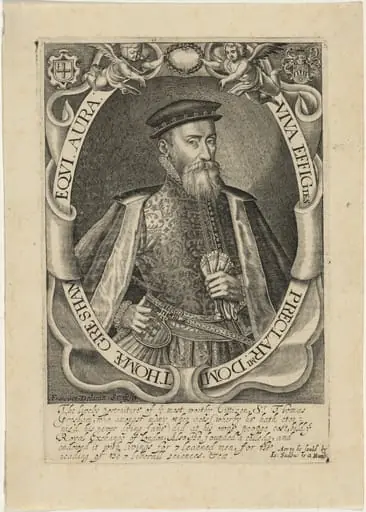 Sir Thomas Grisham
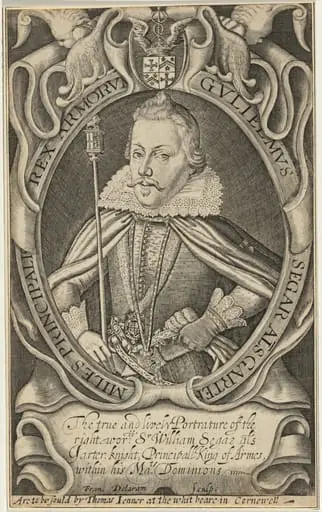 Guliemus Segar (Sir William Segar)
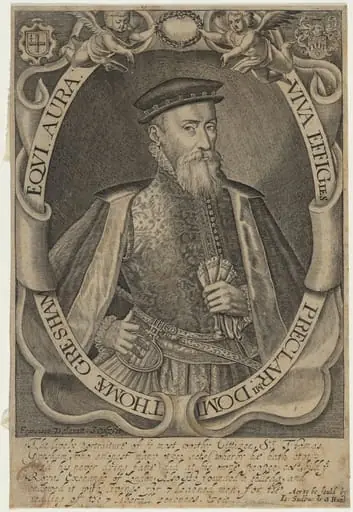 Thomae Gresham Equi. Aura (Sir Thomas Gresham)
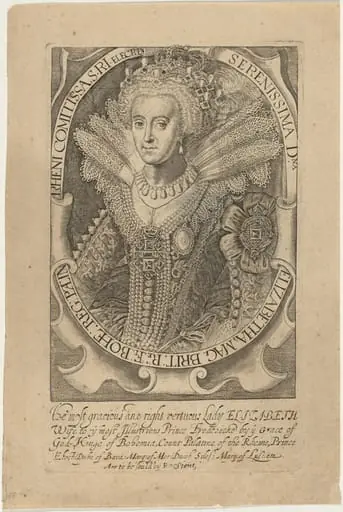 Elizabeth, Queen of Bohemia
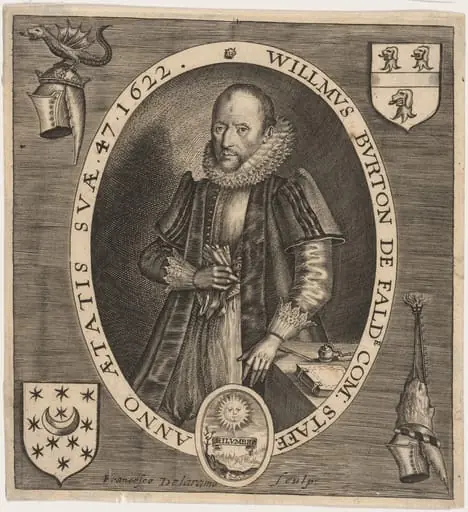 Willmus Burton de Falde (William Burton)
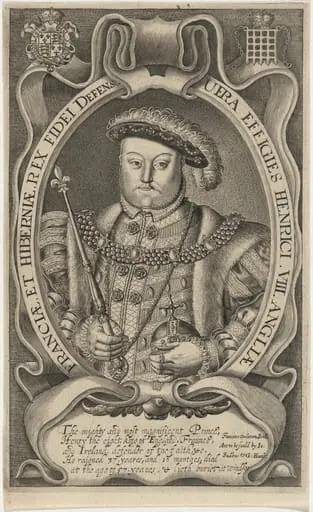 Henrici VIII Angliae, Franciae et Hiberniam Rex (King Henry VIII)