Artwork
Willmus Burton de Falde (William Burton)
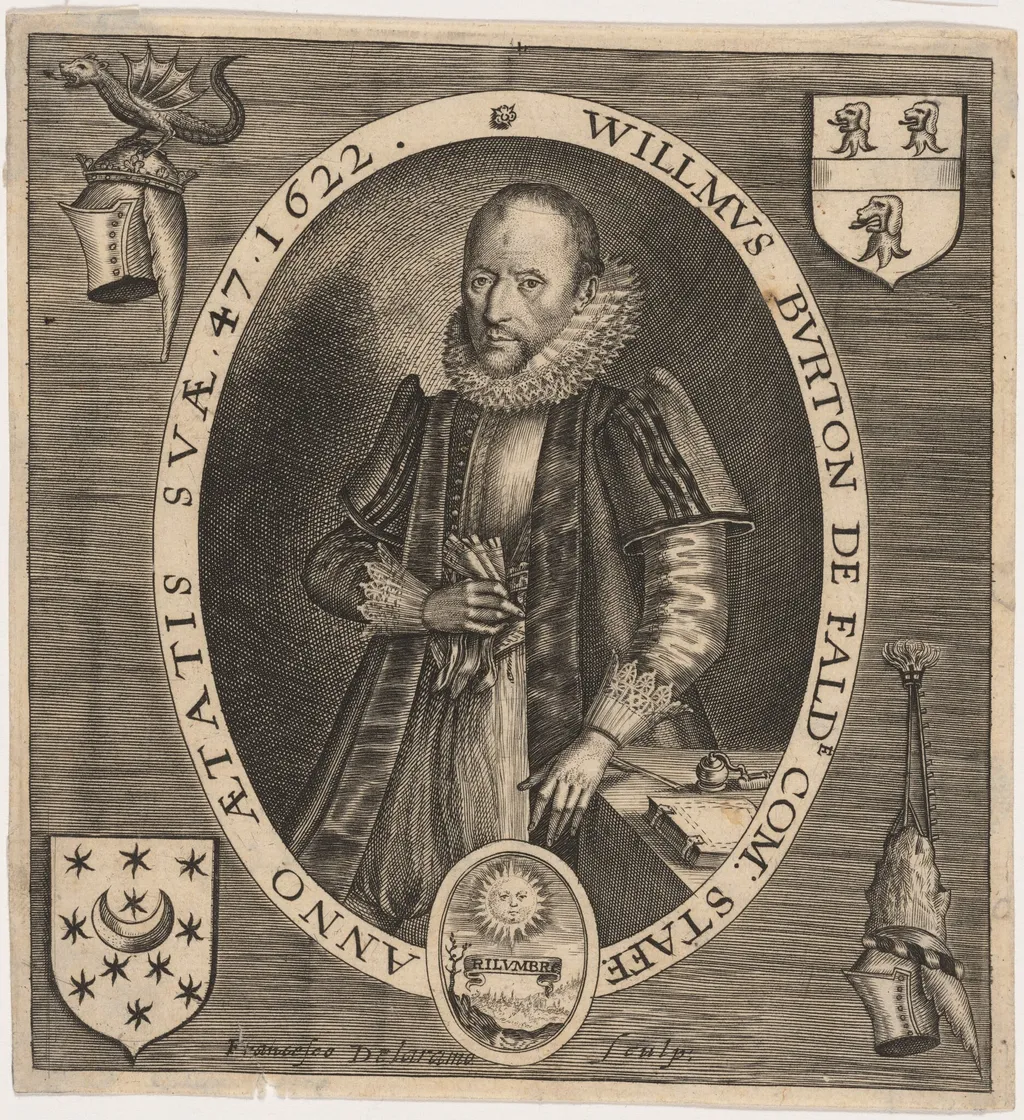
Willmus Burton de Falde (William Burton) is an ink print by the Baroque artist Francis Delaram. It dates from 1622 and is held in the collection of the National Gallery of Art.
About this work
" The name "Willmus Burton de Falde" is written in a scroll above him, and the date "1622" is in the corner.
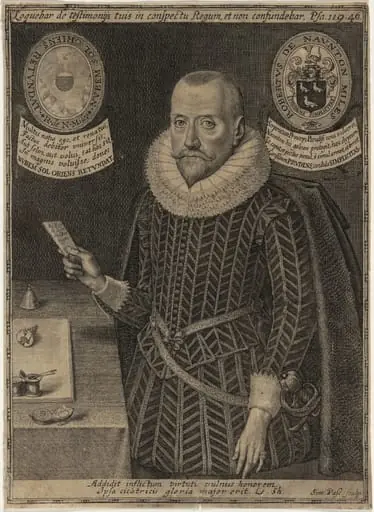
This black-and-white engraving shows a man in fancy clothes, holding a glove and a hat. His face is serious, with a big beard and curly hair. Around him are symbols like a crown, shields, and a sunburst circle with the word "FILUMBR."
The name "Willmus Burton de Falde" is written in a scroll above him, and the date "1622" is in the corner. The details look carved into the metal plate, not painted.
Next, check out the technique: engraving.
Overview
Francis Delaram’s 1622 engraving presents a full‑length portrait of William Burton, identified by the inscription “Willmus Burton de Falde” on a scroll above the figure. Rendered in black and white, the image shows Burton in contemporary attire, holding a glove and a hat, with a serious expression, a full beard, and curled hair.
Subject & Meaning
Burton is depicted in period dress, complete with a ruff collar and a loose outer garment, surrounded by emblematic motifs such as a crown, shields, and a sunburst circle bearing the word “FILUMBR.” These symbols likely allude to status, heraldic identity, or personal motto, framing the sitter within a context of authority and learned bearing.
Technique & Style
The work is executed by engraving, a process that incises lines into a metal plate, producing fine, crisp details in the figure while the background is rendered more loosely. Delaram’s handling of decorative elements—musical cherubs and ornamental motifs—reflects the influence of the Flemish school on English printmaking of the early seventeenth century.
History & Provenance
Francis Delaram, an English engraver active between 1615 and at least 1624, created portraits, landscapes, and book illustrations, notably for William Camden’s Historie. This portrait of Burton is one of his documented prints, dated 1622, and exemplifies his practice of combining portraiture with elaborate ornamental framing.
Context
The engraving emerges from a period when printed portraits served both documentary and propagandistic purposes, circulating the likenesses of notable individuals beyond the reach of painted commissions. Delaram’s inclusion of heraldic and allegorical symbols aligns with contemporary conventions for asserting social rank and personal virtues in printed media.
Artist & collection
Artist
Francis Delaram (born around 1590, fl. 1615–1624 or 1627), was an English engraver. Delaram left a substantial collection of engraved portraits, landscapes and book illustrations (specifically, William Camden's…

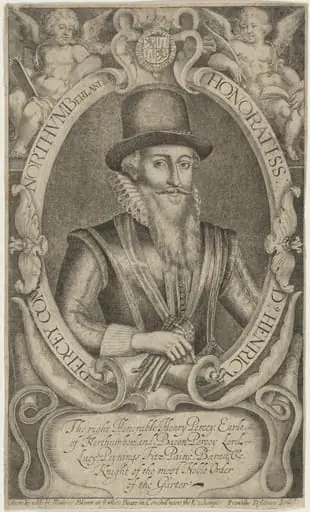 Henricus Percye (Henry Percy, Ninth Earl of Northumberland)
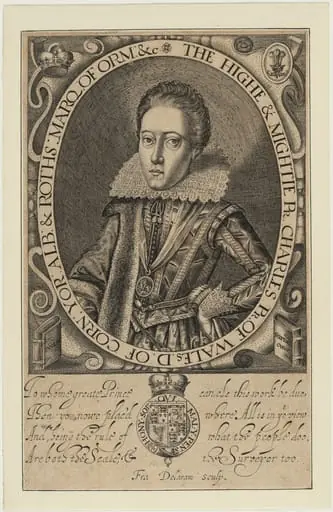 Charles I, as Prince of Wales
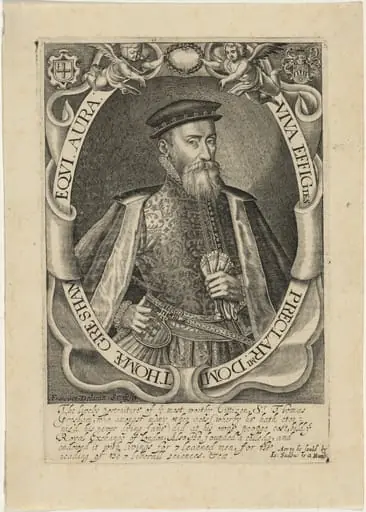 Sir Thomas Grisham
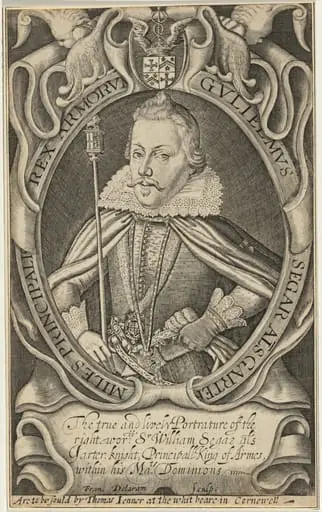 Guliemus Segar (Sir William Segar)
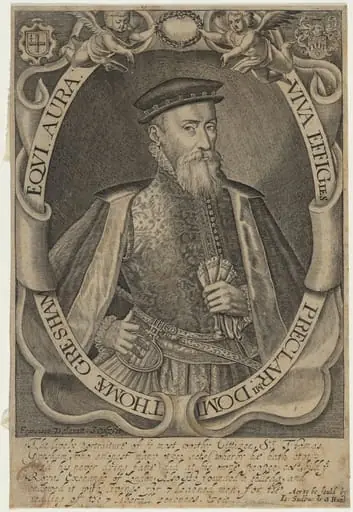 Thomae Gresham Equi. Aura (Sir Thomas Gresham)
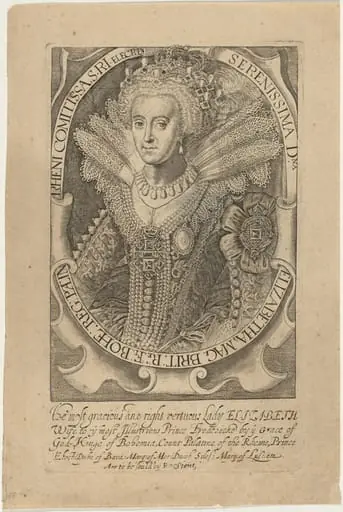 Elizabeth, Queen of Bohemia
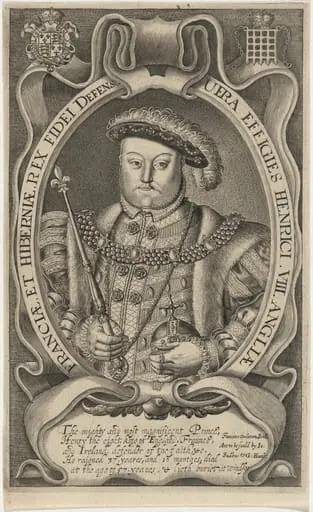 Henrici VIII Angliae, Franciae et Hiberniam Rex (King Henry VIII)
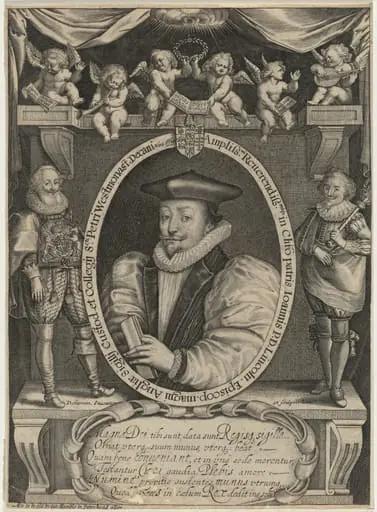 John Williams, D.D., Archbishop of York and Lord Keeper