Artwork
Thomae Gresham, Equi. Aura (Sir Thomas Gresham)
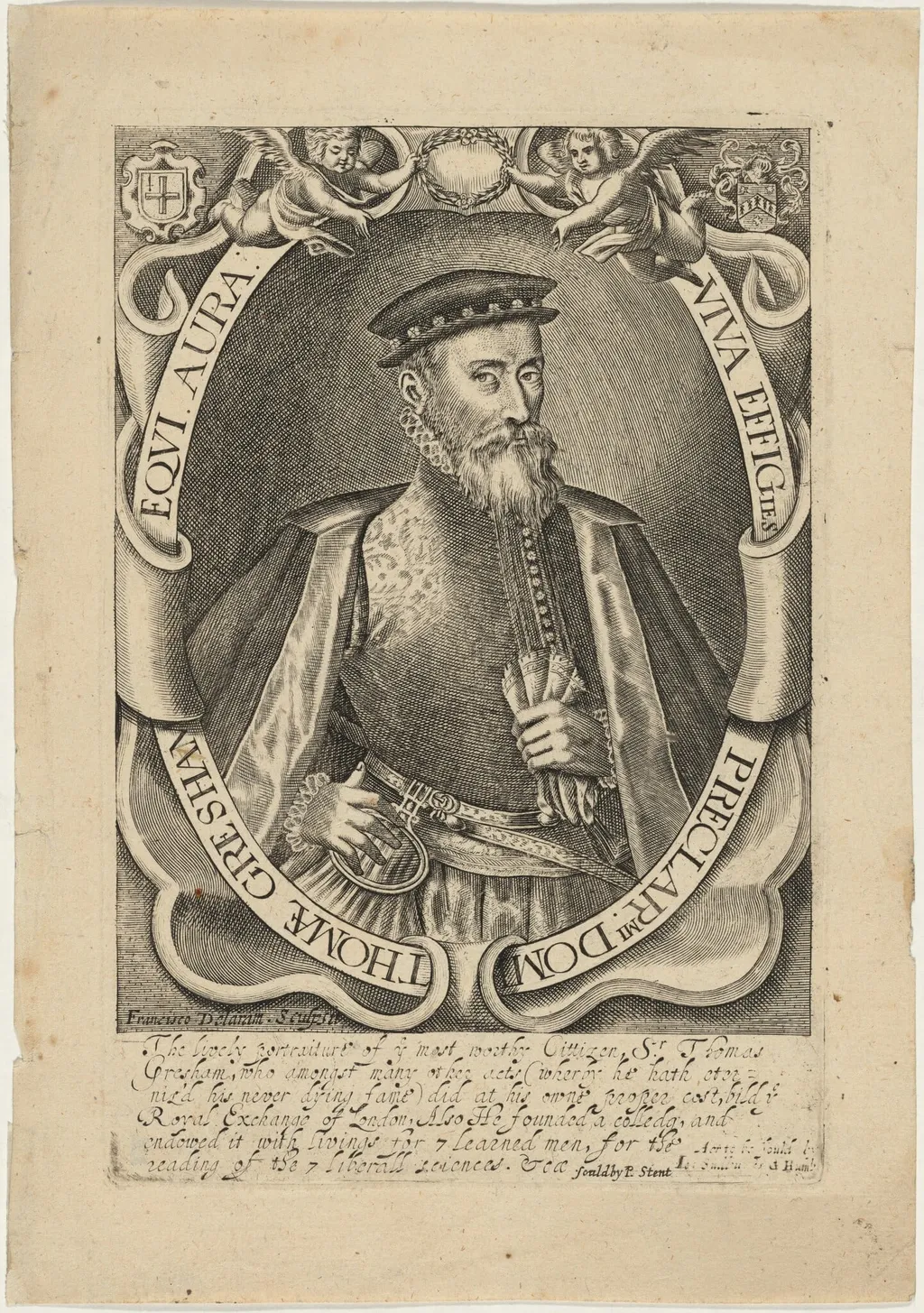
Thomae Gresham, Equi. Aura (Sir Thomas Gresham) is an ink print by the Renaissance artist Francis Delaram. It dates from 1608 and is held in the collection of the National Gallery of Art.
About this work
Overview
Francis Delaram’s 1608 engraving portrays Sir Thomas Gresham, the English financier who established London’s Royal Exchange. Rendered in black and white, the image shows Gresham in a dark coat and hat, holding a small object in his left hand and a chain in his right, surrounded by Latin inscriptions and decorative cherubs.
Subject & Meaning
The portrait emphasizes Gresham’s status as a wealthy merchant and public benefactor. Latin ribbons bearing words such as *AURA* and *VIRTUS* underscore virtues associated with his commercial success, while the cherubs add a classical, allegorical dimension typical of early‑17th‑century portraiture.
Technique & Style
Delaram employs fine cross‑hatching to model light and shadow, creating depth through intersecting lines. Decorative elements, including the dotted coat pattern and musical cherubs, reflect the influence of the Flemish school, a hallmark of Delaram’s early work.
History & Provenance
Francis Delaram, active between 1615 and the late 1620s, was an English engraver known for portraits, landscapes, and book illustrations, notably for William Camden’s *Historie*. The engraving’s background is comparatively weakly executed, suggesting a focus on the figure rather than the setting.
Context
The print belongs to a period when English portraiture increasingly incorporated continental decorative motifs. Delaram’s Flemish‑inspired details align with broader artistic exchanges between England and the Low Countries during the early Stuart era.
Artist & collection
Artist
Francis Delaram (born around 1590, fl. 1615–1624 or 1627), was an English engraver. Delaram left a substantial collection of engraved portraits, landscapes and book illustrations (specifically, William Camden's…

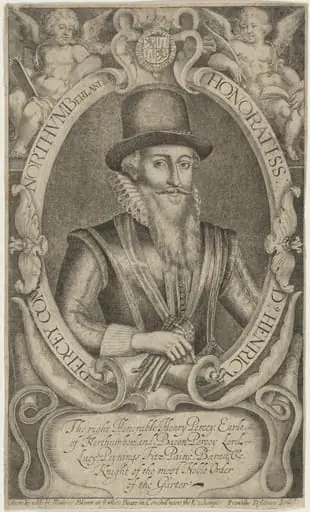 Henricus Percye (Henry Percy, Ninth Earl of Northumberland)
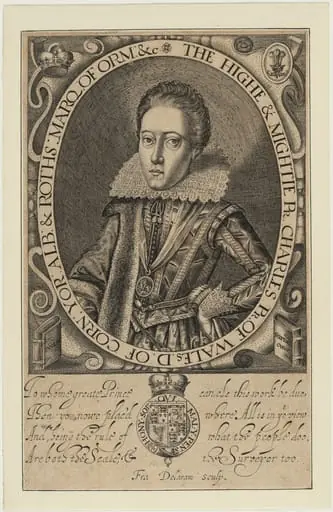 Charles I, as Prince of Wales
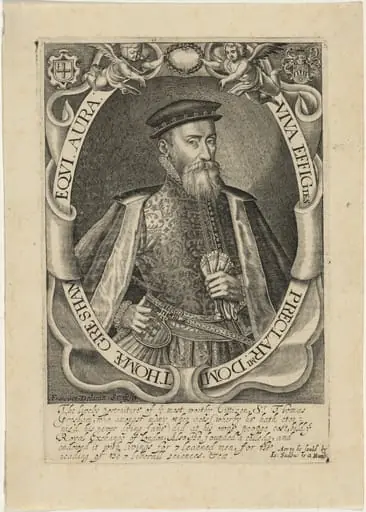 Sir Thomas Grisham
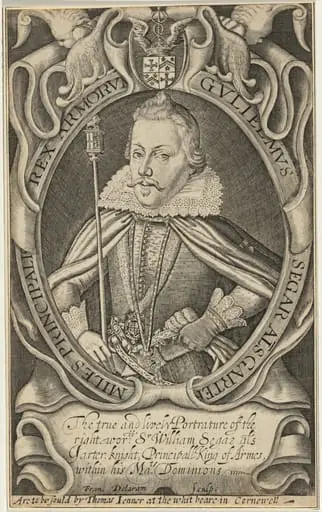 Guliemus Segar (Sir William Segar)
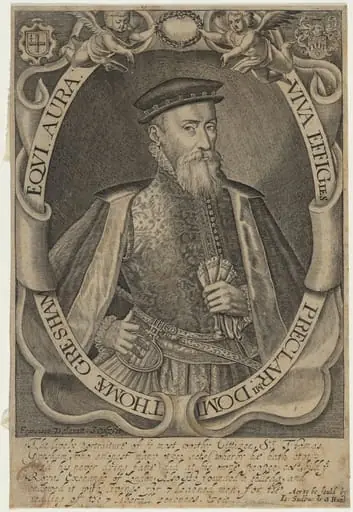 Thomae Gresham Equi. Aura (Sir Thomas Gresham)
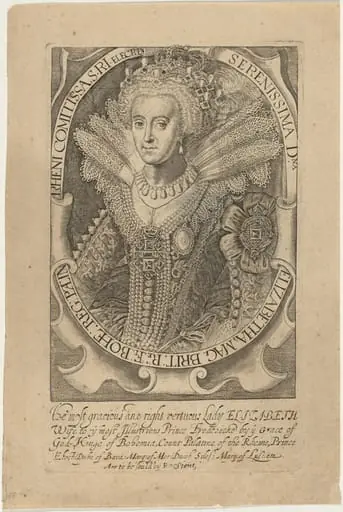 Elizabeth, Queen of Bohemia
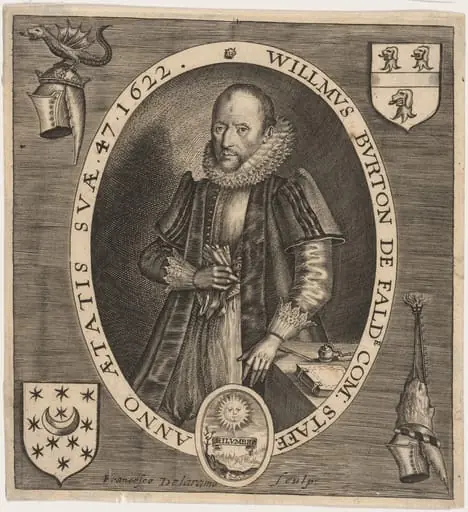 Willmus Burton de Falde (William Burton)
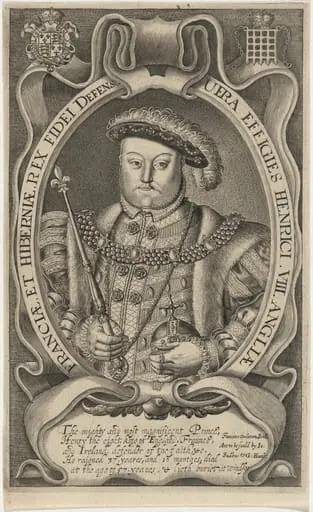 Henrici VIII Angliae, Franciae et Hiberniam Rex (King Henry VIII)