Artwork
Ferdinand I
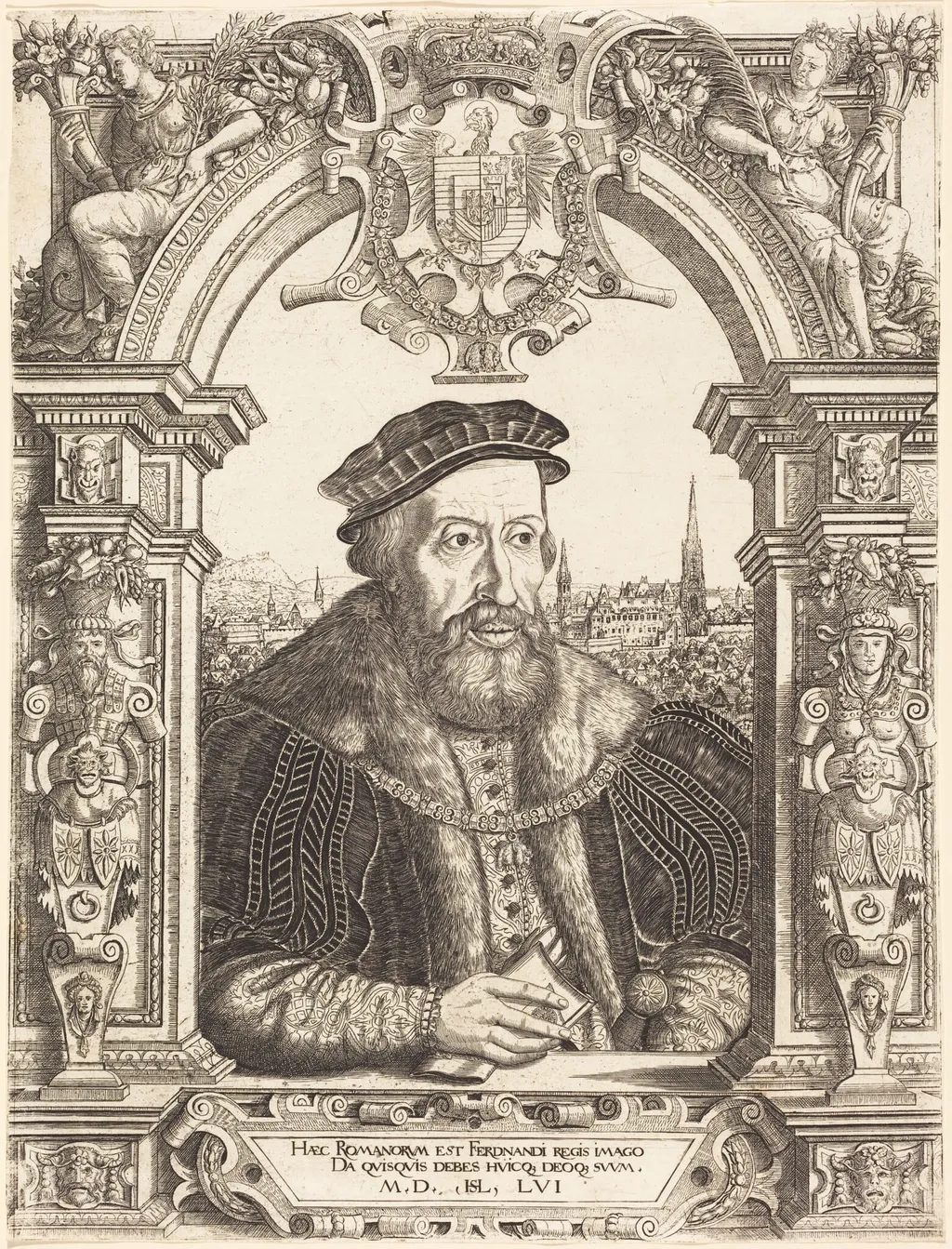
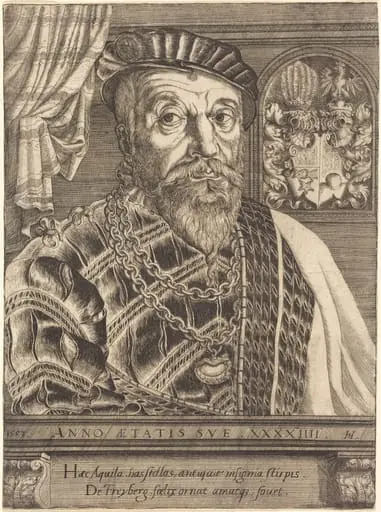
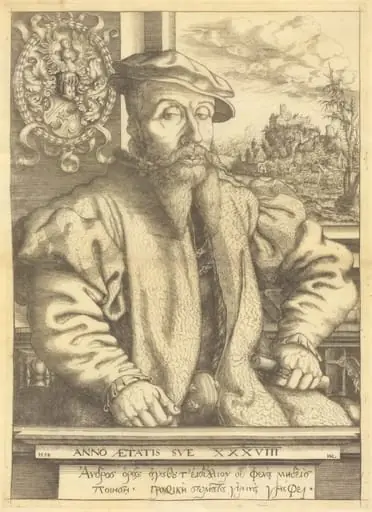
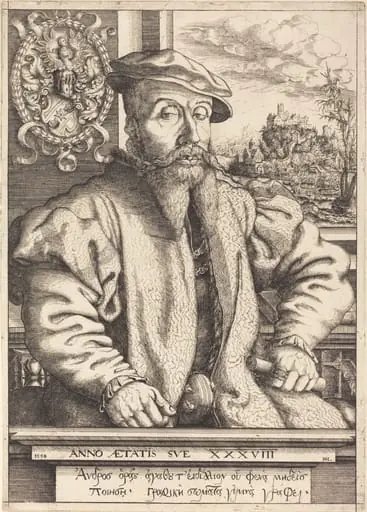
Ferdinand I is an ink print by the Renaissance artist Hanns Lautensack. It dates from 1556 and is held in the collection of the National Gallery of Art.
About this work
Overview
Ferdinand I is a 1556 etching by German artist Hanns Lautensack, portraying the emperor in a detailed, black-and-white profile. The work combines the subject's likeness with symbolic and contextual elements.
Subject & Meaning
The etching depicts Emperor Ferdinand I in a fur-lined robe and cap, set against a backdrop of a cityscape with a church spire. The ornate stone frame surrounding him features carvings of various figures, animals, and shapes, potentially alluding to imperial power and cultural heritage.
Technique & Style
Lautensack employed fine etching lines to render the intricate folds of the emperor's clothing and the texture of his beard. The level of detail, including the stone frame's ornamentation, showcases the artist's mastery of the etching technique.
History & Provenance
Created during Lautensack's time in Vienna in 1556, the etching may have been commissioned by Ferdinand I himself, possibly in connection with the documentation of the emperor's ancient coin collection. Characteristically, the work would have been signed with Lautensack's monogram.
Artist & collection
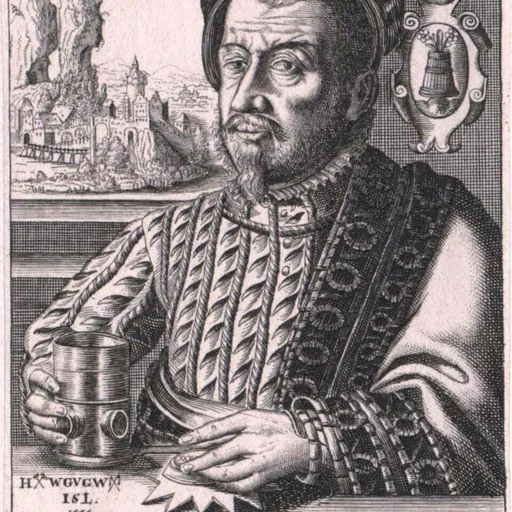
Artist
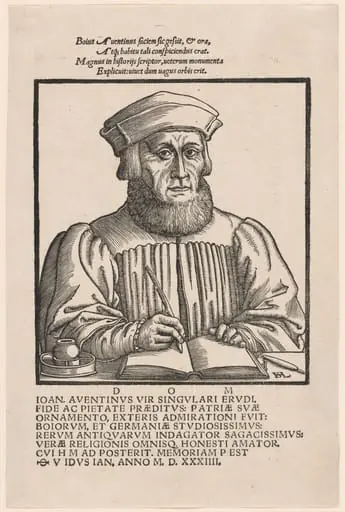
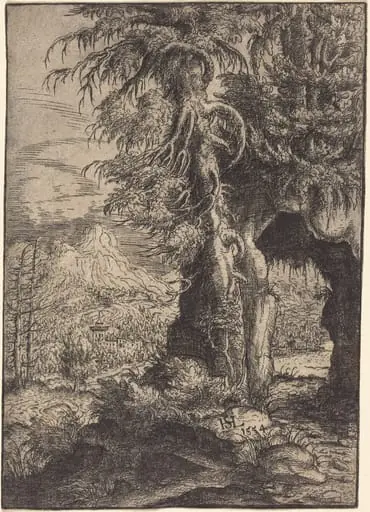
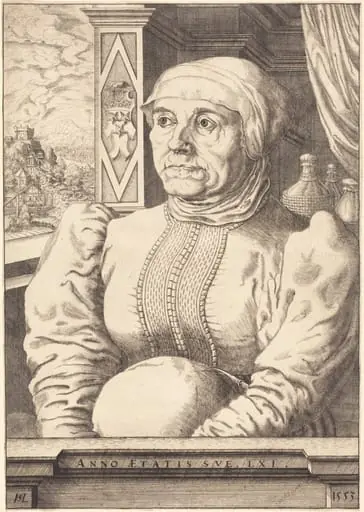
Hanns Lautensack (sometimes erroneously referred to as Hans Sebald Lautensack) (1524 – c.

![View of Nuremberg from the West [center section], by Hanns Lautensack](https://artifactworldgallery.com/img/hanns-lautensack--view-of-nuremberg-from-the-west-center-section--12422dca269411c0-w320.webp)