Artwork
Thomae Gresham Equi. Aura (Sir Thomas Gresham)
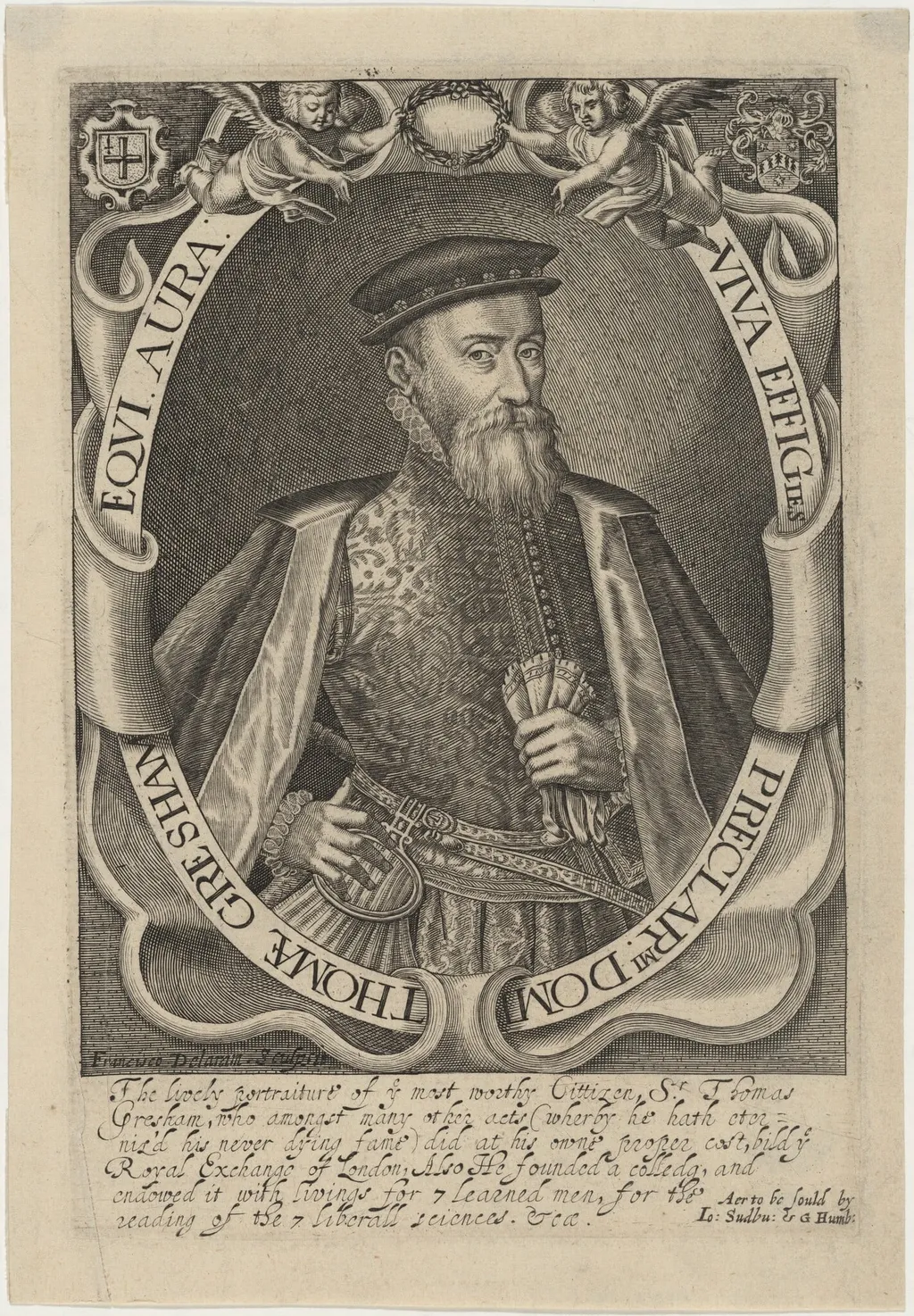
Thomae Gresham Equi. Aura (Sir Thomas Gresham) is an ink print by the Renaissance artist Francis Delaram. It dates from 1608 and is held in the collection of the National Gallery of Art.
About this work
Overview
This 1608 engraving by Francis Delaram portrays Sir Thomas Gresham, a prominent English merchant, in a formal, detailed likeness. The work showcases Delaram's skill in combining portraiture with ornate decorative elements.
Subject & Meaning
Sir Thomas Gresham is depicted holding a model of a building (likely the Royal Exchange, which he founded) and a scroll, symbolizing his commercial and intellectual pursuits. Above him, cherubs hold a banner with Latin virtues (*Fama* and *Prudencia*), highlighting his esteemed reputation and prudent character.
Technique & Style
Delaram employed sharp lines and nuanced shading to achieve depth and detail, characteristic of Flemish-influenced English engraving of the early 17th century. The inclusion of musical cherubs and ornate background elements, including crests, reflects his training, possibly under Cornelis Boel.
History & Provenance
Created in 1608, this engraving is part of Delaram's prolific output of portraits and illustrations, including work on William Camden’s *Historie*. Delaram, likely born in Flanders around 1590, was an English engraver active during a period of significant Flemish artistic influence in England.
Context
The engraving situates Gresham within the cultural and economic elite of early 17th-century England, where merchant patrons like Gresham played crucial roles in urban development projects like the Royal Exchange.
Artist & collection
Artist
Francis Delaram (born around 1590, fl. 1615–1624 or 1627), was an English engraver. Delaram left a substantial collection of engraved portraits, landscapes and book illustrations (specifically, William Camden's…

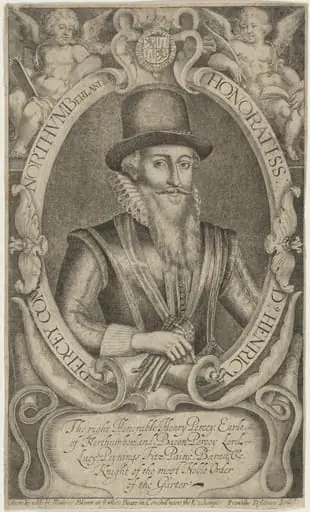 Henricus Percye (Henry Percy, Ninth Earl of Northumberland)
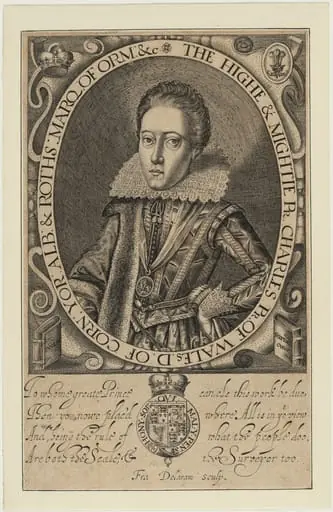 Charles I, as Prince of Wales
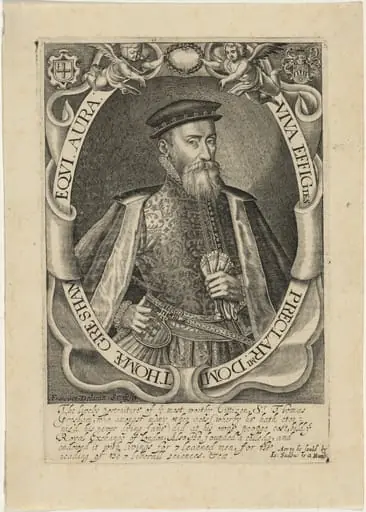 Sir Thomas Grisham
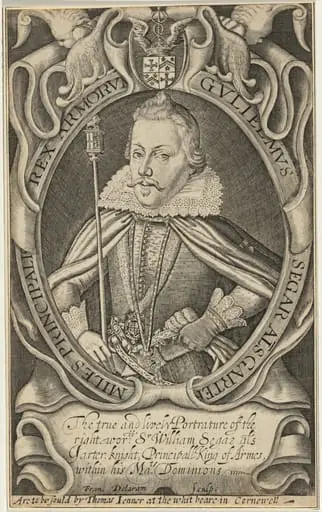 Guliemus Segar (Sir William Segar)
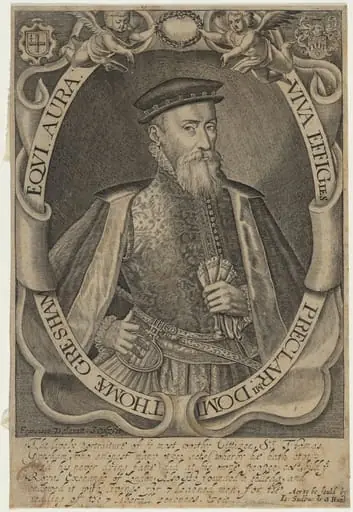 Thomae Gresham Equi. Aura (Sir Thomas Gresham)
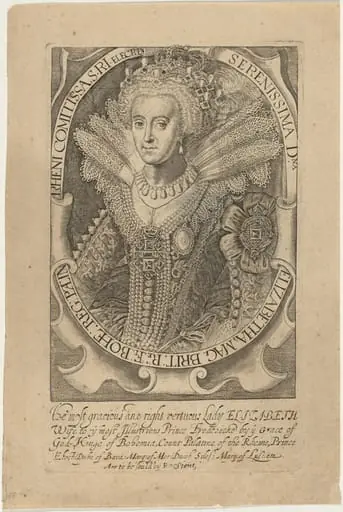 Elizabeth, Queen of Bohemia
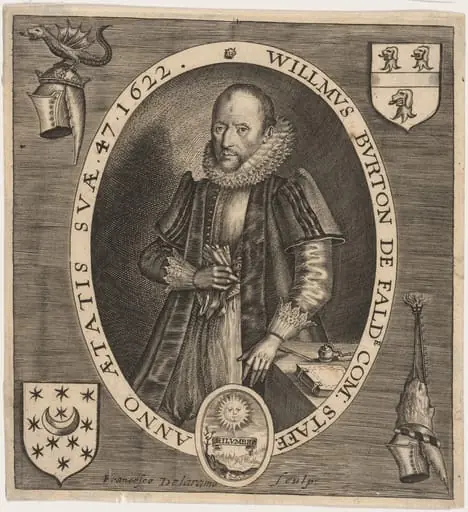 Willmus Burton de Falde (William Burton)
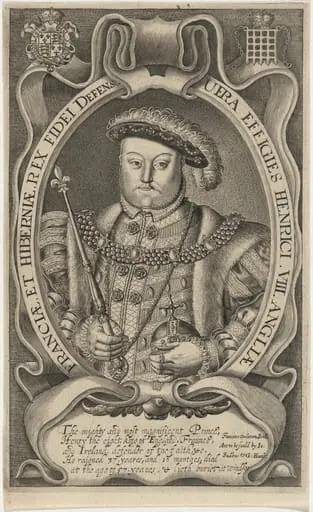 Henrici VIII Angliae, Franciae et Hiberniam Rex (King Henry VIII)