Artwork
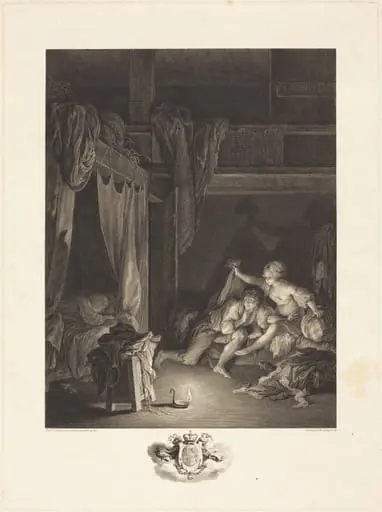
Ah! Jeune homme à ton bienfaiteur
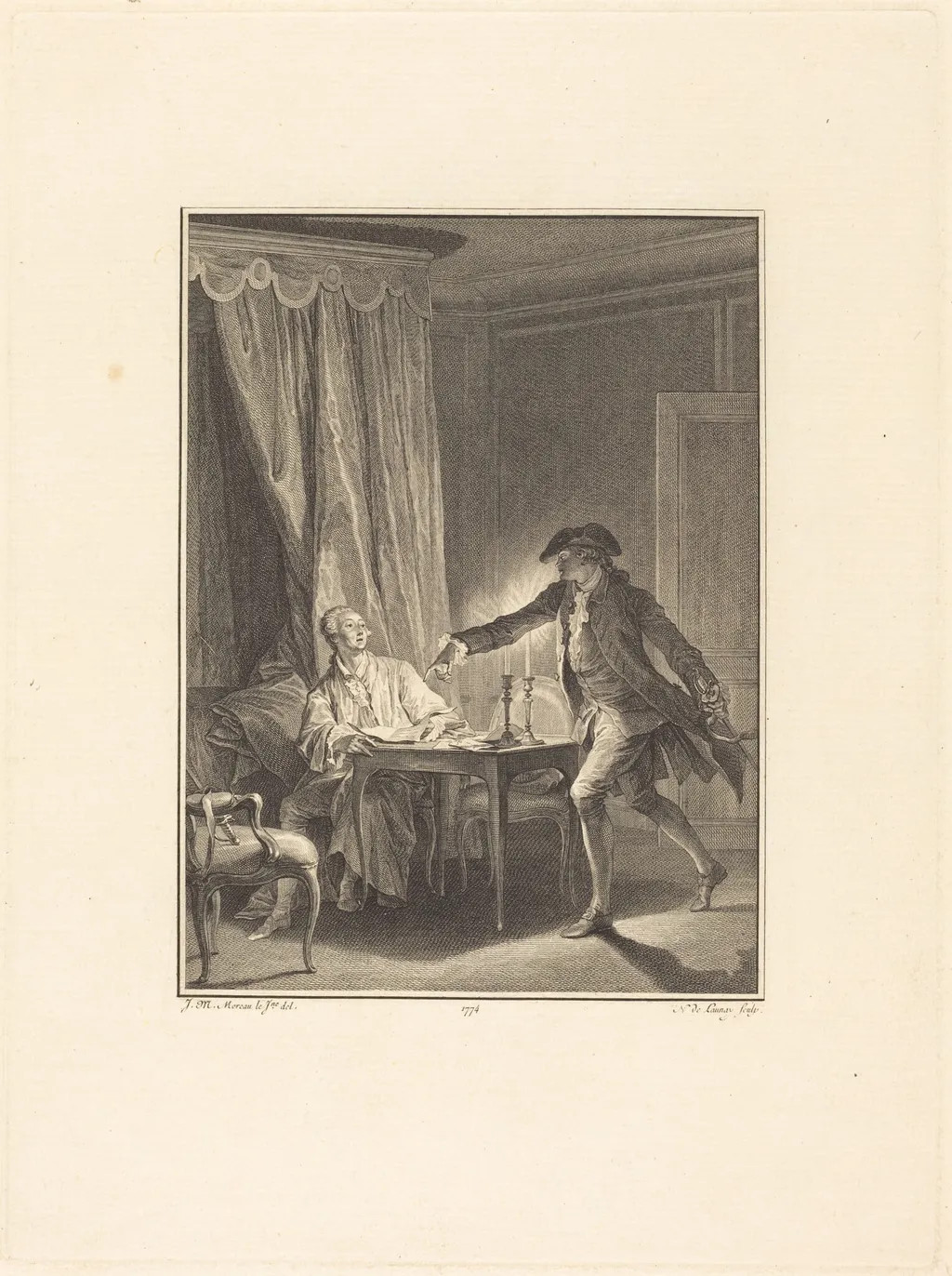
Ah! Jeune homme à ton bienfaiteur is an ink print by the Romanticist artist Nicolas Delaunay. It dates from 1774 and is held in the collection of the National Gallery of Art.
About this work
Overview
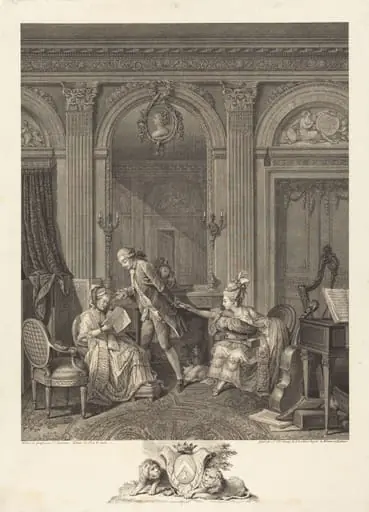
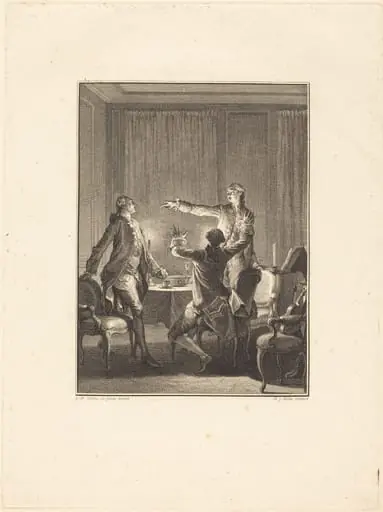
A seated man holds a sheet of paper, his expression one of startled surprise, while a standing gentleman in elaborate dress points emphatically at the document.
Nicolas Delaunay’s 1774 print, titled Ah! Jeune homme à ton bienfaiteur, is an etching and engraving executed on paper. Rendered in monochrome, the image captures a dim interior where two figures occupy the foreground. A seated man holds a sheet of paper, his expression one of startled surprise, while a standing gentleman in elaborate dress points emphatically at the document. A single candle provides the only illumination, casting soft shadows across a hanging curtain.
Subject & Meaning
The composition suggests a moment of revelation or accusation. The upright figure’s urgent gesture and the startled reaction of the seated individual convey a narrative of sudden disclosure, perhaps a legal or financial notice. The contrast between the refined attire of the pointing man and the humble posture of the other hints at a power dynamic, inviting viewers to infer a story of patronage, debt, or moral admonition.
Technique & Style
Delaunay combined traditional engraving with etching, allowing for both precise line work and softer tonal areas. The fine incised lines define the figures and their clothing, while broader etched washes create the atmospheric gloom and the candle’s glow. The interplay of crisp outlines and delicate shading produces a sense of depth within the limited palette, characteristic of late‑18th‑century French printmaking.
History & Provenance
Created in 1774, the print belongs to Delaunay’s mature period, when he produced a series of narrative scenes for the French market. Though specific ownership records are scarce, the work appears in several 19th‑century catalogues of French prints, indicating it circulated among collectors of genre imagery. Its survival in museum collections attests to its continued relevance as an example of Enlightenment‑era visual storytelling.
Artist & collection