Artwork
Diana Standing
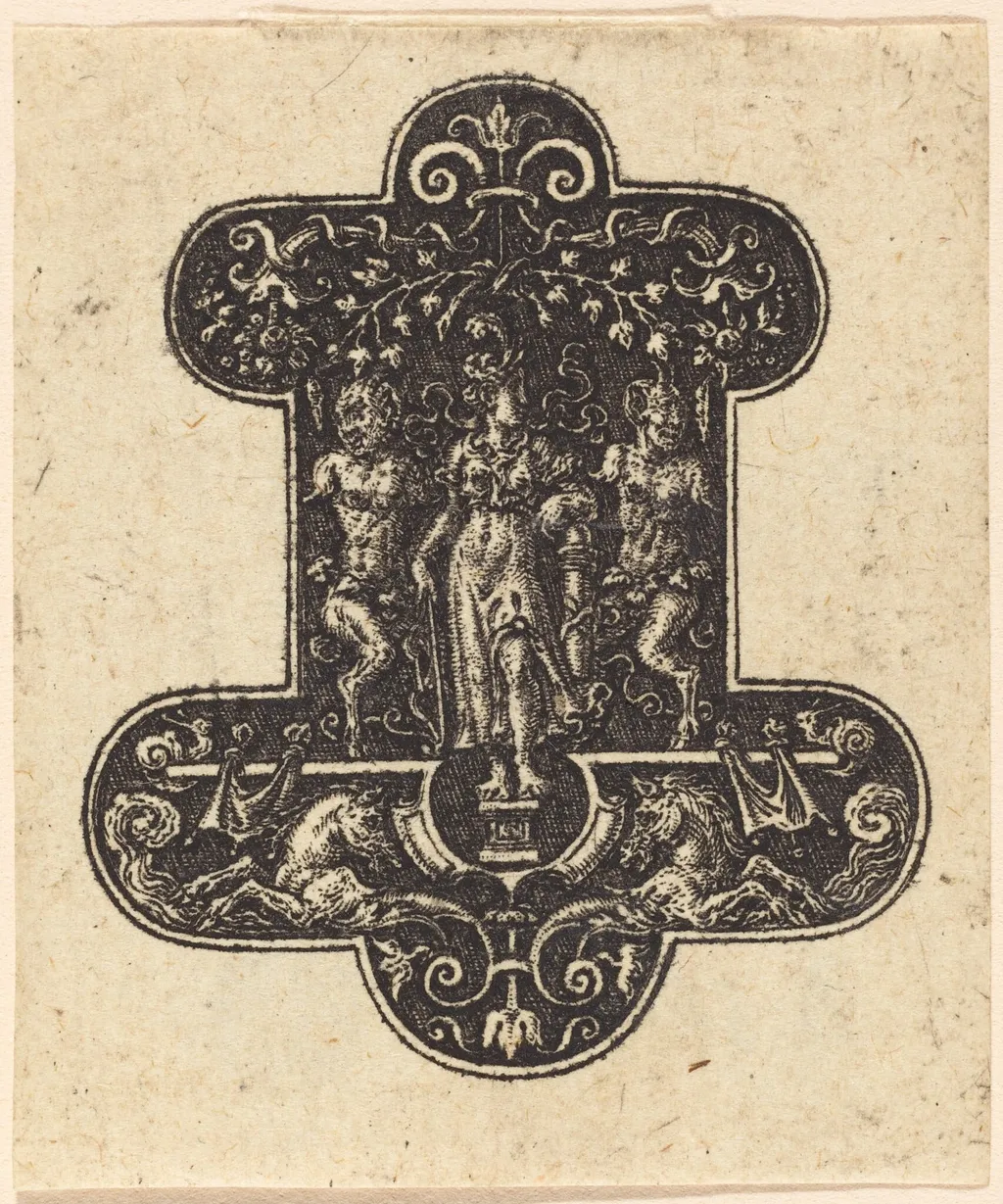
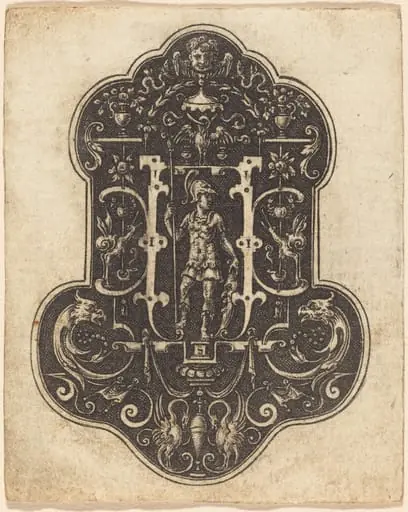
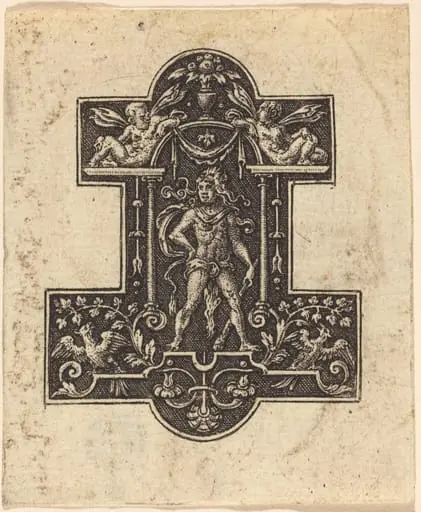
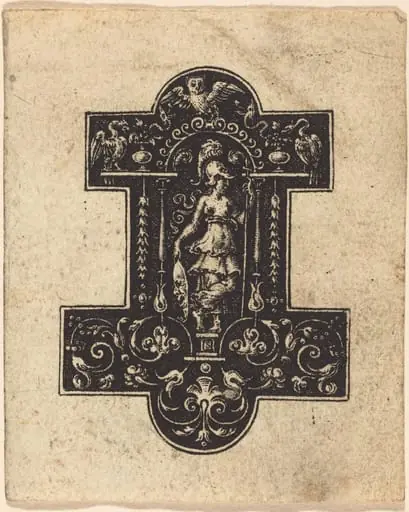
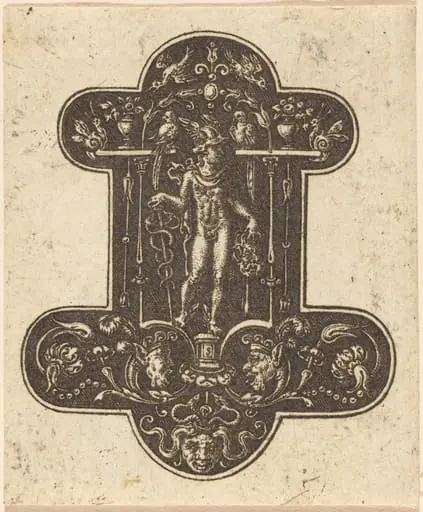
Diana Standing is an ink print by the Renaissance artist Etienne Delaune. It dates from 1551 and is held in the collection of the National Gallery of Art.
About this work
Overview
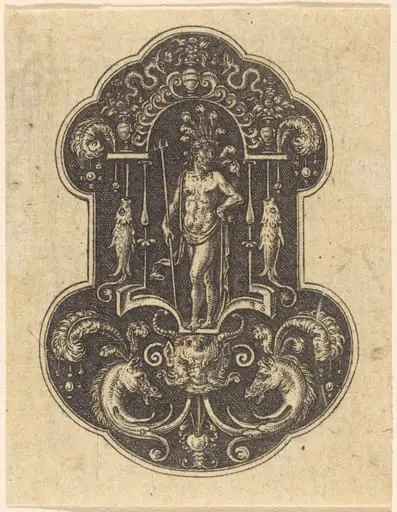
Etienne Delaune’s engraving Diana Standing, produced in 1551, presents a mythological scene rendered in black‑line print. The composition centers on a solitary female figure within a cross‑shaped frame, her posture upright and poised. The work exemplifies the Renaissance practice of translating classical subjects into the medium of intaglio, offering a compact yet intricate visual narrative.
Subject & Meaning
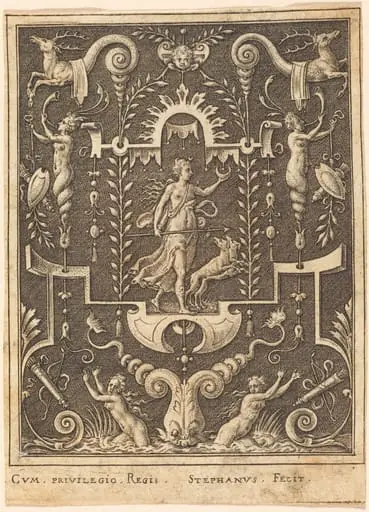
The central figure is the Roman goddess Diana, identifiable by her bow, arrow, and flowing attire, symbols of the hunt and chastity. A small dog at her feet reinforces her role as a protector of wildlife. Surrounding foliage, vines, and diminutive figures create a lush, mythic environment that underscores her dominion over nature.
Technique & Style
Delaune employs fine cross‑hatching to build tonal variation and depth, a hallmark of mid‑sixteenth‑century engraving. The delicate interlacing of lines defines the drapery, the animal’s fur, and the intricate botanical background. This meticulous line work allows subtle gradations of light and shadow, achieving a three‑dimensional effect despite the medium’s monochrome constraints.
History & Provenance
Created during the height of the French Renaissance, the print reflects Delaune’s role as a court engraver for Francis I. While the original copper plate no longer survives, surviving impressions have passed through notable European collections, appearing in early print catalogues and later in museum holdings that document the spread of classical iconography in Northern Europe.
Artist & collection