Artwork
Europe
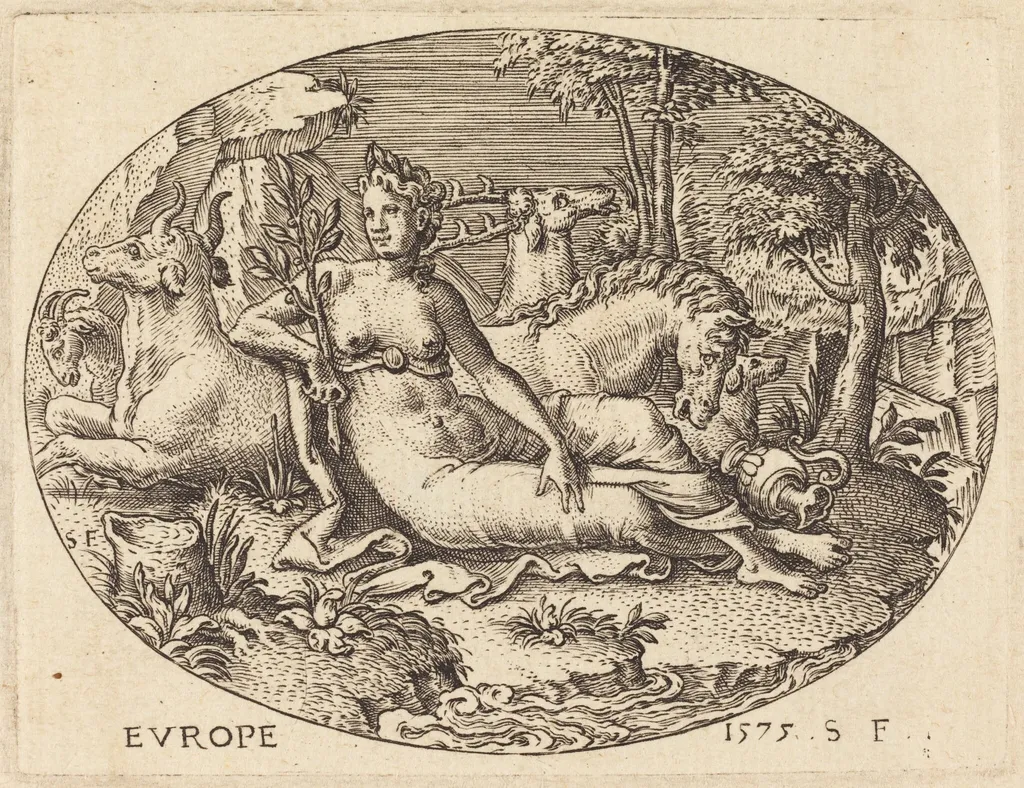
Europe is an ink print by the Renaissance artist Etienne Delaune. It dates from 1575 and is held in the collection of the National Gallery of Art.
About this work
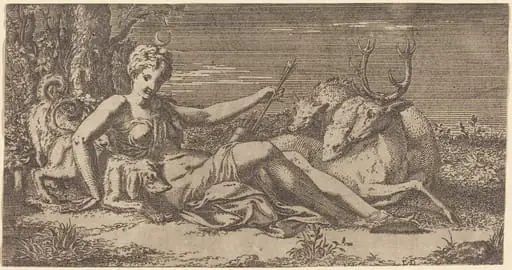
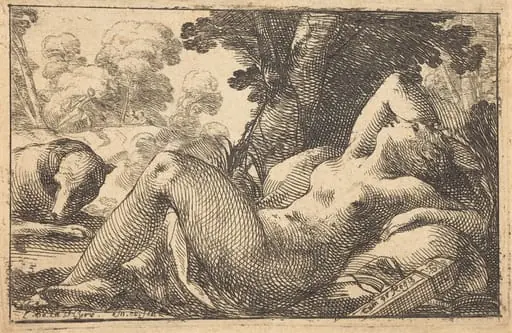
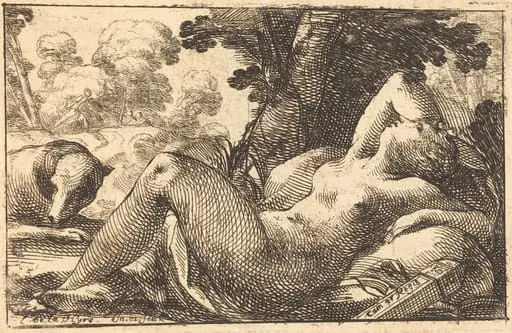
This black-and-white print shows a woman lying on a rocky shore, surrounded by animals—a bull, a lion, and a bird nearby.
This black-and-white print shows a woman lying on a rocky shore, surrounded by animals—a bull, a lion, and a bird nearby. She wears a crown of leaves and holds a scepter, while waves lap at her feet. The scene looks peaceful but a little strange, like a story without words.
The word "EUROPE" is written below, and the date "1575" is stamped in the corner. This isn’t a photo—it’s an *engraving*, where lines are carved into metal and inked to make the print. The artist used tiny parallel lines to create shadows and texture.
If you like this style, look up engraving to see how artists built whole worlds with just ink and metal.
Overview
Etienne Delaune’s 1575 engraving titled Europe presents a solitary female figure reclining on a craggy shoreline. The composition is rendered in black ink on paper, employing the fine linear technique characteristic of metal engraving. The image is signed with the word “EUROPE” and dated in the lower corner, confirming its authorship and year of execution.
Subject & Meaning
The central figure, crowned with a wreath of leaves and grasping a scepter, is surrounded by a bull, a lion and a bird, all positioned near the surf. The juxtaposition of the regal woman with wild animals evokes an allegorical representation of the continent, suggesting a harmonious yet enigmatic relationship between humanity and nature.
Technique & Style
Delaune achieved tonal variation through densely packed parallel lines, a hallmark of engraving that allows subtle gradations of shadow and texture. The crisp outlines and meticulous hatching give the rocky shore and rolling waves a tactile quality, while the delicate rendering of the figure’s drapery demonstrates the artist’s command of line.
History & Provenance
Created in the late sixteenth century, the print reflects the period’s interest in personifying geographic entities. While specific ownership records are scarce, the work has been catalogued in several collections of Renaissance prints, indicating its circulation among connoisseurs of engraving during and after Delaune’s lifetime.
Context
The engraving emerges from a broader European tradition of allegorical maps and personifications that flourished in the Renaissance. Delaune, a French goldsmith and engraver, contributed to this visual language, integrating classical motifs with contemporary symbolic conventions.
Legacy
Europe remains a representative example of mid‑sixteenth‑century engraving, illustrating how artists conveyed complex ideas through the disciplined medium of line. Its study informs understanding of the period’s iconography and the technical evolution of printmaking.
Artist & collection