Artwork
Sir Dudley Carleton, Viscount Dorchester
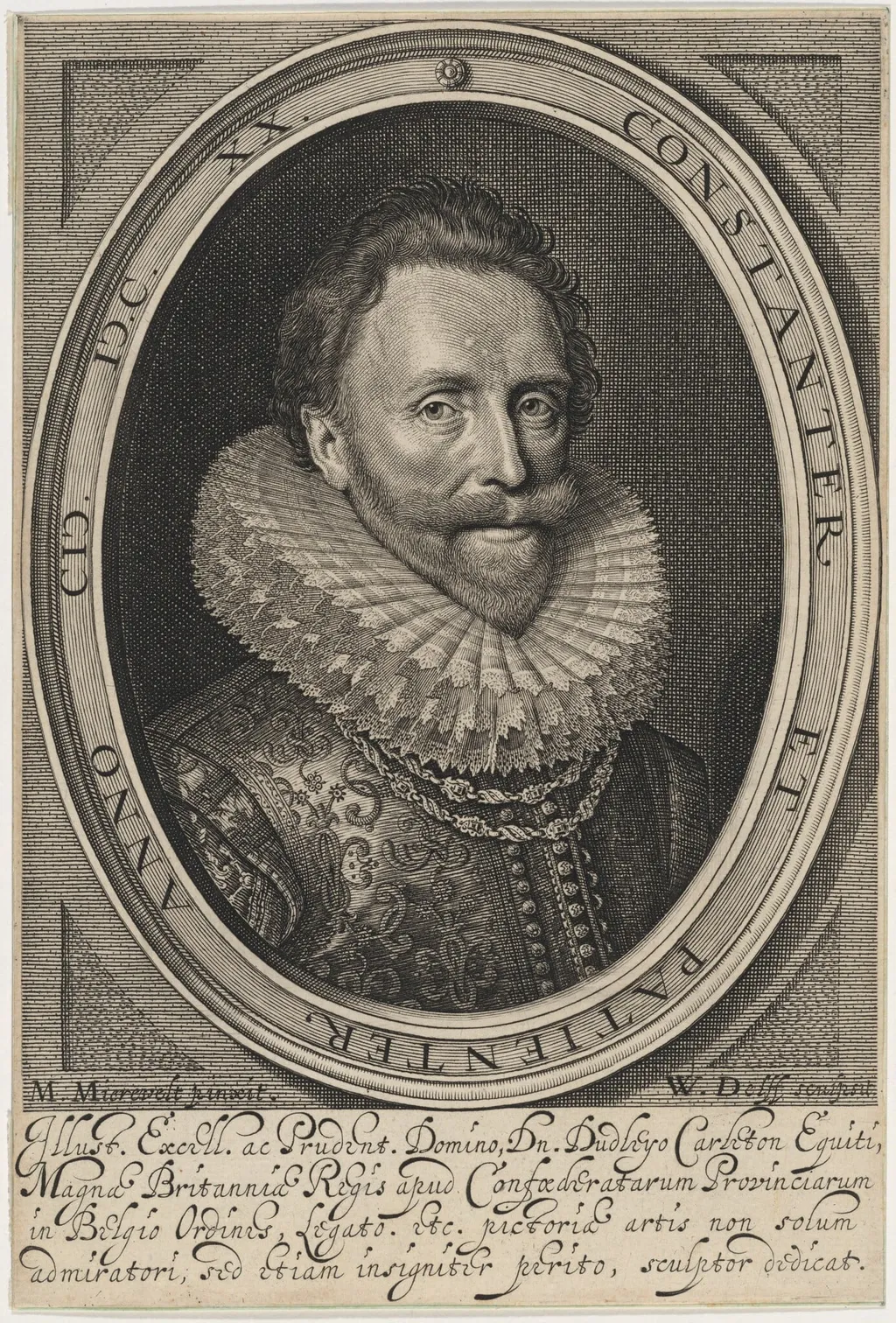
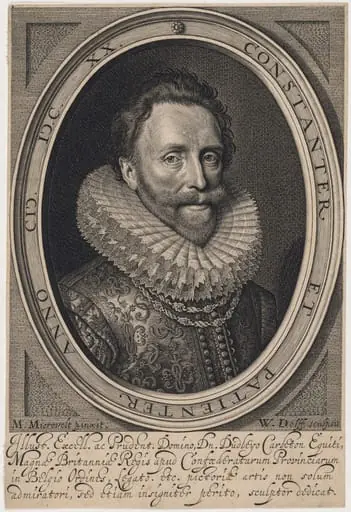
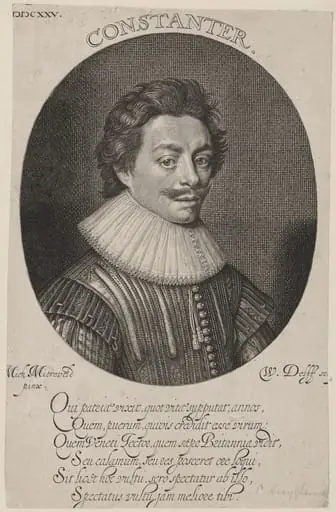
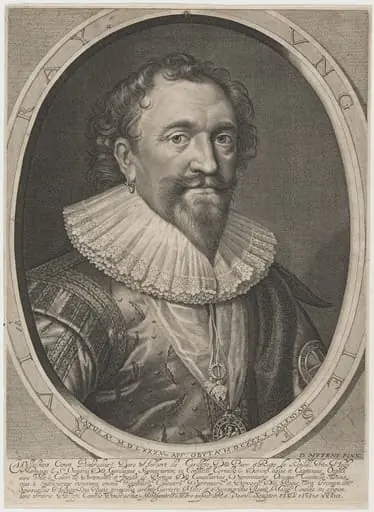
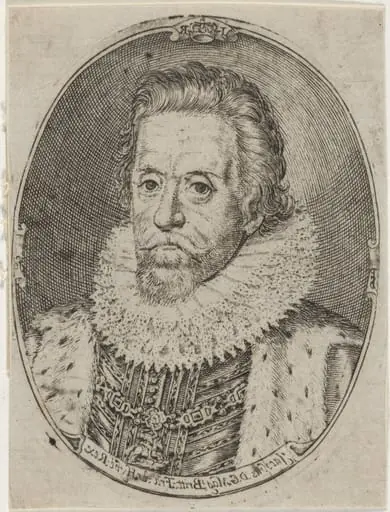
Sir Dudley Carleton, Viscount Dorchester is an ink print by the Baroque artist Willem Jacobsz Delff. It dates from 1620 and is held in the collection of the National Gallery of Art.
About this work
Overview
The image is rendered entirely in ink on paper, using precise linear techniques typical of early 17th-century printmaking.
This black-and-white print is an engraving by Willem Jacobsz Delff, completed in 1620. It depicts Sir Dudley Carleton, who held the title of Viscount Dorchester, in a formal portrait. The image is rendered entirely in ink on paper, using precise linear techniques typical of early 17th-century printmaking. The composition is tightly focused on the sitter’s face and upper torso, with no distracting elements in the background.
Subject & Meaning
Sir Dudley Carleton was an English diplomat and statesman, and this portrait reflects his status and gravitas. His rigid posture, direct gaze, and formal attire signal authority and composure. The chain around his neck likely represents an honor or office, while the high lace collar and neatly arranged hair convey the refined aesthetics of courtly life. The image functions as a visual record of identity and social position rather than a personal expression.
Technique & Style
Delff employed fine, controlled lines to model the textures of fabric, skin, and hair, using cross-hatching and subtle tonal gradations to suggest volume. The engraving’s precision highlights the contrast between the crisp edges of the lace collar and the softer contours of the face. The plain background eliminates context, directing attention entirely to the sitter’s features and attire, a common approach in portrait engravings of the period.
History & Provenance
Created in 1620, the engraving was likely produced to circulate Carleton’s likeness among diplomatic and aristocratic circles. Delff, a skilled Dutch printmaker, was known for his portraits of European elites. The Latin inscriptions surrounding the image were conventional in such prints, serving as formal identifiers rather than narrative elements. The work’s survival suggests it was valued and preserved within collections of portraiture or diplomatic memorabilia.
Context
In early 17th-century Europe, engraved portraits were a primary means of disseminating the likenesses of prominent figures before photography. Delff’s work aligns with a tradition of Dutch and Flemish printmakers who catered to international patrons. Carleton’s role as ambassador to Venice and The Hague made him a figure of interest abroad, increasing the demand for his image in printed form across Protestant and Catholic courts.
Legacy
This engraving remains a documented example of how diplomatic identity was visually constructed in the early modern era. While not widely reproduced today, it contributes to the historical record of Carleton’s public persona and reflects the technical standards of Dutch printmaking at its peak. It continues to serve as a reference for scholars studying portraiture, diplomacy, and the material culture of the Stuart period.
Artist & collection