Artwork
Nuni Dona
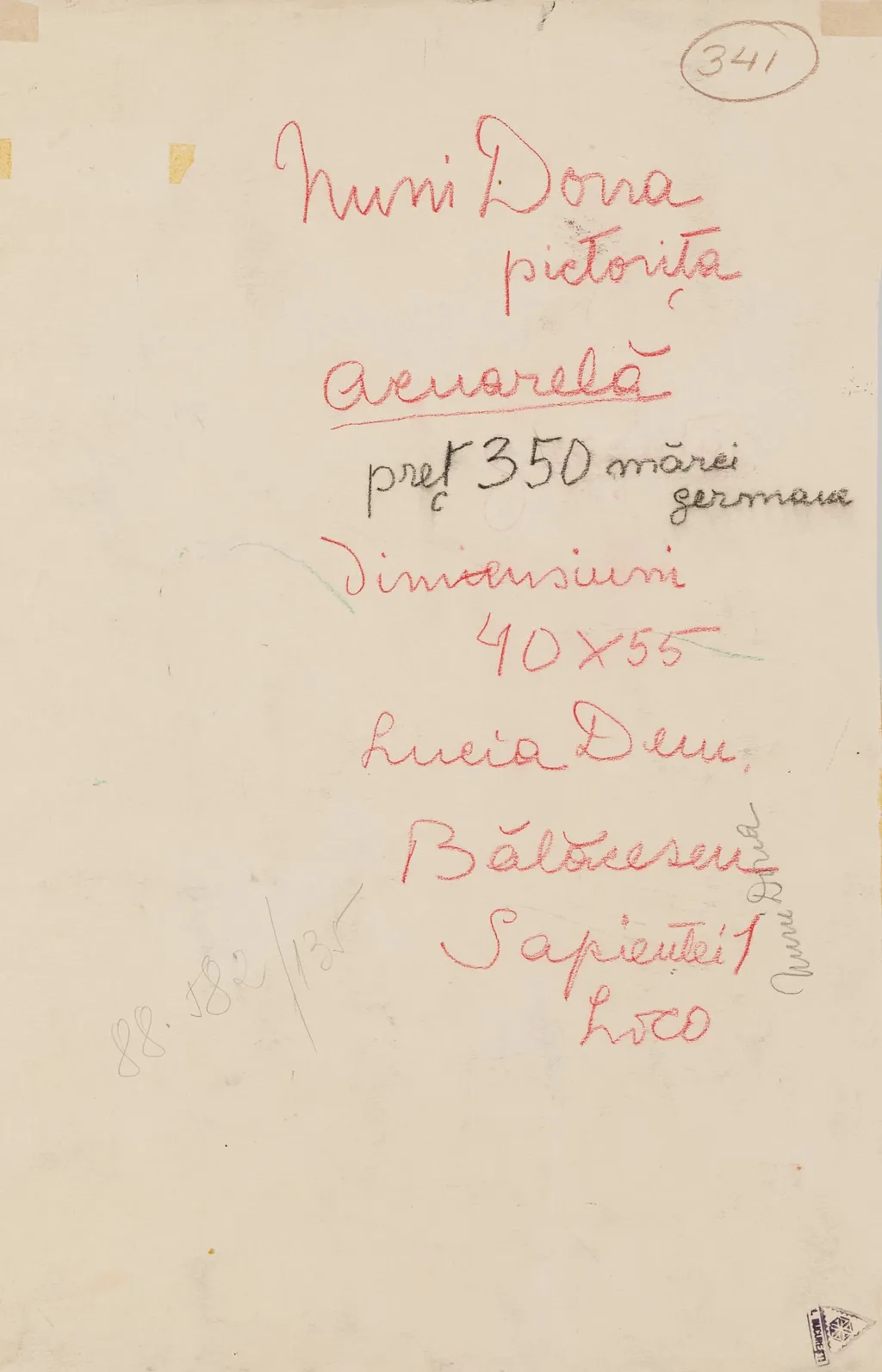
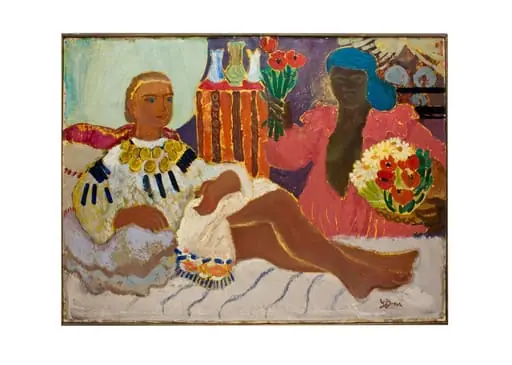
Nuni Dona is a print by Lucia Dem-Bălăcescu. It dates from 1850 and is held in the collection of the National Museum of Art of Romania.
About this work
Overview
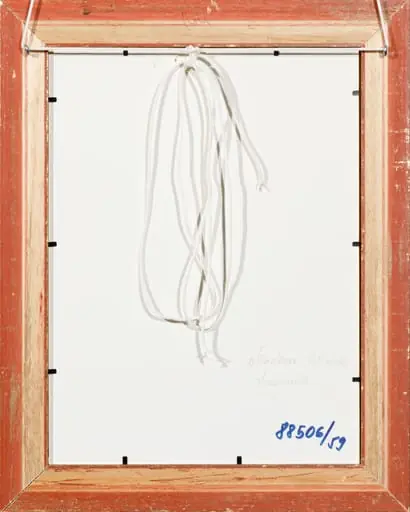
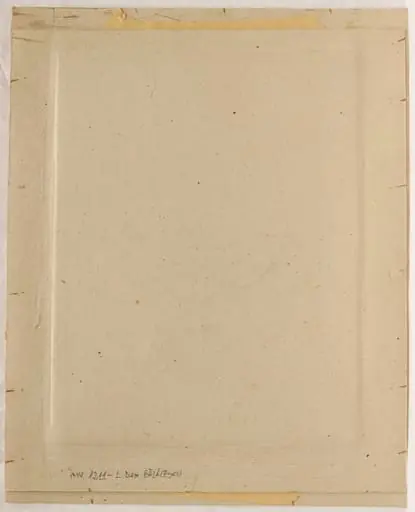
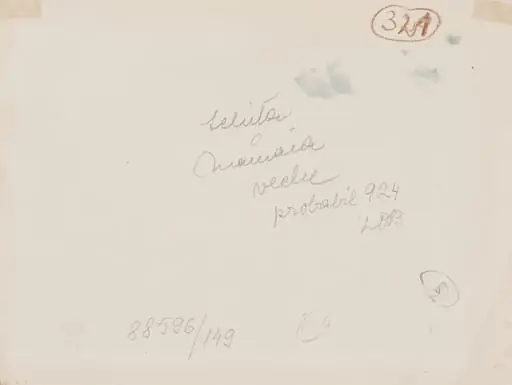
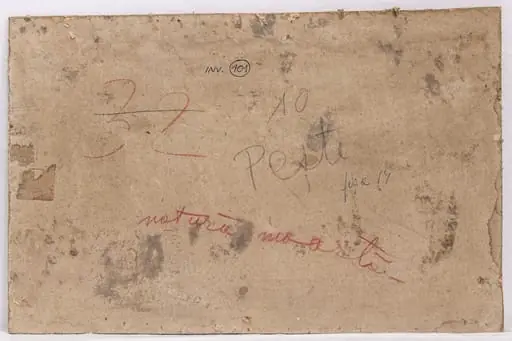
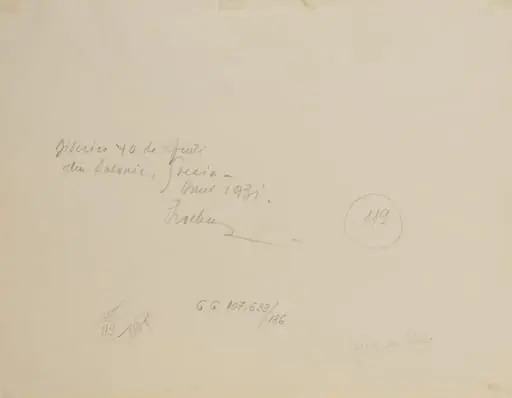
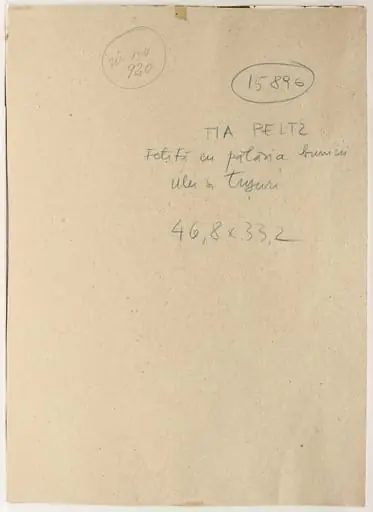
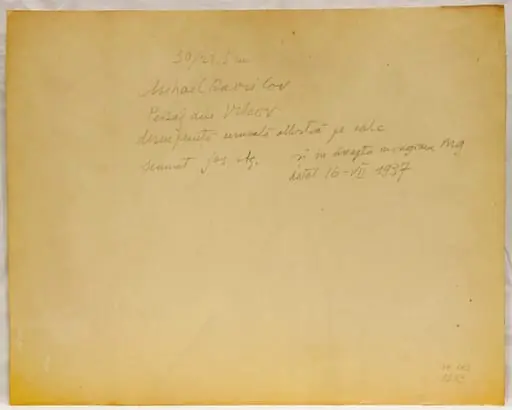
The work survives as a fragile, faded sheet bearing handwritten annotations in Romanian and German.
Nuni Dona is a watercolor portrait on paper, dated around 1850, attributed to Lucia Dem-Bălăcescu. The work survives as a fragile, faded sheet bearing handwritten annotations in Romanian and German. The title and medium are inscribed at the top, alongside dimensions of 40 by 55 centimeters. The paper shows signs of age—stains, pencil markings, and smudged ink—suggesting it was handled or stored informally, perhaps as a study or personal record rather than a finished exhibition piece.
Subject & Meaning
The portrait depicts a woman named Nuni Dona, identified in the artist’s handwritten note. No additional biographical details about the sitter are present, and the image itself is not described in surviving records. The work’s significance lies in its function as a personal record—possibly a study of a local individual, reflecting the artist’s engagement with portraiture outside formal commissions. The lack of embellishment or context suggests an intimate, observational approach.
Technique & Style
Executed in watercolor, the work employs a loose, direct technique typical of informal studies. The pigments have faded significantly, and the brushwork appears hurried, with minimal detail in facial features or clothing. The handwritten annotations, in uneven script, were likely added after the image was completed. The absence of a refined finish indicates this was not intended as a public portrait but rather a working sketch or private record of a person observed.
History & Provenance
The work’s early history is undocumented, but it entered the collection of the Museum of Ethnography, where it is held today. Its survival as a single sheet with marginalia suggests it was preserved not for its aesthetic value but for its connection to the artist or local cultural context. The presence of German measurements and Romanian text hints at the multilingual environment of 19th-century Romanian intellectual circles, though its exact path from studio to museum remains unclear.
Context
In mid-19th century Romania, watercolor portraiture was often used for personal or ethnographic documentation rather than elite commissions. Lucia Dem-Bălăcescu, one of the few documented female artists of the period, may have created this work as part of a broader effort to record individuals from diverse social backgrounds. The inclusion of 'Sapiéntia' in the inscription remains unexplained but may reference a personal motto, a place, or a miswritten term.
Legacy
Nuni Dona endures as a rare surviving example of a woman artist’s intimate work from pre-modern Romania. Its modest scale and unpolished condition contrast with the grander traditions of academic portraiture, offering insight into the informal practices of early female creators. While not widely exhibited, it holds value as a material trace of individual identity and artistic activity in a period with limited documentation of women’s contributions to visual culture.
Artist & collection