Artwork
Saint Philip
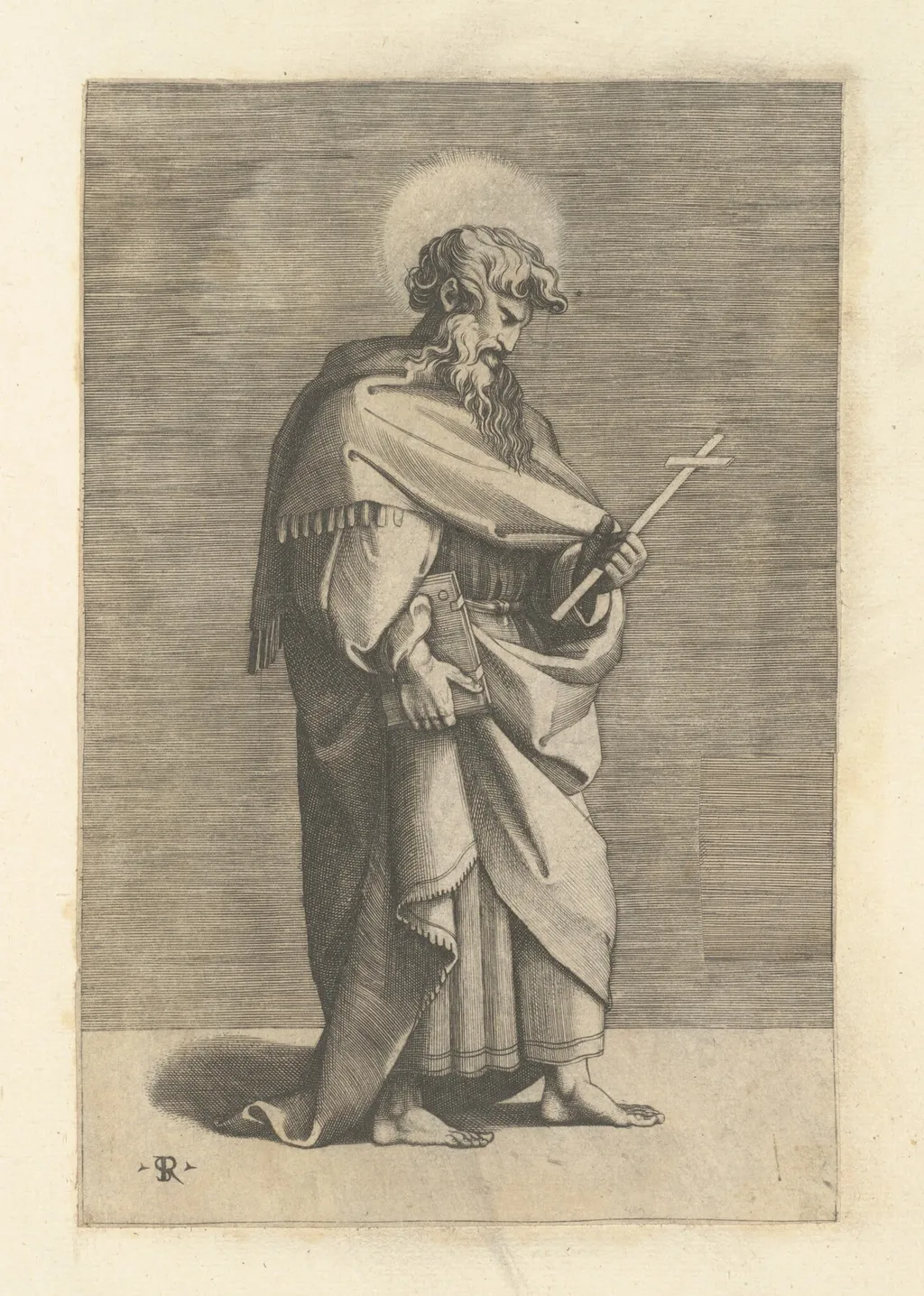
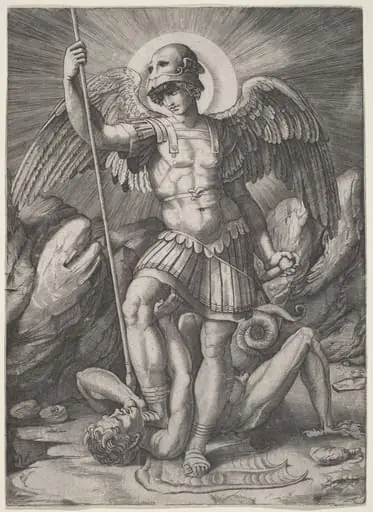
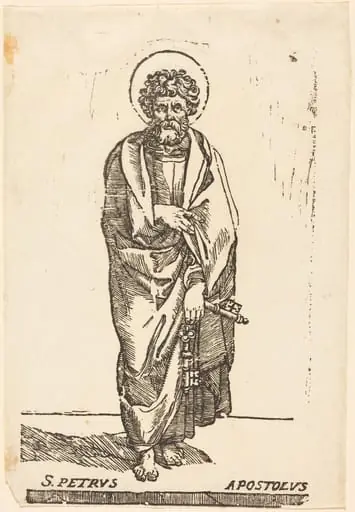
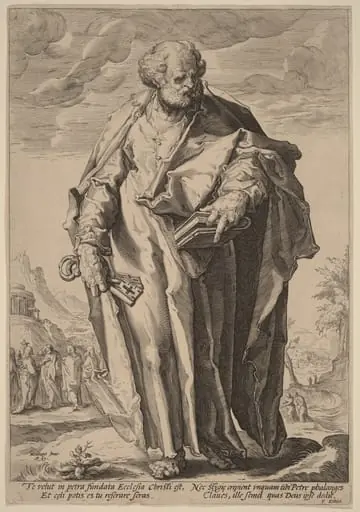
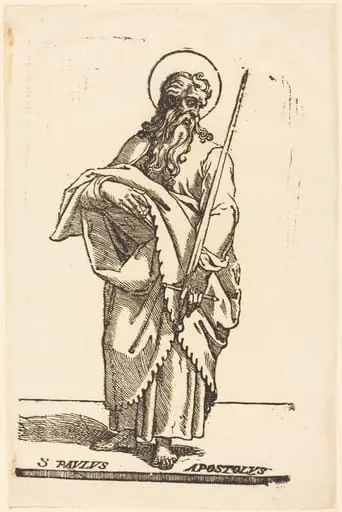
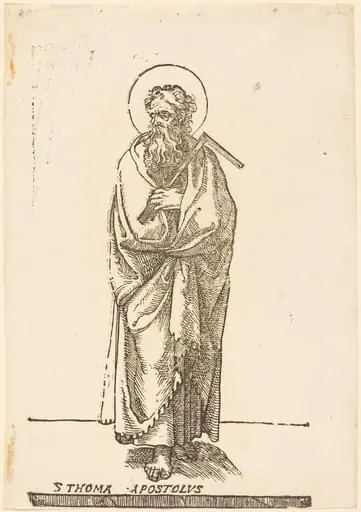
Saint Philip is an ink print by the Baroque artist Marco Dente. It is held in the collection of the National Gallery of Art.
About this work
Overview
Though dated 1657, the work likely stems from a plate carved by Marco Dente in the early 1500s, with the impression made posthumously.
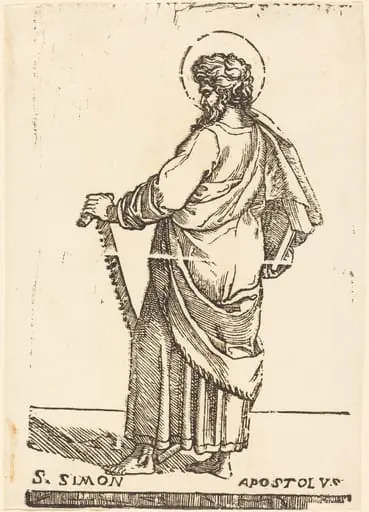
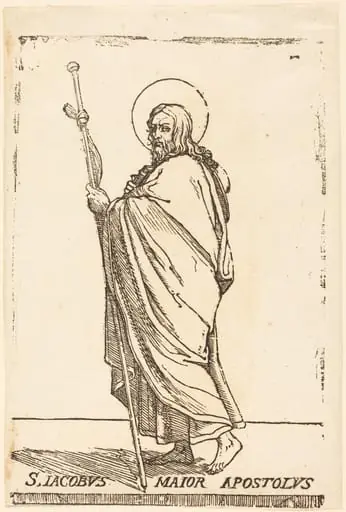
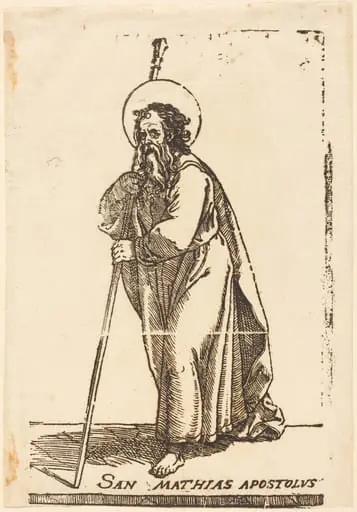
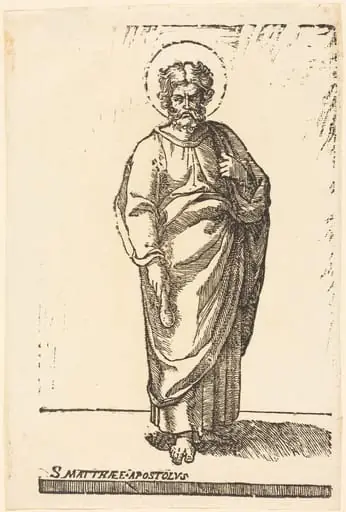
This engraving on laid paper, mounted on an older album sheet, depicts Saint Philip as a solitary figure. Though dated 1657, the work likely stems from a plate carved by Marco Dente in the early 1500s, with the impression made posthumously. Dente, an Italian printmaker active in Rome, specialized in reproductive engravings, translating established compositions into printed form for broader circulation within religious and artistic circles.
Subject & Meaning
The figure of Saint Philip is rendered with ascetic intensity: barefoot, bearded, and draped in voluminous robes, he holds a staff and gestures with one hand while a scroll is partially visible beneath his cloak. His wild hair and direct gaze suggest spiritual fervor. The imagery aligns with traditional iconography of apostles as witnesses to divine truth, emphasizing humility and prophetic authority through physical austerity and symbolic objects.
Technique & Style
Fine, controlled lines define the folds of the robe and the texture of the saint’s hair, using hatching and cross-hatching to model form and shadow. The plain background isolates the figure, heightening focus on his posture and expression. The precision of the engraving reflects the reproductive practices of early 16th-century Roman printmakers, who prioritized fidelity to original models over personal invention, yet still conveyed emotional gravity through meticulous draftsmanship.
History & Provenance
Marco Dente, trained in Ravenna and active in Rome during the 1510s–1520s, was part of a network of engravers reproducing works by artists like Raphael and Marcantonio Raimondi. This print likely originated from a plate created during his lifetime, with the 1657 date indicating a later impression. Its mounting on an album sheet suggests it was collected as part of a curated series of religious figures, common among scholars and clergy in the Baroque era.
Context
In early 16th-century Italy, engraved religious images served as accessible devotional tools and teaching aids, especially as literacy expanded. Dente’s work emerged during a period when the Church encouraged visual representations of saints to reinforce doctrine. His engravings, derived from paintings and sculptures, helped standardize iconography across regions, making sacred figures recognizable to lay audiences beyond the reach of original artworks.
Legacy
Dente’s prints, though not original compositions, played a key role in disseminating Renaissance visual language through print. His technique influenced later reproductive engravers and contributed to the persistence of apostolic imagery in devotional culture. While his name faded from public memory, his plates continued to circulate for over a century, testifying to the enduring utility of engraved religious imagery in pre-modern Europe.
Artist & collection

Artist
Marco Dente da Ravenna (1493–1527), usually just called Marco Dente, was an Italian engraver born in Ravenna in the latter part of the 15th Century.