Artwork
Saint Peter
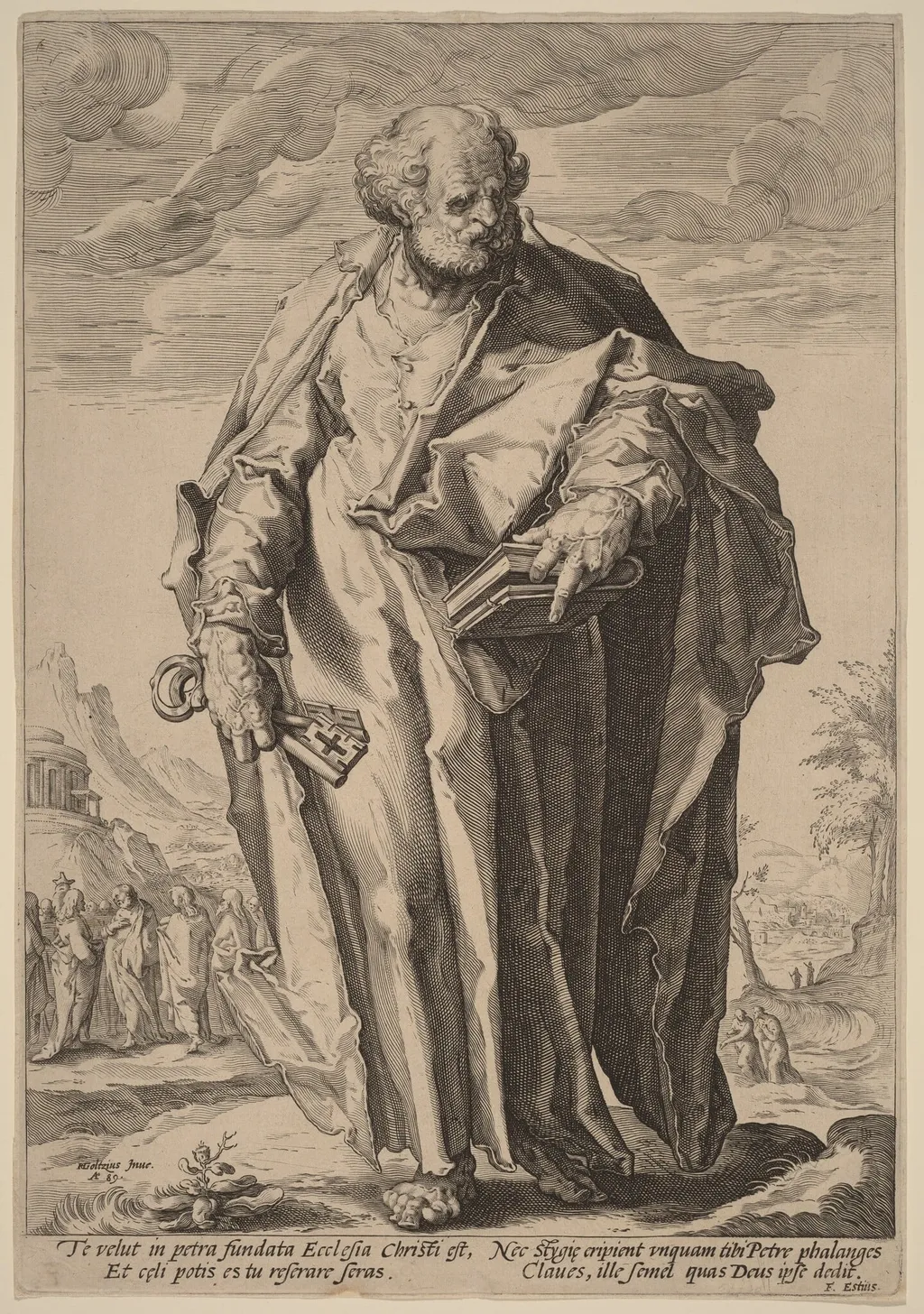
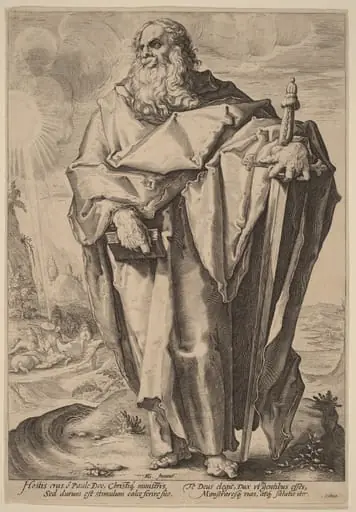
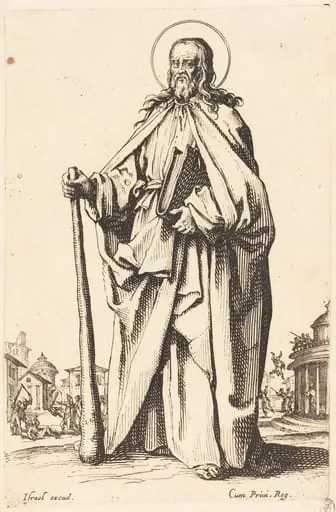
Saint Peter is an ink print by the Renaissance artist Jacques de Gheyn II. It dates from 1589 and is held in the collection of the National Gallery of Art.
About this work
Overview
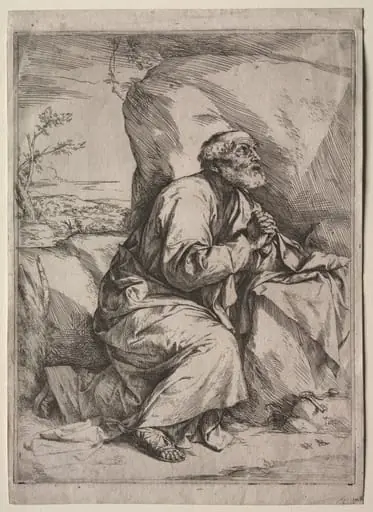
Jacques de Gheyn II’s engraving titled Saint Peter, executed in 1589, is a black‑and‑white print on laid paper. The image presents the apostle as an elderly figure, his beard and curls rendered in fine lines, clothed in draped robes. He holds a large key in one hand and a scroll in the other, his expression solemn and his features modeled through careful shading.
Subject & Meaning
The work identifies the biblical Saint Peter, traditionally regarded as the holder of the keys to Heaven, a symbol of ecclesiastical authority.
The work identifies the biblical Saint Peter, traditionally regarded as the holder of the keys to Heaven, a symbol of ecclesiastical authority. The accompanying scroll alludes to his role as a teacher and founder of the early Church. Peripheral vignettes—one of a crowd gathered before a building and another of a shipwreck—reference Peter’s miracles of feeding the multitude and calming the sea, reinforcing his spiritual significance.
Technique & Style
De Gheyn employs intricate line work characteristic of late‑Renaissance engraving. Cross‑hatching and stippling generate deep shadows that give the robes and flesh a three‑dimensional quality. The use of laid paper, with its faint ribbed texture, enhances the tonal range. Small narrative scenes are integrated into the borders, demonstrating the artist’s skill in composing complex compositions within a single plate.
History & Provenance
Created toward the end of the 16th century, the print reflects the growing demand for devotional images in Northern Europe. While specific ownership records are scarce, copies of the engraving appear in several early modern collections, indicating its circulation among collectors of religious prints. The work remains attributed to de Gheyn, whose oeuvre includes both portraiture and religious subjects.
Context
The engraving emerges from a period when printmaking served both as a means of disseminating religious iconography and as a vehicle for artistic experimentation. In the wake of the Counter‑Reformation, images of saints like Peter were commissioned to reinforce Catholic doctrine, and the technical precision of de Gheyn’s work aligns with contemporary expectations for didactic clarity and visual impact.
Artist & collection


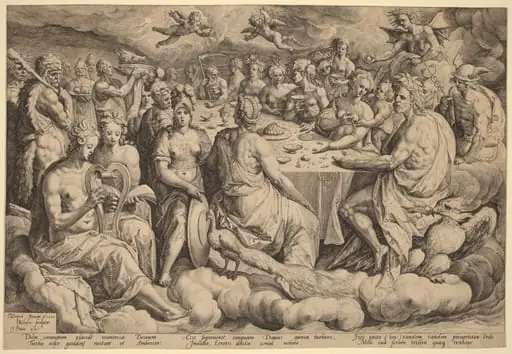 Banquet of the Gods at the Wedding of Peleus and Thetis
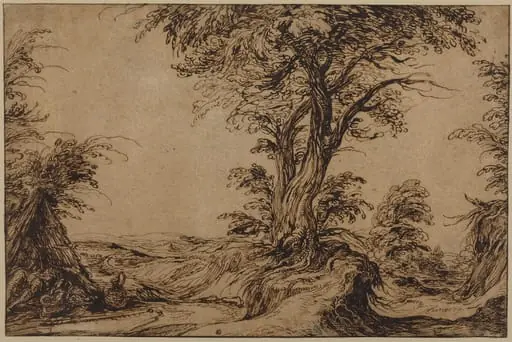 Landscape with Sleeping Peasants
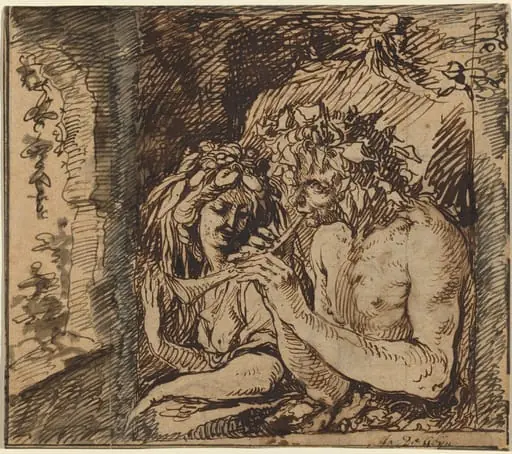 Bacchus and Ceres
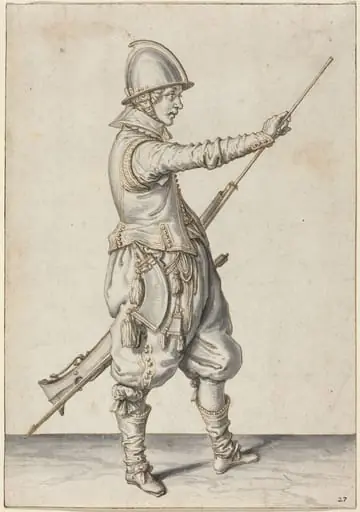 Elegantly Dressed Soldier Tamping His Caliver
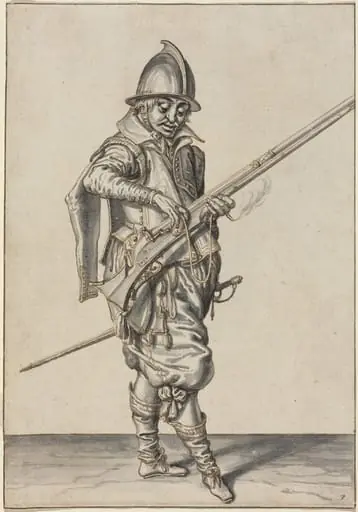 Elegantly Dressed Soldier Preparing to Fire His Caliver
![Witchcraft Scene with a Vampire [recto], by Jacques de Gheyn II](https://artifactworldgallery.com/img/jacques-de-gheyn-ii--witchcraft-scene-with-a-vampire-recto--a791adbd7e97db30-w320.webp) Witchcraft Scene with a Vampire [recto]
Witchcraft Scene with a Vampire [recto]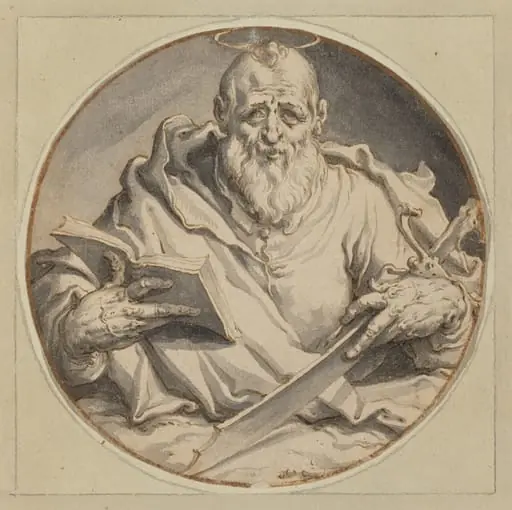 Saint Matthew
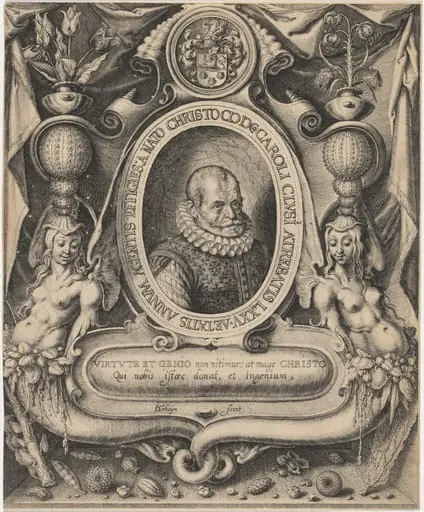 Carolus Clusius, Professor of Botany at Leyden