Artwork
Saint Peter
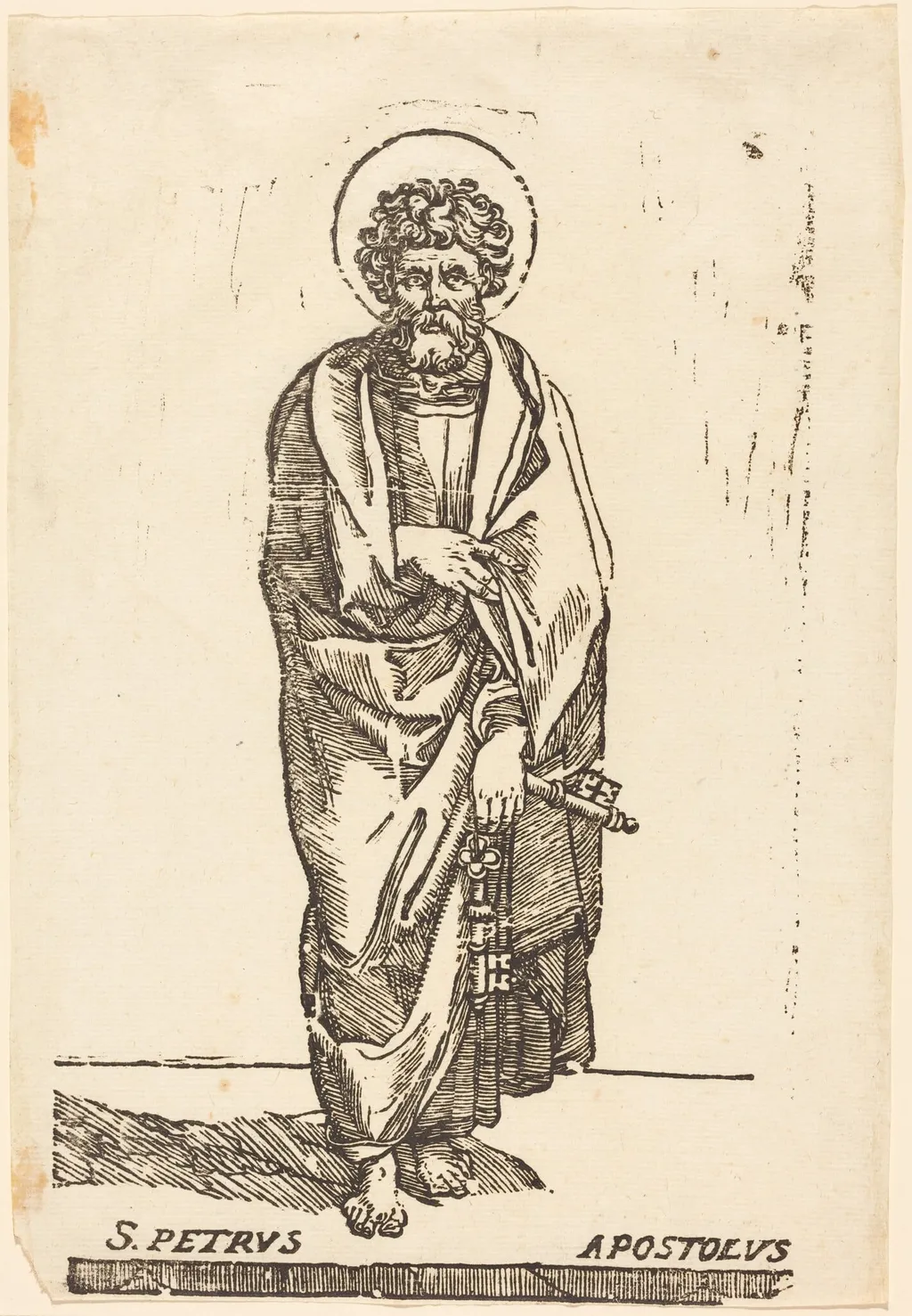
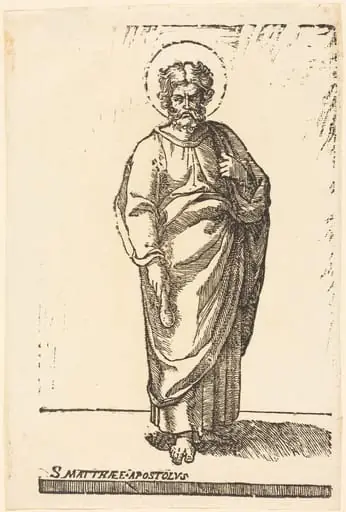
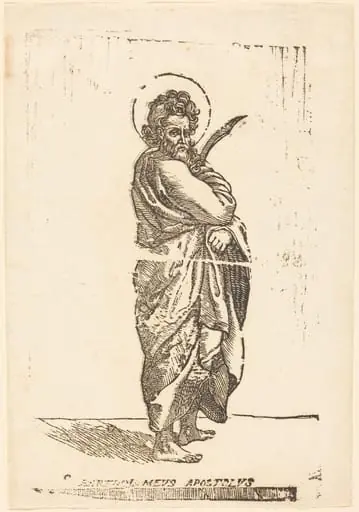
Saint Peter is an ink print by the Renaissance artist Italian 16th Century. It dates from 1626 and is held in the collection of the National Gallery of Art.
About this work
Overview
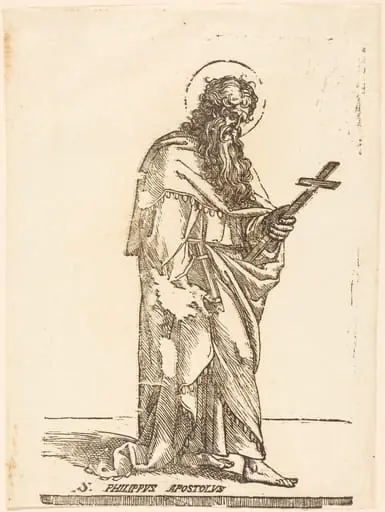
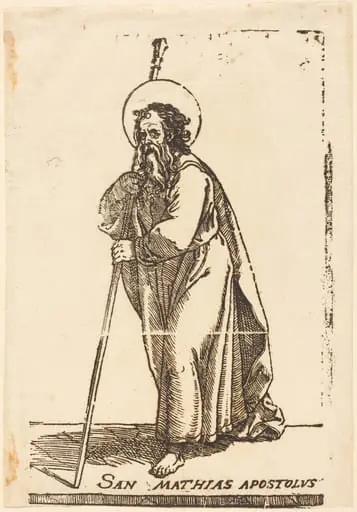
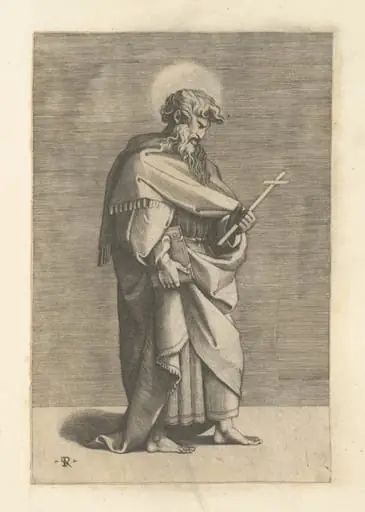
This woodcut on laid paper depicts Saint Peter, identifiable by his halo, beard, and curly hair. He is dressed in a long robe, with one hand holding a set of keys (symbolizing his role in Christian tradition) and the other resting on his chest. The print features a textured paper appearance and the inscription 'S. PETRUS APOSTOLEVS' at the bottom.
Subject & Meaning
The subject is Saint Peter, a central figure in Christianity, often represented with keys to signify the 'keys to heaven' entrusted to him by Christ. This imagery aligns with Renaissance European religious iconography.
Technique & Style
Executed as a woodcut, the image was carved into a wood block before printing on laid paper, characteristic of Renaissance printmaking techniques. The black-and-white format and textured paper are typical of this method.
History & Provenance
Originating from Renaissance Europe, the woodcut reflects common printmaking practices of the time. Specific details about its creation date, artist, or ownership history are not provided.
Context
Created within the religious and artistic climate of Renaissance Europe, this woodcut would have been used for devotional or illustrative purposes, contributing to the widespread dissemination of Christian imagery during this period.
Legacy
As a representative example of Renaissance woodcutting, it illustrates the era's religious art themes and printmaking techniques, though its individual impact or influence on later art is not specified.
Artist & collection

Artist
A 16th-century Italian sculptor left us small bronze works in dark brown and gold.