Artwork
Saint Paraskevi
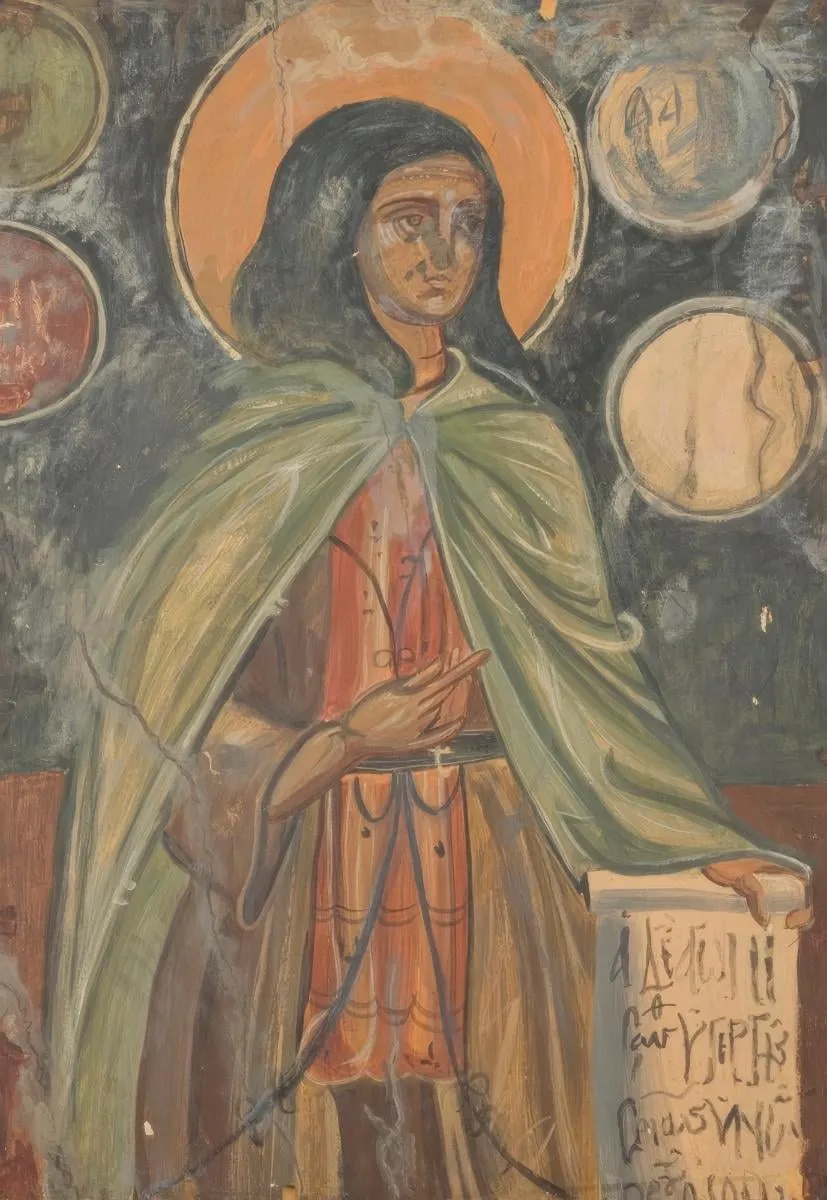
Saint Paraskevi is an unspecified painting by the Byzantine icon painting artist Despina Mega. It dates from 1959 and is held in the collection of the Athens School of Fine Arts.
About this work
Overview
Painted in 1959 by Despina Mega, this work portrays Saint Paraskevi, a Christian martyr venerated in Eastern Orthodox traditions. Executed in a style drawing from Byzantine iconography, the painting is part of the Museum of Ethnography’s collection. Its formal composition and symbolic elements reflect a deliberate engagement with religious visual heritage, adapted through a 20th-century lens.
Subject & Meaning
The surrounding colored circles may symbolize divine presence or celestial order, reinforcing her spiritual authority within a devotional context.
The figure represents Saint Paraskevi, traditionally associated with healing and the protection of the eyes. Her raised right hand signifies blessing or invocation, while the inscribed white object in her left hand likely denotes a sacred text or relic. The surrounding colored circles may symbolize divine presence or celestial order, reinforcing her spiritual authority within a devotional context.
Technique & Style
Mega employs bold, flat contours and saturated hues typical of Byzantine icons, yet the composition introduces abstract elements not found in historical models. The dark background isolates the saint, enhancing her presence. The use of layered pigments and precise linework suggests a methodical approach, blending traditional aesthetic principles with modern interpretive freedom.
History & Provenance
Created in 1959, the painting entered the Museum of Ethnography’s holdings shortly after its completion. It is one of several religious works by Despina Mega produced during a period of renewed interest in Orthodox iconographic forms in postwar Greece. Its preservation in a museum of cultural history underscores its role as both devotional object and ethnographic artifact.
Context
In mid-20th century Greece, artists like Mega revisited Byzantine traditions as a means of cultural reassertion amid modernization. This painting reflects a broader movement to reconnect with religious imagery, not as mere revival, but as a living expression of identity. The inclusion of abstract symbols signals an evolving dialogue between ancient forms and contemporary artistic language.
Legacy
The work contributes to the recognition of Despina Mega as a figure who bridged ecclesiastical iconography and modernist sensibilities. While not widely exhibited beyond institutional collections, it remains a significant example of how religious themes were reinterpreted in postwar Greek art, influencing later artists exploring spiritual symbolism through non-traditional means.
Artist & collection
Artist
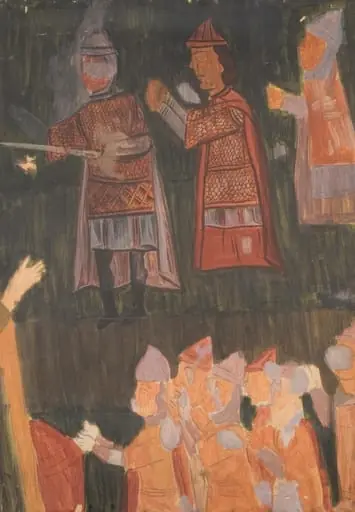
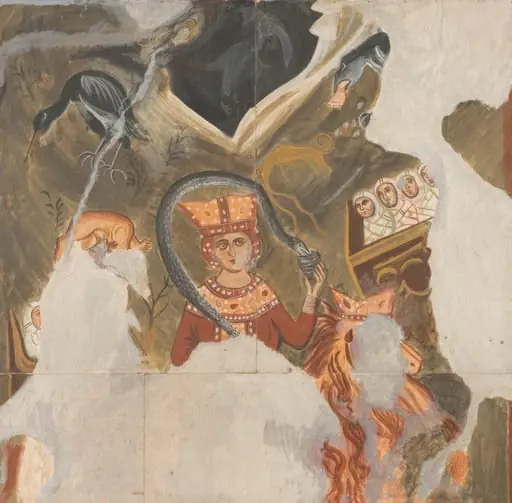
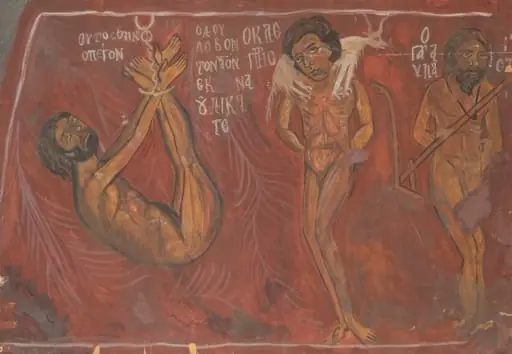
Despina Mega made four religious paintings in 1959. Saint Paraskevi shows a saint holding a cross in soft light. Herod’s persecution depicts soldiers and a cradle in sharp colors. Scene of the Apocalypse and Hell fill…
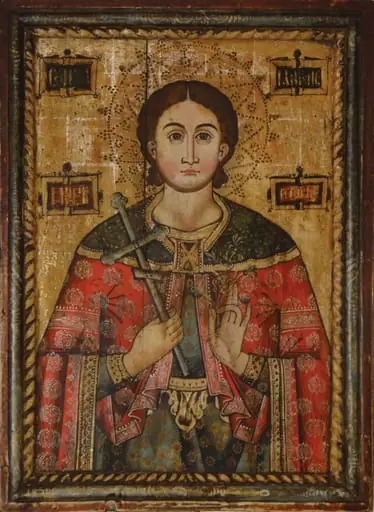 Sf. Gheorghe
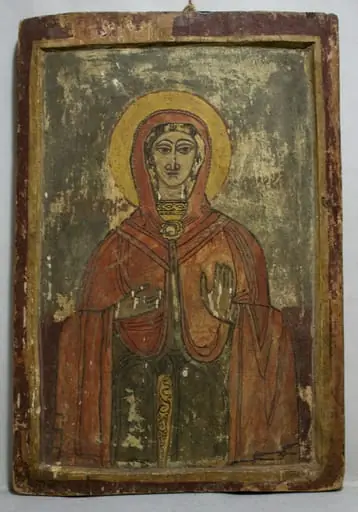 Sfânta Cuvioasă Paraschiva este redată 3/4, frontal, într.o manieră naivă, specific țărănească. Chip oval, trăsăturile feței accentuate, ochii conturați cu negru, privirea îndreptată lateral, scrâncenele mult arcuite, nările mari, gura mică. Mâna stângă o ține la piept, dreapta ridicată în semnde binecuvântare. Înveșmântată cu un maforion roșu pal, cu decorațiuni vagi, albe, stola verde cu galben, porțiune decorată cu motive fitomorfe.Nimb galben cu linia de contur albă. Fond grena în partea de jos, gri în cea superioară. Chenar dublu, galben + grena.
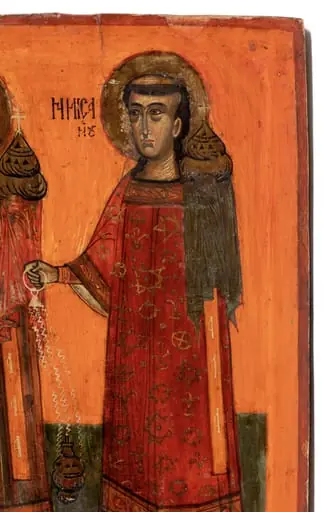 Sfinții diaconi Parmena și Nicanor
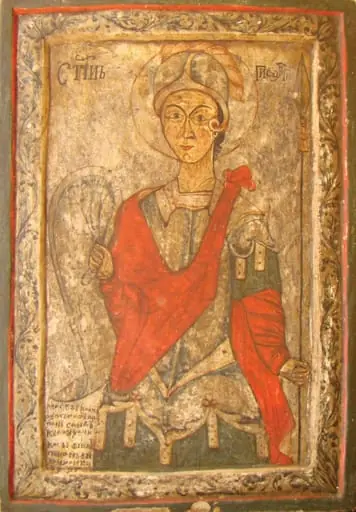 Sf. Gheorghe
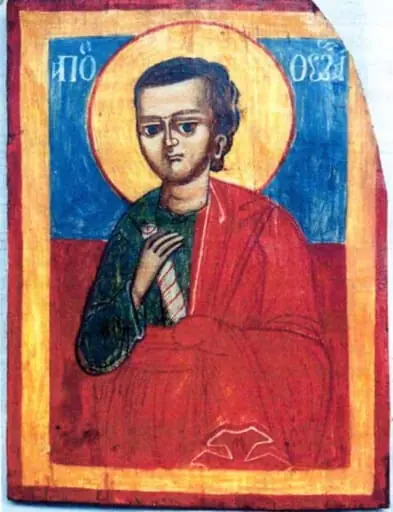 Apostolul Toma
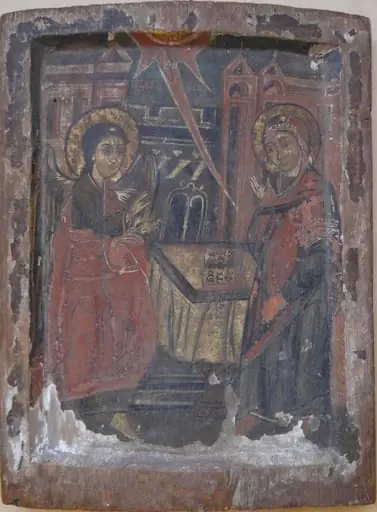 Buna Vestire
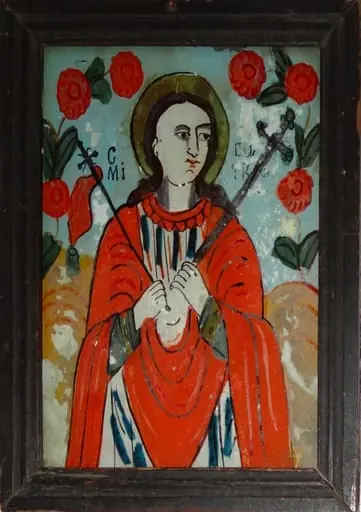 Sf. Dumitru
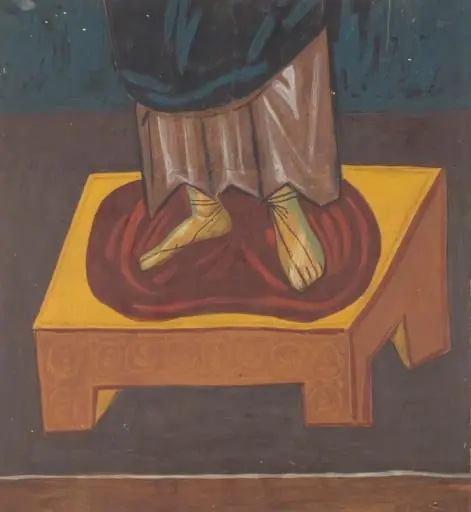 Detail
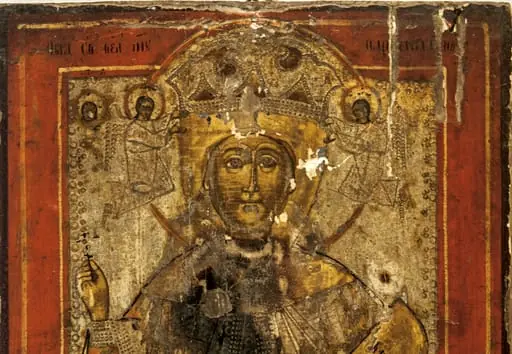 Sfânta Paraschiva este reprezentată frontal, 3/4, încoronată de doi arhangheli (după prescurtările de pe aureole) Nimbul trasat cu roșu depășește linia chenarului și partea superioară a coroanei. Ochii Sfintei, fin trasați, sunt îndreptați spre privitor, impunând un aer sever. Tehnica iluminării treptate cu elemente specifice: accentuarea zonei ochilor, tonurile de pământ ale umbrelor. Tunica decorată cu motive florale ample de culoare deschisă, incizate în stratul de grund. Mantie închisă în față, cu decor linar și bordură lată cu motive geometrice (4 rânduri de puncte și cerculețe incizate în grund). Pe cap, umeri lăsat pe spate, un maforion de culoare deschisă. În mâna dreaptă, Sfânta ține o cruce mică, rusească, în stânga un rotulus desfășurat cu inscripția scrisă în limba slavonă: Cred în unul Dumnezeu… alte inscripții: pe chenar de o parte și de alta a nimbului: Chipul Sf. Mucenițe Parascheva Vineri, în colțul stâng al icoanei IS HR și ѾOН pe nimbul cruciger al lui Iisus, reprezentat ca pe mahrama Veronicăi. Cromatica: Chenar roșu cu două linii galbene și mărginit cu brun; fond - foița metalică decorată prin incizare și ștanțare; Stratul pictural prezintă zgârieturi, arsură.În partea de sus un cui bătut necorespunzător. Pe spate, un bilet, cu ștampila Miliția oraș Deta, cu însemnarea: "Abandonate".
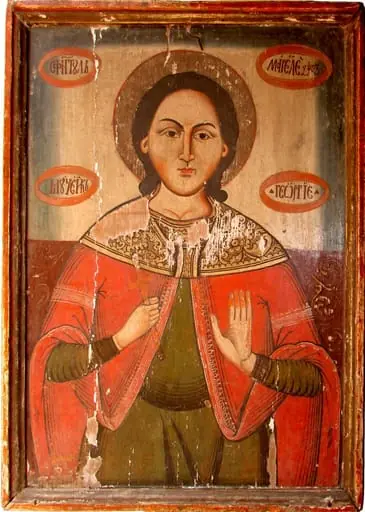 Sf. Gheorghe
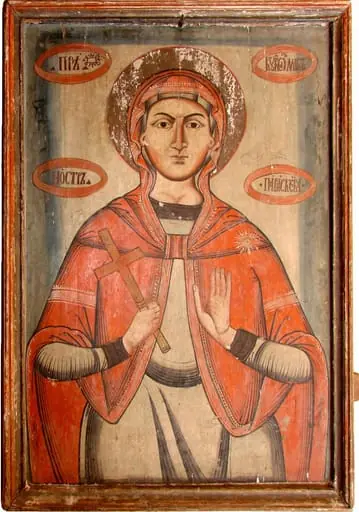 Sf. Paraschiva
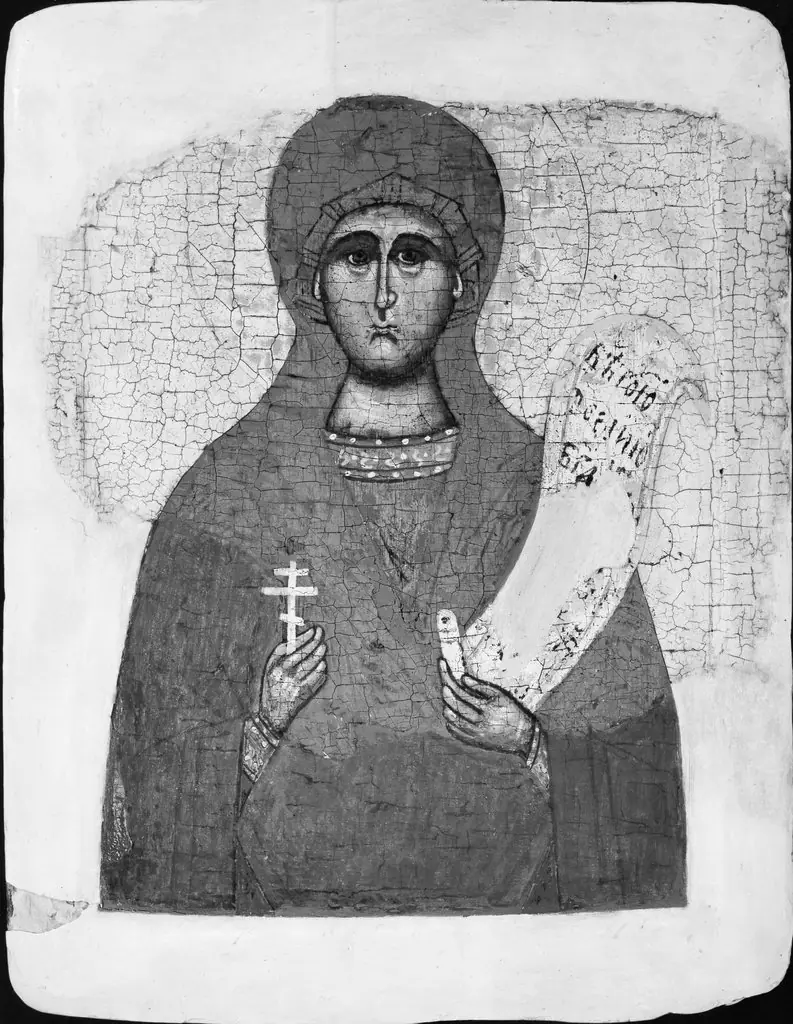 Saint Parasceva