Artwork
Sfinții diaconi Parmena și Nicanor
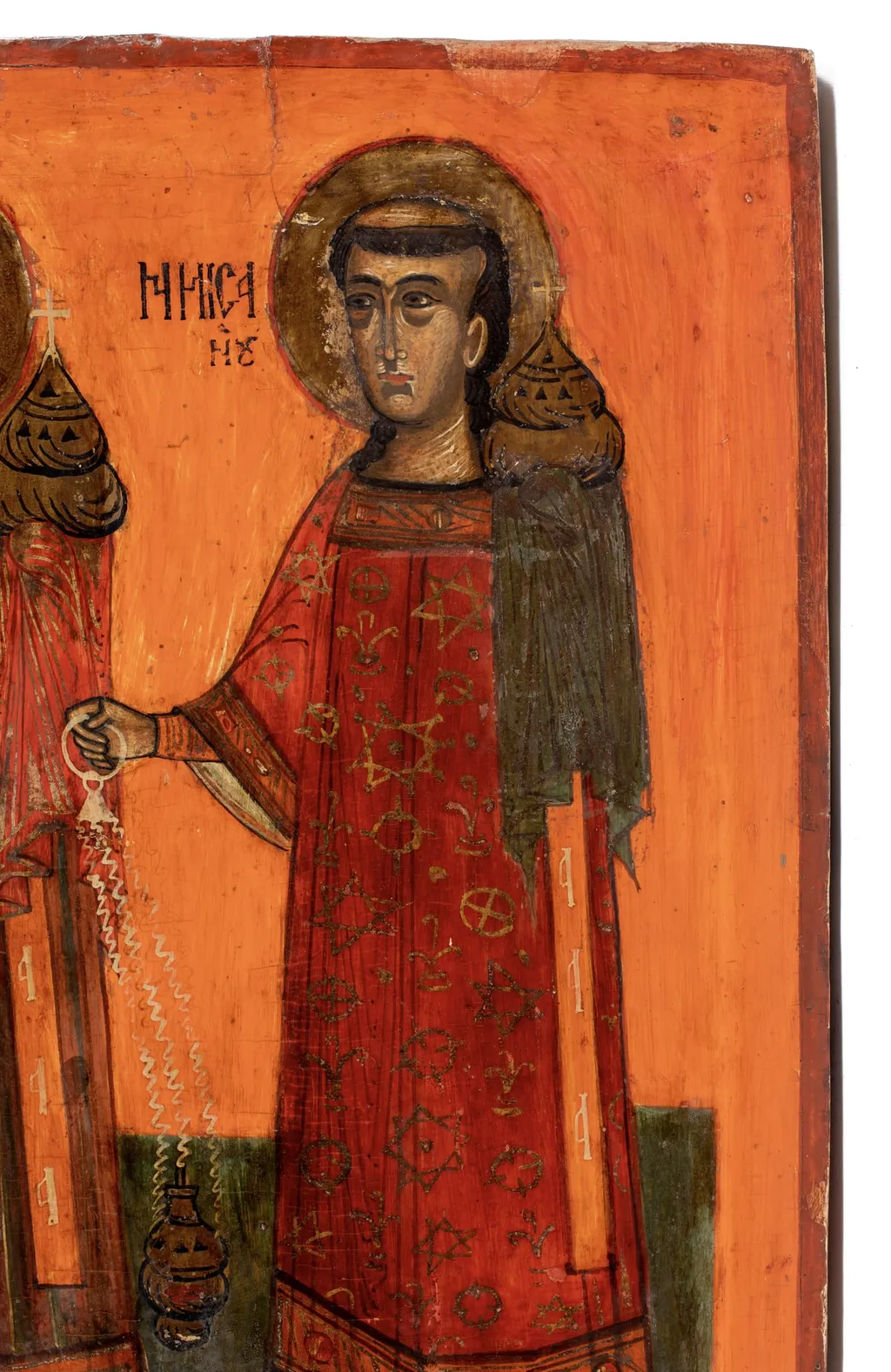
Sfinții diaconi Parmena și Nicanor is an unspecified painting by the Byzantine icon painting artist Hugo Kołłątaj. It is held in the collection of the Moldova National Museum Complex. This early devotional panel depicts two saints, Parmenas and Nicanor, traditionally recognized as deacons in the early Christian church.
About this work
Overview
Rendered in a restrained palette against a dark, undefined background, the figures occupy a minimal space that directs attention to their faces and gestures.
This early devotional panel depicts two saints, Parmenas and Nicanor, traditionally recognized as deacons in the early Christian church. Rendered in a restrained palette against a dark, undefined background, the figures occupy a minimal space that directs attention to their faces and gestures. The work reflects a pre-Renaissance aesthetic, prioritizing spiritual presence over environmental detail.
Subject & Meaning
Parmenas and Nicanor were among the first seven deacons appointed by the apostles, as recorded in the Acts of the Apostles. Their depiction here serves a liturgical function, likely intended for private veneration or church use. The focused gaze and solemn expressions emphasize their role as intermediaries between the divine and the faithful, reinforcing their status as models of service and piety.
Technique & Style
The painting employs flat, muted tones and soft modeling to define the faces and drapery, avoiding sharp contours. While the term sfumato is often associated with later Renaissance practices, this work shows an early, rudimentary use of blurred transitions between light and shadow to soften features and enhance the figures' solemnity, consistent with Byzantine and early Orthodox icon traditions.
History & Provenance
The painting’s age and condition suggest it originates from the late medieval or early Renaissance period, possibly from a region with strong Orthodox Christian traditions. Its survival indicates it was preserved within a religious context, though its exact origin and early ownership remain undocumented. The lack of clear provenance reflects its humble, devotional purpose rather than elite commission.
Context
Created during a time when religious imagery served as a primary means of conveying doctrine to largely illiterate communities, this panel aligns with regional icon-painting practices. Its simplicity reflects a focus on spiritual recognition over naturalism, consistent with Eastern Christian traditions that valued symbolic representation and liturgical function over decorative elaboration.
Legacy
Though not widely known outside specialized circles, the work contributes to the broader understanding of early Christian portraiture in Eastern Europe. It exemplifies how devotional art prioritized emotional resonance and theological clarity, influencing later iconographic conventions in Orthodox communities and preserving the visual language of early saintly veneration.
Artist & collection
Artist
This Polish folk painter worked in the late eighteenth and early nineteenth centuries, creating religious scenes with bold colors and simple shapes.
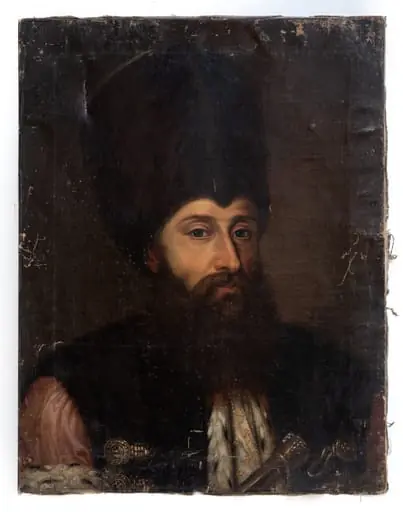 Alexandru Ipsilanti
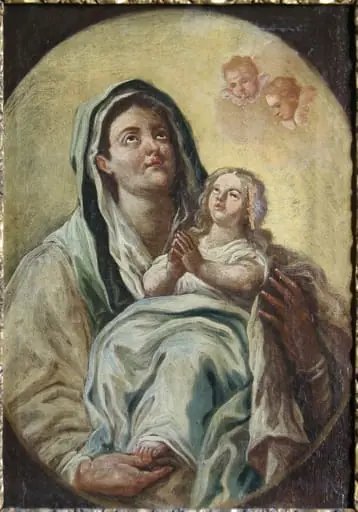 Fecioara Maria cu Pruncul Isus (în Reg. Inv.: Maria cu copilul Isus)
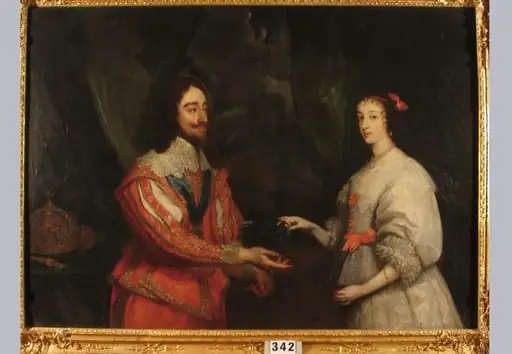 Regele Charles I Stuart al Angliei și soția sa Henrietta Maria de Franța (în Reg. Inv.: Carol I al Angliei și soția sa Henriette din Franța)
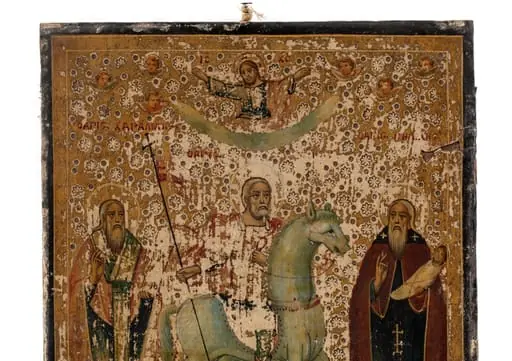 Sfântul Haralambie cu alți doi sfinți
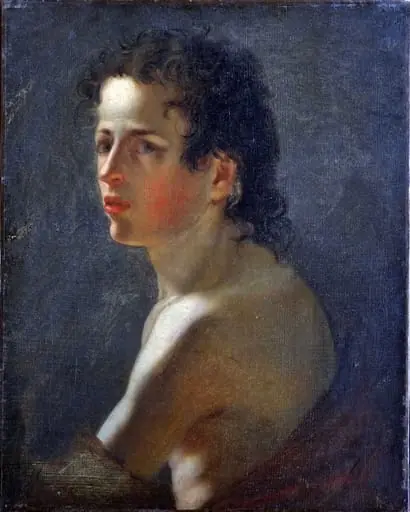 Portret de bărbat
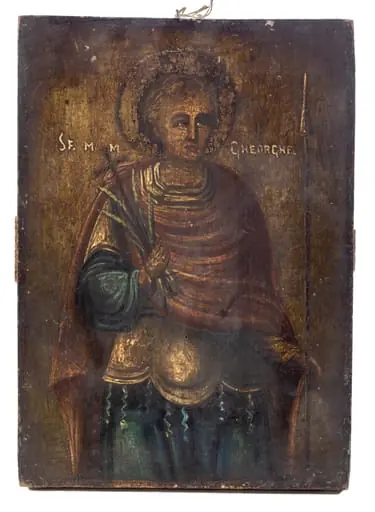 Sfântul Gheorghe
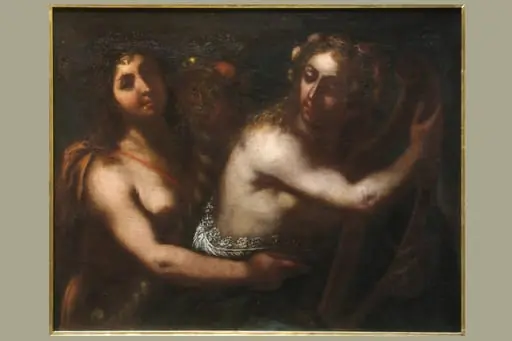 Vertumnus și Pomona (în Reg. Inv.: Vertumnus și Flora)
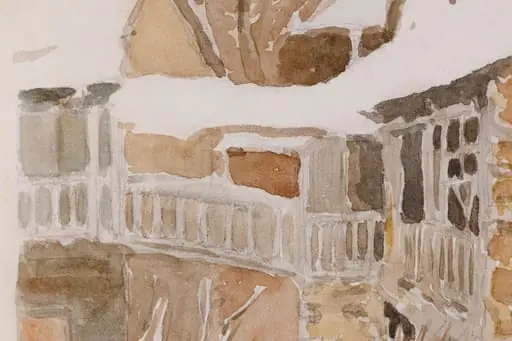 Iarnă
Iarnă
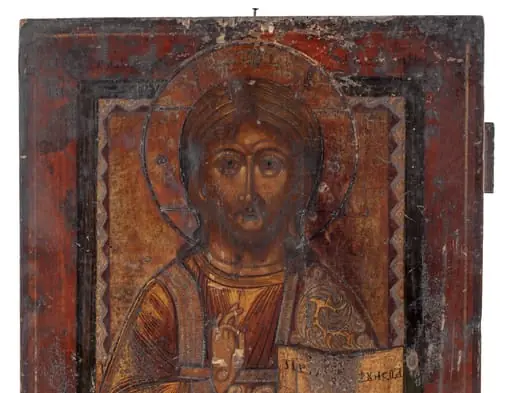 Iisus Christos (Iisus Hristos)
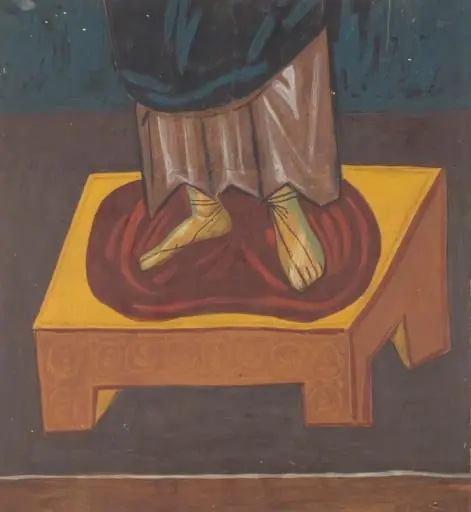 Detail
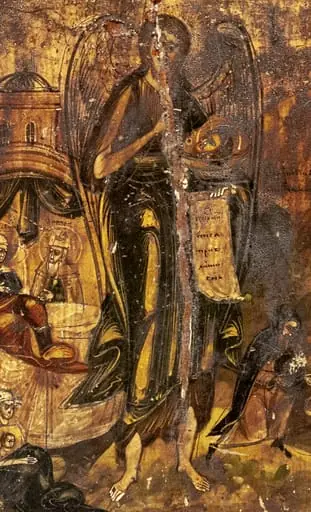 În centrul spațiului pictural, prim plan, Sfântul Ioan Îngerul Pustiului, cu aripi mari,având în mâna stângă un rotulus desfășurat, cu dreapta ținând capul său tăiat pe o tipsie. Este înveșmântat cu o mantie verde peste blana de cămilă, picioarele desculțe. În planul doi, dreapta, este redată scena aflării capului. Un călugăr îngenuncheat lângă capul aureolat al sfântului prooroc, un alt personaj în veșminte roșii(deși tot călugăr), prezentat în picioare, cu capul înclinat, indicând locul cu o săgeată (în alte icoane ambii călugări au lopeți). Este vorba de una dintre aflările capului sfântului, în zilele lui Constantin cel Mare. Aceasta s-a întâmplat în muntele Eleonului. În partea stângă a icoanei este redată nașterea sfântului Ioan. Pe un pat înalt, Elisabeta, în spatele patului, proorocul Zaharia, cu barbă lungă, albă, privind-o. În fața patului, o slujnică ținându-l în brațe pe pruncul Ioan, cu aureolă în jurul capului. Scena se petrece într-un iatac dintr-o clădire cu o turlă. În colțul din stânga sus, Iisus așa cum apare pe mahrama Veronicăi sau sfântul Keramion. Inscripții: pe chenar în partea superioară - Chipul Sfântului Ioan Înainte Mergătorul; în jurul nimburilor părinților proorocului -Elisaveta și Zaharia; în partea dreaptă a icoanei cu litere mici cursive: Aflarea capului Sfântului Ioan Botezătorul, pe rotulusul desfășurat inscripții indescifrabile.Fondul - foița aurie brunificată, (partea de sus), pe care se proiectează crestele muntoase. Cromatica specifică acestui tip de icoane, predomină culorile calde, tonurile de brun, încadrate de bordura roșiatică( galben, ocru, tonuri de verde, brun, roșu, negru.) Desenul trasat cu linie fină. Suportul prezintă o crăpătură longitudinală, lacune ale stratului pictural.
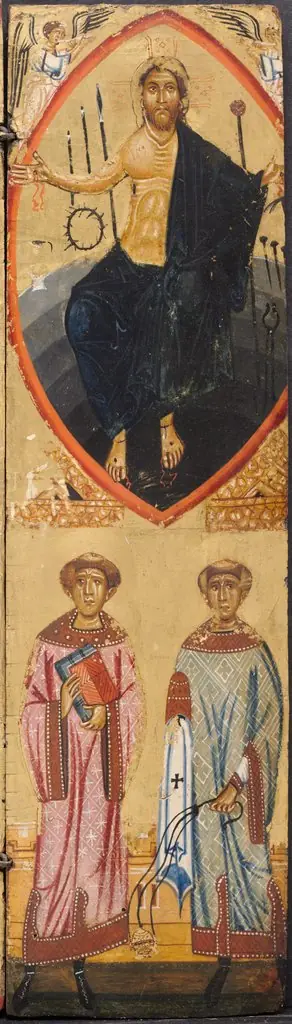 Christ in a Mandorla, with the instruments of the Passion, with St. Stephen and St. Lawrence below
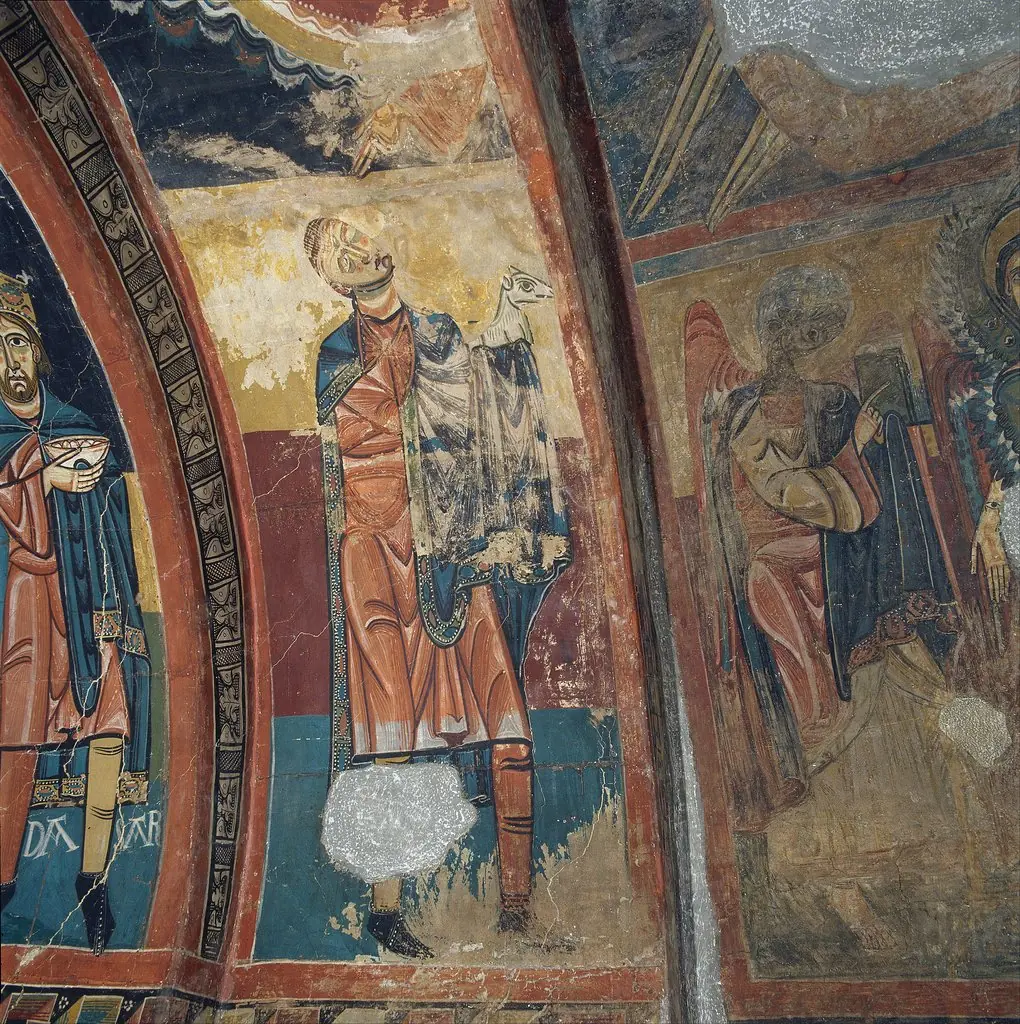 Arch of Abel's Offering from Santa Maria de Taüll
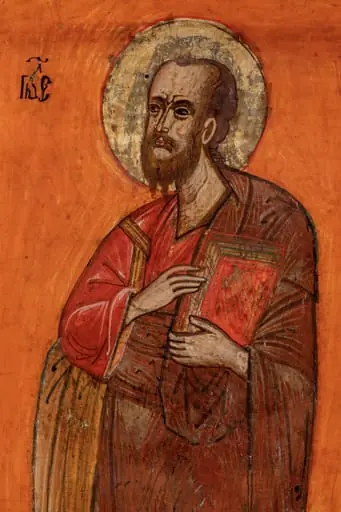 Sfinții apostoli Pavel și Matei
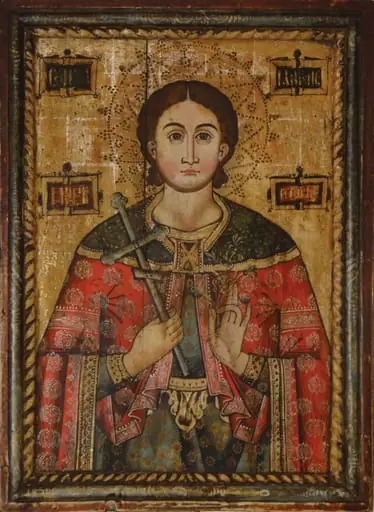 Sf. Gheorghe
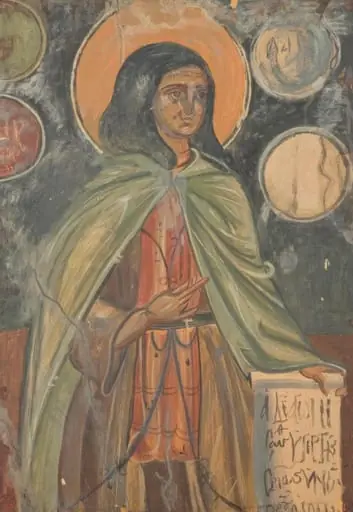 Saint Paraskevi
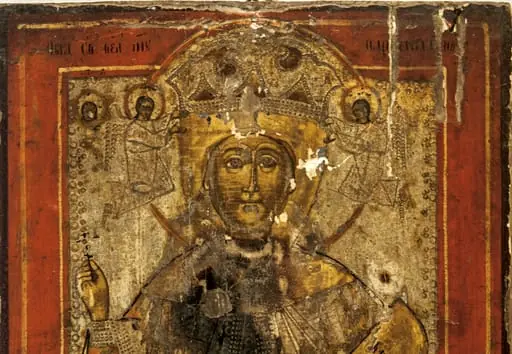 Sfânta Paraschiva este reprezentată frontal, 3/4, încoronată de doi arhangheli (după prescurtările de pe aureole) Nimbul trasat cu roșu depășește linia chenarului și partea superioară a coroanei. Ochii Sfintei, fin trasați, sunt îndreptați spre privitor, impunând un aer sever. Tehnica iluminării treptate cu elemente specifice: accentuarea zonei ochilor, tonurile de pământ ale umbrelor. Tunica decorată cu motive florale ample de culoare deschisă, incizate în stratul de grund. Mantie închisă în față, cu decor linar și bordură lată cu motive geometrice (4 rânduri de puncte și cerculețe incizate în grund). Pe cap, umeri lăsat pe spate, un maforion de culoare deschisă. În mâna dreaptă, Sfânta ține o cruce mică, rusească, în stânga un rotulus desfășurat cu inscripția scrisă în limba slavonă: Cred în unul Dumnezeu… alte inscripții: pe chenar de o parte și de alta a nimbului: Chipul Sf. Mucenițe Parascheva Vineri, în colțul stâng al icoanei IS HR și ѾOН pe nimbul cruciger al lui Iisus, reprezentat ca pe mahrama Veronicăi. Cromatica: Chenar roșu cu două linii galbene și mărginit cu brun; fond - foița metalică decorată prin incizare și ștanțare; Stratul pictural prezintă zgârieturi, arsură.În partea de sus un cui bătut necorespunzător. Pe spate, un bilet, cu ștampila Miliția oraș Deta, cu însemnarea: "Abandonate".
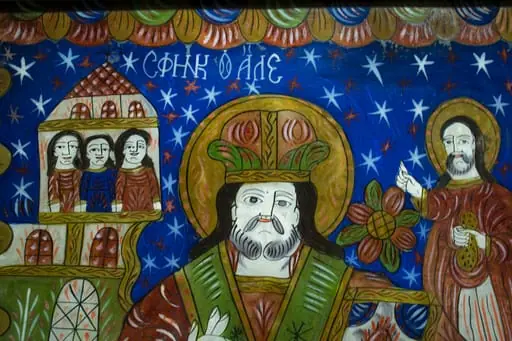 Icoacum
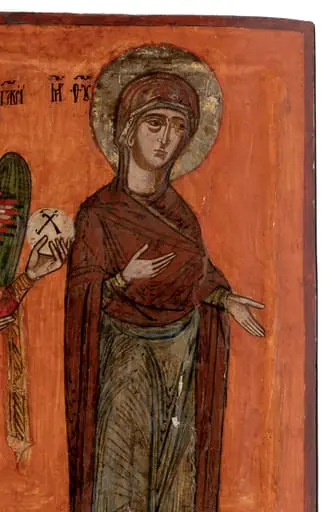 Sfântul Arhanghel Gavriil cu Maica Domnului