Artwork
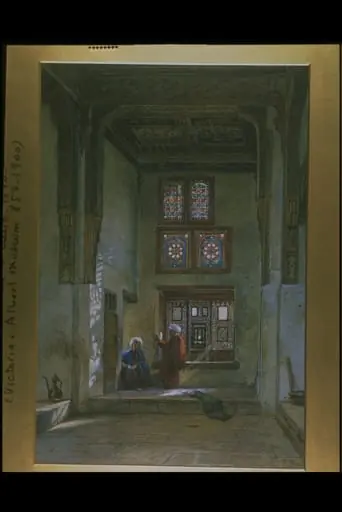
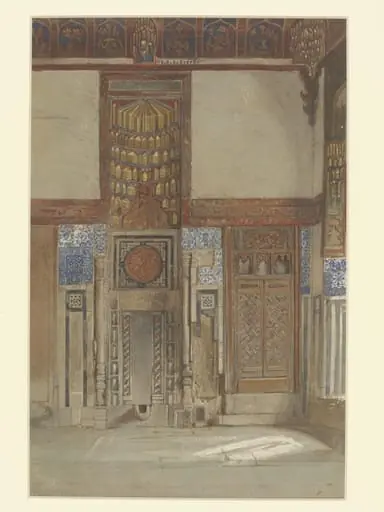
Recess in the reception room in the house of the Mufti Sheikh el Mahadi, Cairo
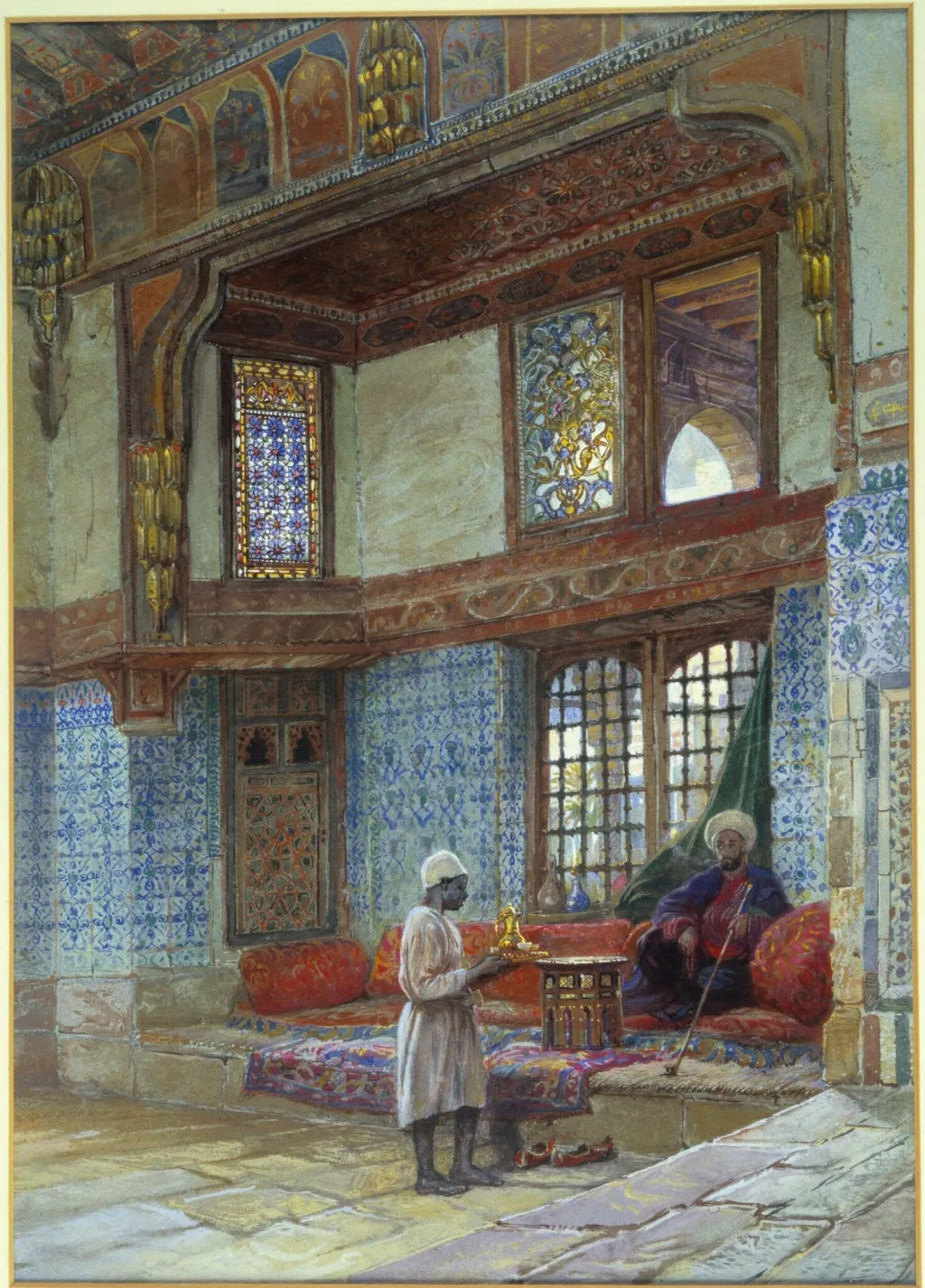
Recess in the reception room in the house of the Mufti Sheikh el Mahadi, Cairo is a watercolor work on paper by the Romanticist artist Frank Dillon. It dates from 1823 and is held in the collection of the Victoria and Albert Museum.
About this work
Overview
Created in 1823 by Frank Dillon, this watercolor depicts an interior space in the residence of Sheikh el Mahadi, the Mufti of Cairo.
Created in 1823 by Frank Dillon, this watercolor depicts an interior space in the residence of Sheikh el Mahadi, the Mufti of Cairo. Rendered in delicate washes, the work captures a moment of quiet domestic life within a traditionally decorated reception room. The painting is part of the Victoria and Albert Museum’s collection, where it serves as a record of architectural detail and social atmosphere in early 19th-century Egypt.
Subject & Meaning
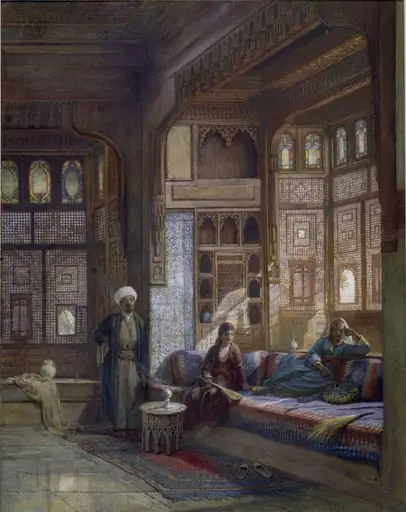
The scene portrays two figures in a formal sitting area: one standing with a serving tray, the other seated, leaning on a cane. Their presence suggests ritualized hospitality, common in elite Egyptian households. The setting reflects status through its furnishings and ornamentation, not through grandeur but through refined detail. The composition implies a private, intimate moment rather than public ceremony, emphasizing daily life within a religious leader’s home.
Technique & Style
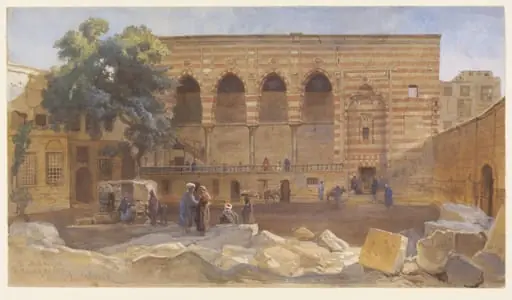
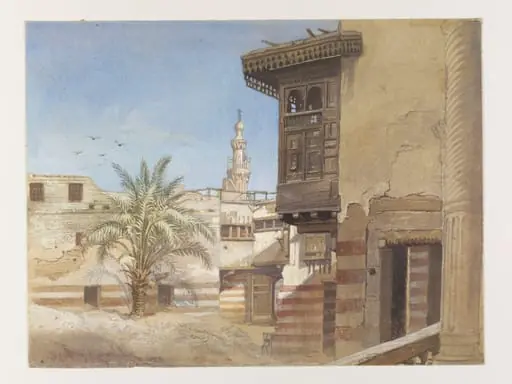
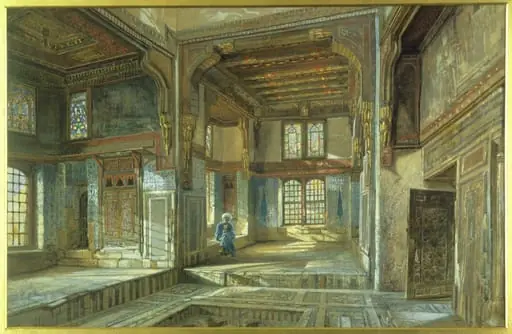
Dillon employed transparent watercolor to capture the play of light on glazed tiles and woven textiles. Fine brushwork defines the intricate geometric patterns along the walls and ceiling, while layered washes suggest the warmth of sun filtering through stained glass. The colors—cobalt blues, deep reds, and soft ochres—are applied with precision, creating texture without heavy pigment. The technique prioritizes observational accuracy over dramatic effect.
History & Provenance
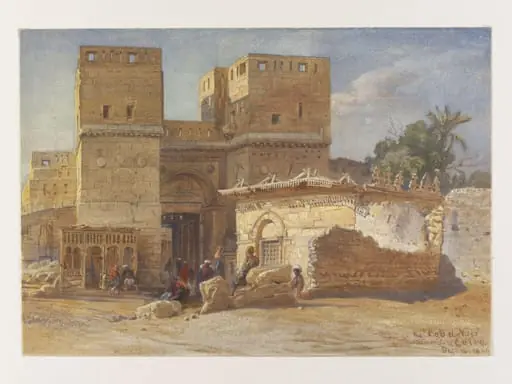
Dillon, a British artist and traveler, produced this work during a visit to Cairo in the early 1820s. It likely formed part of a series documenting Egyptian architecture and domestic interiors. The painting entered the Victoria and Albert Museum’s collection through its historical focus on decorative arts and travel documentation. Its preservation reflects 19th-century European interest in recording non-Western environments with ethnographic intent.
Context
This work emerged during a period when European artists increasingly traveled to the Ottoman Empire and North Africa, drawn by architectural richness and cultural difference. Dillon’s focus on interior spaces aligns with a broader trend of documenting everyday life rather than monumental sites. His attention to pattern and light distinguishes his approach from more romanticized depictions of the Orient, offering a restrained, observational perspective.
Legacy
The painting contributes to a visual archive of Egyptian domestic architecture before widespread modernization. While not widely exhibited, it remains a valuable reference for scholars studying material culture and cross-cultural representation in 19th-century art. Its quiet detail and technical restraint offer a counterpoint to more sensationalized Orientalist imagery of the era, preserving a nuanced glimpse into a specific time and place.
Artist & collection

Artist
Frank Edward Dillon, known in later years as Pop Dillon, was an American baseball player and manager.