Artwork
Temple of Athene, Cape Sunium, Greece
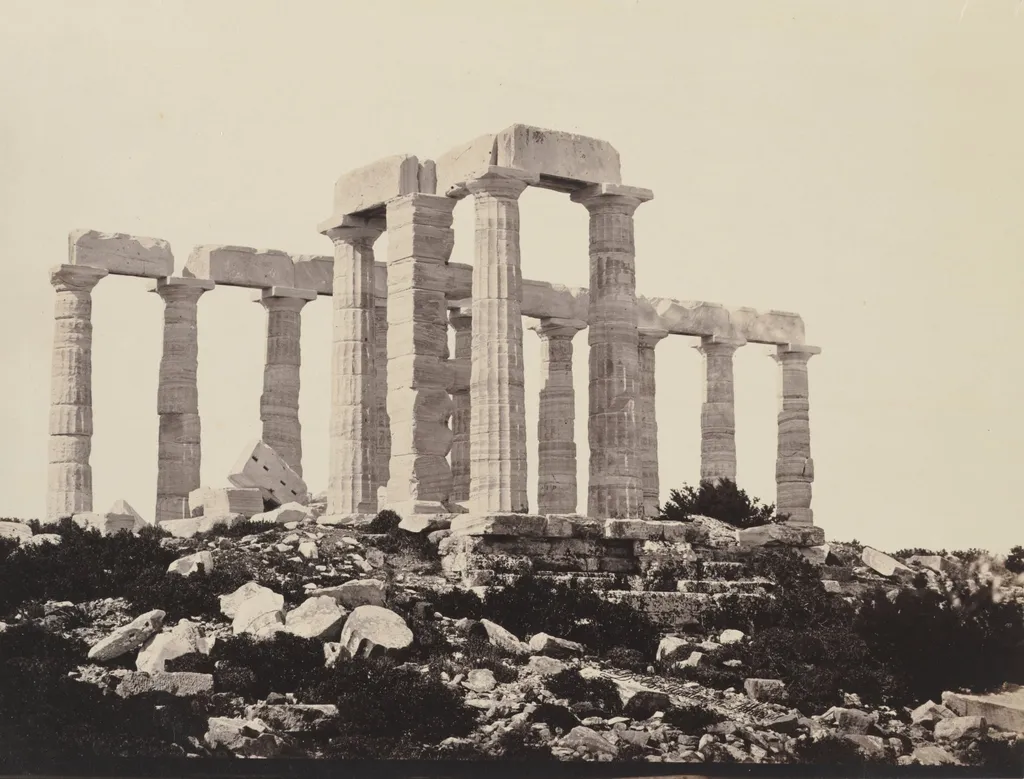
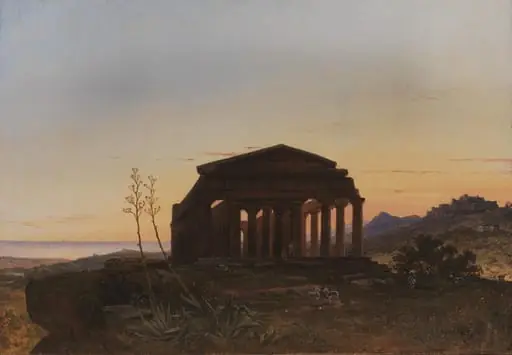
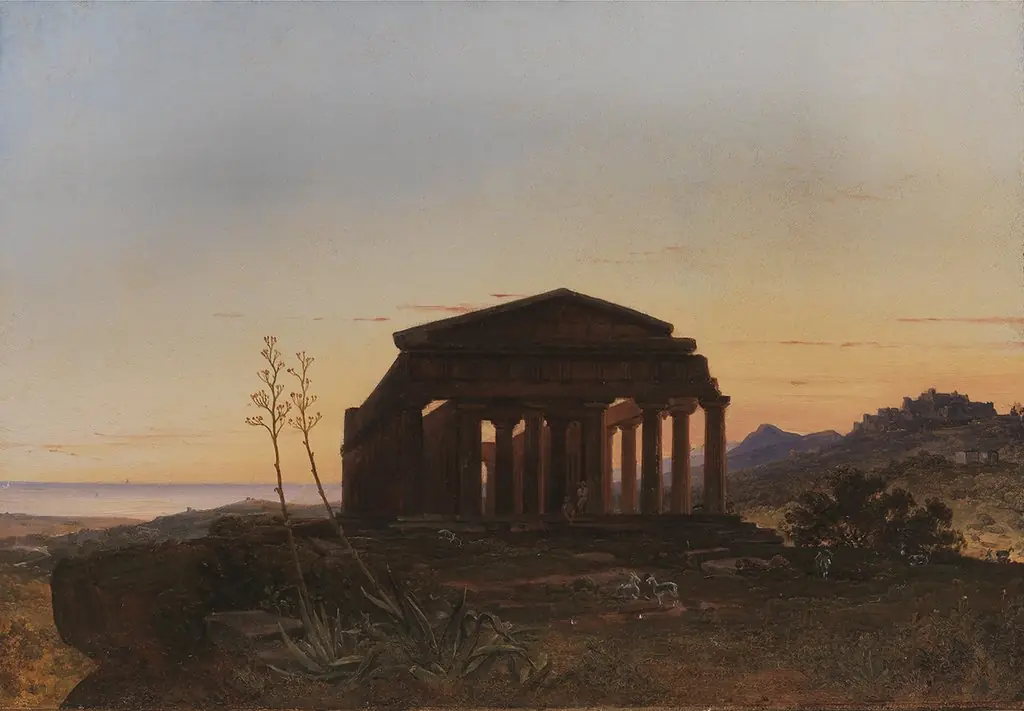
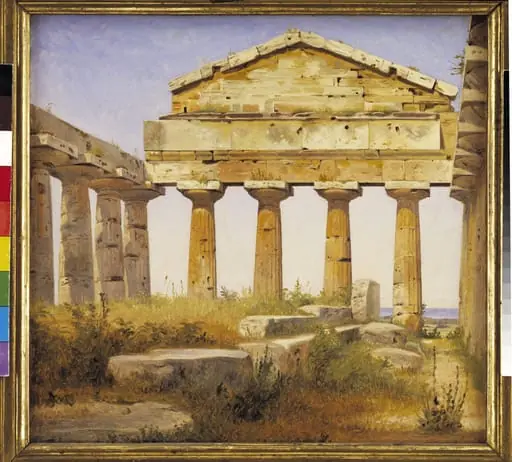
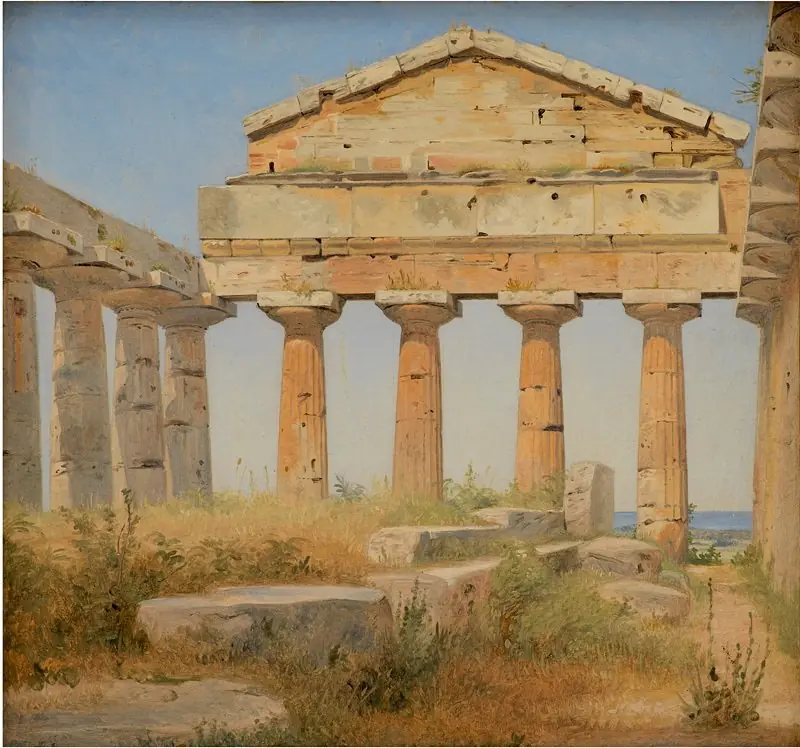
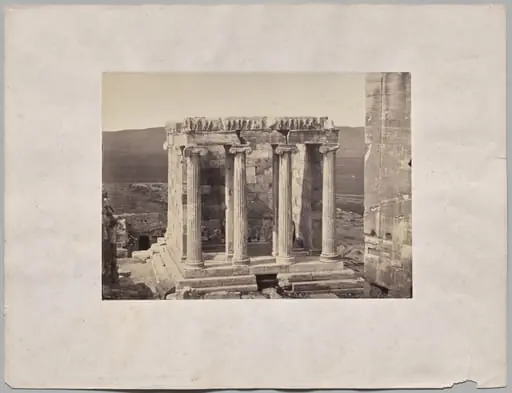
Temple of Athene, Cape Sunium, Greece is a photography by the Impressionist artist Dimitri Constantin. It dates from 1860 and is held in the collection of the Cleveland Museum of Art.
About this work
Overview
The photograph reflects the era’s growing interest in documenting classical antiquities as cultural relics rather than active religious sites.
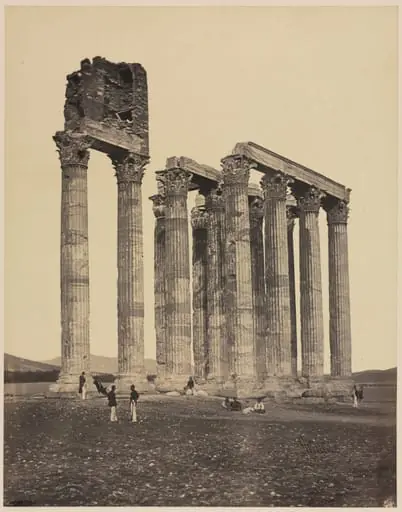
A mid-19th-century photograph by Dimitri Constantin captures the ruins of the Temple of Athena at Cape Sounion, Greece. Taken around 1860, the image records the remains of an ancient structure reduced to a line of six weathered columns, standing isolated on a rugged coastal promontory. The photograph reflects the era’s growing interest in documenting classical antiquities as cultural relics rather than active religious sites.
Subject & Meaning
The subject is the skeletal remains of a temple once dedicated to Athena, overlooking the Aegean Sea. Its ruined state—roofless, wallless, and stripped of decorative elements—evokes the passage of time and the fragility of human endeavors. The image does not idealize the past but presents it as a silent, enduring trace, inviting contemplation of historical loss and continuity.
Technique & Style
The photograph employs a restrained, documentary approach typical of early photographic practice. The composition is frontal and symmetrical, emphasizing the alignment of the columns against a pale, uniform sky. The tonal range is muted, with soft contrasts that enhance the sense of erosion and age. No human figures or modern intrusions appear, focusing attention solely on the ruins.
History & Provenance
The photograph was made in the 1860s, during a period when European travelers and scholars increasingly documented Greek antiquities. It entered the collection of The Cleveland Museum of Art, where it remains as part of its historical photography holdings. Its origin as a personal or scholarly record is unconfirmed, but its preservation suggests recognition of its value as a historical document.
Context
In the mid-1800s, Greece was emerging as a modern nation-state after centuries of Ottoman rule, and its ancient monuments became symbols of national identity and classical heritage. Photographers like Constantin contributed to a broader visual archive that shaped Western perceptions of antiquity, transforming ruins into objects of study and reverence rather than mere remnants.
Legacy
This image contributes to a visual record that helped define how 19th-century audiences understood ancient Greek architecture. It reflects the transition from romanticized depictions to more factual photographic documentation. Today, it serves as a reference for archaeological study and a quiet testament to the endurance of material culture across centuries.
Artist & collection