Artwork
Temple of Jupiter Olympius
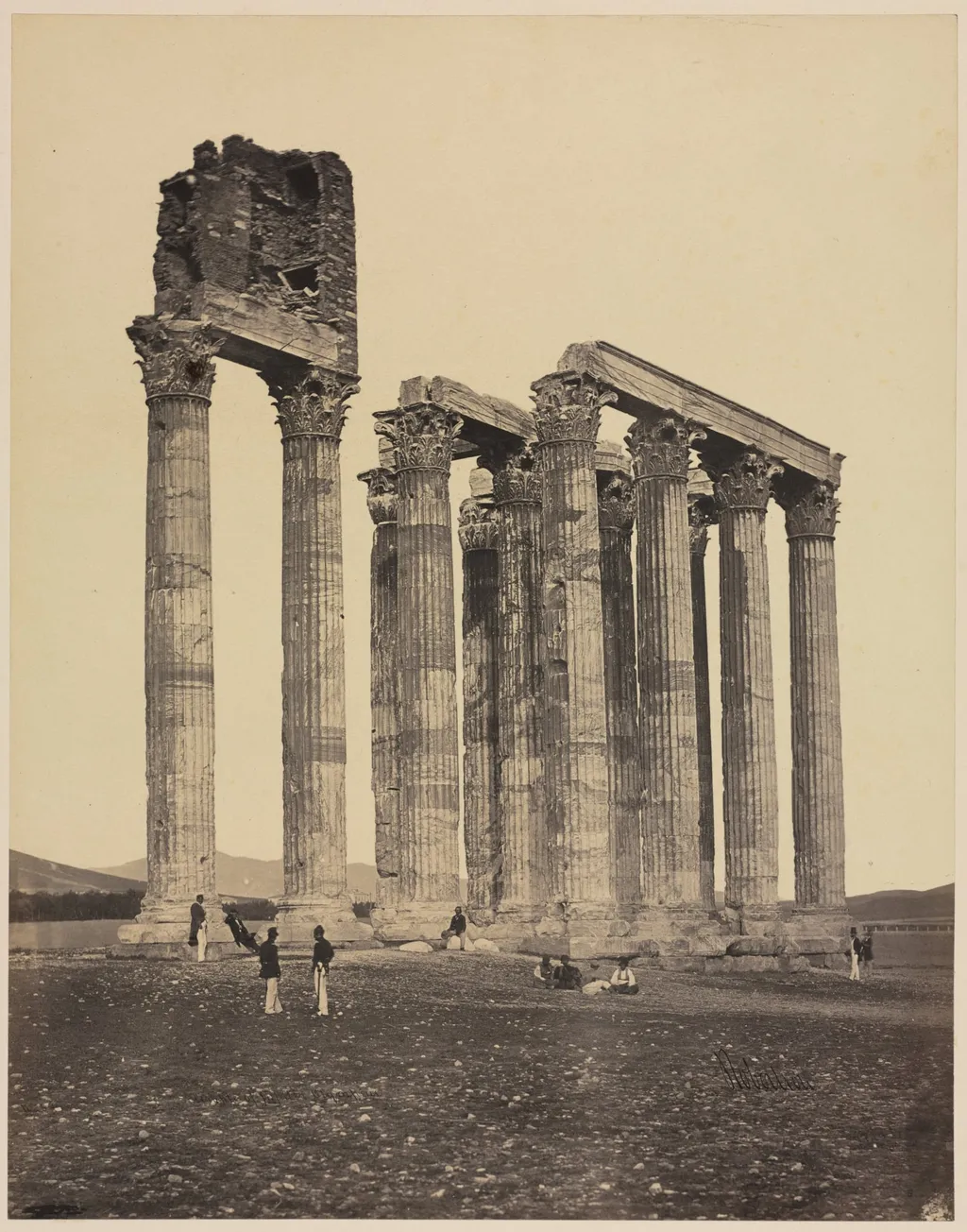
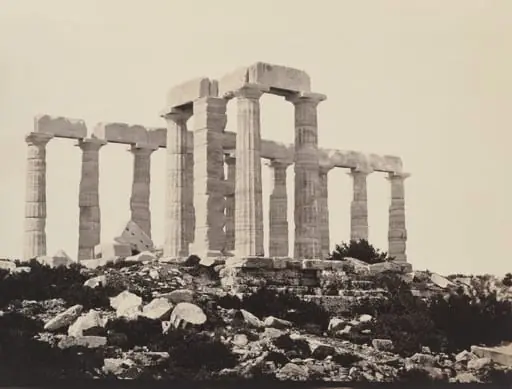
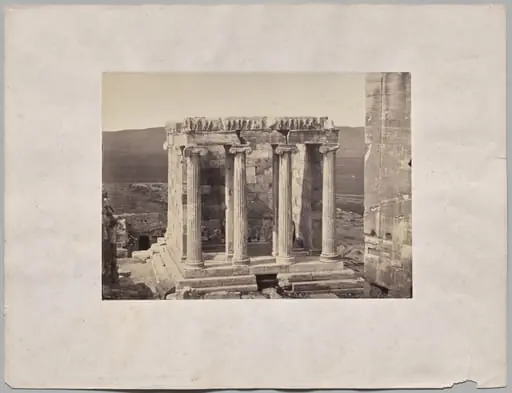
Temple of Jupiter Olympius is a photography by the Romanticist artist 1813 (?)-aft 1865) James Robertson (British. It dates from 1853 and is held in the collection of the Cleveland Museum of Art.
About this work
Overview
James Robertson’s black‑and‑white photograph, dated around 1853, captures the remnants of the Temple of Jupiter Olympius. The image is part of the Cleveland Museum of Art’s collection and offers a mid‑nineteenth‑century view of the ancient site’s deteriorated columns and surrounding terrain.
Subject & Meaning
The picture focuses on a line of six massive stone columns, some partially collapsed or missing sections, set against a rugged, uneven ground. Human figures—both standing and seated—are scattered nearby, providing a sense of scale that emphasizes the monumental size of the ruins.
Technique & Style
Robertson employed the early photographic processes of the 1850s, producing a monochrome image with a high contrast between the weathered stone and the sky. The composition centers on the verticality of the columns, while the detailed but eroded capitals draw the eye toward the top of each shaft.
History & Provenance
The photograph was taken circa 1853, a period when archaeological exploration of Roman sites was gaining public interest. It later entered the Cleveland Museum of Art’s holdings, where it remains accessible for study and exhibition.
Context
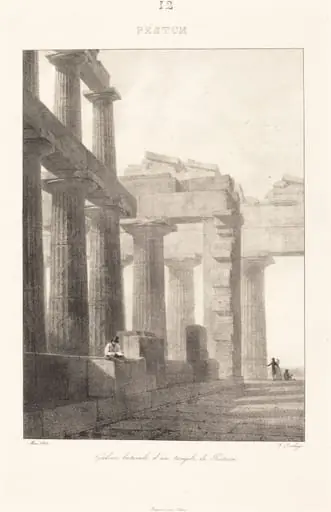
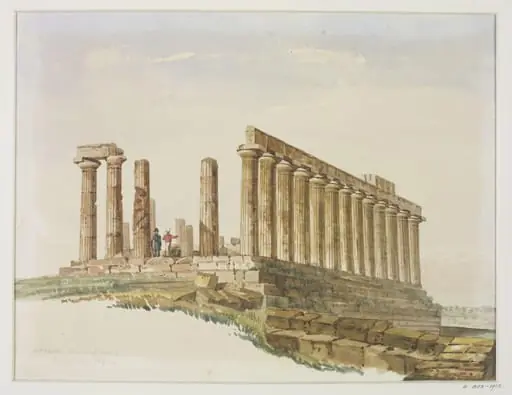
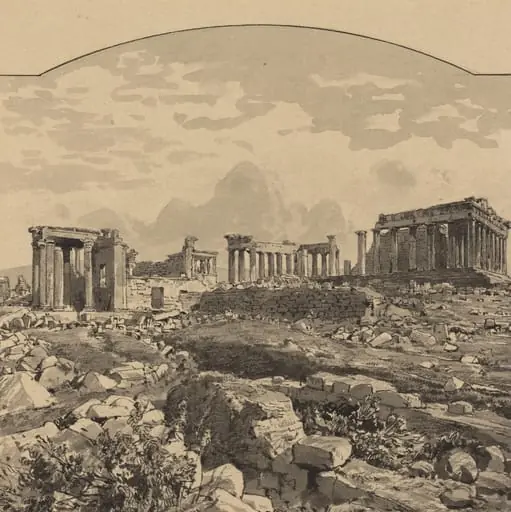
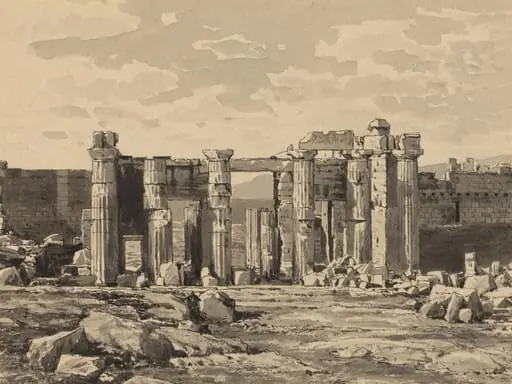
The Temple of Jupiter Olympius, once a prominent Roman sanctuary, fell into ruin over centuries. Robertson’s image documents the state of the structure during the mid‑19th century, a time when many such ancient sites were being recorded before modern conservation efforts.
Artist & collection
Artist
1813 (?)-aft 1865) James Robertson (British
James Robertson carted a camera into war zones and holy cities when most photographers stayed home.