Artwork
Parthenon
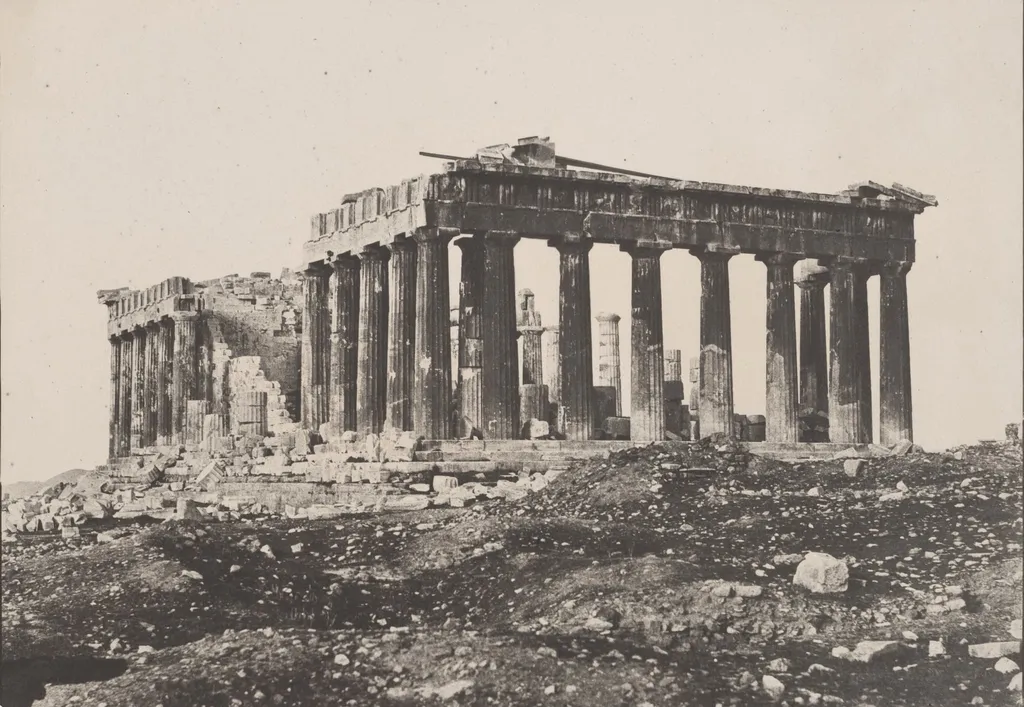
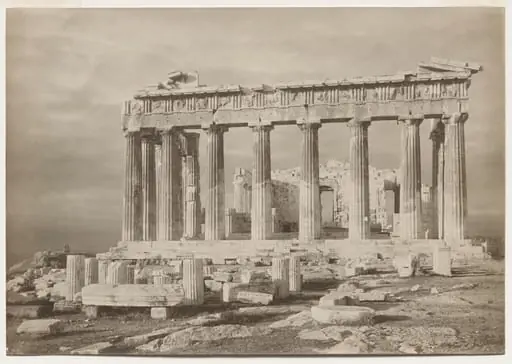
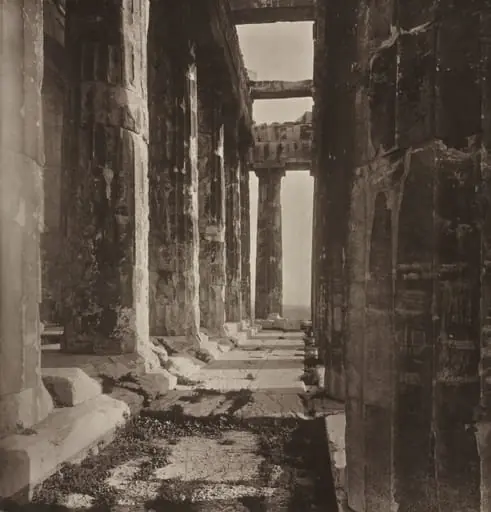
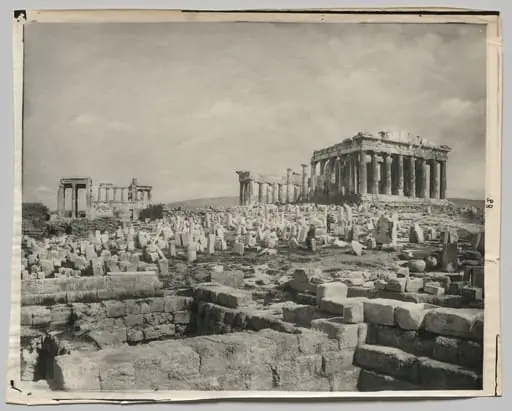
Parthenon is a photography by the Impressionist artist Eugène Piot. It dates from 1852 and is held in the collection of the Cleveland Museum of Art.
About this work
The photo was taken in 1852, showing how the temple looked after years of wear.
This black-and-white photo shows a ruined temple with tall, fluted columns. The front has six big columns, and the roof is mostly gone. Crumbled stones and debris cover the ground around it. The walls behind the columns are broken, with some sections still standing.
The photo was taken in 1852, showing how the temple looked after years of wear. The lighting is flat, typical of early photography.
Look up The Cleveland Museum of Art to see where this image is kept.
Overview
Parthenon is a black-and-white photograph by Eugène Piot, created in 1852, currently part of The Cleveland Museum of Art's collection.
Subject & Meaning
The photograph depicts the ancient Parthenon in a state of ruin, with six prominent fluted columns at the front, a largely absent roof, and surrounding debris, capturing the temple's deterioration over time.
Technique & Style
Characterized by flat lighting, the image reflects the technical constraints and aesthetic norms of early photography, prioritizing documentary representation over dynamic illumination.
History & Provenance
Captured in 1852 by Eugène Piot, the photograph documents the Parthenon's condition at that time, before later restorations. It is now housed at The Cleveland Museum of Art.
Artist & collection