Artwork
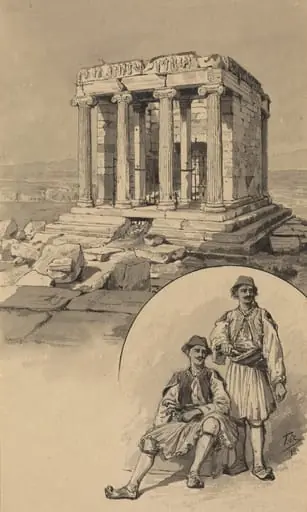
Temple of Athene Nike. Venus Victrix—Wingless Victory
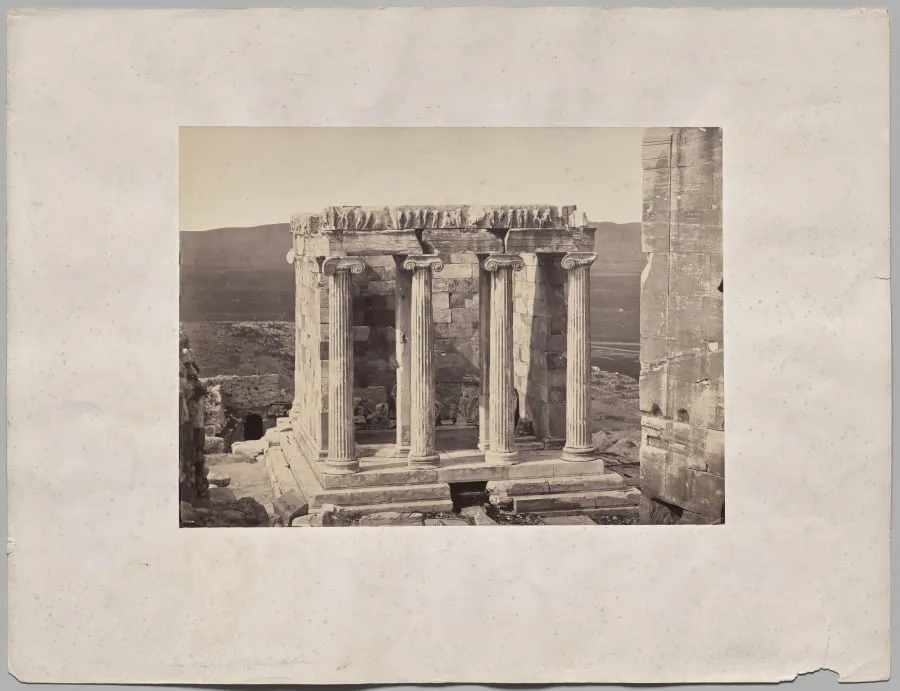
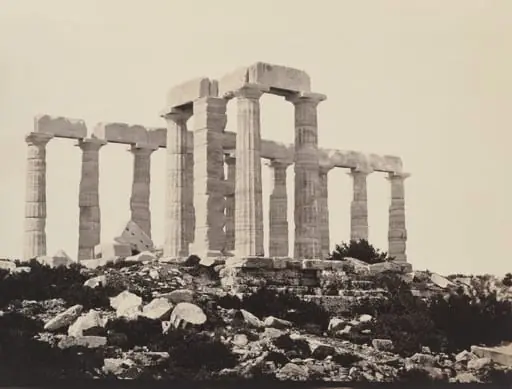
Temple of Athene Nike. Venus Victrix—Wingless Victory is a photography by the Romanticist artist Dimitrios Constantin. It dates from 1858 and is held in the collection of the Cleveland Museum of Art.
About this work
The painting shows how 19th-century Greeks looked back at their past, mixing pride with a touch of sadness.
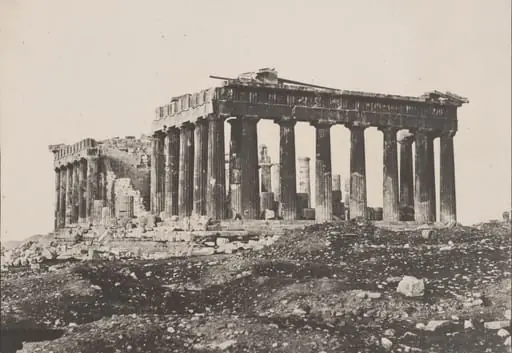
You see a small, white marble temple perched on a rocky ledge, its columns sharp against a cloudy sky.
This is the Temple of Athena Nike, painted in the 1800s by a Greek artist who knew the ruins well. The temple was built to honor victory in war—but here, it’s quiet, almost forgotten. The painting shows how 19th-century Greeks looked back at their past, mixing pride with a touch of sadness.
If you like this, look up *Greece, 19th century* for more works like it.
Overview
The Temple of Athena Nike, constructed around 420 BCE on the Athenian Acropolis, is a modest yet prominent structure perched on a southern cliff. In the 19th century, a Greek artist captured its weathered marble form against a sky heavy with clouds, documenting its quiet endurance amid ruins. The painting reflects a period when Greeks were re-engaging with their classical heritage, viewing ancient monuments not as relics of glory but as silent witnesses to time’s passage.
Subject & Meaning
Dedicated to Athena as the bringer of victory and Nike, the personified spirit of triumph, the temple originally celebrated military success in the Peloponnesian War. By the 1800s, its symbolic purpose had shifted. The painting emphasizes stillness over triumph, suggesting a cultural reckoning: the ideals of ancient victory now resonated with contemporary losses and the fragility of national identity under Ottoman rule.
Technique & Style
The 19th-century artist rendered the temple in precise, muted tones, emphasizing architectural clarity over dramatic effect. The white marble columns stand sharply defined against a soft, overcast sky, with minimal embellishment. This restrained approach reflects a documentary impulse, prioritizing accuracy and atmosphere over romanticized grandeur, aligning with emerging trends in Greek artistic nationalism.
History & Provenance
Built during the High Classical period, the temple survived centuries of neglect, looting, and partial destruction. By the 1800s, it stood as a fragmented ruin on the Acropolis, its sculptures dispersed or damaged. The painting’s existence confirms its visibility to local artists during the early years of the modern Greek state, serving as both record and tribute to a heritage still physically present but politically distant.
Context
In the 19th century, Greece was newly independent and actively reclaiming its ancient past as a foundation for national identity. Artists and intellectuals turned to classical ruins like the Temple of Athena Nike not merely as subjects, but as symbols of continuity. This work emerged within a broader movement to visually archive and emotionally reconnect with a lost golden age, often tinged with melancholy for what had been lost.
Legacy
The painting contributes to a visual archive that shaped modern Greece’s relationship with its antiquities. It helped establish a precedent for documenting ruins with sensitivity rather than spectacle, influencing later archaeological illustration and heritage conservation. Its quiet tone endures as a reminder that cultural memory is often carried not in monuments alone, but in the gaze that returns to them.
Artist & collection