Artwork
São Jerónimo
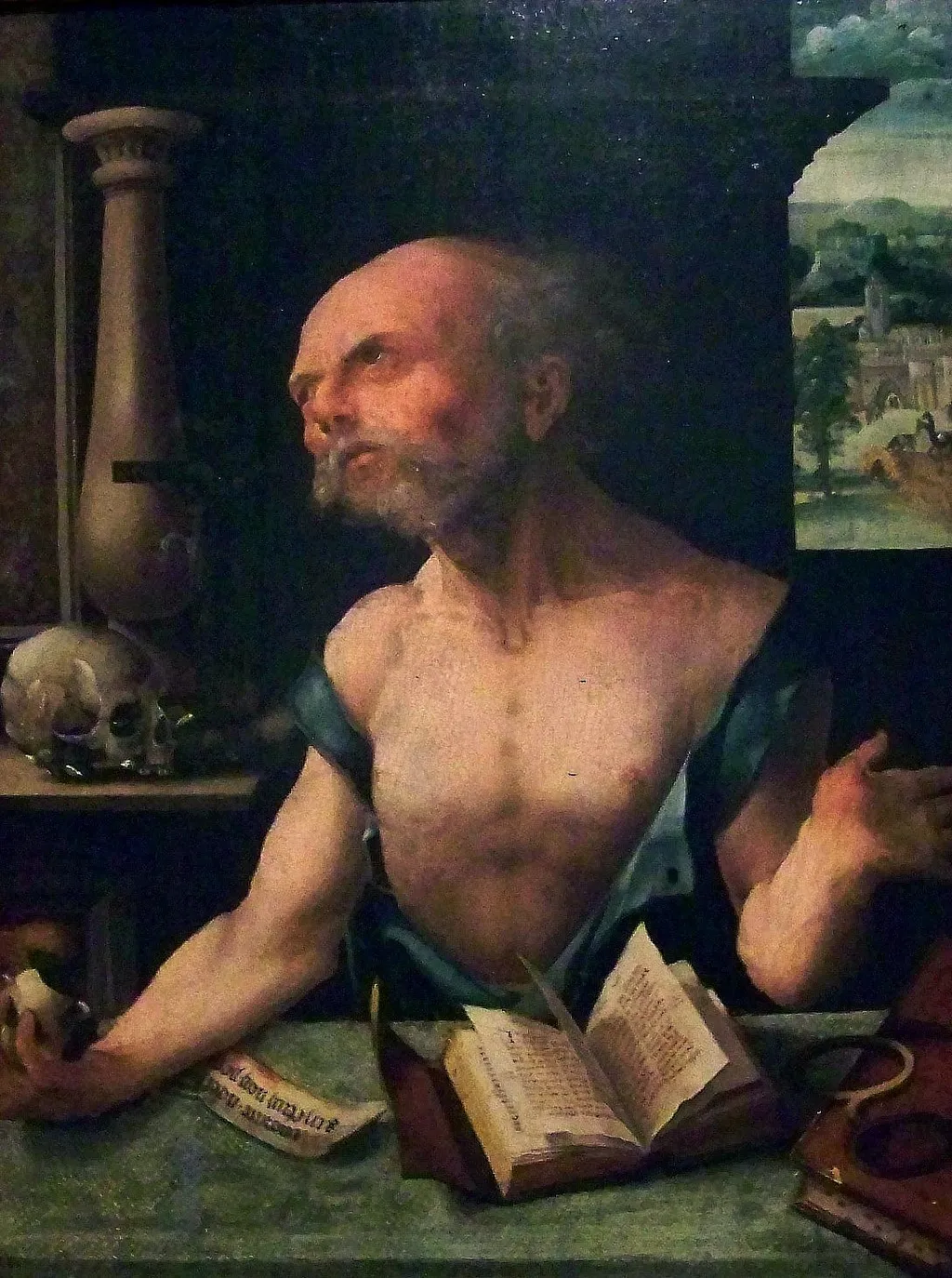
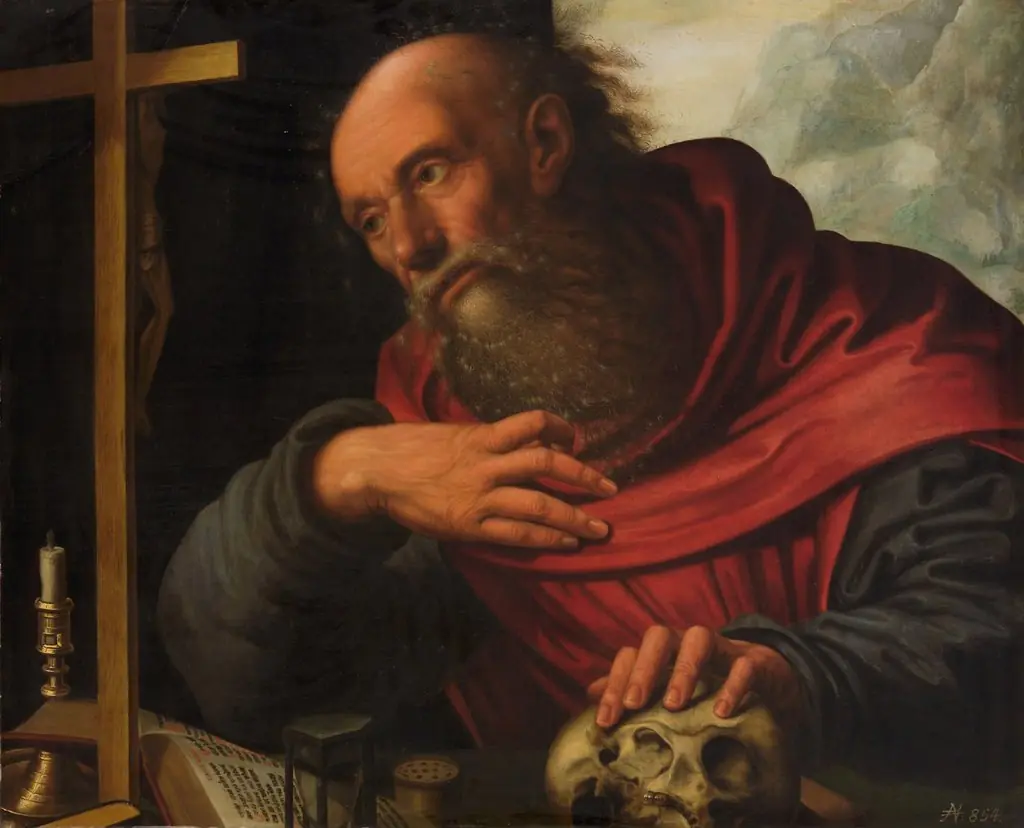
São Jerónimo is an oil painting by the Northern Renaissance artist Dirck Jacobsz. It dates from 1501 and is held in the collection of the National Museum of Ancient Art.
About this work
Overview
Painted in 1501 by Dirck Jacobsz, *São Jerónimo* is an oil-on-panel work from the early Northern Renaissance.
Painted in 1501 by Dirck Jacobsz, *São Jerónimo* is an oil-on-panel work from the early Northern Renaissance. It portrays Saint Jerome, a Church Father frequently depicted in devotional art, in a contemplative pose. The painting is part of the permanent collection at the National Museum of Ancient Art in Lisbon, where it stands as one of the few surviving works by the Dutch artist from this period.
Subject & Meaning
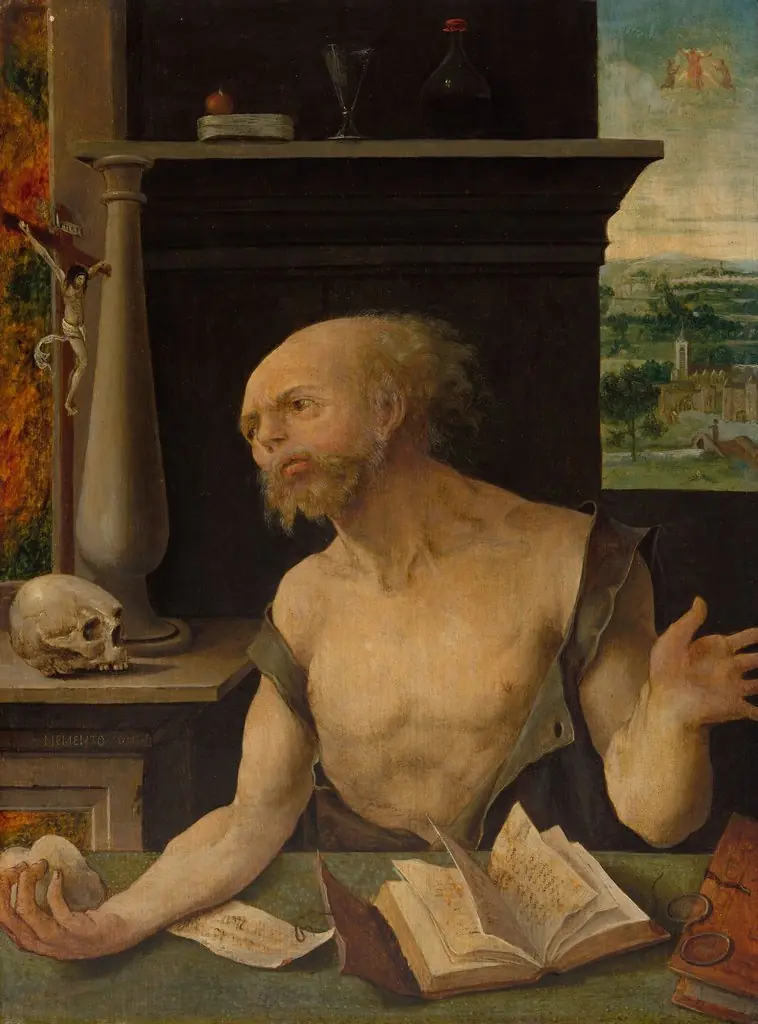
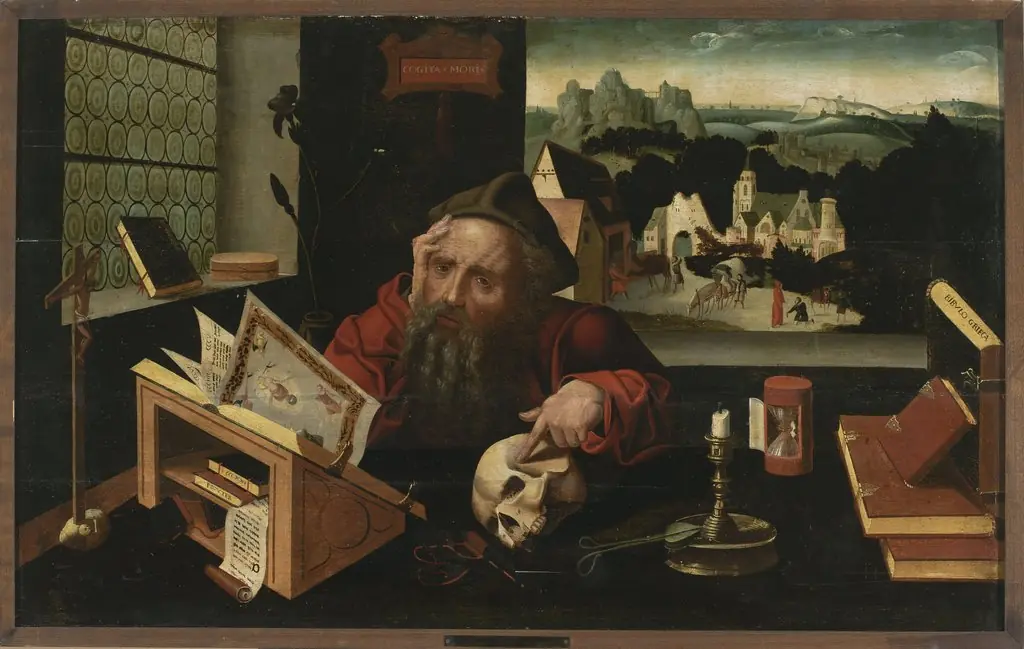
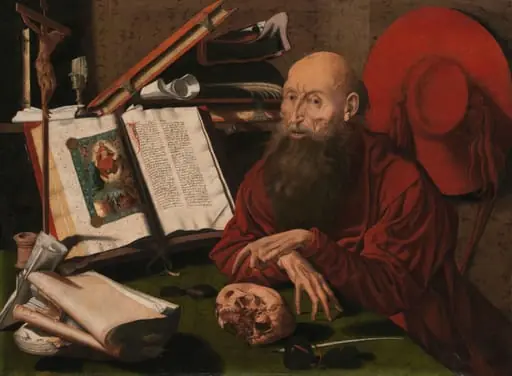
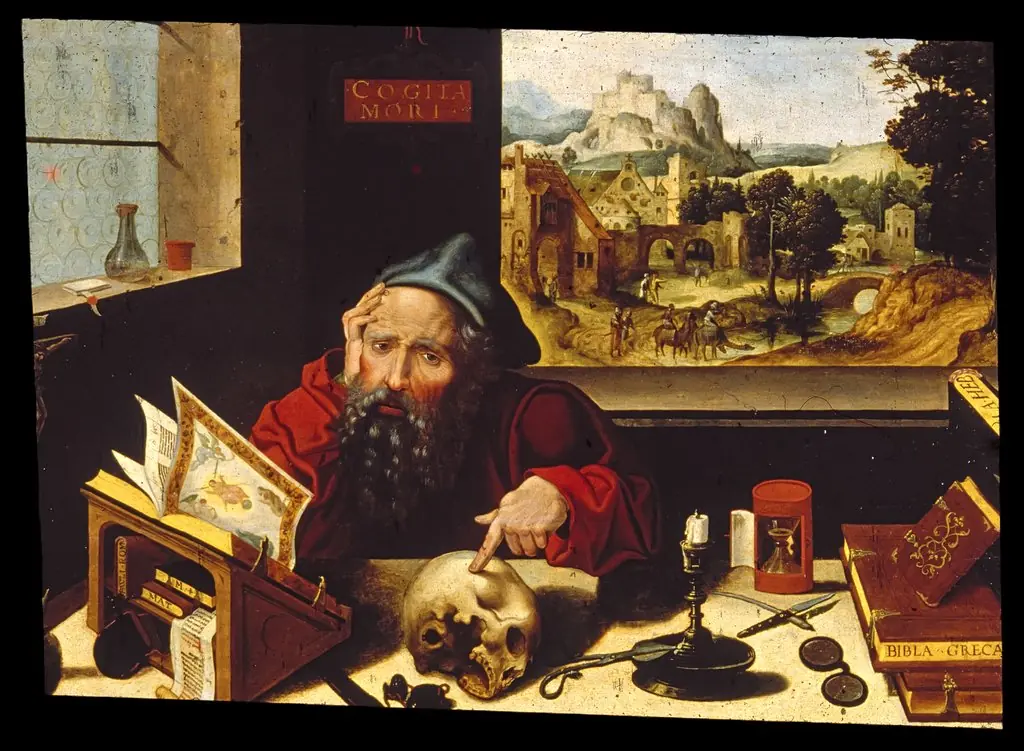
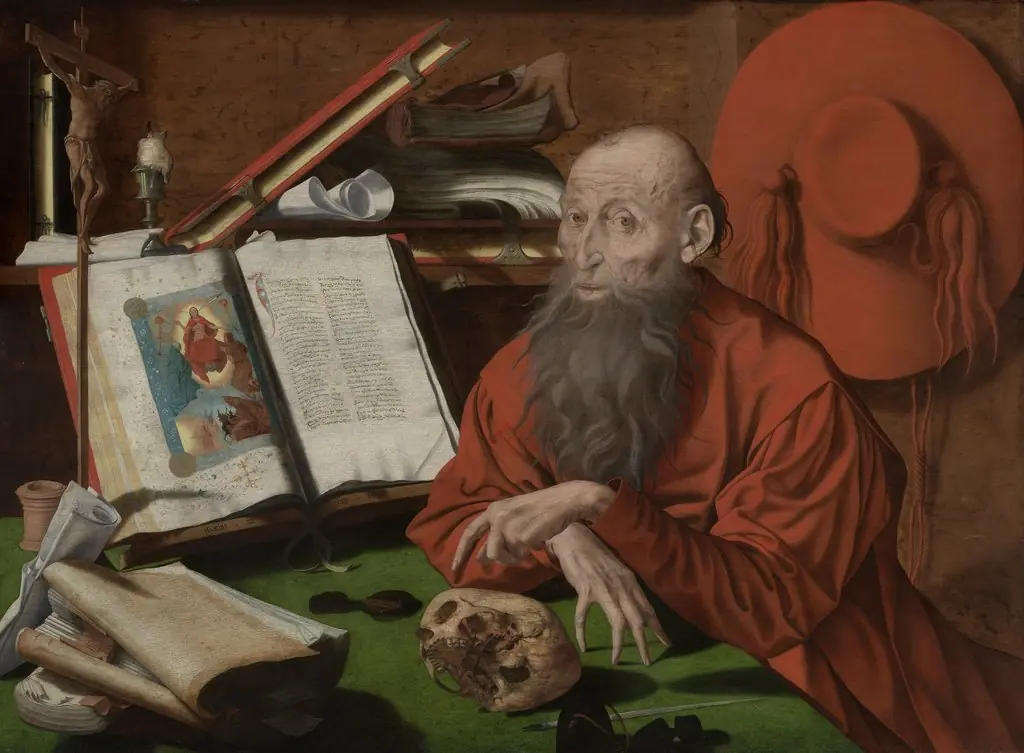
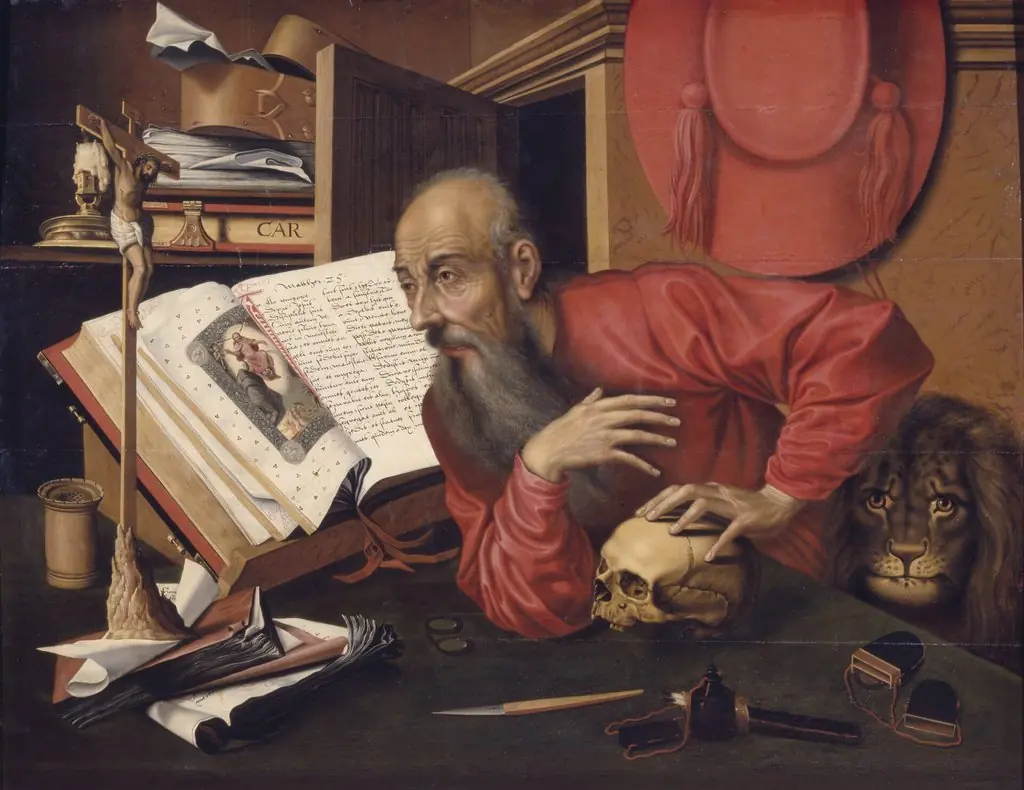
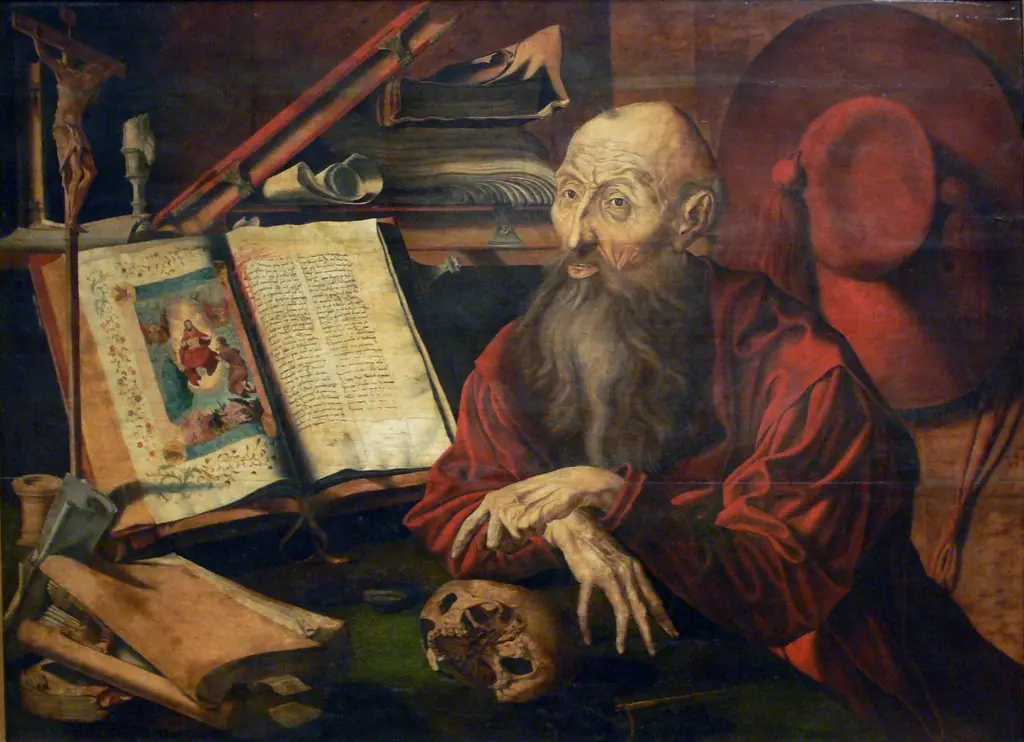
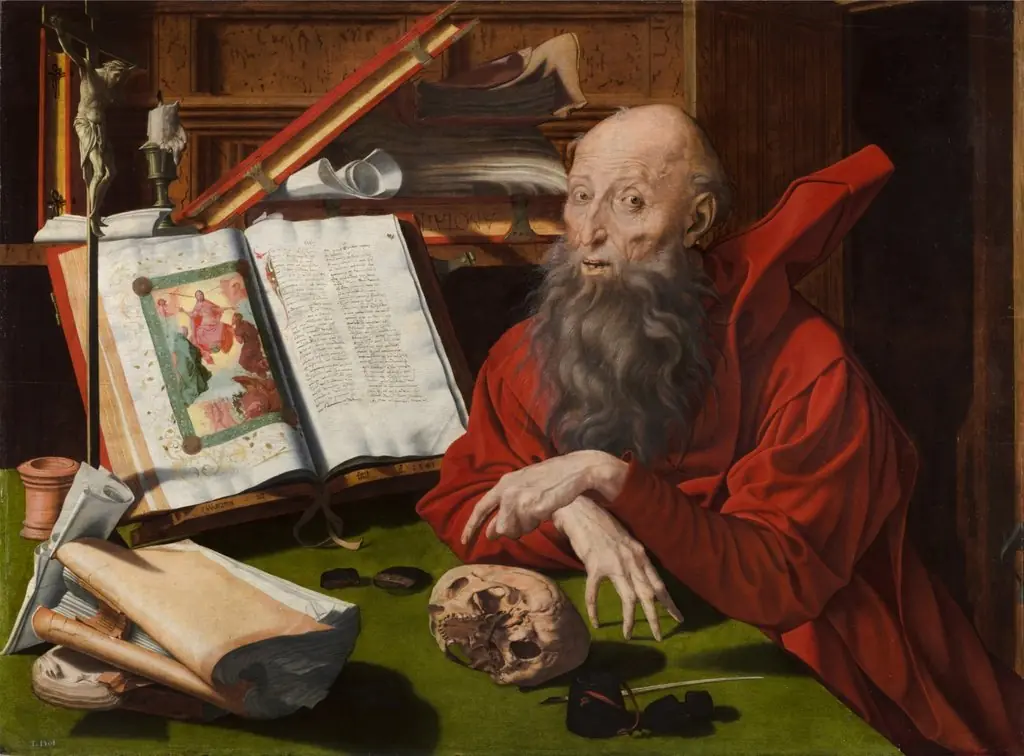
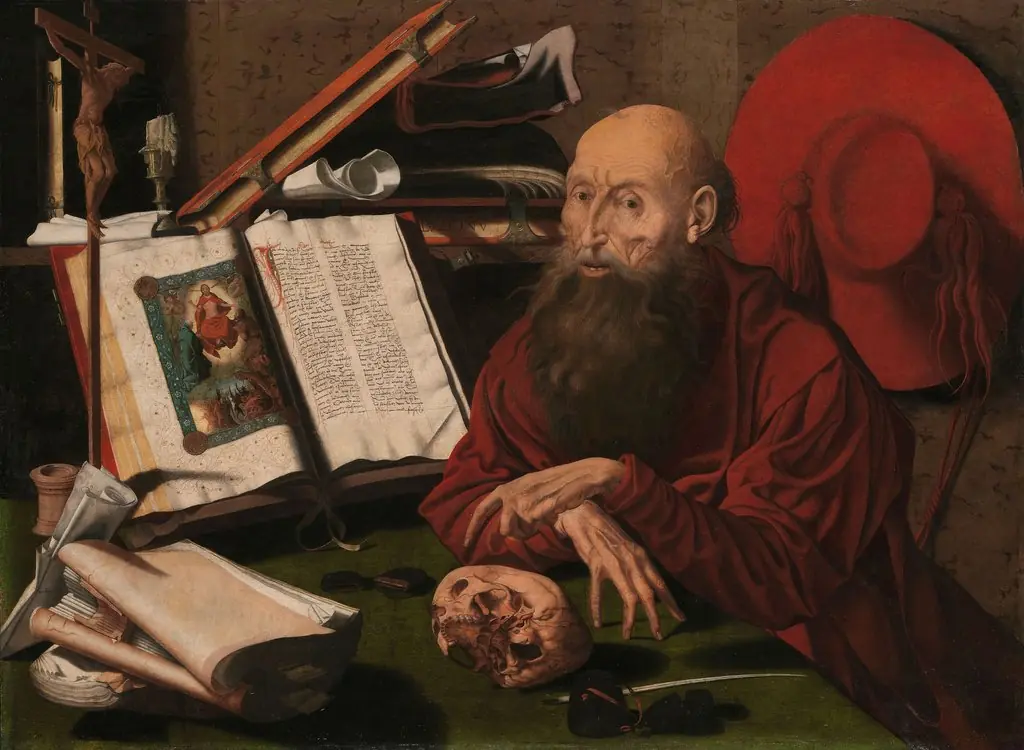
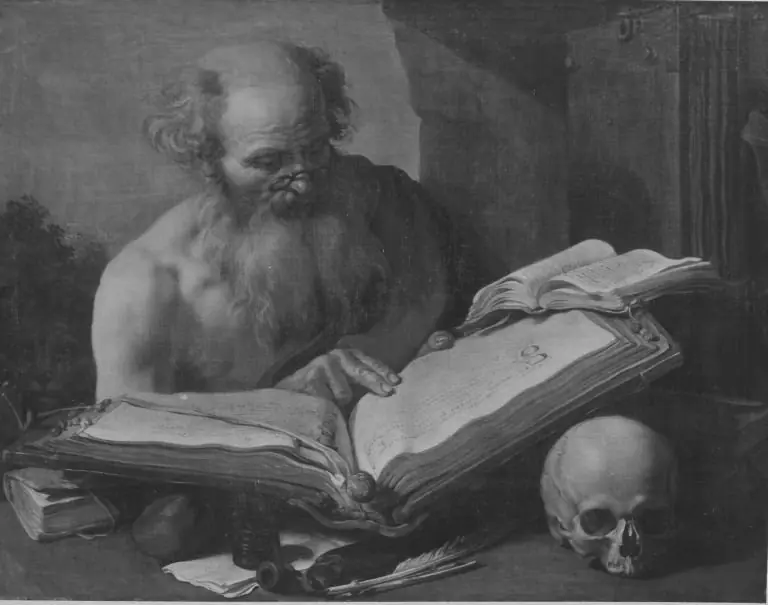
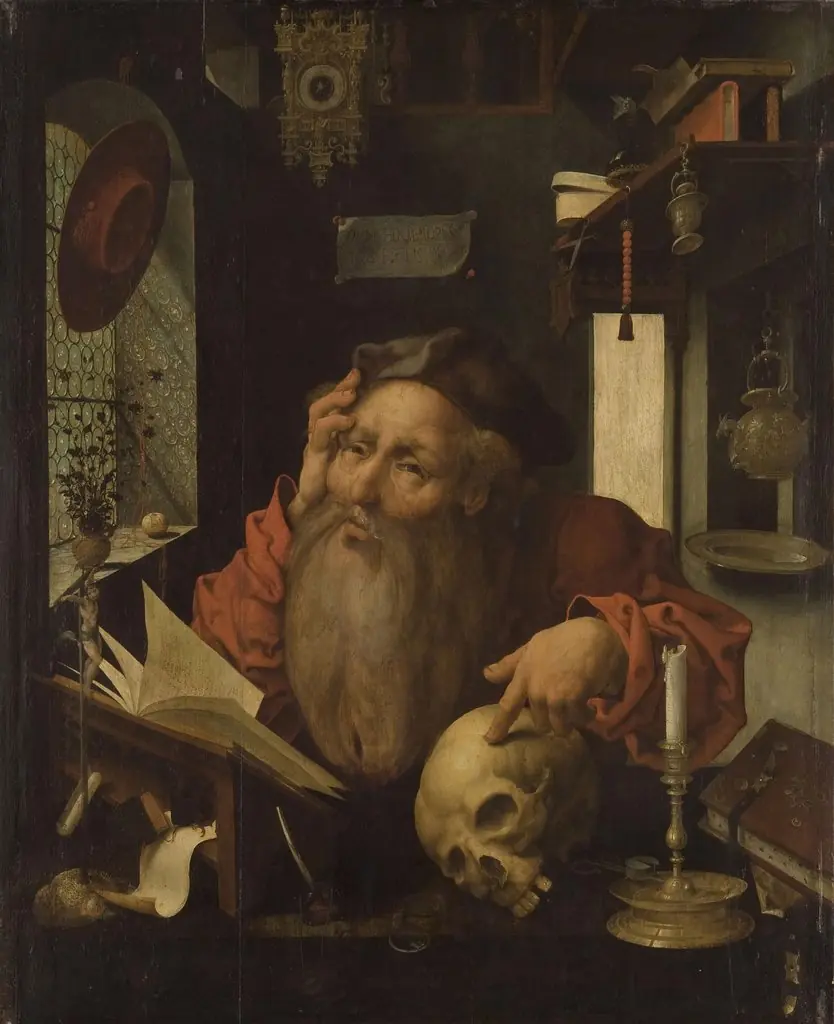
The figure of Saint Jerome is shown in scholarly solitude, holding a skull—a traditional symbol of mortality and penitence. An open book before him suggests his scholarly labor, particularly his translation of the Bible into Latin. The quiet intensity of his gaze and the sparse surroundings emphasize inner reflection, aligning with the ascetic ideals associated with Jerome’s life as a hermit and theologian.
Technique & Style
Oil paint allows for subtle gradations of tone and texture, evident in the rendering of fabric, skin, and metallic objects. Chiaroscuro modeling defines the figure’s form against a dark background, focusing attention on the face and hands. The composition is restrained, with minimal props—a vase, a scroll—each carefully placed to support the theme of quiet devotion without distraction.
History & Provenance
The painting’s early history is undocumented, but it entered the collection of the National Museum of Ancient Art in the 19th century. As one of the few known works by Dirck Jacobsz, it provides rare insight into Dutch artistic production before the full emergence of the Protestant Reformation. Its preservation reflects its recognized significance within Portuguese collections of Northern European art.
Context
In early 16th-century Northern Europe, depictions of Saint Jerome were common among both Catholic and emerging Protestant communities, valued for his scholarly devotion. Jacobsz, working in the Netherlands, would have been familiar with such imagery through prints and altarpieces. His version reflects a quiet, humanized piety rather than grand ceremonial display, consistent with regional trends in devotional portraiture.
Legacy
Though Dirck Jacobsz is not widely known today, *São Jerónimo* remains a key example of early Dutch oil painting’s capacity for psychological depth. Its presence in a major Portuguese museum underscores the transnational circulation of Northern Renaissance art. The work continues to serve as a reference for understanding how religious themes were rendered with intimacy in the decades before the Reformation.
Artist & collection
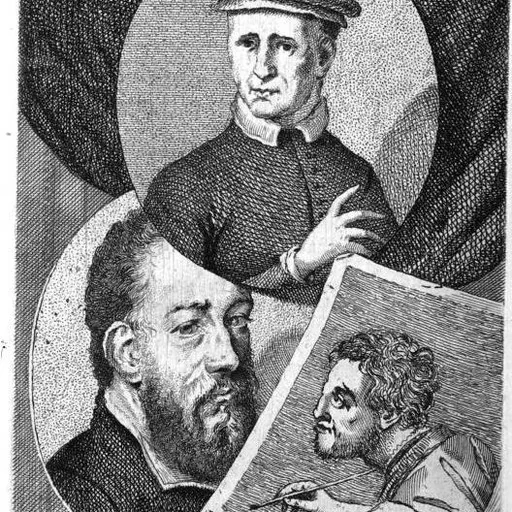
Artist
Dirck Jacobsz (1496–1567) was a Dutch Renaissance painter. His exact birthplace is unknown, but it was somewhere near Amsterdam.