Artwork
The Fall of Phaeton
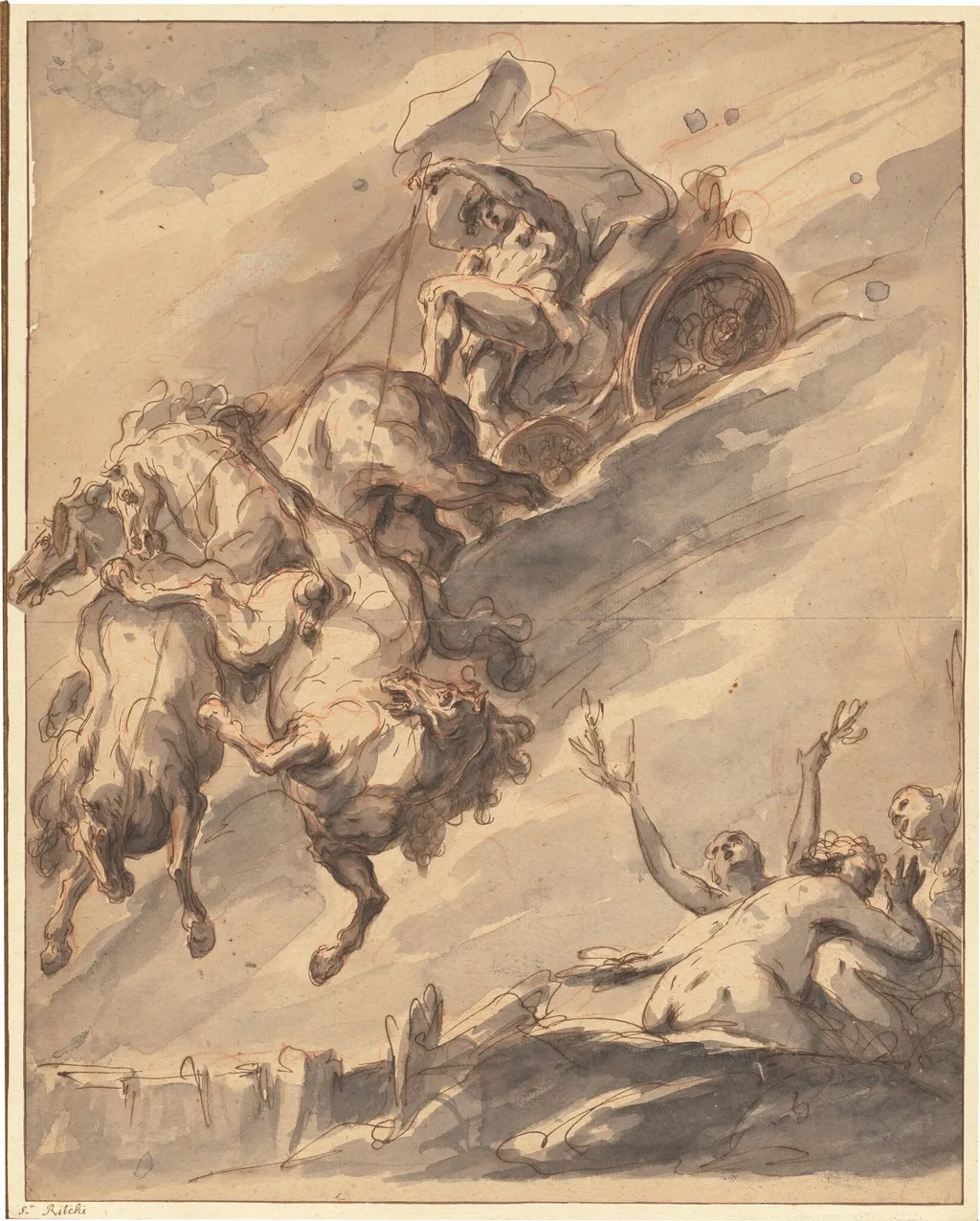
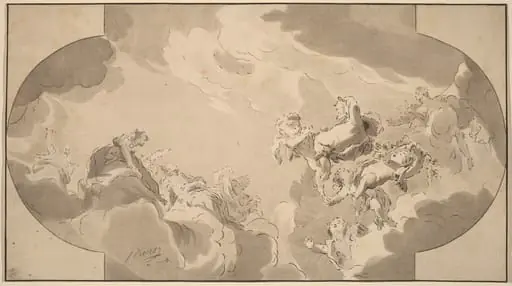
The Fall of Phaeton is an ink drawing by the Baroque artist Gaspare Diziani. It dates from 1748 and is held in the collection of the National Gallery of Art.
About this work
Overview
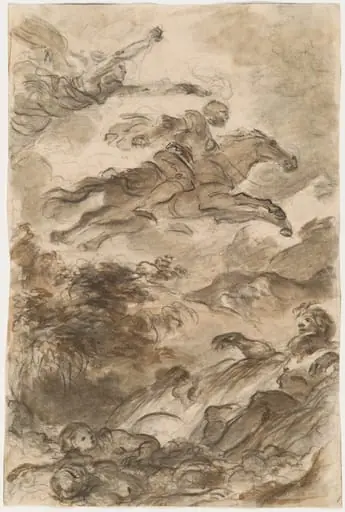
Gaspare Diziani’s 1748 drawing *The Fall of Phaeton* is executed in pen and brown ink applied over a red‑chalk underdrawing, with additional brown and gray washes on laid paper. The work functions as a preparatory sketch for a larger painted composition, illustrating the artist’s method of planning complex mythological scenes before committing to colour.
Subject & Meaning
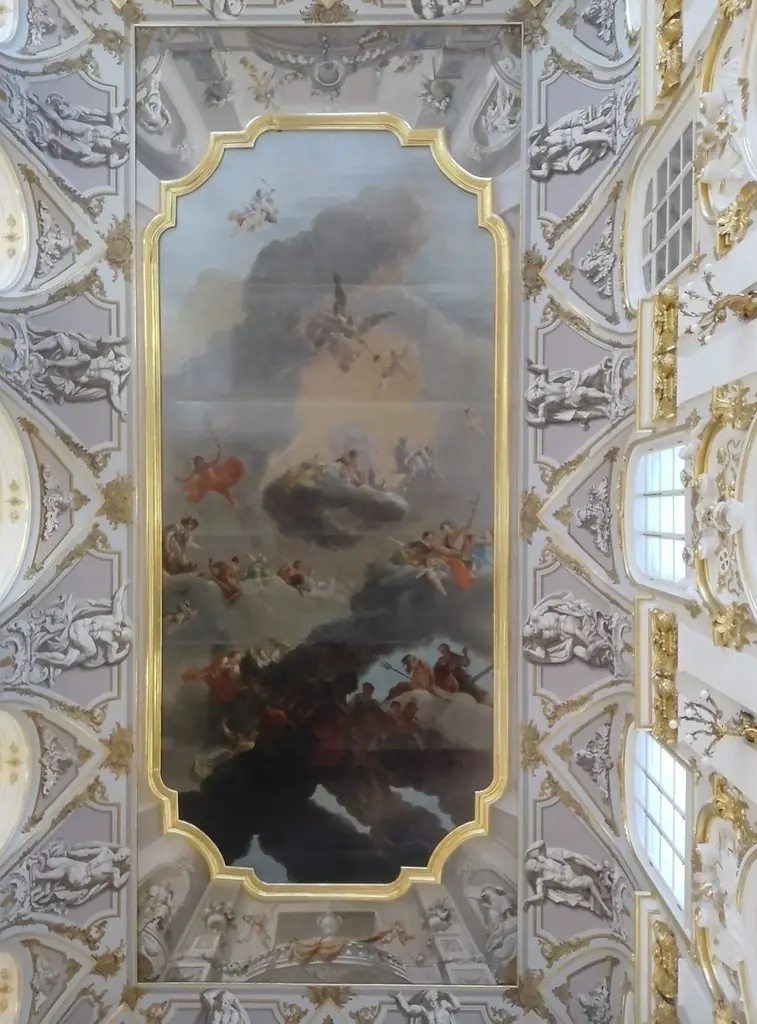
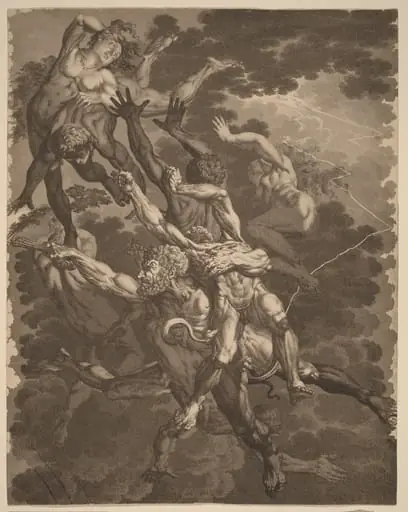
The image captures the moment from the Greek myth when Phaeton, the son of Helios, loses control of his sun‑chariot and plummets headfirst toward the earth. Zeus, poised with a raised arm, prepares to unleash a bolt of lightning, while storm clouds gather, emphasizing the divine retribution and the peril of hubris.
Technique & Style
Diziani employs rapid, confident lines and dense cross‑hatching to model form and convey movement. The red chalk underdrawing provides a structural guide, while the layered ink washes create atmospheric depth. The sketch reflects the late‑Baroque to Rococo transition, favoring dynamic composition and decorative vigor.
History & Provenance
Created during Diziani’s active period in Venice, the drawing also aligns with his commissions in Dresden and Munich. Though intended as a study for a finished painting, the sketch has survived as an independent work, offering insight into the artist’s preparatory process in the mid‑18th century.
Context
Mythological subjects such as the fall of Phaeton were popular among Baroque and Rococo artists, who relished dramatic narratives and vigorous motion. Diziani’s treatment fits within this tradition, employing theatrical lighting and vigorous gesture to heighten the story’s emotional impact.
Artist & collection
Artist
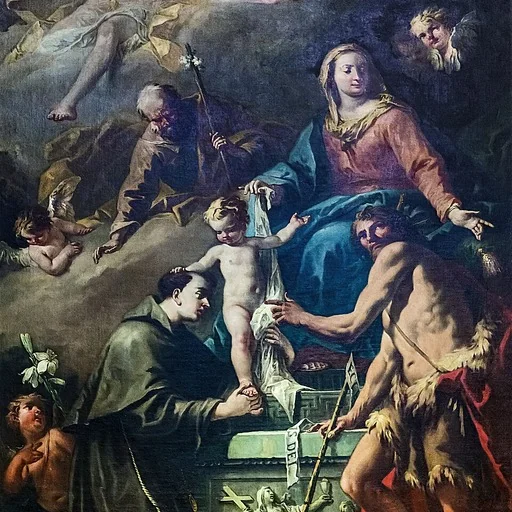
Gaspare Diziani (1689 – 17 August 1767) was an Italian painter of the late-Baroque or Roccoco period, active mainly in the Republic of Venice but also in Dresden and Munich.