Artwork
S. Hieronymus in Deserto (Saint Jerome in the Desert)
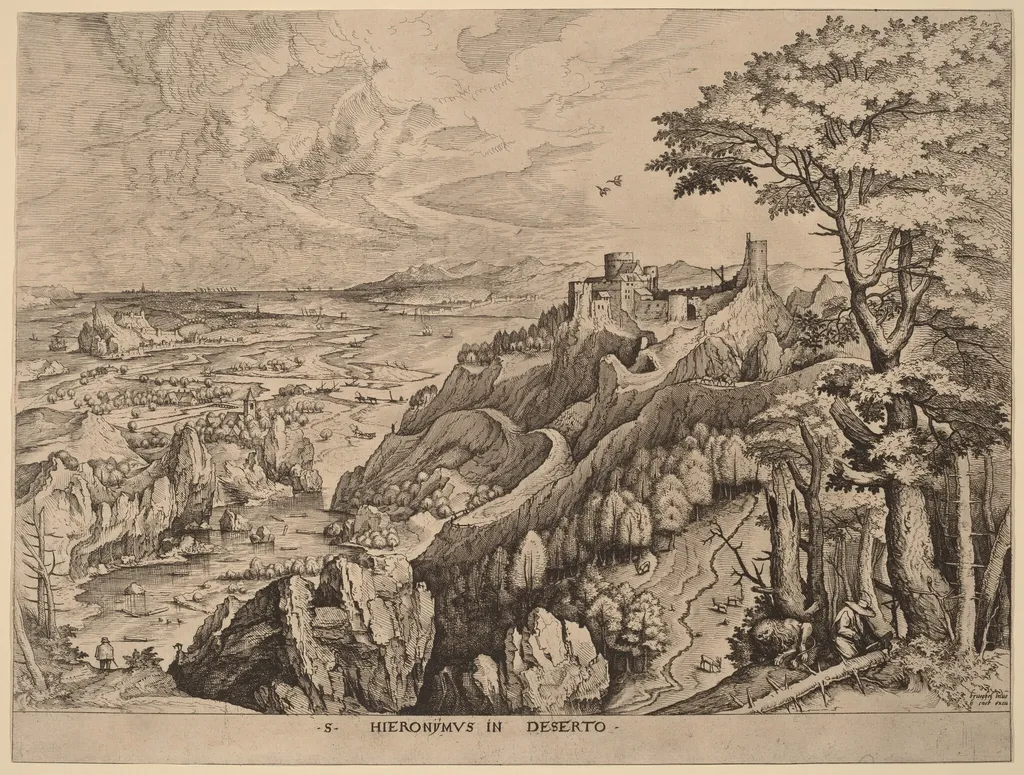
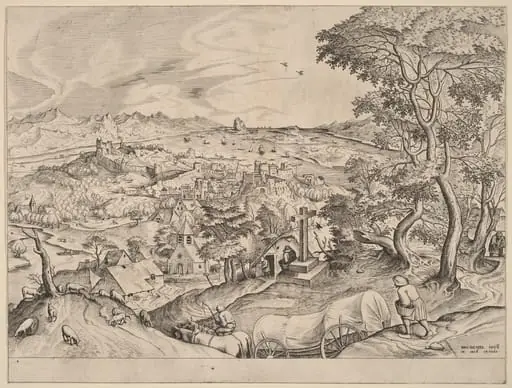
S. Hieronymus in Deserto (Saint Jerome in the Desert) is an ink print by the Renaissance artist Lucas van Doetechum. It dates from 1556 and is held in the collection of the National Gallery of Art.
About this work
Overview
Created around 1556, this print by Lucas van Doetechum depicts Saint Jerome in a barren landscape. Executed through a combination of etching and engraving, the work presents a solitary, robed figure seated amid rocky terrain, with a distant fortress perched on a cliff above a meandering river. Sparse trees punctuate the scene under a light sky marked by a few clouds.
Subject & Meaning
The central figure represents the early Christian scholar Saint Jerome, traditionally associated with hermitic contemplation. His placement in an austere desert setting underscores themes of asceticism and scholarly solitude, reflecting the saint’s reputed withdrawal from worldly distractions to pursue translation of biblical texts.
Technique & Style
Van Doetechum employs fine, intersecting lines to render textures such as the folds of the robe and the rugged cliff faces. The dual use of etching for broader tonal areas and engraving for precise detail allows a nuanced rendering of light and surface, characteristic of mid‑sixteenth‑century Northern printmaking.
History & Provenance
The engraving was produced in the mid‑16th century, a period when religious subjects were commonly reproduced for devotional purposes. While specific ownership records are scarce, the work is attributed to van Doetechum based on stylistic analysis and contemporary documentation of his print output.
Context
During the 1550s, the Reformation and Counter‑Reformation heightened interest in visual representations of saints. Prints like this served both as instructional images and as personal objects of piety, circulating widely beyond the confines of churches and elite collections.
Artist & collection


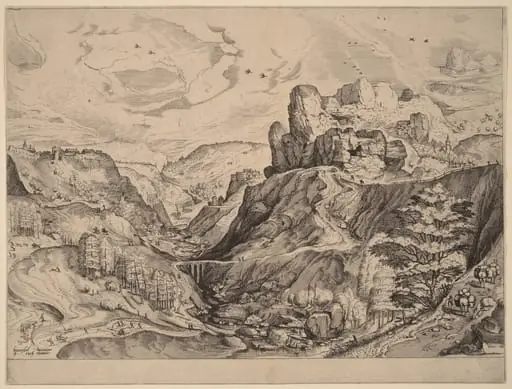 Alpine Landscape
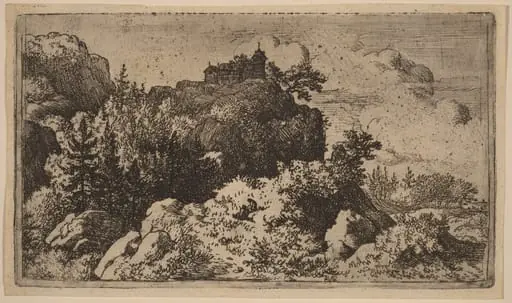 Firs in the Defile
 Firs in the Defile
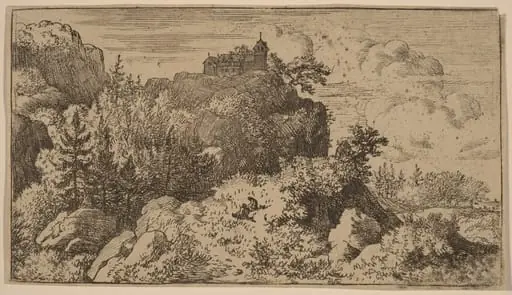 Firs in the Defile
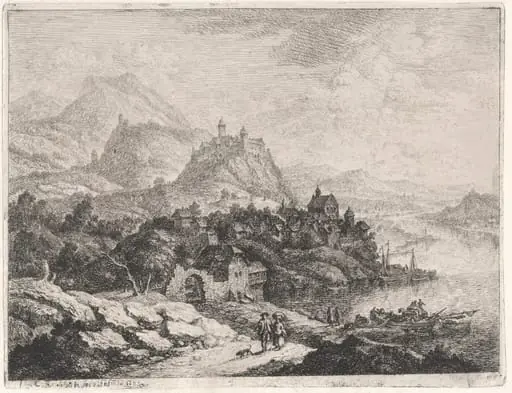 A Wide Riverscape with a View of Heidelberg Castle
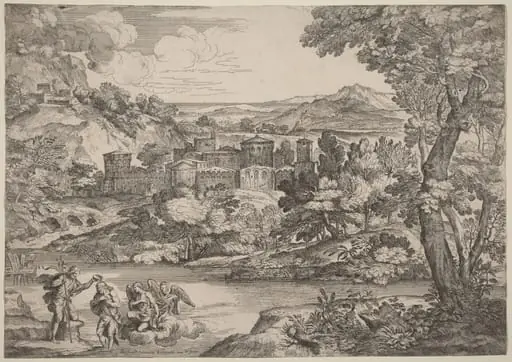 The Baptism of Christ, Set in a Mountainous Landscape
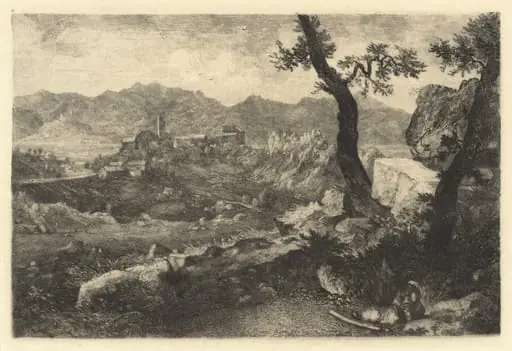 A View Near Rome
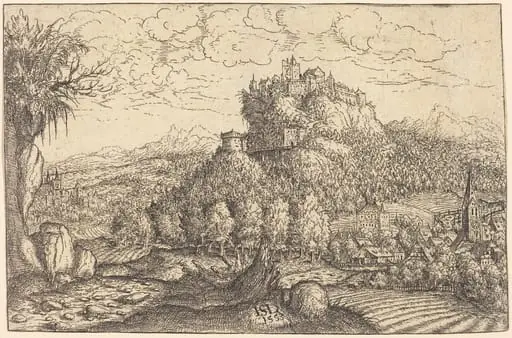 Landscape with a Castle in the Center
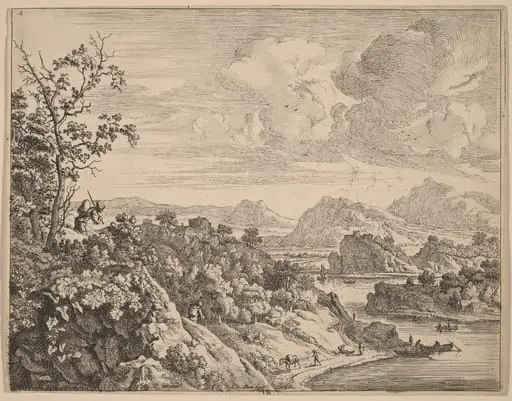 View of the River Rhine
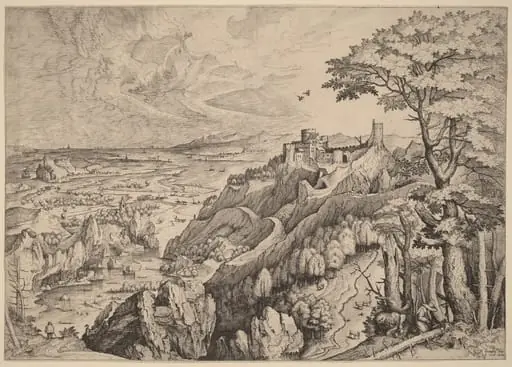 S. Hieronymus in Deserto (Saint Jerome in the Desert)