Artwork
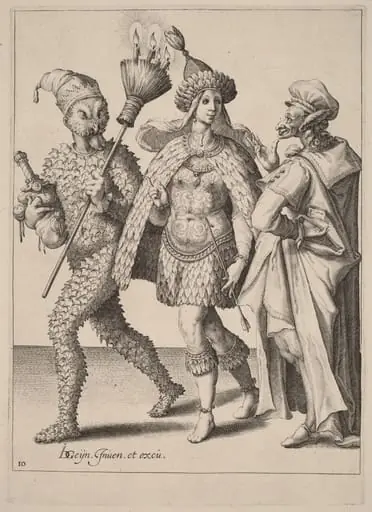
Three Dancing Mummers, Including a Jester
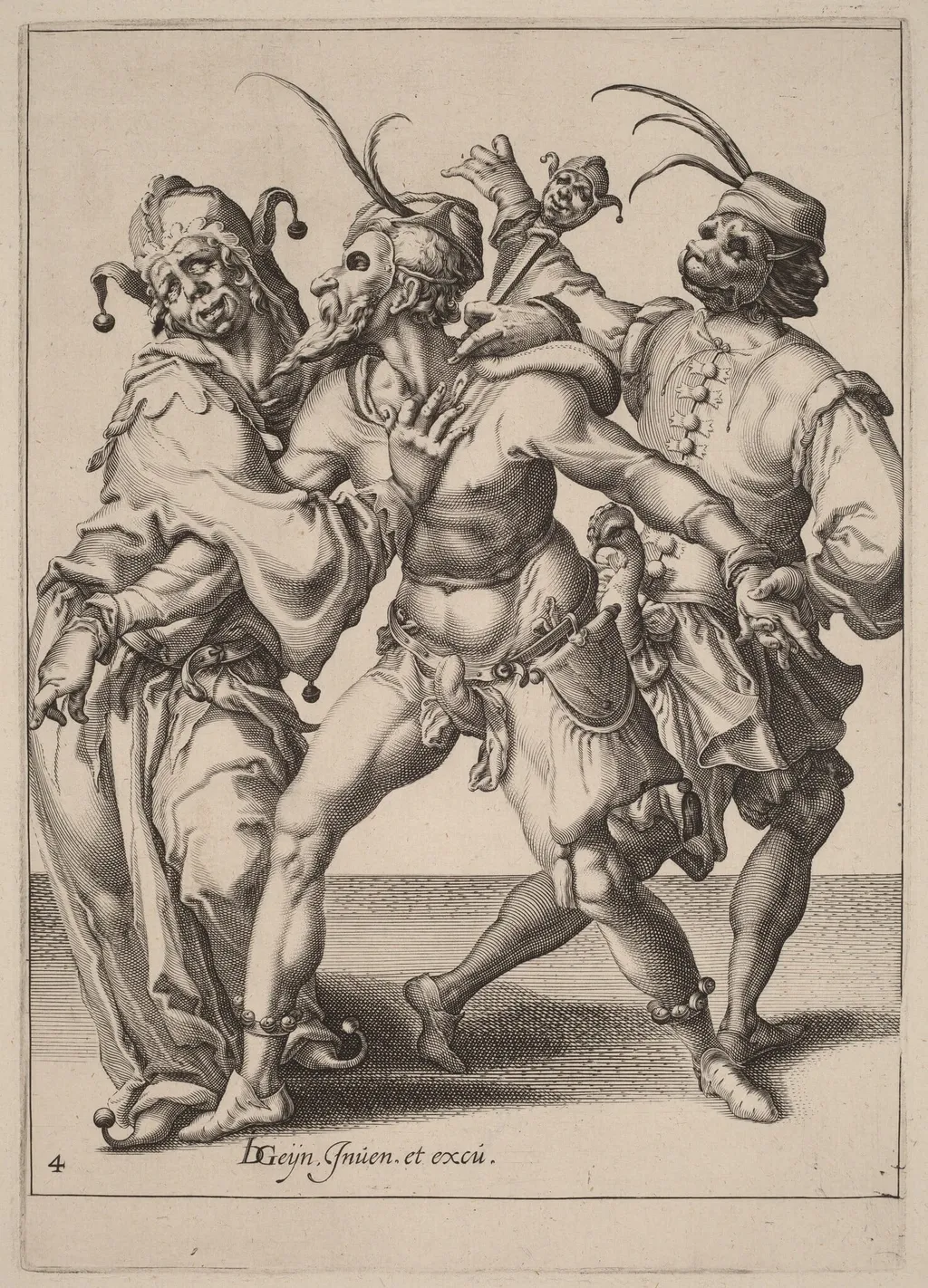
Three Dancing Mummers, Including a Jester is an ink print by the Renaissance artist Zacharias Dolendo. It dates from 1596 and is held in the collection of the National Gallery of Art.
About this work
Overview
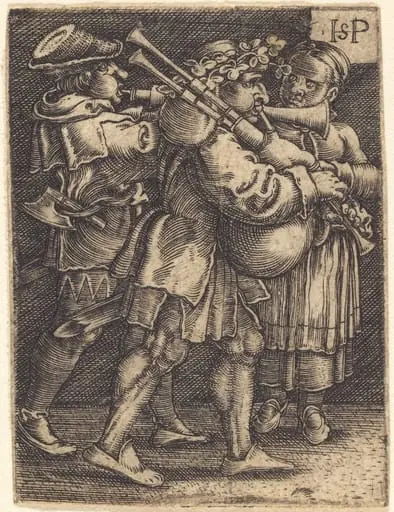
Zacharias Dolendo, a Dutch engraver born in Leiden in 1561, produced the print *Three Dancing Mummers, Including a Jester* in 1596. Executed on laid paper, the work presents a lively scene of three costumed figures engaged in a festive dance, rendered with the fine line work characteristic of late‑sixteenth‑century engraving.
Subject & Meaning
The composition shows three men in elaborate attire, one clearly identified as a jester by his cap, curved feather and jingling bell. The figures are captured in dynamic poses—a leaping dancer, a musician, and the grinning jester—evoking the popular folk and theatrical entertainments of the period.
Technique & Style
Dolendo’s engraving demonstrates meticulous line engraving, with delicate hatching that models the textures of fabric, feathers and metal bells. The use of laid paper provides a subtle tonal background, allowing the intricate details of the costumes and movement to stand out without distraction.
History & Provenance
Active in the late 1500s, Dolendo is known for surpassing his brother Bartholomeus in technical skill, and some scholars suggest he may have trained under Jacob de Ghein. His prints often bear a personal cipher, and this work belongs to a body of prints that includes portraits and religious subjects, illustrating his versatility.
Context
The image reflects a broader Renaissance interest in popular performance, especially the mummers’ plays and courtly masques that blended music, dance, and comedy. Such subjects were common in Northern European print culture, serving both as documentation of folk customs and as decorative prints for collectors.
Artist & collection
Artist
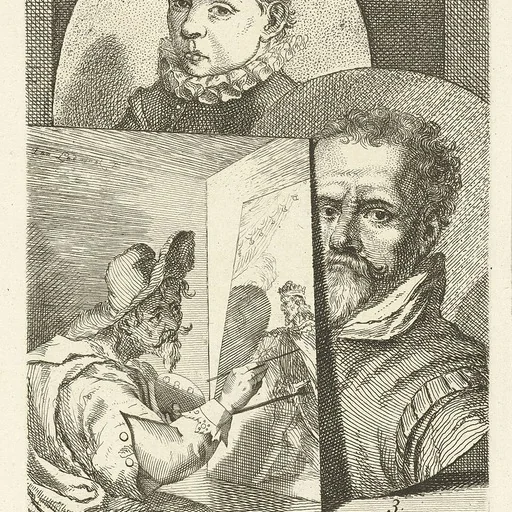
Zacharias Dolendo (1561–1601) was a Dutch engraver. He was the brother of Bartholomeus Dolendo, whom he surpassed both in style and in correctness. He was born at Leyden in 1561, and is said by Huber to have been a…

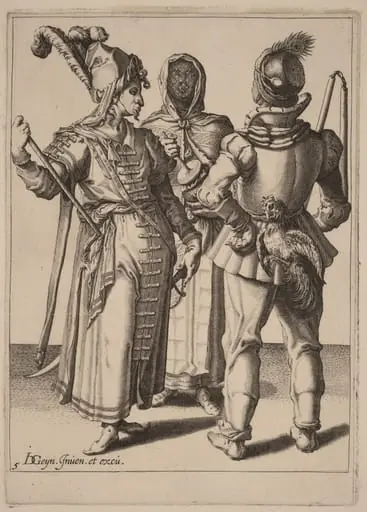 A Grandee, a Peasant, and a Veiled Woman
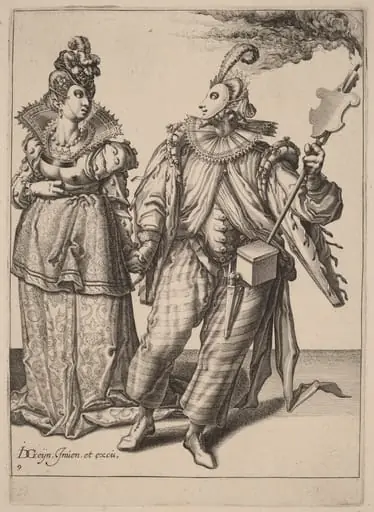 A Woman Led by a Player Holding a Torch
 An Old Mummer Addressing a Couple Dressed in Feathers
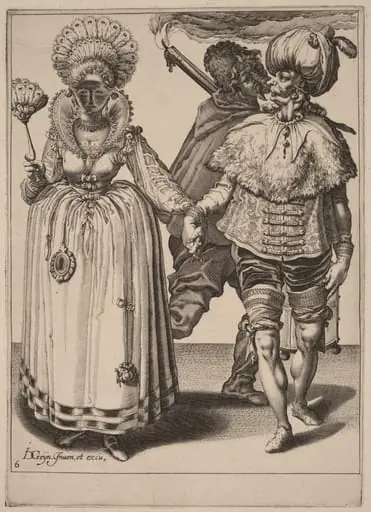 A Man with a Turban Leading a Woman Wearing Peacock Feathers
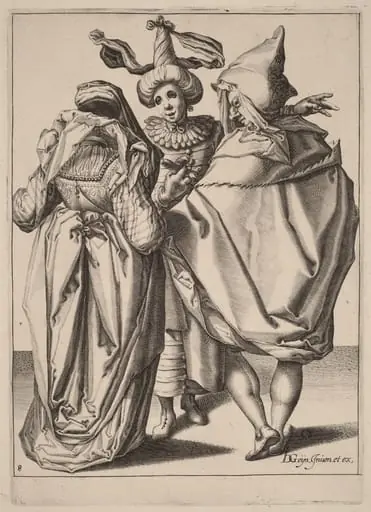 A Couple Addressing a Gesticulating Young Man
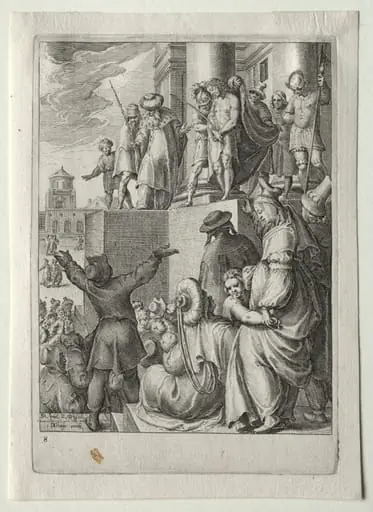 Passion Set: Ecce Homo
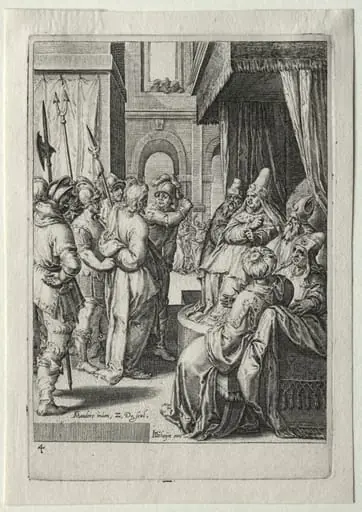 Passion Set: Christ before Herod
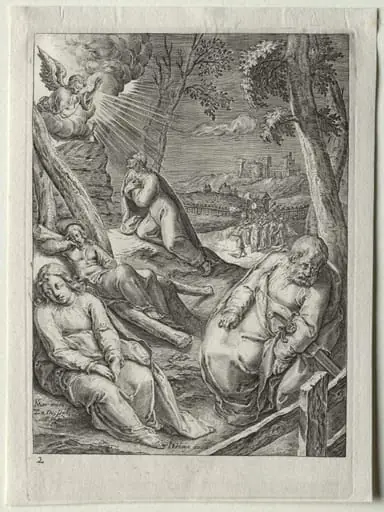 Passion Set: Christ on the Mount of Olives