Artwork
'Raphaelis Sanctij Vrbinatis Planetarium,' &c.
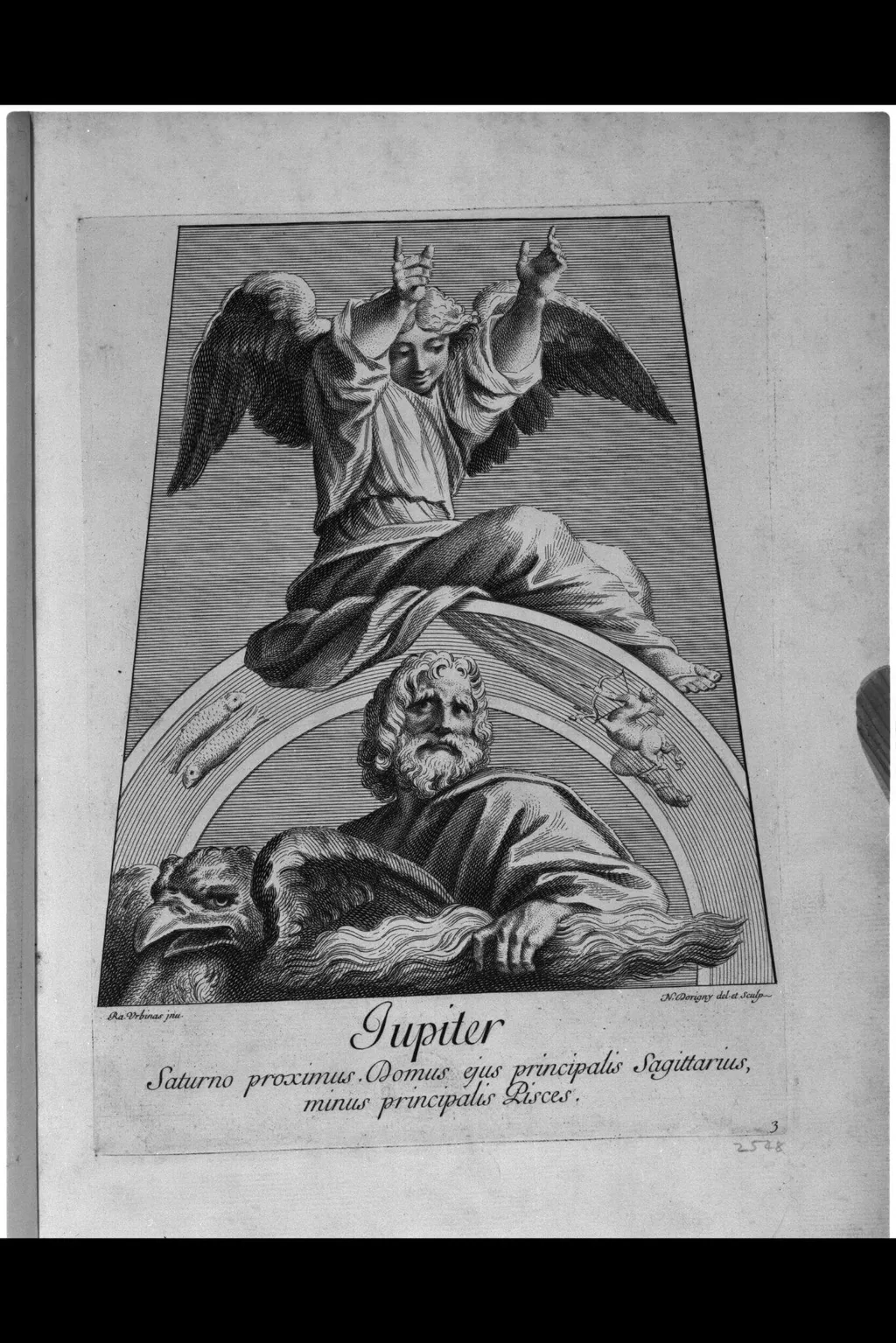
'Raphaelis Sanctij Vrbinatis Planetarium,' &c. is a print by the Baroque artist Nicholas Dorigny. It dates from 1695 and is held in the collection of the Victoria and Albert Museum.
About this work
Overview
It represents Jupiter and derives from designs originally conceived by Raphael for mosaics in the Chigi Chapel in Rome.
This 1695 engraving by Nicholas Dorigny is one of eight prints illustrating celestial bodies from classical cosmology. It represents Jupiter and derives from designs originally conceived by Raphael for mosaics in the Chigi Chapel in Rome. Executed on paper, the print includes Latin inscriptions that situate it within a sequence, following Saturn. The work reflects the late 17th-century revival of Renaissance iconography through printmaking.
Subject & Meaning
Jupiter is depicted allegorically, with a celestial figure above holding up two fingers—possibly symbolizing divine authority or duality. Below, a bearded man crowned with leaves, seated on clouds amid two fish, evokes ancient associations of the god with water and sovereignty. The imagery merges Greco-Roman mythology with Christian symbolism, common in Counter-Reformation art, to convey cosmic order and divine hierarchy.
Technique & Style
Dorigny employed fine line engraving to render intricate textures in drapery, clouds, and scales. Subtle chiaroscuro modeling creates volume and spatial depth, characteristic of Baroque printmaking. The composition is vertically structured, with figures framed by curved lines suggesting celestial spheres. Attention to detail in hair, fabric, and background shading demonstrates technical precision and adherence to Raphael’s original compositional intent.
History & Provenance
The engraving stems from Raphael’s preparatory cartoons for mosaics commissioned by Agostino Chigi around 1516 for the Chigi Chapel. Though the mosaics were completed by others, Raphael’s designs endured as influential models. Dorigny, a French engraver, reproduced them nearly two centuries later, likely for scholarly or aristocratic collectors interested in Renaissance revival. The print’s inscription confirms its place in a numbered series.
Context
In the late 17th century, there was renewed interest in Renaissance art among European elites, leading to the reproduction of classical designs through print. Dorigny’s series aligned with this trend, linking ancient cosmology with contemporary scientific and theological views of the heavens. The Chigi Chapel’s mosaics, originally intended to glorify divine order, were reinterpreted through print to serve intellectual and aesthetic curiosity rather than liturgical function.
Legacy
Dorigny’s engravings preserved Raphael’s designs for later generations when the original mosaics were less accessible. Though not widely exhibited today, the series remains a documented link between High Renaissance visual culture and Baroque printmaking practices. Scholars use these prints to study the transmission of artistic ideas across centuries and the evolving reception of classical mythology in early modern Europe.
Artist & collection
Artist
This guy made prints that feel like travel souvenirs from another century. He carved religious scenes so crisp they look like photographs—except the robes are a little too dramatic. A friend once pointed out how he…

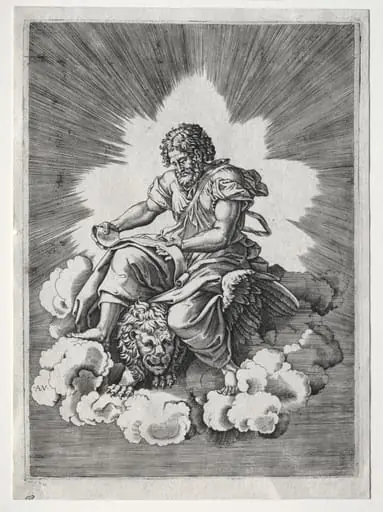 The Four Evangelists: St. Mark
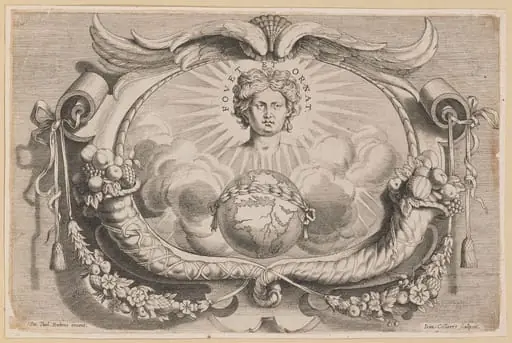 Printer's Device for Jan van Keerbergen: Vignette for Biblia Cum Glossa Ordinaria
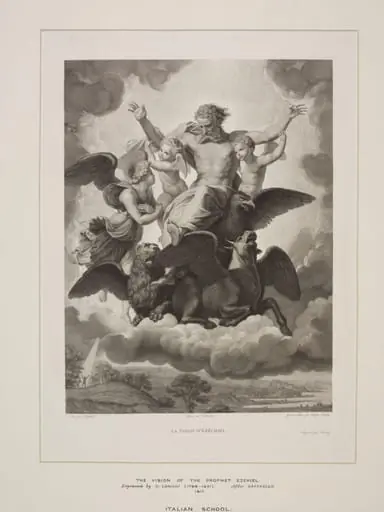 The Vision of Ezekiel
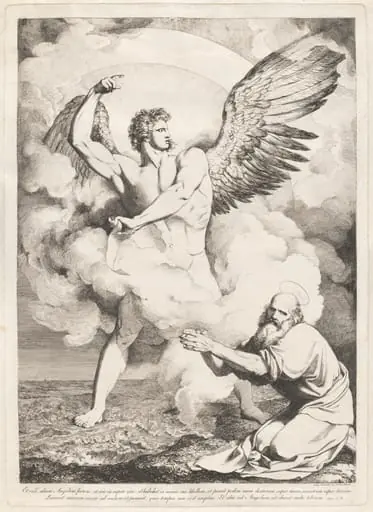 Et vidi alium angelum fortem... (The Angel of the Apocalypse Appearing to Saint John)
 Genius of the Sun (from the Tarocchi, series B: Cosmic Principles & Virtues, #31)
 The Northern Celestial Hemisphere
 The Angel with the Sudarium
 Son of Righteousness
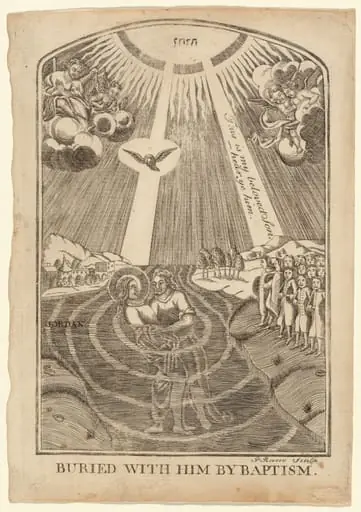 Buried with Him by Baptism
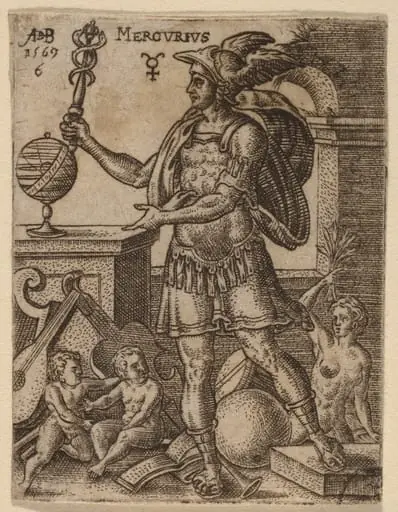 Mercury
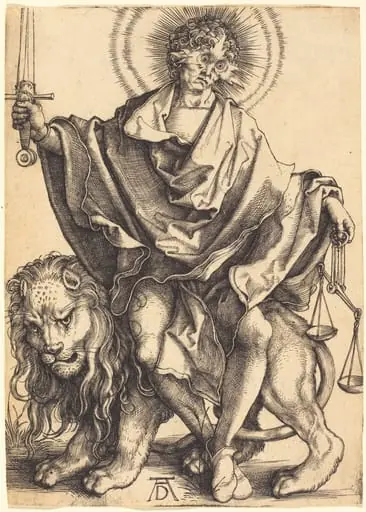 Sol Iustitiae ("Sun of Righteousness")
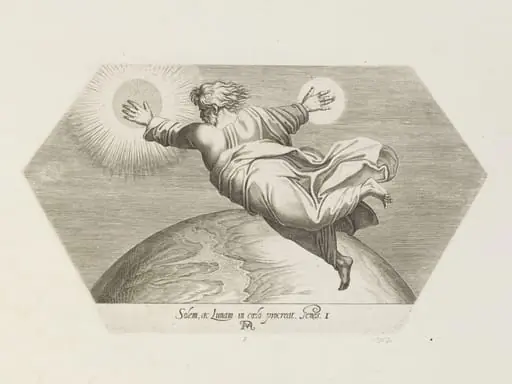 God creating the Sun and the Moon