Artwork
Le paysan
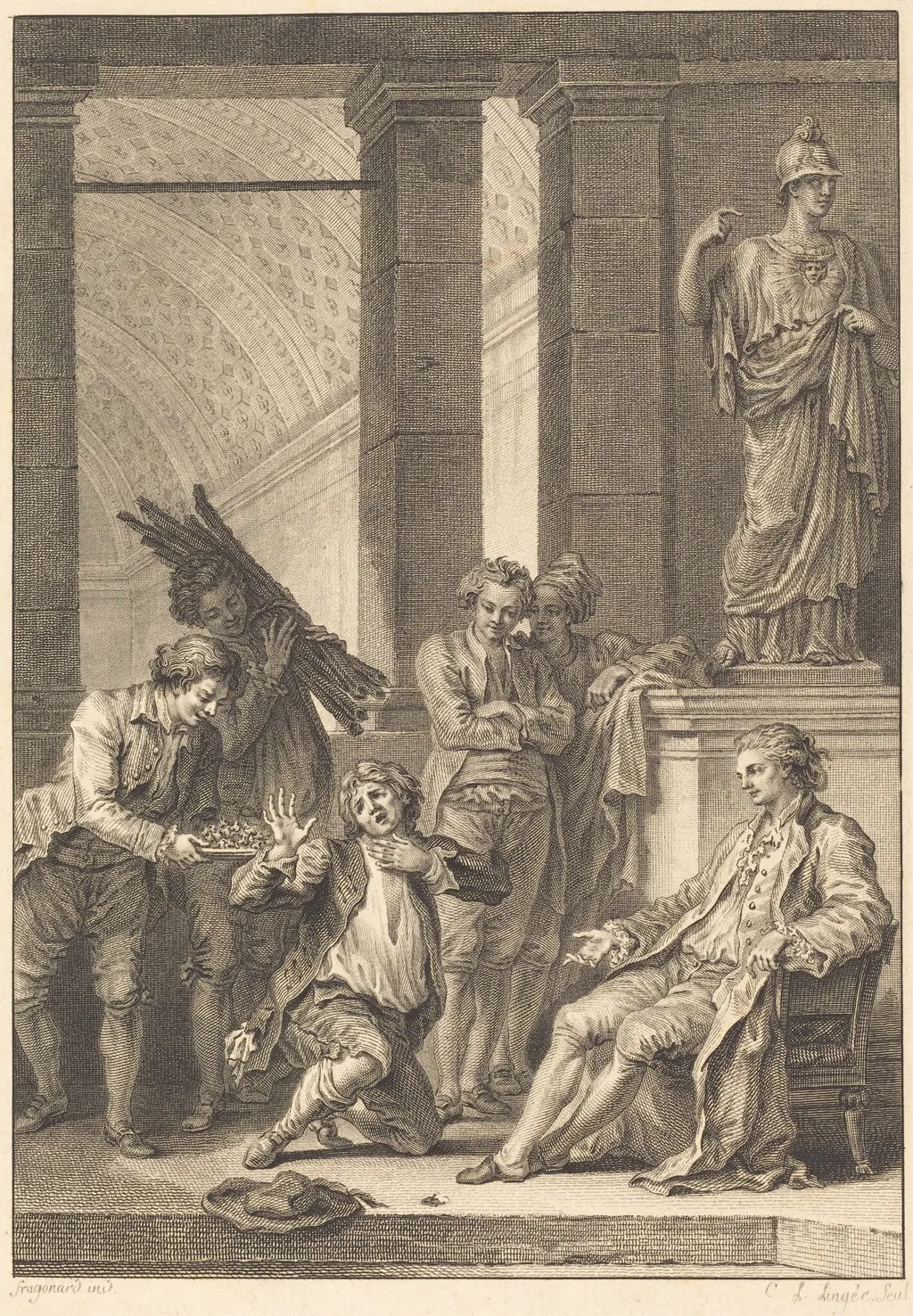
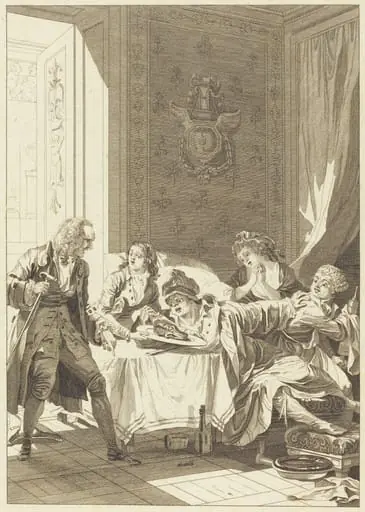
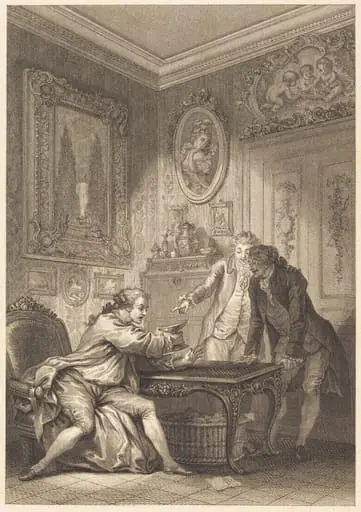
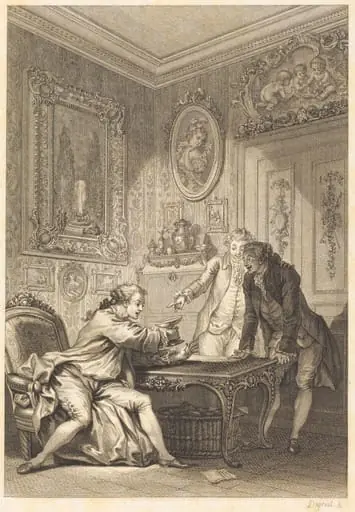
Le paysan is an ink print by the Baroque artist Charles Louis Lingée. It dates from 1784 and is held in the collection of the National Gallery of Art.
About this work
Overview
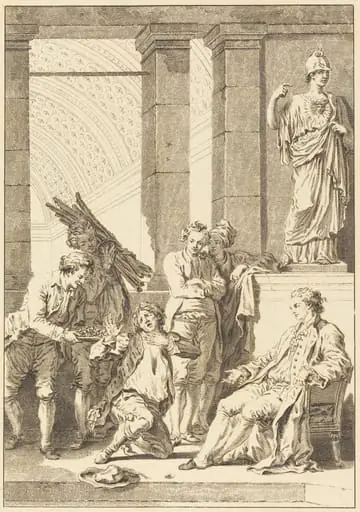
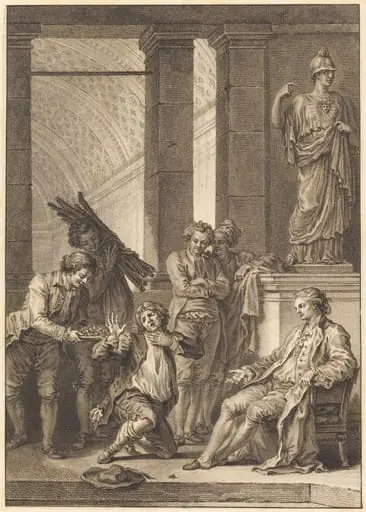
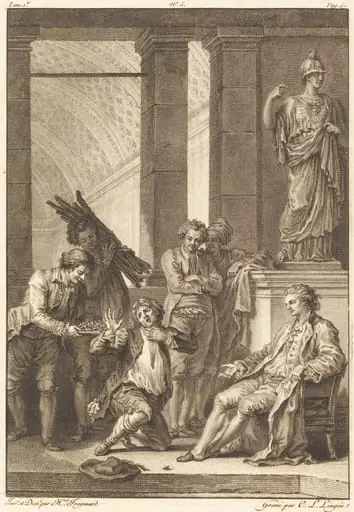
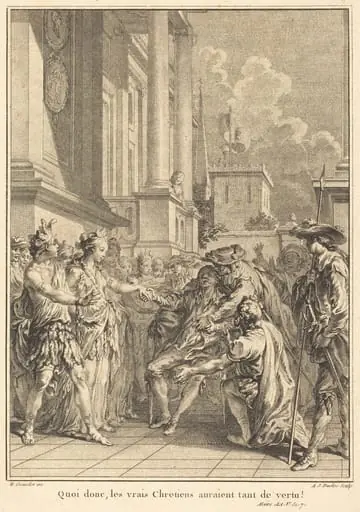
Le paysan is a print created by Charles Louis Lingée in 1784, executed in etching and engraving techniques. Contrary to the title's suggestion of a peasant, the work depicts a scene of figures gathered around a statue, set amidst architectural elements.
Subject & Meaning
The central figure is a statue of a woman in a long robe and helmet, holding a cloth. Surrounding individuals, dressed in antiquated attire, are seated, standing, or kneeling, intently focused on something on the ground, implying a scene of solemn discussion or contemplation.
Technique & Style
Lingée utilized etching and engraving to achieve the work's detailed, high-contrast visuals. While the style bears some compositional similarities to Baroque's dramatic flair, the overall tone and subject matter suggest a more nuanced, possibly Neoclassical inclination.
History & Provenance
Created in 1784, specific details on the print's history, ownership, and exhibition record are not provided in available sources.
Context
Emerging in the late 18th century, 'Le paysan' reflects the period's artistic shift, potentially bridging Baroque's expressive qualities with the emerging Neoclassicism's emphasis on antiquity and solemnity.
Legacy
The print's impact on subsequent artistic movements or its reception over time is not detailed in the provided information, suggesting a need for further research to assess its influence.
Artist & collection