Artwork
Cană de mici dimensiuni, de culoare cărămizie, bombată la mijloc, prezintă toartă arcuită. Aceasta este smălțuită în partea superioară unde prezintă o alternanță de linii albe cu negre încadrate de două rânduri de linii vălurite albe. Cromatică: fond: cărămiziu; motive: negru, alb.
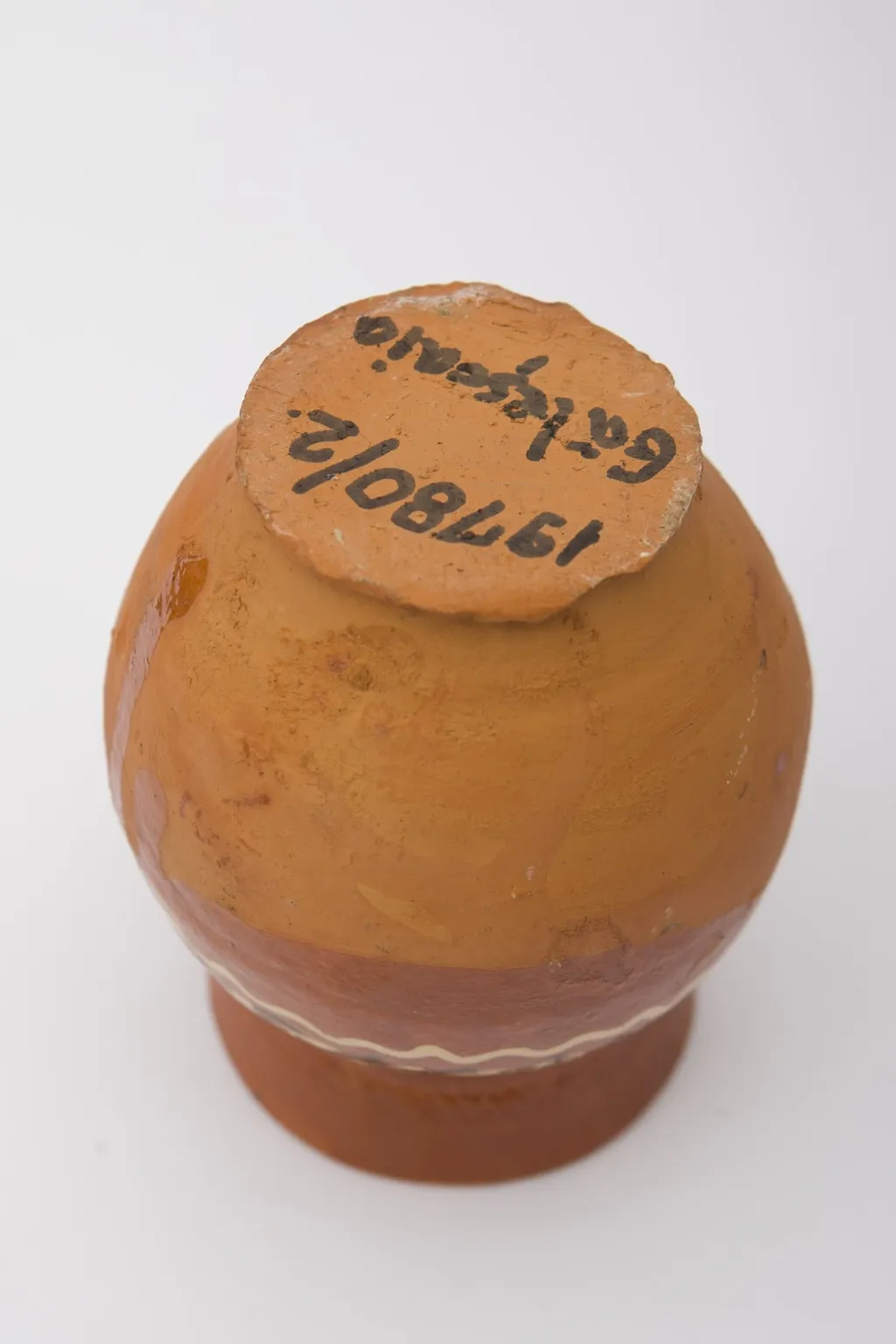
Cană de mici dimensiuni, de culoare cărămizie, bombată la mijloc, prezintă toartă arcuită. Aceasta este smălțuită în partea superioară unde prezintă o alternanță de linii albe cu negre încadrate de două rânduri de linii vălurite albe. Cromatică: fond: cărămiziu; motive: negru, alb. is a photography by Dumitru Peptan. It is held in the collection of the ASTRA National Museum Complex. A small, rounded clay vessel with a brick-red hue, this object features a gently bulging body and a narrow, reddish foot.
About this work
Overview
Its upper rim is flat and smaltized, displaying a decorative band of alternating black and white lines, bordered above and below by undulating white contours.
A small, rounded clay vessel with a brick-red hue, this object features a gently bulging body and a narrow, reddish foot. Its upper rim is flat and smaltized, displaying a decorative band of alternating black and white lines, bordered above and below by undulating white contours. The surface shows signs of wear, with uneven textures and subtle imperfections, suggesting prolonged use or burial. Its modest size and utilitarian form indicate a domestic or ritual function.
Subject & Meaning
No figural or symbolic imagery is present; meaning derives from form and surface treatment. The geometric pattern of alternating stripes and wavy borders may reflect regional aesthetic conventions or serve as a marker of identity or craftsmanship. The absence of pictorial elements points toward a functional object, possibly used for storage or ceremonial purposes, where decoration was secondary to utility.
Technique & Style
Hand-formed from coarse clay, the vessel was fired to achieve a rusty orange tone. The upper rim was coated with a thin slip, then incised or painted with alternating black and white lines, likely using natural pigments. Wavy borders were applied with a comb-like tool or by hand, creating rhythmic texture. The surface wear suggests post-firing handling, possibly through repeated use or exposure to soil over time.
History & Provenance
The object’s style and material align with early to mid-20th century Romanian folk pottery traditions, particularly those from regions where Dumitru Peptan worked. While its exact origin is undocumented, its construction and decoration resemble pieces produced in rural workshops during a period of renewed interest in vernacular ceramic forms. It likely emerged from a local artisan’s studio rather than an industrial setting.
Context
This vessel belongs to a broader tradition of utilitarian ceramics in Romanian rural communities, where handmade pottery served daily needs and carried subtle cultural markers. Its restrained palette and linear decoration reflect a preference for simplicity over ornamentation, consistent with regional practices that valued function and material honesty. Similar forms appear in ethnographic collections from Moldavia and Oltenia.
Legacy
Though unattributed to a specific maker, the piece exemplifies the continuity of folk ceramic practices in Romania during the 20th century. Its preservation in collections or archives underscores a scholarly interest in documenting vernacular craftsmanship. It stands as a quiet testament to the enduring presence of handmade objects in everyday life, valued for their material truth rather than artistic pretension.
Artist & collection
Artist

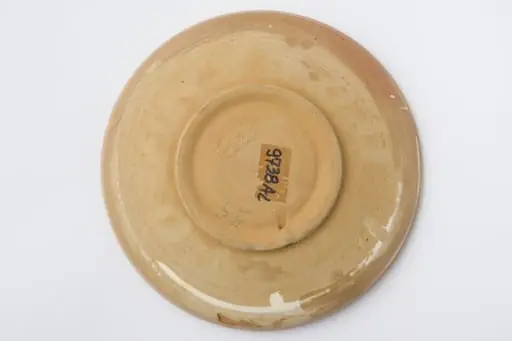 Farfurie de mici dimensiuni, cu fundul îngust, pereții puțin înalți, dar puternic evazați. Centrul farfuriei îl formează o spirală. Restul câmpului este ornamentat în registre succesive separate prin linii de culoare maro realizate cu pensula. Tot cu pensula, peste jirăvire a fost pictată o cunună cu frunze, încadrată în arce cu baza pe un inel cărămiziu, pe ultimul din registru. Spre buză o linie dispusă circular cu buline în alternanță cromatică înscrise în arce. Este prevăzută cu o gaură, pe partea posterioară, la baza inelară, pentru prindere. Dorsal incizată inscripția ”Stelian Ogrezeanu Hurez Vîlcea România''. Cromatică: fond: alb; motive: verde; cărămiziu; negru.
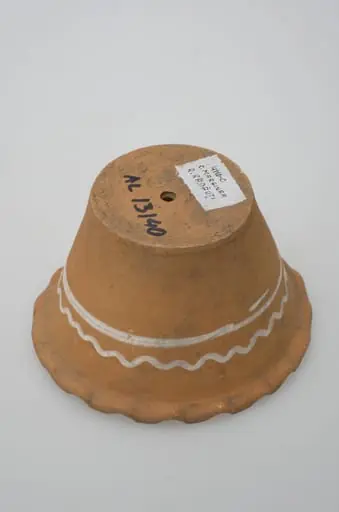 Vas de formă tronconică cu buza evazată și ondulată obținută prin apăsare cu degetul. Decorul este minimalist, format dintr-o linie dreaptă și una linie șerpuită trase cu pensula cu angobă de huma alba. Nesmălțuit. Cromatică: fond: cărămiziu; motive: alb.
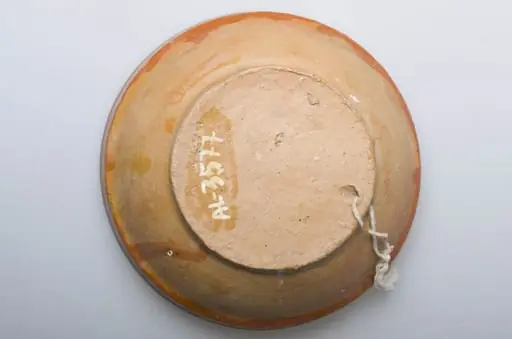 Blid de formă tronconică, cu gura largă, înaltă și dreaptă, smălțuit integral în partea interioară și în exterior doar la nivelul buzei. Este decorat din interior cu motive florale: trei flori - una albă central încadrată de doi brăduți și două verzi lateral; motive geometrice: trei linii ondulate deasupra florii albe și unghiuri de diferite dimensiuni între cele două flori verzi. Fundul este circular și prezintă un orificiu pentru agățare. Cromatică: fond: cărămiziu; motive: alb; verde; negru.
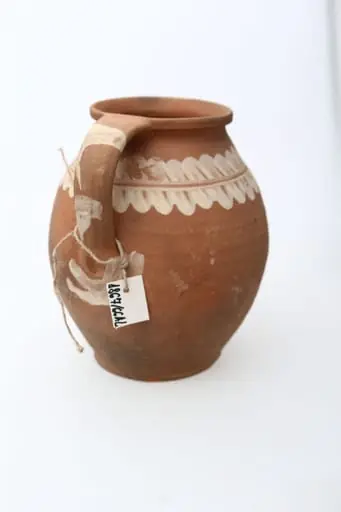 Recipient din lut nesmălțuit, de formă bitronconică, având gât îngust, gura ușor răsfrântă și buza dreaptă. Prevăzut cu o toartă lată și arcuită fixată la buză și la mijlocul vasului. Decorat cu degetul pe umeri cu motive zoomorfe (dintele de lup), și pe toartă cu motive geometrice neregulate. Decorat cu pastă de angobă, albă. Se folosește la fiertul mâncării pe vatră liberă în familii mai puțin numeroase. Cromatică:fundal cărămiziu,motive: alb.
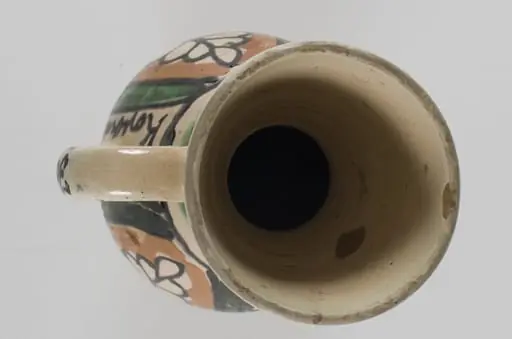 Cană cu gât lung, cu buza evazată și o toartă. Este smălțuită în interior și în exterior. Prezintă decor pe toată suprafața cu motive fitomorfe, motive florale stilizate și motive geometrice: linie, linie ondulată, punct, tablă de șah. Pe toartă scrie ”Jozsa Janos”, iar pe corp, chiar lângă toartă, scrie ”Korond 1974”. Cromatică: fond: alb; motive: bej, maro, verde, negru.
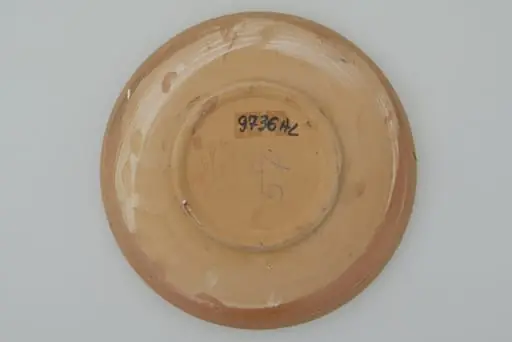 Farfurie tronconică de mici dimensiuni, cu fundul mic, pereții puțin înalți, dar puternic evazați. Centrul farfuriei prezintă o spirală, urmează un câmp jirăvit; urmează două cercuri maro și verde, din nou câmp jirăvit, urmează o ghirlandă cu trandafiri, sfârșindu-se cu un câmp jirăvit. Este prevăzută cu o gaură, pe partea posterioară, pentru prindere. Cromatică: fond: alb-gri; motive; maro; verde; cărămiziu.
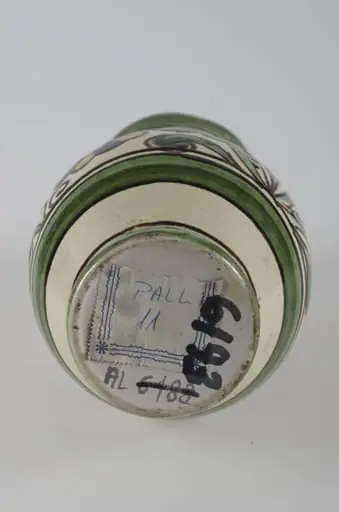 Cană cu gât lung, buza evazată și o toartă. Este smălțuită în interior și în exterior. Decorată pe toată suprafața cu motive fitomorfe, motive florale și motive geometrice: linie, punct; de asemenea este decorată cu motive zoomorfe: șarpe (pe toartă) și avimorfe (pe corp); Cromatică: fond: alb; motive: verde; galben; bleumarin; maro.
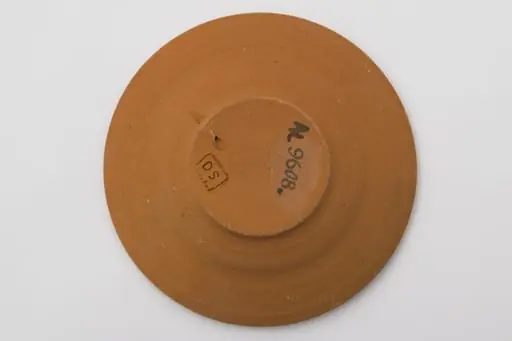 Vas ceramic cu fundul plat puțin adâncit și marginile evazate, puțin ridicate. Ornamentată cu pensula cu angoba albă. Fundul este marcat printr-o spirală din care ies alte șase spirale mici dispuse pe circumferința exterioară. Pe marginea vasului două benzi, una cu o linie întreruptă, a doua cu șase valuri întrerupte. La posterior ștanțat ”DS” încadrat într-un dreptunghi. Cromatică: fond: cărămiziu; motive: alb.
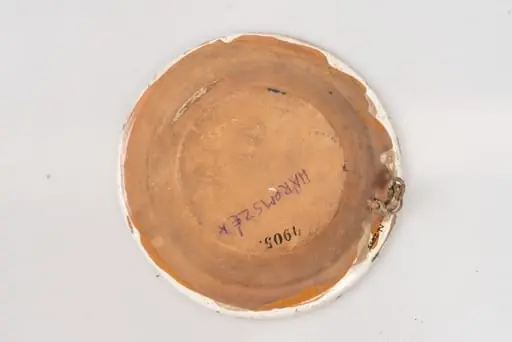 Farfurie adâncă cu buză îngustă, evazată și muchia buzei rotunjită, angobată pe suprafața interioară cu un strat de humă albă. Decorul este realizat prin pictare cu pensula și cu cornul și se compune din motive florale și geometrice, dispuse astfel: central pe fundul farfuriei, încadrat într-un cerc albastru, se găsește un buchet format din trei flori cu petale mici albastre și mijlocul din linii roșu-cărămiziu, și din doi boboci în culorile roșu-cărămiziu și albastru. Registrul marginal de pe buza farfuriei conține motive formate din câte două dungi scurte de culoare roșu-cărămiziu, între care sunt pictate grupuri de linii drepte hașurate intersectat, de culoare roșu-cărămiziu, albastru și verde. Decorul marginal este încadrat între două cercuri subțiri albastre. Suprafața ornamentată a farfuriei este acoperită cu un strat de smalț transparent. Cromatica: alb, albastru, roșu-cărămiziu, verde.
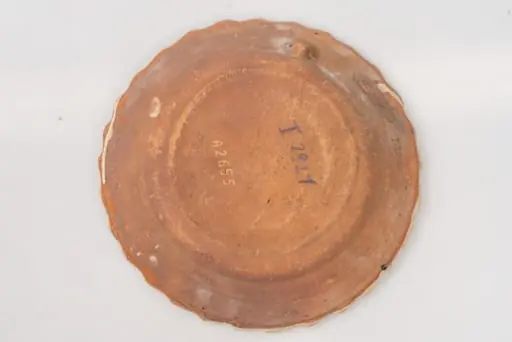 Farfurie semi-adâncă, cu buza evazată și muchia buzei ondulată; este angobată pe suprafața interioară cu un strat de humă albă peste care este pictat cu cornul decorul bogat, ce acoperă întreaga suprafață a farfuriei și este format din motive geometrice și vegetale stilizate: floare cu petale rotunde și mijlocul umplut cu linii hașurate intersectat, semicercuri cu contur albastru și interior verde, linii sub formă de V, linii punctate duble dispuse sub formă de stea, linii circulare, linii groase sub formă de virgulă, grupuri de puncte. Suprafața ornamentată a farfuriei este acoperită cu un strat de smalț transparent. Cromatica: alb, verde, albastru.
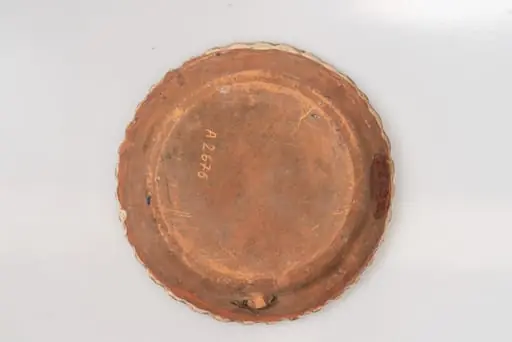 Farfurie semi-adâncă, cu fundul larg, buză evazată cu muchia buzei ondulată. Piesa este acoperită pe suprafața interioară cu un strat de angobă albă, peste care este pictat cu cornul și cu pensula decorul monocromatic, format din motive florale și vegetale stilizate și geometrice: fundul farfuriei este decorat cu un buchet format din flori și boboci de lalea stilizate (două tipuri de lalea) și grupuri de puncte, iar buza acesteia cu un șir continuu de frunze duble cu motive punctate între ele (linii). Bordura interioară a farfuriei este marcată de două linii circulare simple și o linie circulară ondulată între ele, iar muchia buzei de o dungă albastră. Suprafața ornamentată a farfuriei este acoperită cu un strat de smalț transparent. Cromatica: alb, albastru.