Artwork
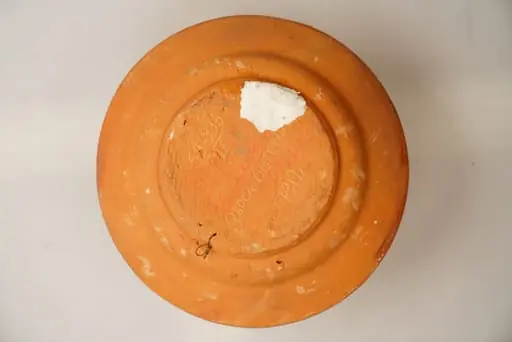
Vas de formă tronconică cu buza evazată și ondulată obținută prin apăsare cu degetul. Decorul este minimalist, format dintr-o linie dreaptă și una linie șerpuită trase cu pensula cu angobă de huma alba. Nesmălțuit. Cromatică: fond: cărămiziu; motive: alb.
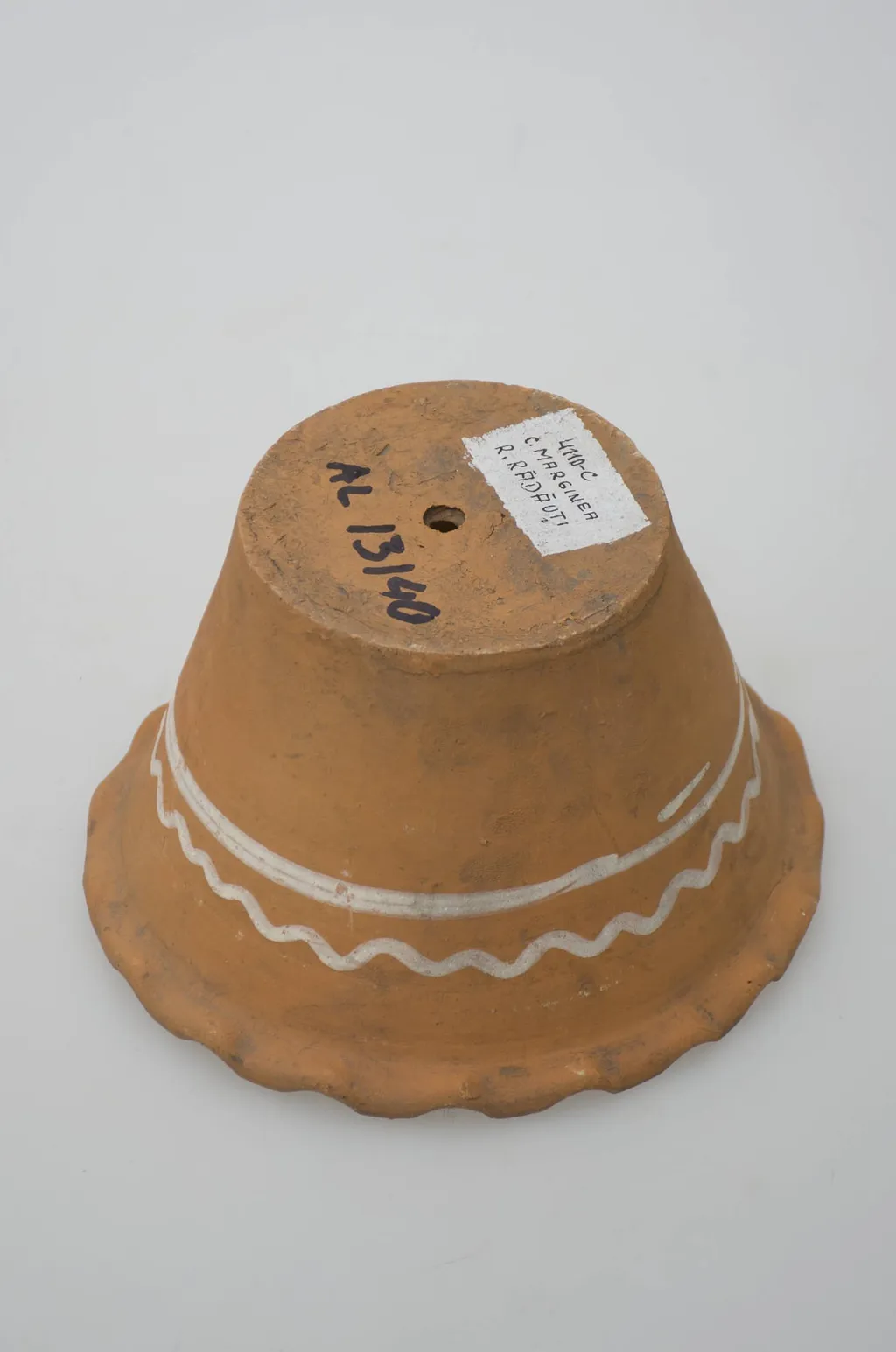
Vas de formă tronconică cu buza evazată și ondulată obținută prin apăsare cu degetul. Decorul este minimalist, format dintr-o linie dreaptă și una linie șerpuită trase cu pensula cu angobă de huma alba. Nesmălțuit. Cromatică: fond: cărămiziu; motive: alb. is a photography by Magopăț Ilie. It is held in the collection of the ASTRA National Museum Complex. This is a hand-formed ceramic vessel with a conical body and a flared, undulating rim created by pressing the clay with a finger.
About this work
Overview
This is a hand-formed ceramic vessel with a conical body and a flared, undulating rim created by pressing the clay with a finger.
This is a hand-formed ceramic vessel with a conical body and a flared, undulating rim created by pressing the clay with a finger. The surface remains unglazed, revealing the natural reddish-brown hue of the fired clay. Decorative elements are limited to two hand-painted white lines, applied with slip, contrasting subtly against the earthy ground. The form and finish reflect a deliberate simplicity, emphasizing material authenticity over ornamentation.
Subject & Meaning
No figurative or symbolic imagery is present. The decoration consists solely of abstract lines—one straight, one wavy—suggesting a focus on rhythm and gesture rather than narrative. The minimalism may reflect a functional aesthetic or a meditative approach to craft, where the act of making and the material’s inherent qualities hold primary significance.
Technique & Style
The vessel was shaped by hand on a wheel or with coiling, then left unglazed to preserve the clay’s texture. The white lines were painted using a slip made from fine huma clay, applied with a brush in a single, fluid motion. The irregular rim and uneven base indicate manual handling without mold use, reinforcing the object’s handmade character and the artist’s direct engagement with the medium.
History & Provenance
The object is attributed to Magopăț Ilie, a ceramicist known for his restrained, material-focused work in Romanian folk traditions. While specific dates or collection history are not provided, the form and technique align with late 20th-century studio pottery movements in Romania that revived indigenous methods while rejecting industrial replication.
Context
This piece emerges from a regional ceramic tradition that values tactile honesty and functional clarity. Its lack of glaze and sparse decoration distinguishes it from more ornate folk pottery, situating it within a broader postwar shift toward minimalist, artist-led ceramics that prioritize process over decoration and local materials over imported finishes.
Legacy
Magopăț Ilie’s work, including this vessel, contributed to a redefinition of Romanian ceramics as a contemporary art form grounded in craft. His emphasis on hand-formed surfaces and restrained decoration influenced later generations of potters seeking to balance tradition with modernist abstraction, preserving the integrity of material and gesture.
Artist & collection
Artist

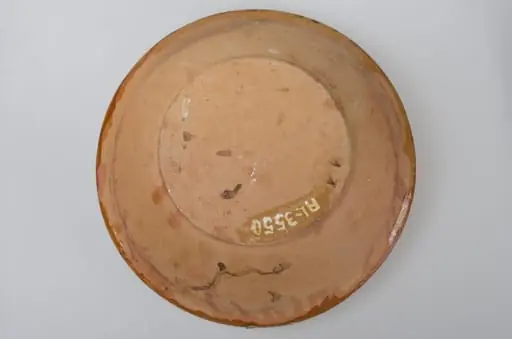 Vas de formă tronconică cu buza dreapta. Decorul este amplasat pe toată suprafața interioară și parțial în exterior, pe buză. Acesta este compus din motive geometrice (val); motive fitomorfe, plasate pe fund (frunza) și motive florale, tot pe fund (pansea). Blidul este smălțuit la interior și pe zona exterioară a buzei. Cromatică: fond: maron; motive: alb, verde.
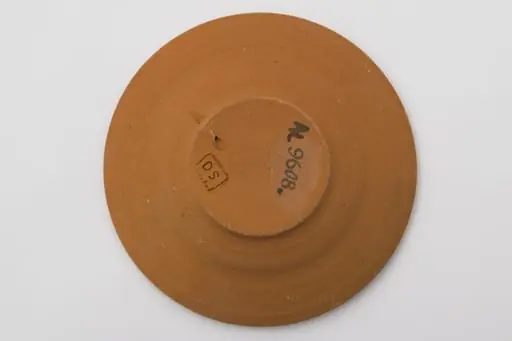 Vas ceramic cu fundul plat puțin adâncit și marginile evazate, puțin ridicate. Ornamentată cu pensula cu angoba albă. Fundul este marcat printr-o spirală din care ies alte șase spirale mici dispuse pe circumferința exterioară. Pe marginea vasului două benzi, una cu o linie întreruptă, a doua cu șase valuri întrerupte. La posterior ștanțat ”DS” încadrat într-un dreptunghi. Cromatică: fond: cărămiziu; motive: alb.
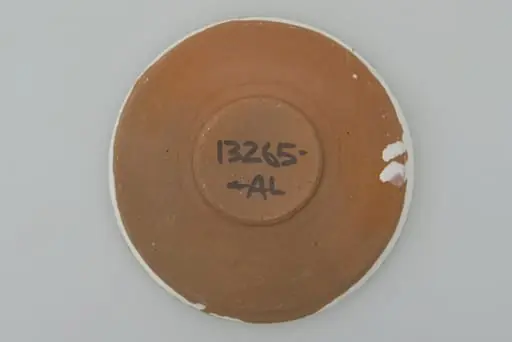 Farfurie de formă tronconică cu buza rotunjită. Decorul este compus din motive geometrice și vegetale pictate cu cornul: pe fund: două spirale cu puncte și două frunze; pe buză: linie ondulată; interior angobat; decor smălțuit. Cromatică: fond: alb; motive: verde; galben.
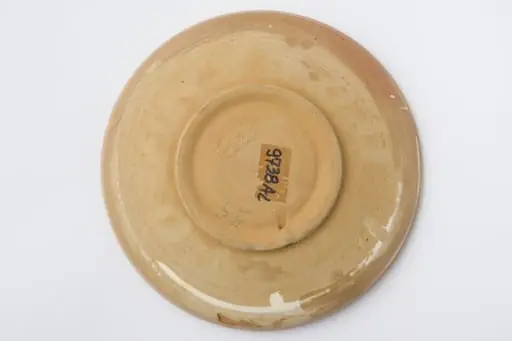 Farfurie de mici dimensiuni, cu fundul îngust, pereții puțin înalți, dar puternic evazați. Centrul farfuriei îl formează o spirală. Restul câmpului este ornamentat în registre succesive separate prin linii de culoare maro realizate cu pensula. Tot cu pensula, peste jirăvire a fost pictată o cunună cu frunze, încadrată în arce cu baza pe un inel cărămiziu, pe ultimul din registru. Spre buză o linie dispusă circular cu buline în alternanță cromatică înscrise în arce. Este prevăzută cu o gaură, pe partea posterioară, la baza inelară, pentru prindere. Dorsal incizată inscripția ”Stelian Ogrezeanu Hurez Vîlcea România''. Cromatică: fond: alb; motive: verde; cărămiziu; negru.
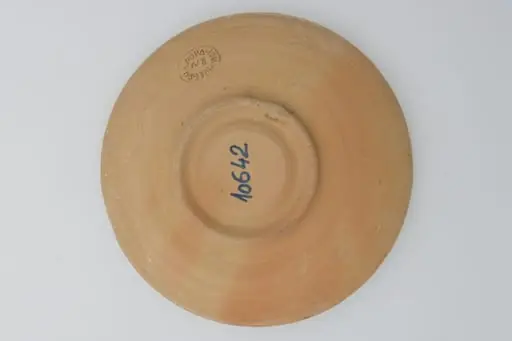 Recipient din lut de uz casnic, nesmălțuit, de formă circulară, cu profil tronconic și buza rotunjită. Acesta este decorat pe toată suprafața cu motive geometrice și florale, realizate cu gaița și cornul. În partea centrală este redată o floare cu petale multiple. Pereții se termină cu o linie ondulată. Cromatică: fond: alb; motive: gri, maro închis, maro deschis.
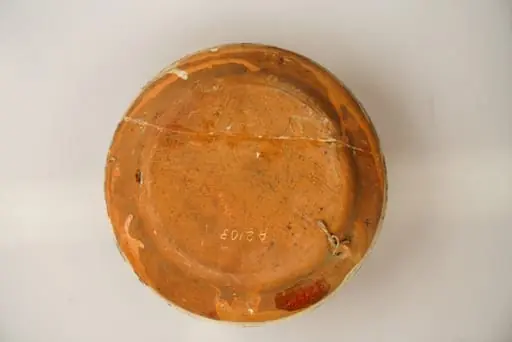 Farfurie de formă aplatizată, cu buza evazată și ușor concavă spre interior; este angobată pe suprafața interioară cu un strat de humă albă peste care este pictat cu pensula și cu cornul decorul format din motive geometrice, dispuse pe întreaga suprafață a piesei: linii groase verzi sub formă de semicerc, cu contur maro; grupuri de linii paralele crescătoare și descrescătoare dispuse pe buză sub formă de triunghi cu vârful orientat spre interior; linii circulare simple și ondulate; linii drepte groase de culoare verde cu contur maro; elemente vegetale geometrizate (frunze?) verzi sau cu linii mici maro în interior; motive sugerând mici flori cu petale rotunde. Suprafața ornamentată a farfuriei este acoperită cu un strat de smalț transparent. Cromatica: alb, albastru.
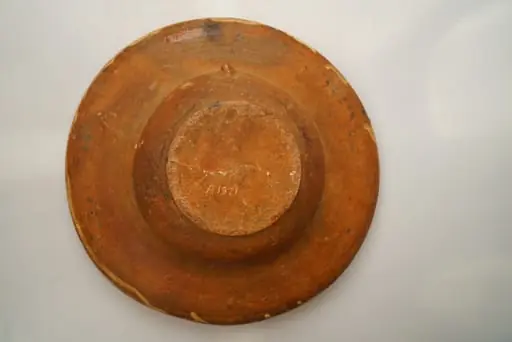 Farfurie mare adîncă, cu corp tronconic ușor rotunjit, buză lată evazată cu muchia buzei verticală; este acoperită pe suprafața interioară cu un strat de angobă albă peste care este pictat cu pensula decorul monocromatic format din motive geometrice și motive florale și vegetale stilizate, dispuse astfel: centrul farfuriei este decorat cu o floare (posibil crin) încadrată într-un cerc dublu, floare care se repetă și pe exteriorul cercului, alternată cu un motiv format din linii hașurate intersectat dispus sub formă de triunghi. Restul suprafeței corpului este decorat cu șiruri de frunze duble, orientate opus. Exteriorul buzei este decorat cu două linii circulare incizate. Suprafața ornamentată a farfuriei este acoperită cu un strat de smalț transparent. Cromatica: alb, albastru.
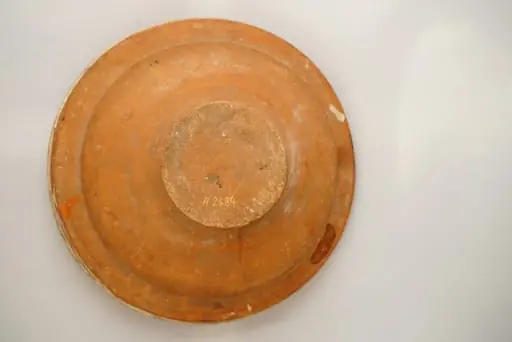 Farfurie mare, adâncă, de tip castron, cu corp tronconic, buza evazată și muchia buzei verticală; suprafața interioară a piesei este acoperită cu un strat de angobă albă, peste care este pictat cu cornul decorul monocromatic format din motive geometrice, florale și vegetale stilizate: centrul farfuriei este decorat cu un cerc format din mai multe linii subțiri maro, cerc ce conține în interior o tulpină cu o floare albastră rotundă și mai multe frunze realizate din linii subțiri; acestui decor floral i se adaugă patru grupuri de linii paralele crescătoare și descrescătoare ca mărime, dispuse sub formă de triunghi. Peretele farfuriei este decorat cu două tipuri de motive florale, cîte două din fiecare motiv și dispuse diametral opus: o tulpină cu două flori de lalea și frunze, și o tulpină cu două flori rotunde și centrul format din linii hașurate intersectat. Buza farfuriei este decorată cu un șir de motive vegetale formate din două linii sub formă de zigzag, dispuse circular, care se intersectează rezultând niște romburi, intersecția acestor linii fiind marcată cu două linii mici în formă de cruciuliță. Muchia buzei este decorată cu linii mici ondulate. Suprafața ornamentată a farfuriei este acoperită cu un strat de smalț transparent. Cromatica: alb, albastru.
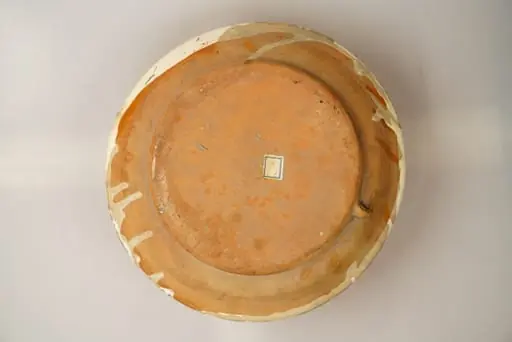 Farfurie de formă semi-adâncă, cu buza evazată și muchia buzei rotunjită. Este acoperită pe suprafața interioară cu un strat de angobă albă, peste care este pictat cu pensula și cu cornul decorul format din motive vegetale și florale stilizate, din motive geometrice și motive avimorfe, dispuse astfel: registrul decorativ central de pe fundul farfuriei, încadrat într-un cerc din două linii subțiri albastre, conține o vază cu baza ascuțită și două torți laterale, în care sunt așezate două flori mari albastre, cu frunze verzi, rotunde. În partea superioară a buchetului, pe cele două flori sunt așezate două păsări, una verde (stânga) și cealaltă maro (dreapta), având între ele o floare cu petale galbene, posibil floare de salcâm. Buza farfuriei este decorată cu trei motive vegetale, aproximativ identice (două frunze laterale verzi, o frunză/floare centrală galbenă având de o parte și de alta câte trei linii albastre) separate de câte un mic motiv format din trei linii albastre. Bordura interioară a farfuriei este marcată cu o dungă circulară subțire, albastră, iar marginea buzei cu o linie spiralată circulară, subțire, neglijent realizată. Suprafața ornamentată a farfuriei este acoperită cu un strat de smalț transparent. Cromatica: alb, verde, albastru, maro, galben.
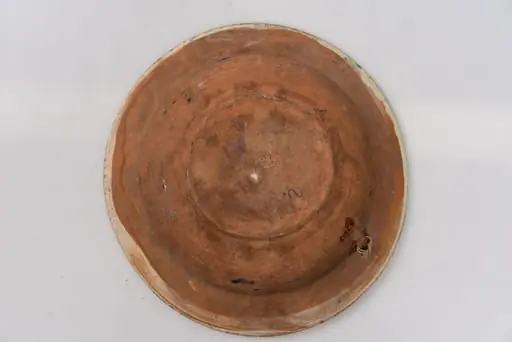 Farfurie adâncă, cu buza dreaptă, evazată; este angobată pe suprafața interioară cu un strat de humă albă, peste care este pictat cu pensula decorul monocromatic format din motive vegetale și florale stilizate: registrul decorativ central de pe fundul farfuriei conține o tulpină cu cinci flori de lalea, o floare centrală cu patru petale rotunde și frunze. Registrul decorativ marginal de pe buza farfuriei, încadrat între două linii circulare ondulate ușor, este format dintr-un șir continuu de motive formate dintr-o linie spiralată de formă ovală. Suprafața ornamentată a farfuriei este acoperită cu un strat de smalț transparent. Cromatica: alb, albastru.
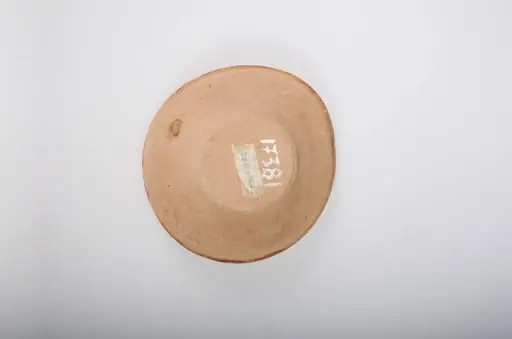 Vasul are forma tronconică, cu gura mai largă decât baza, cu buza dreaptă și înaltă. Din punct de vedere al decorului, acesta este pictat cu linii în formă de spirală, la baza vasului și linii verticale pe pereții supraînălțați. Buza vasului este prevăzută cu o linie șerpuită. Starchina este nesmălțuită. Cromatica vasului se prezintă în felul următor: fond - cărămiziu, motivele fiind redate cu culoarile alb și gri.
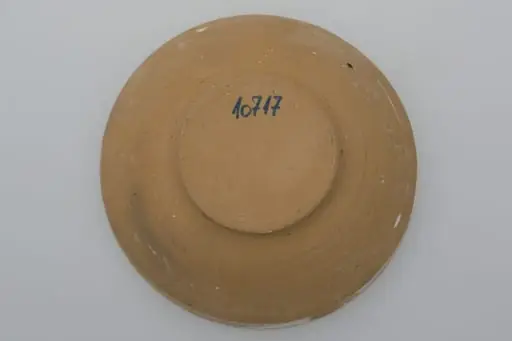 Recipient din lut de uz casnic, nesmălțuit, angobat, de formă circulară, cu profil tronconic, cu buza dreaptă și înaltă. Pe pereții interiori, vasul este decorat cu cornul, cu motive geometrice și florale: un contur de floare urmat de un șir de flori mici stilizate. Spre gura strachinii, la interior, sunt prezente linii concentrice, maro. În centrul vasului este pictată o spirală. Buza vasului este ornată cu o linie ondulată. Cromatică: fond: alb; motive: gri, maro închis, maro deschis.
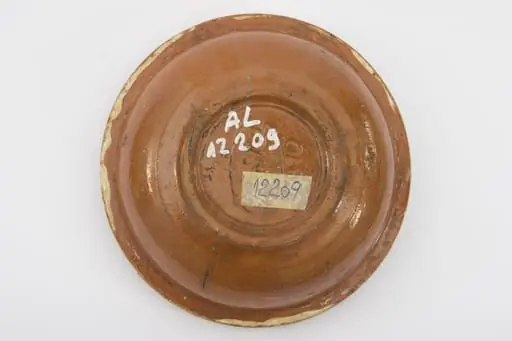 Obiect de uz casnic de formă tronconică foarte adâncită, cu buza foarte înaltă și ușor ieșită în afară în partea exterioară; este smălțuit interior și exterior (doar buza); în centru e decorat cu motive florale, iar pe margine cu o linie; pe fund are marca Granitul No 10; are gura puțin ciobită. Ccromatica: fond interior crem, fond exterior maro; motice: verde, albastru, maro.
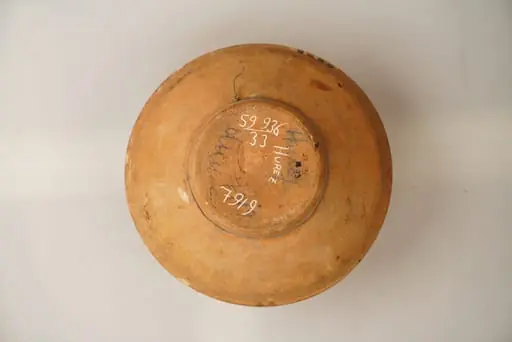 Farfurie adâncă de tip castron, cu corpul tronconic și buza dreaptă, verticală cu muchia buzei ușor răsfrântă spre exterior; este acoperită pe suprafața interioară cu un strat de angobă albă peste care este pictat cu cornul decorul format din motive geometrice dispuse astfel: centrul farfuriei este decorat cu un cerc de culoare maro ce este dublat pe exterior cu linii mici în formă de semicercuri, simulând petalele unei flori, iar în interior conținând un mic element decorativ neregulat, de culoare maro. Peretele farfuriei este decorat în jumătatea sa inferioară cu linii circulare în culorile roșu, verde-deschis, maro, completate cu șapte grupuri de motive formate din semicercuri mici de culoare maro și cu un șir de linii maro în formă de semicercuri mai mari, alăturate, având în interior linii curbe de culoare verde-deschis și roșu. Muchia buzei este decorată cu o linie circulară maro, ondulată mărunt. Suprafața farfuriei nu este smălțuită. Cromatica: alb, verde-deschis, roșu, maro.
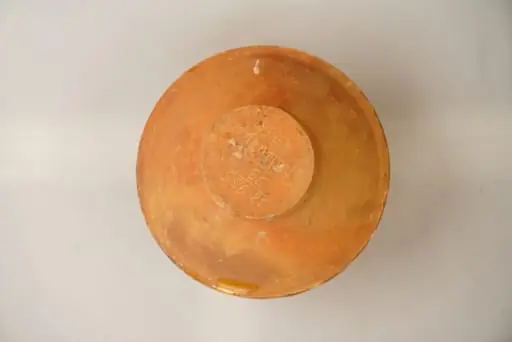 Farfurie adâncă de tip castron, cu fund îngust, corp tronconic și buză verticală, dreaptă. Decorul este pictat cu cornul, cu humă albă, direct pe suprafața neangobată a vasului și se compune din motive geometrice: două linii spiralate circulare, una care marchează centrul farfuriei, cea de-a doua pe peretele vasului, imediat sub buză; între aceste două linii spiralate se regăsește o linie circulară ondulată. Buza farfuriei este decorată pe exterior cu o linie circulară ondulată, de culoare albă, iar pe suprafața interioară, decorul farfuriei este completat cu pete de culoare verde, realizate prin picurarea culorii cu pensula. Suprafața ornamentată a farfuriei este acoperită cu un strat de smalț transparent. Cromatica: alb, verde, pe fondul roșu al lutului ars.
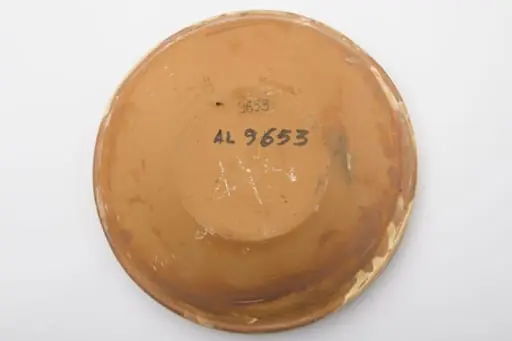 Castron cu fundul îngust, pereții înalți și evazați. Vasul este decorat. Motivul central îl repreintă un mănunchi de cinci flori, cu laleaua în vârf. Decorul este fin incizat, în tehnica sgrafitării, înainte de pictare. Pe marginea vasului între două linii concentrice sunt prezente decorații cu motive geometrice și fitomorfe stilizate (arc de cerc, linii hașurate, drepte și ondulate). Pe spate, castronul are o gaură pentru ață și incizată inscripția ,,Colibaba''. Cromatica: fond: alb; motive: verde, galben, brun.
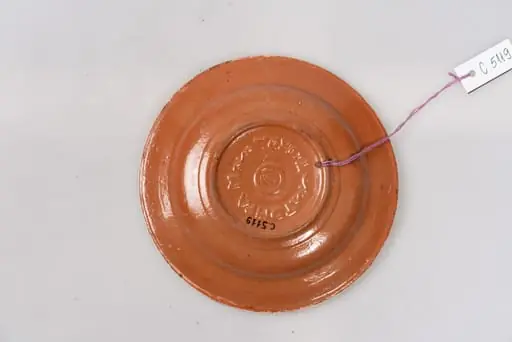 Farfurie adâncă, angobată pe fața interioară și pe suprafața exterioară a buzei cu un strat de angobă albă. Este decorată prin pictare cu pensula cu motive florale, fitomorfe și geometrice: central pe fundul farfuriei este reprezentată o floare (lalea) cu petale de culoare galben-ocru și albastru și frunze verzi și trei flori maro-roșcate cu frunze verzi, pe buza farfuriei. Bordura interioară a farfuriei și muchia buzei sunt marcate de câte o linie circulară de culoare maro-roșcat. Pe fundul farfuriei pe exterior se găsesște marca meșterului "TOMPA M". Cromatica: alb, verde, maro-roșcat, albastru. Farfuria este acoperită pe ambele fețe cu un strat de smalț transparent.
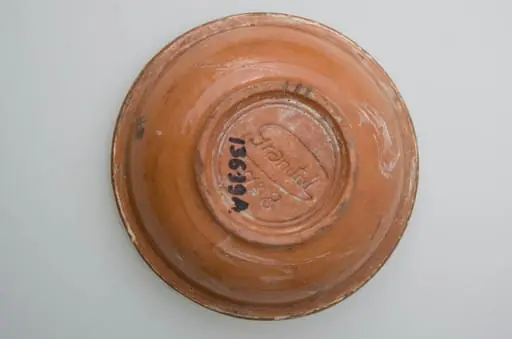 Vas ceramic smălțuit, de formă circulară cu profil tronconic, având pereții ușor evazați, baza plată și buza circulară. Decorat cu motive vegetal-florale și cordiforme pe fundul vasului (două rânduri de frunze, o lalea și o inimă), pictate cu pensula. Fundul vasului este delimitat de pereți printr-o linie subțire, circulară. Gura este pictată în alb și la exterior.Pe fundul vasului găsim marca Granitul No 8 și două cercuri concentrice, incizate. Cromatică: fond alb interior, cărămiziu și alb exterior; motive: albastru, cărămiziu, verde, maro.
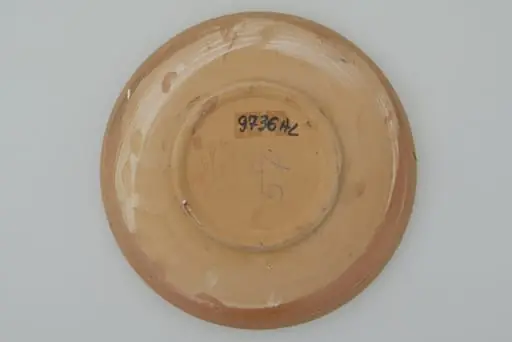 Farfurie tronconică de mici dimensiuni, cu fundul mic, pereții puțin înalți, dar puternic evazați. Centrul farfuriei prezintă o spirală, urmează un câmp jirăvit; urmează două cercuri maro și verde, din nou câmp jirăvit, urmează o ghirlandă cu trandafiri, sfârșindu-se cu un câmp jirăvit. Este prevăzută cu o gaură, pe partea posterioară, pentru prindere. Cromatică: fond: alb-gri; motive; maro; verde; cărămiziu.
 Farfurie semi-adâncă, cu buza dreaptă evazată; decorul este realizat prin pictare cu cornul cu motive geometrice dispuse astfel: centrul farfuriei este decorat cu un cerc umplut cu linii hașurate intersectat, rezultând mici carouri albe cu puncte de culoare maro în interior; acest motiv este încadrat într-un cerc mai mare format din trei linii, două de culoare albă, una de culoare maro, având pe exterior opt grupuri de motive în formă de semicerc de culoare albă, decorate cu puncte maro și cu o linie centrală de culoare verde. Buza farfuriei conține opt motive de formă ovală, formate din linii albe, maro și puncte verzi, motive încadrate între două linii circulare de culoare albă. Muchia buzei este marcată de două linii circulare, una simplă de culoare albă și una ondulată mărunt, de culoare verde. Suprafața ornamentată a farfuriei este acoperită cu un strat de smalț transparent. Cromatica: alb, verde, maro, pe fondul roșu al lutului ars.