Artwork
The Babylon Harlot
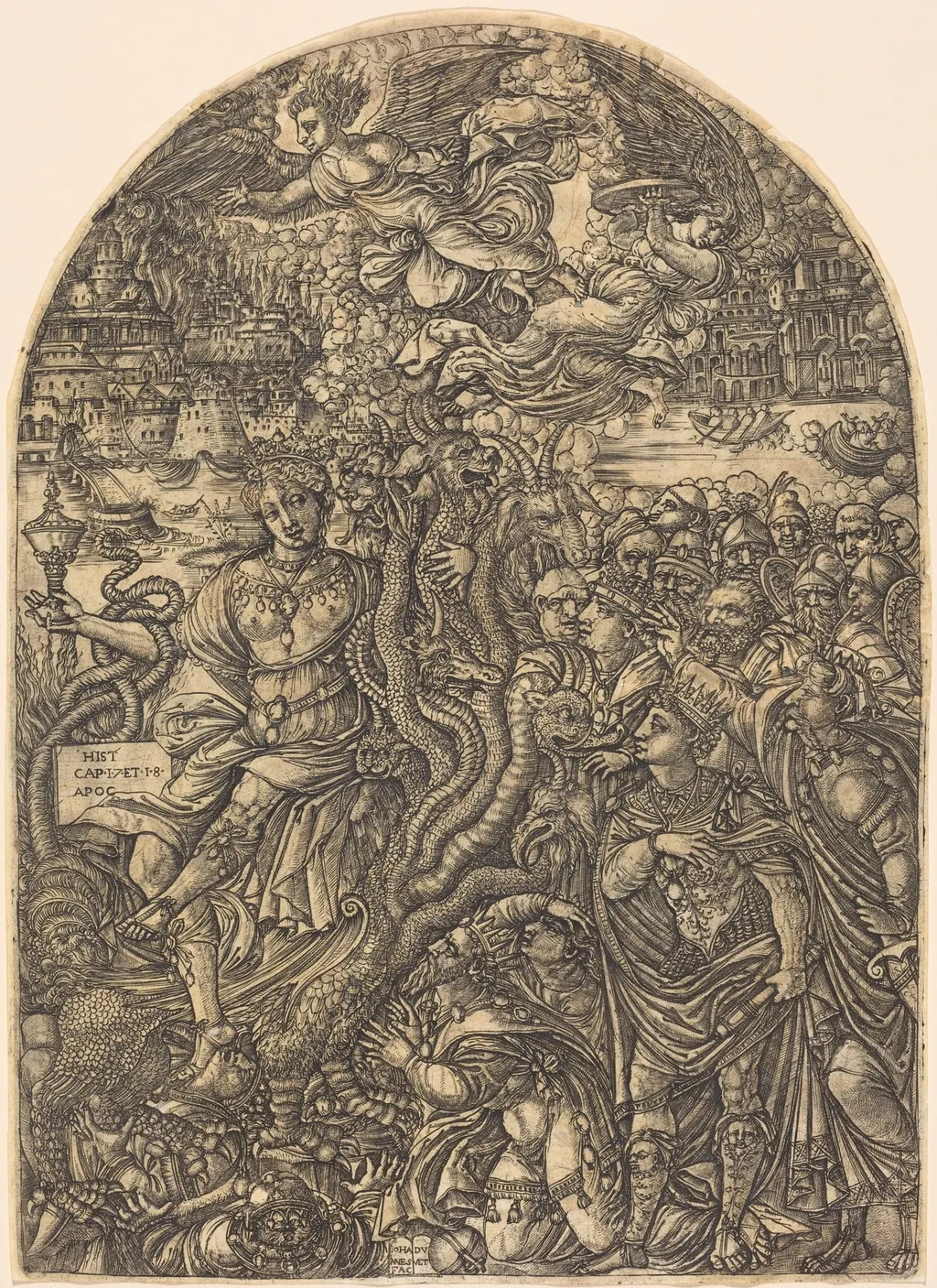
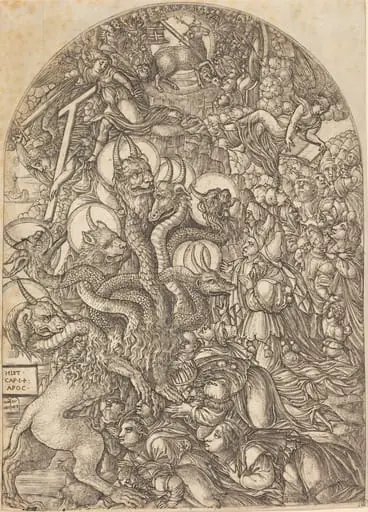
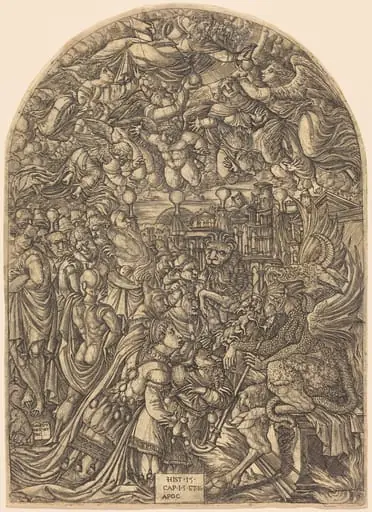
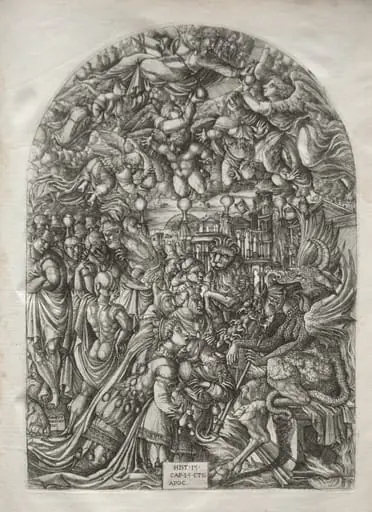
The Babylon Harlot is an ink print by the Renaissance artist Jean Duvet. It dates from 1551 and is held in the collection of the National Gallery of Art.
About this work
Overview
Created in 1551 by Jean Duvet, *The Babylon Harlot* is an engraving on laid paper, one of approximately 73 known plates by the French artist.
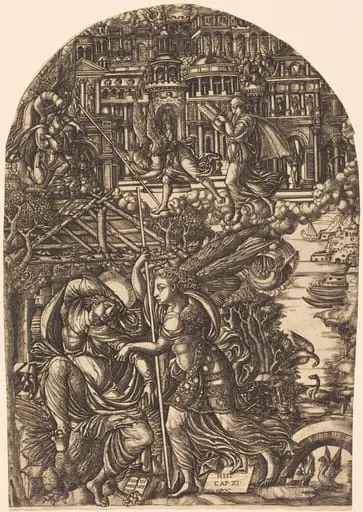
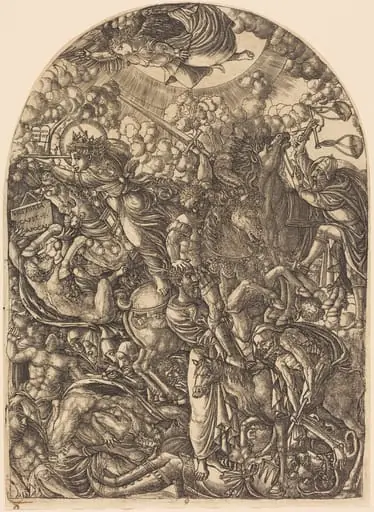
Created in 1551 by Jean Duvet, *The Babylon Harlot* is an engraving on laid paper, one of approximately 73 known plates by the French artist. Duvet, primarily a goldsmith, turned to printmaking with a distinctive approach that diverged from the polished norms of his time. His work is characterized by dense, intricate compositions rendered in fine linear strokes, producing a tactile, almost tactile intensity through ink alone, without color or wash.
Subject & Meaning
The image depicts the Whore of Babylon from the Book of Revelation, seated atop a multi-headed beast, holding a golden chalice. Around her, a tumultuous crowd of figures—human and hybrid—engages in chaotic activity, symbolizing moral corruption. Above, a winged celestial being observes, while below, a fortified city with ships suggests worldly power and decay. The scene functions as a moral allegory, warning against spiritual seduction and the excesses of earthly empires.
Technique & Style
Duvet employed engraving, a method involving incised lines on a metal plate inked and pressed onto paper. His technique favors dense, swirling lines that build texture and shadow without gradation, creating a sense of urgency and unease. The lack of spatial clarity and the exaggerated scale of figures contribute to a dreamlike, almost hallucinatory effect. This raw, unrefined style contrasts with the classical harmony typical of Renaissance printmaking.
History & Provenance
Little is known of Duvet’s life beyond his documented work as a goldsmith in Langres and his activity as a printmaker between 1530 and 1570. *The Babylon Harlot* was produced during his mature period, likely for a devotional or intellectual audience. Surviving impressions are rare, and the print’s early ownership remains undocumented, though its thematic gravity suggests it was circulated among those engaged with Reformation-era religious discourse.
Context
Produced during the height of the Protestant Reformation, the image reflects anxieties about religious corruption and the perceived decadence of the Catholic Church. Duvet’s visual language, though rooted in biblical prophecy, diverges from mainstream Northern Renaissance clarity. His idiosyncratic style may have resonated with reformist circles seeking visceral, emotionally charged imagery to convey theological warnings.
Legacy
Duvet’s work was largely overlooked until the 19th century, when his intense, visionary compositions drew comparisons to Romantic and Symbolist artists like William Blake. *The Babylon Harlot* is now recognized as a singular achievement in French printmaking—a bold, personal interpretation of apocalyptic themes that transcends its time through its emotional force and unconventional form.
Artist & collection

Artist
Jean Duvet (1485 – after 1562) was a French Renaissance goldsmith and engraver, now best known for his engravings.