Artwork
The Multitude Which Stands before the Throne
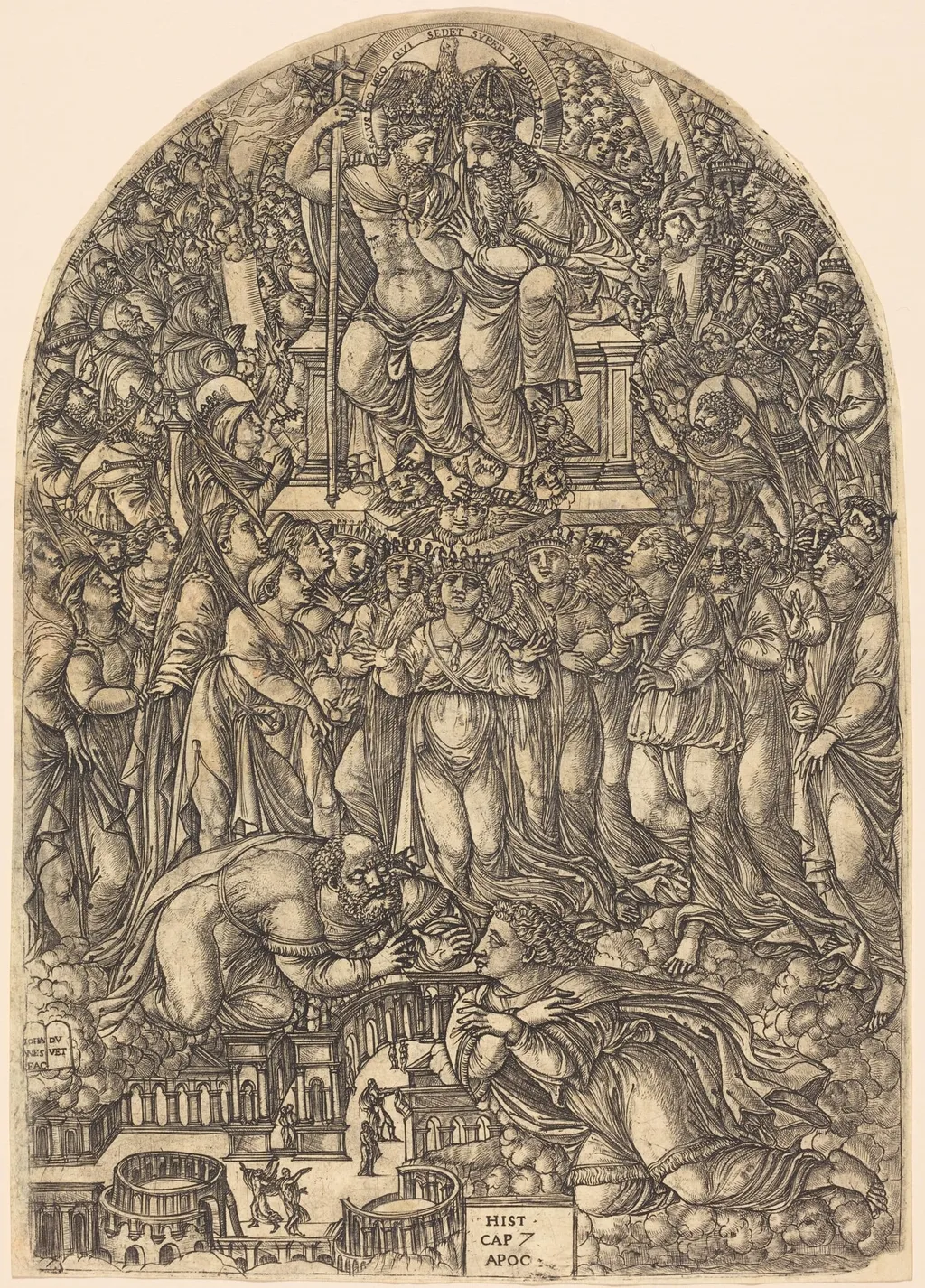
The Multitude Which Stands before the Throne is an ink print by the Renaissance artist Jean Duvet. It dates from 1551 and is held in the collection of the National Gallery of Art.
About this work
Overview
Executed on laid paper, it exemplifies his distinctive approach to religious imagery, combining dense figuration with a raw, expressive energy.
Created in 1551 by the French goldsmith and engraver Jean Duvet, this work is one of approximately 73 known engravings he produced. Executed on laid paper, it exemplifies his distinctive approach to religious imagery, combining dense figuration with a raw, expressive energy. Unlike many contemporaries, Duvet avoided polished refinement, favoring a personal, almost visionary style that set him apart in 16th-century French printmaking.
Subject & Meaning
The scene illustrates a passage from the Book of Revelation, depicting a vast assembly of worshippers gathered before a celestial throne. Figures are arranged in layered tiers, some kneeling, others standing or turning away, suggesting varied responses to divine presence. The central throne, occupied by an indistinct figure, anchors the composition as a symbol of judgment and transcendence, reflecting the apocalyptic themes prevalent in Reformation-era religious thought.
Technique & Style
Duvet employed fine, incised lines to build texture and volume, using cross-hatching and dense patterning to model forms and suggest depth. The composition is tightly packed, with overlapping figures creating rhythmic movement across the page. His handling of space defies Renaissance conventions of perspective, favoring a flattened, almost hieratic arrangement that enhances the spiritual intensity of the scene.
History & Provenance
Little is known with certainty about Duvet’s life, and records of his career are fragmented. He worked primarily in France, likely in Lyon or Paris, and his prints circulated among collectors and religious communities. While his reputation faded after his death, 19th-century scholars began to reassess his work, recognizing its emotional force and unique position between medieval tradition and early modern expression.
Context
Duvet’s output emerged during a period of religious upheaval in France, as Catholic orthodoxy faced Protestant challenges. His imagery, steeped in apocalyptic symbolism, resonated with audiences seeking spiritual clarity amid uncertainty. Unlike Italian or Northern Renaissance printmakers, he did not adhere to classical ideals, instead drawing from vernacular piety and manuscript illumination for his visual language.
Legacy
Though largely overlooked during his lifetime, Duvet’s work gained renewed attention in the 19th and 20th centuries for its emotional directness and unconventional composition. His engravings are now seen as precursors to later visionary artists, particularly in their disregard for naturalism and embrace of symbolic intensity. His prints remain important for understanding the diversity of religious expression in Renaissance print culture.
Artist & collection

Artist
Jean Duvet (1485 – after 1562) was a French Renaissance goldsmith and engraver, now best known for his engravings.

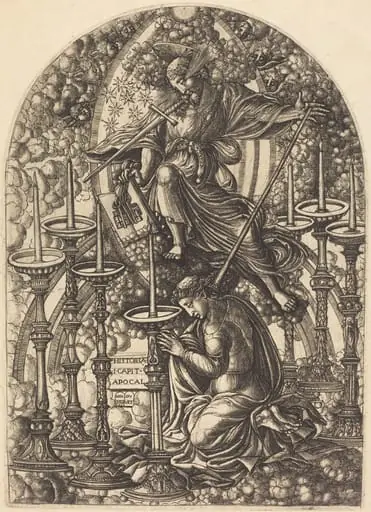
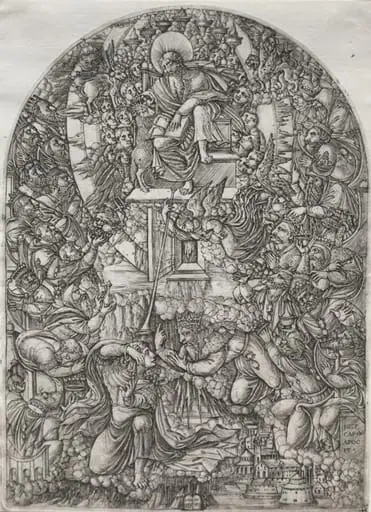 The Apocalpse: St. John Summoned to Heaven
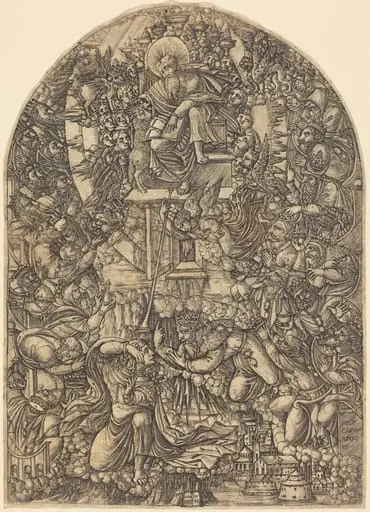 Saint John Summoned to Heaven
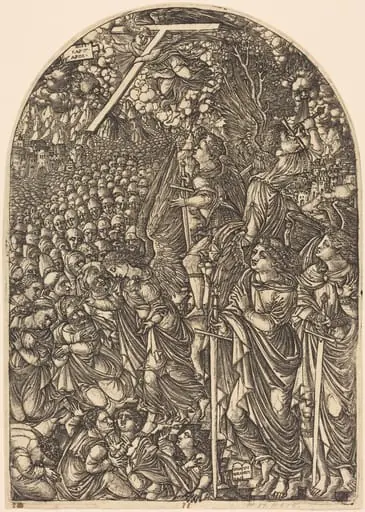 Four Angels Holding Back the Winds
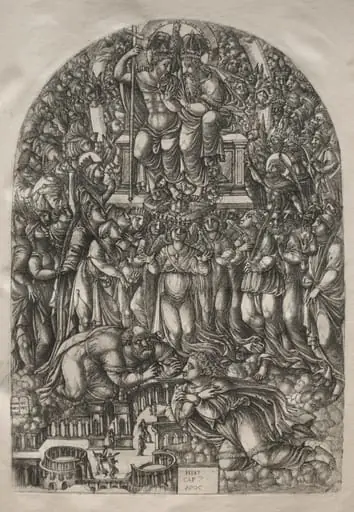 The Apocalypse: An Innumerable Multitude Which Stand before the Throne
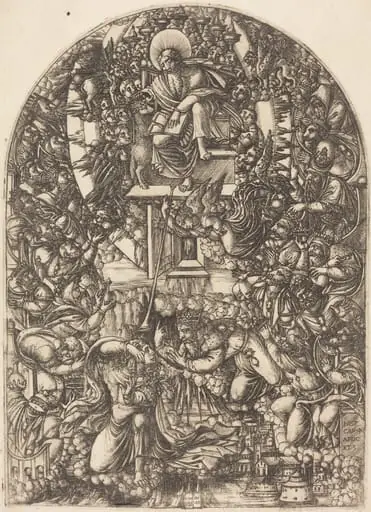 Saint John Summoned to Heaven
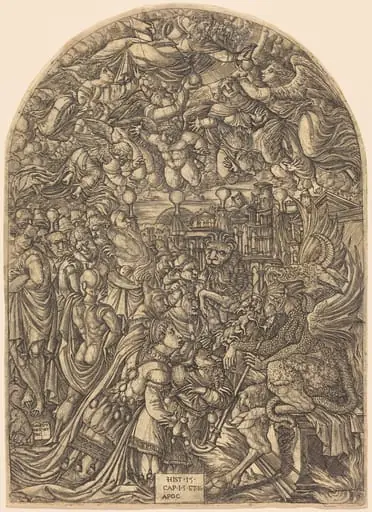 The Dragon and the Beast
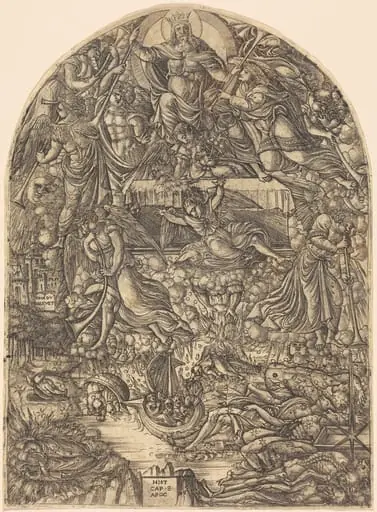 The Opening of the Seventh Seal
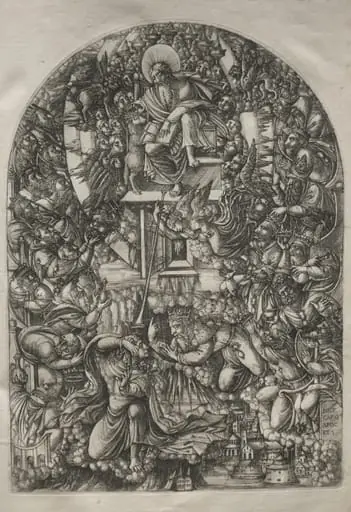 The Apocalypse: St. John Summoned to Heaven
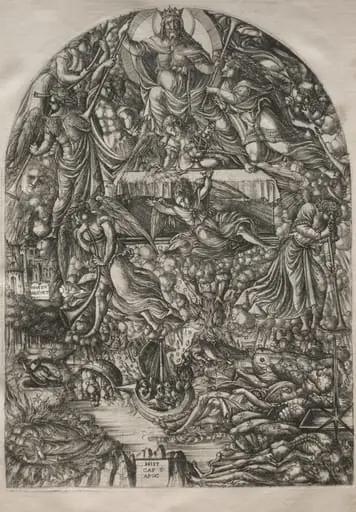 The Apocalypse: The Opening of the Seventh Seal
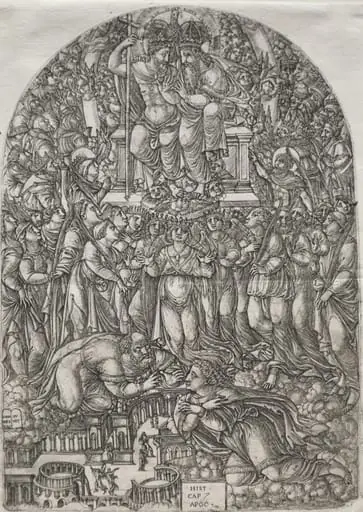 The Apocalpse: An Innumerable Multitude which stand before the Throne