Artwork
Jodocus de Momper
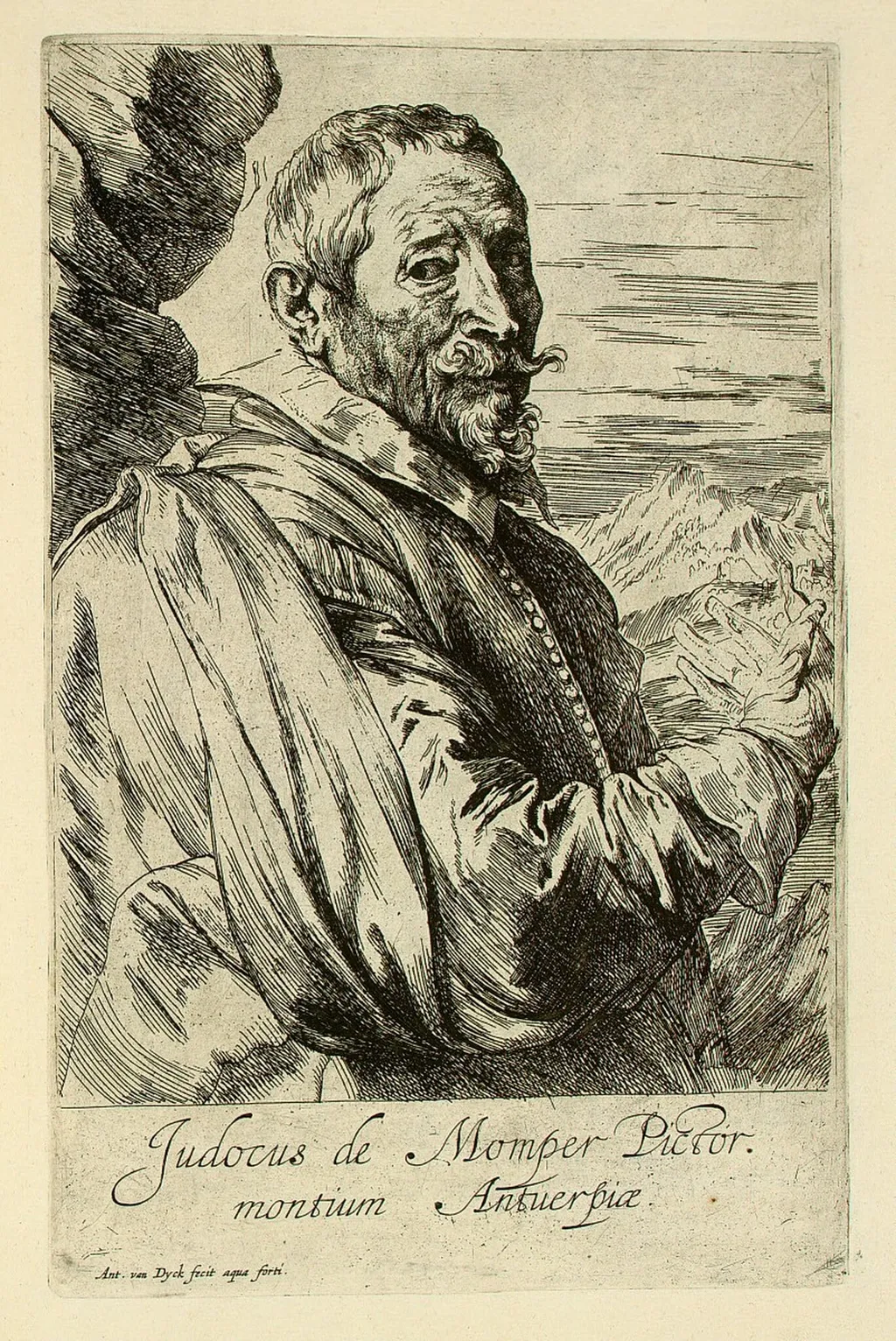
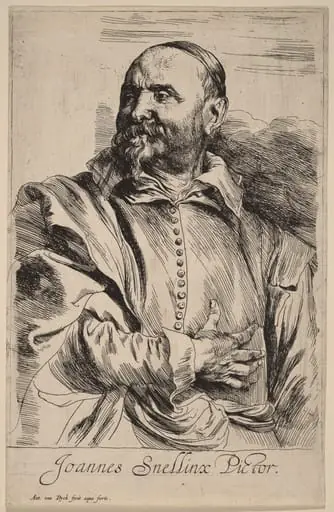
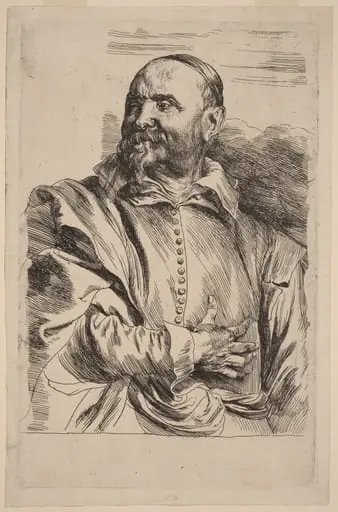
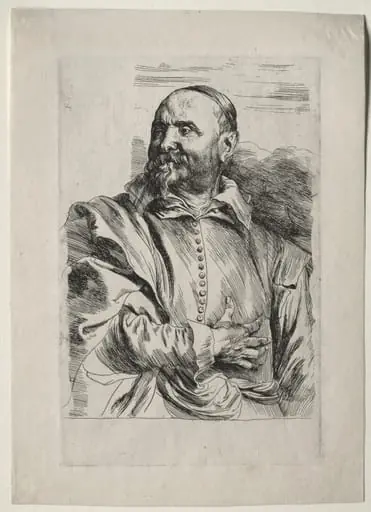
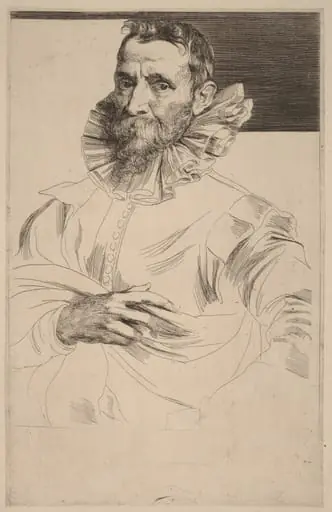
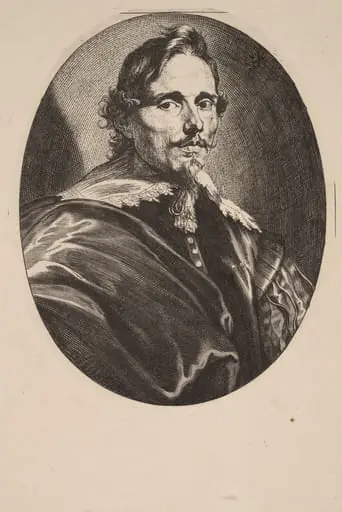
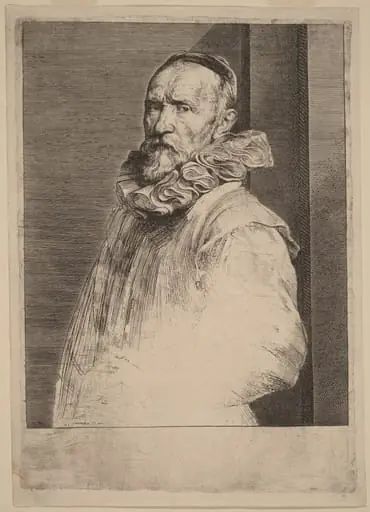
Jodocus de Momper is an ink print by the Baroque artist Anthony van Dyck. It dates from 1634 and is held in the collection of the National Gallery of Art.
About this work
Overview
The work titled Jodocus de Momper is an early 17th‑century print executed as an etching on laid paper. Produced around 1634, it bears the hand of the Flemish painter and printmaker Sir Anthony van Dyck, whose output at the time included a range of portraiture and illustrative prints.
Technique & Style
Van Dyck employed the traditional copper‑plate etching process, incising the image with acid to create fine lines that translate the tonal qualities of his drawing onto the textured surface of laid paper. The print demonstrates the artist’s characteristic handling of light and shadow, rendering the figure with a restrained yet expressive line work typical of his early printmaking.
History & Provenance
Created in the mid‑1630s, the etching reflects van Dyck’s brief but productive period of print production while he was active in England and the Low Countries. The piece has passed through several private collections before entering public holdings, where it is catalogued as a representative example of van Dyck’s lesser‑known graphic oeuvre.
Artist & collection
Artist
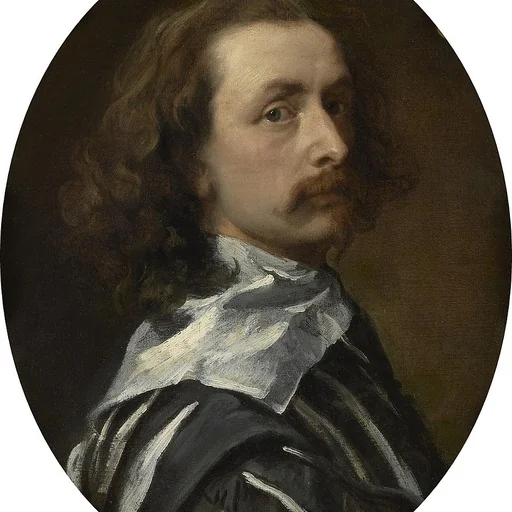
Sir Anthony van Dyck (; Dutch: Antoon van Dijck ; 22 March 1599 – 9 December 1641) was a Flemish Baroque artist, who became the leading court painter in England after success in the Spanish Netherlands and Italy.