Artwork
"Ah Mr. Hardy, Mr. Hardy, if you only knew all the circumstances..."
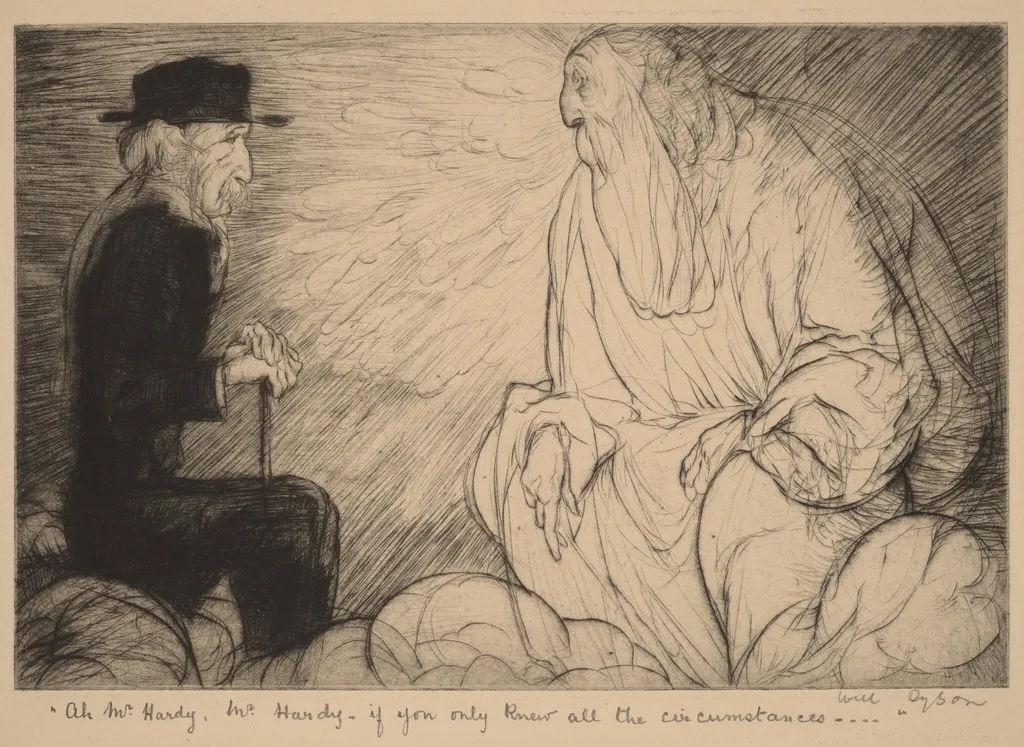
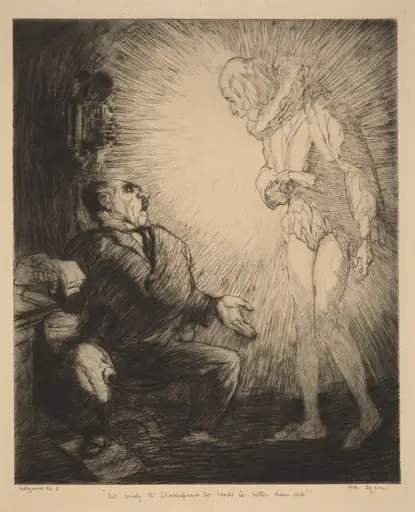
"Ah Mr. Hardy, Mr. Hardy, if you only knew all the circumstances..." is an ink print by the Impressionist artist Will Dyson. It dates from 1909 and is held in the collection of the National Gallery of Art.
About this work
Overview
Created in 1909, this drypoint by Australian artist Will Dyson is a small, intimate print that captures a quiet, tense moment. The work is rendered in fine, irregular lines typical of the drypoint technique, where the burr of the tool creates soft, velvety textures. The composition centers on a seated elderly man, with a looming, indistinct figure behind him, suggesting unseen presence or memory.
Subject & Meaning
Behind him, a blurred, almost spectral form suggests a hidden observer or a memory intruding on the present.
The scene depicts an older man, possibly in contemplation or distress, seated with a cane across his lap. Behind him, a blurred, almost spectral form suggests a hidden observer or a memory intruding on the present. The quoted phrase at the base implies regret or unspoken truth, framing the image as a moment of private revelation, where the unseen figure may represent guilt, loss, or a past unresolved.
Technique & Style
Dyson employed drypoint to achieve a raw, immediate quality, using a sharp needle to scratch directly into the plate, creating a raised burr that holds ink and produces rich, fuzzy lines. The strokes are hurried and uneven, emphasizing movement and emotional urgency. The lack of fine detail and the dominance of shadow enhance the sense of ambiguity, turning the figure behind the man into an enigmatic presence rather than a defined form.
History & Provenance
The print was made during Dyson’s early career in London, when he was contributing illustrations to radical publications. It was not widely exhibited at the time and remained in private hands until later acquisitions by institutional collections. Its survival reflects its status as a personal, experimental work rather than a commercial commission, offering insight into Dyson’s private artistic concerns beyond his journalistic output.
Context
In early 20th-century Britain, drypoint was often used by artists seeking expressive immediacy over polished finish. Dyson, influenced by European printmakers and social realism, used the medium to explore psychological depth in everyday scenes. This work aligns with broader interests in inner life and hidden emotion, contrasting with the era’s more overt political imagery while still hinting at social unease.
Legacy
Though not among Dyson’s most reproduced works, this print is recognized for its emotional resonance and technical economy. It exemplifies how drypoint could convey psychological complexity with minimal means. Later scholars have cited it as evidence of Dyson’s sensitivity to quiet human drama, distinguishing his practice from the more overtly satirical illustrations for which he was better known.
Own this work as a print
Artist & collection

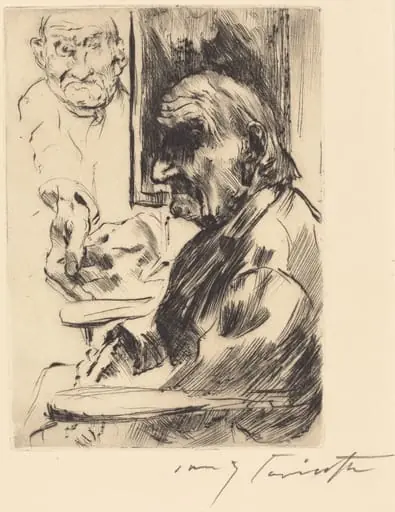 Alter Mann (Old Man)
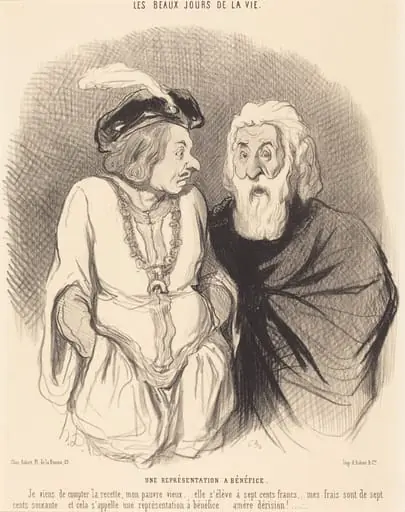 Une Représentation a bénéfice
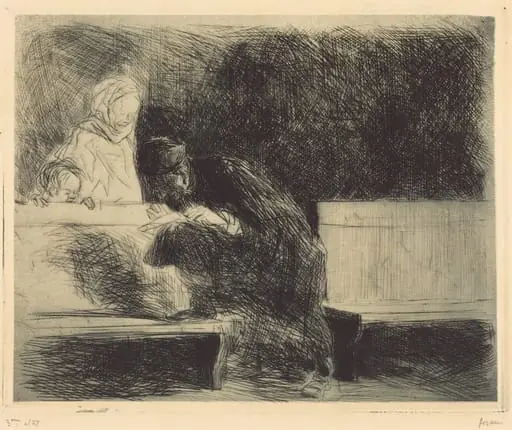 Avocat compulsant un dossier (Lawyer Going through a Brief)
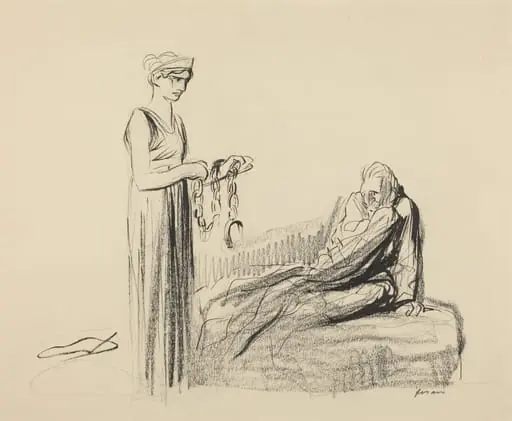 a) Fetters (recto); b) Several Figures (verso)
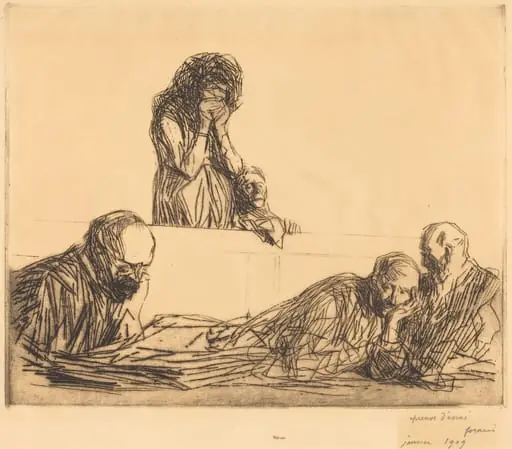 Fille-mère (1ère planche) (Unwed Mother) (first plate)
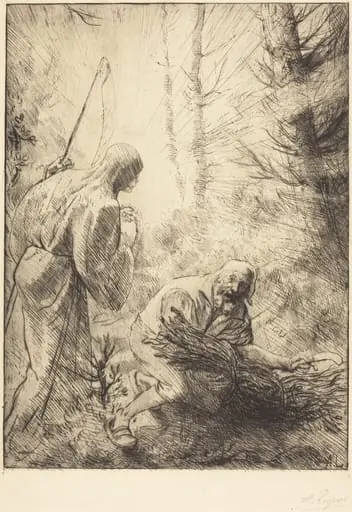 Death and the Woodcutter, 2nd plate (La mort et le bucheron)
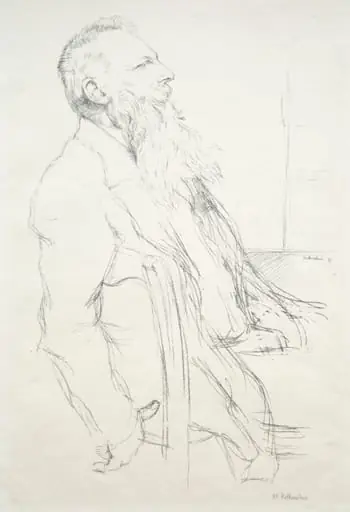 Auguste Rodin
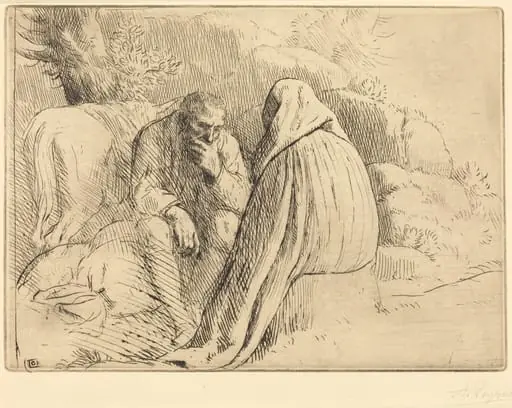 Bohemien Encampment (Campement de bohemiens)
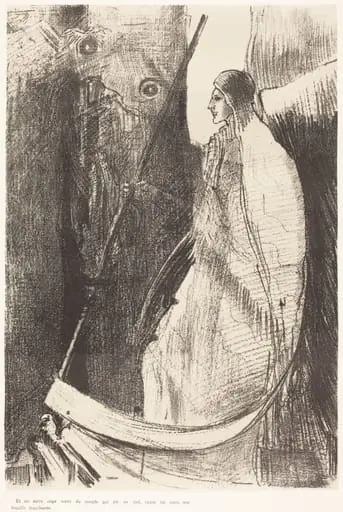 Et un autre ange sortit du temple qui est au ciel, ayant lui aussi une faucille tranchante (And another angel came out of the temple which is in heaven, and he also having a sharp sickle)